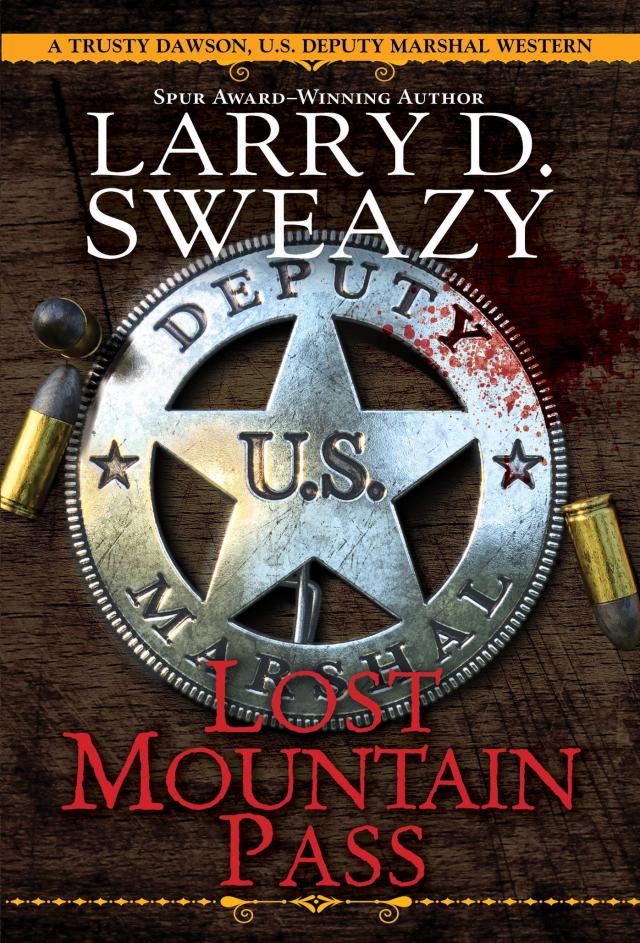
Lost Mountain Pass, page 16


* * *
Calhoun took another drink of whiskey, then sent Gladdy to his room. He was going to do this deed himself, make sure it wasn’t messed up by the Mick. It felt good to have a plan, a release, something to track down. That had always been the thing about killing that he liked the most. Not the reactionary fights when his temper took over and released itself with a fist to flesh and the crack of bone, but the ones that took time to plan, to think out; killing a man slowly was like eating a good meal. This one had purpose, had reason, and there was nothing better than that.
Calhoun liked the idea that no one could know that he was still alive. Once the wire was sent and the news of his pretended death hit the newspapers, then he would have the freedom to pursue his revenge however he wanted to. The more he thought about the plan, the more he liked the idea that Gladdy had given him. Everything that had happened in the last few days, from the birth of the baby, to losing Jessica, then being outsmarted by her father, combined into something that he had not even considered that he needed: a fresh start. The ranch was a lot of work. Being a landowner didn’t suit him. Freedom did. He hadn’t felt so excited about life since the war.
Calhoun slid out of the bootleg room and made his way into the lobby of the Hobart House Hotel. The room was cavernous with eighteen-foot ceilings, dominated by a river stone fireplace that climbed up the wall. The windows were covered with thick red draperies, and the wood plank floor was warmed by hand-woven rugs large enough to cover the roofs of normal-sized sod houses. The furniture was covered in tanned leather, giving the room a comfortable feeling rather than a pretentious one like so many hotels that Calhoun had been in aspired to. Candles burned dimly in sconces that lined the walls, and an ornately carved grandfather clock ticked toward midnight. The desk clerk was nowhere to be seen. Even the mice in the place were quiet. It was just the way he needed it to be.
A thin glow of yellow light escaped from under a door behind the registration desk. There was no way for Calhoun to know whether the door was locked or not, but he was betting it wasn’t. He unsheathed his knife, then carefully slid it up his sleeve, balancing the point in between his fingers. All he had to do was open his hand and the hilt of the knife would slide out. Firing a shot would alert everyone within earshot, awake or asleep, that something had gone wrong, that there was a threat about. Calhoun didn’t want that. He hoped Garland Faulks was in the office and would be relieved by someone in the morning, putting enough space between the killing and the shine of discovery.
Calhoun eased behind the counter, making sure not to creak a floorboard and give away his presence. He stopped next to the door and gave a listen. At first all he could hear was his own heartbeat, ramped up by the prospect of killing the desk clerk and getting caught. It was a thrill that made the tops of his ears tingle with excitement. Once he got past the sounds his own body was making, Calhoun heard a soft snore and knew that Faulks was sleeping, relying on someone to ring the bell on the counter to wake him up. A smile crossed Calhoun’s face, but he didn’t make a move. Not yet. He was plastered up against the wall like a moth trying to blend in and disappear into tree bark. It was the lobby and what was outside it that interested him now.
The hotel was silent and so was the street outside. All of Kosoma slept under the cover of darkness, immune to the smell of the sulfur, and snuggled in safely behind their doors, just like Garland Faulks.
Vance Calhoun knew the only thing that could trip him up was a traveler coming in seeking a room for the night. Even though that seemed unlikely, it was possible. But the possibility didn’t stop him. He pushed inside the office slowly, leaving the door open for a quick exit.
A small oil lamp burned on a desk at the back of the room. The desk clerk, Garland Faulks, sat in a chair with his head down, comforted in a triangle made of crossed arms. He slept peacefully, unaware that anyone had come into the room. A ledger lay open on the desk with a pencil next to it. The only available weapon that Calhoun could see for the man to defend himself with was a silver letter opener a few inches from his head.
Calhoun slowed himself down, opened his ears in search of any sounds behind him, and let the knife drop into his grip when he was about a foot behind the sleeping man. There was no turning back now. Get it over quick and get out. That was always the plan, and most of the time it worked.
In one swift motion, Calhoun grabbed the man’s head and pulled it up so he was staring at the wall before him straight on. Faulks didn’t have time to scream out or question what was happening; he was barely awake. Calhoun sliced the man’s throat from ear to ear deep and fast, then let his head fall forward in a bubbling plea for help that couldn’t form into words. To make sure no one could hear a thing, Calhoun ground the clerk’s face into the desk, held it there with all of his might until the shaking, gasping, crying man went still.
Blood dripped off the knife, and the familiar smell of the life fluid hit Calhoun’s nose with a welcoming lick of the lips. The killing had been the meal he had been hungering for since the moment he figured out that Marberry had called his bluff and come after him, taking the things that meant the most to Calhoun.
To make sure the deed was done, Calhoun raised the knife high above his head and drove it down with as much force as he could muster. The steel point sliced through Faulks’s neck, just under the skull, not stopping until it came out the other side, through the man’s throat. The blade drove two inches into the desk, echoing inside the small office like a head hitting a board. The sound stopped Calhoun. He had to listen hard over his racing heartbeat, over the thrill of the kill. All he heard was the ticking of the clock in the lobby. He smiled, pulled out the knife, wiped it on the clerk’s back, sheathed it, and disappeared out the door, doing his best not to be seen or heard.
If he was lucky nobody would find the dead man until the morning. Calhoun planned on being long gone by then—and dead himself, at least to the rest of the world.
Chapter 16
Atoka, Indian Territory, May 1888
The man at the Western Union office was drinking his morning coffee when Trusty walked in the door. Soft golden light pushed through the window that fronted the main street of Atoka, making the small office glow like everything in it was gilded with gold. The smell of paper and ink hit Trusty’s nose as his eyes dropped from the man to the telegraph machine on the desk before him. It still amazed Trusty that words could be sent over a wire hundreds of miles away with the punch of a few buttons. “Mornin’,” he said to the operator.
The thin, young man stood up, holding on to his coffee, suddenly aware that his tie was not pulled tight or that his cap wasn’t on his head where it was supposed to be. He was a Choctaw with light brown skin, looked to be in his mid-twenties, still wet behind the ears but old enough to facilitate a job as important as the one he held at the moment. “Good morning, sir. I beg your pardon for not bein’ ready.”
“Not a problem.” Trusty stopped at the counter. A newspaper was laying on the man’s desk. The headline did not surprise Trusty. It read: FEDERAL JUDGE MURDERED IN KOSOMA. KILLER STILL ON THE LOOSE. “That’s bad news,” he added, nodding to the paper.
“It is.” The operator set his coffee mug down, wrestled his tie tight at the neck, and popped on his Western Union cap. “How can I help you?” Once he was settled, he looked Trusty up and down and let his eyes rest on the badge. There was still a smear of blood on it. Trusty hadn’t bothered to wipe away the tragedy and bring a shine back to his badge.
“I need to send a wire to theU.S. Marshal, William Grimes, in Muskogee. Can you do that?”
The operator nodded, sat down, picked up a pencil, and prepared to write what it was that Trusty had to say. There was no mention of the man’s name anywhere to be seen, and Trusty wasn’t concerned enough to ask. He had a task to do and a horse to ride after the wire was sent.
“What’s the message?” the operator asked.
“Write him that Deputy U.S. Marshal Sam Dawson is on the trail of Judge Hadesworth’s killer. Stop. Was wounded as reported, but capable of riding. Will check for further orders in prescribed locations. Stop. Will not be attending the judge’s funeral unless the assailant is apprehended or am ordered to. Stop. Best regards, Deputy Sam Dawson.”
The operator kept on writing after Trusty stopped talking. Once he was finished, he looked up at Trusty and said, “You’re Trusty Dawson.”
The only answer that came to his mind was that I used to be, but he didn’t say it out loud. He just stared at the operator. “Do you need anything else?”
“There’s no charge.”
“Of course.” Trusty turned and started to walk to the door. The telegraph machine started tapping and at first, Trusty thought the man was sending the message, but it turned out that a message was coming in.
“You better wait to hear this, Marshal; it’s a telegram for the Agency,” the operator said, calling after him.
Trusty had his hand on the doorknob, ready to pull it open to leave. His mouth was dry, and the taste of sadness and failure was thick on his tongue. Pain from the wound throbbed a bit, but the pit of his stomach hurt more. He didn’t want the operator to catch sight of his sad, glazed eyes. “What is it?” he said.
“Looks like there was a murder in Kosoma last night. A desk clerk at the Hobart House Hotel.”
The machine kept tapping and the operator was scribbling as fast as he could, trying to keep up with the message.
Trusty headed back to the counter. “What else does it say? Did they catch the person who did it?”
The operator shook his head. “No, the killer wasn’t caught. The Indian police are speculating that it was the same person who killed the judge.”
“Why is that?”
The operator shrugged his shoulders. “Doesn’t say. But the reward for Amelia Darby’s capture has been upped to five thousand dollars.”
St. Louis, Missouri, spring 1875
It seemed like every time Sam looked up, Jessica Marberry was standing in the doorway of the shop, or waiting for him when he returned home from school. He didn’t mind. His heart skipped a beat when he saw her—even from a distance. But his father had warned him there was no place for Sam in the life of a girl like Jessica Marberry. She was “out of his league,” Markum Dawson had said more than once. “A man like Theodore Marberry wasn’t gonna tolerate a lowlife blacksmith’s son to be seen with his one and only daughter.” Like everything else his father said, Sam tried not to listen. But he couldn’t help but believe the words, because he felt them when Jessica was around. He knew he wasn’t good enough for her.
It was no surprise then, that on a fine spring day that Sam rounded the corner to see a familiar Marberry carriage parked in front of the shop. A pair of black, shiny horses stood rigid, at military attention as if they had been transformed into onyx statues. The carriage, a two-door cabriolet, held an equal amount of gleam and polish. There didn’t seem to be anything wrong with it that Sam could see. Jessica was nowhere to be seen. Nor was the driver, a thin black man called Earl Handsome, who usually eyed Sam with suspicion and acted as a quasi-chaperone or guard for Jessica.
Sam had been on an errand, sent by his father to purchase a load of wood for the declining stack. Business in the spring seemed never-ending. Wagon trains and fortune seekers had insatiable needs of iron and metalwork that his father was more than happy to provide.
When Sam walked into the shop, he had expected—hoped—to see Jessica waiting for him. But she was nowhere to be seen. The only visitor in the shop was Jessica’s father, Theodore Marberry.
Theodore Marberry was cornstalk tall and dressed by the finest tailors in St. Louis. He wore gray tweed suits, perfect white starched collars, and boots that shined like the horses and carriages he rode in on. Sam could only imagine the cost of the clothes the man wore, and like he was when he was in Jessica’s presence, he felt less than, dressed in working rags as he was.
The shop felt like a living being, breathing fire and exhaling smoke. Grit and dust floated through the air from one end of the wide-open room and back again until it found a place to light. Everything in sight was smudged black with soot. Cleanliness was not a consideration. There was no point—or time—for such effort. Orders were stacked up for weeks on end. Theodore Marberry looked out of place, perfectly creased and put together, standing in the middle of the shop with his jaw set hard and his eyes narrowed with a hint of anger. Sam’s father stood before the man with his head down, eyes to the floor, shoulders dropped in submission.
Both men looked relieved when Sam hurried into the shop. They looked at him in unison, while Sam continued to search the room for a beam of blond sunshine.
“She is not here,” Theodore Marberry said in a proper, harsh way. “And she will not be returning to this establishment for any reason, ever again.” He looked to Markum with the expectation that the man would reinforce the words that were just spoken.
“And you are not to go anywhere near Miss Marberry, Samuel,” his father said. “Do you understand me?”
Sam had stopped ten feet from the men. He jammed his hands into his pockets. “I didn’t do anything wrong.”
Markum Dawson sighed, looked at Theodore Marberry with disdain, then said, “Do as you’re told, Sam, and there will be no trouble. Mister Marberry doesn’t want you associating with his daughter.”
Sam wanted to ask why but knew better than to disobey his father openly in front of another man. He looked down and stared at the toes of his boots, wondering what had happened. He had seen Jessica a week prior, had spent a half an hour talking to her. They didn’t hold hands, and they had never kissed. Sam was aware of his place in the world, even if he’d gotten the feeling more than once that Jessica wanted him to kiss her.
“Yes, sir,” Sam said, still looking at his boots.
“Look me in the eye when you say that,” Marberry said.
Sam looked up and made eye contact with the wealthy man. He couldn’t see a thread of Jessica’s beauty in the man. The man’s face was twisted in bitterness and ownership in a way that Sam didn’t understand. “Yes, sir,” he said again, boring through to the back of Marberry’s head with his eyes.
“Good. As long as we’re understood.” Marberry began to walk away from Sam’s father without the offer of a good-bye or a handshake. “I never want to step in this place again.” And then he walked out, leaving a breeze behind him that kicked up old dust.
Sam waited until Marberry was gone before he said anything. “What did I do?”
Markum Dawson had been waiting for the man to leave too. He walked up to Sam and backhanded him with all of his strength. The blow surprised Sam. He hadn’t been ready for it, even though he should have been. He tottered to the right, almost lost his balance as his hand found his cheek, trying to relieve the pain.
“You lost us a paying customer is what you did. A good one. I don’t want you talking to anyone ever again. Especially no girls who come in here. Am I clear?”
“Yes, sir,” Sam said, all the time wondering what mistake he had made. His face stung like acid had been thrown on it. One of these days he would defend himself, stand up to his father and fight back. But today was not that day. He was too upset about Jessica.
Two days later while walking home from school, a carriage pulled up alongside Sam as he meandered down the sidewalk, taking his sweet time.
“Hey there, boy,” a familiar voice called.
It was Earl Handsome. Sam stopped and smiled slightly at the sight of the colored man. “I didn’t think I would ever see you again.”
“Missy sent me to find you and give you this note.” Earl Handsome dug into his fancy black coat, pulled out a piece of paper, and handed it down to Sam. “Don’t you tell nobody, now, you hear? Mister Marberry wouldn’t like it.”
Sam took the paper, looked at it like it was unexpected gold because it was, and said, “What did I do wrong?”
Earl Handsome shrugged. “Don’t you worry none about that, boy. You didn’t do nothin’ but be kind to a lonely girl. Ain’t no harm in that unless a rich man has cause to worry that kindness will lead into somethin’ else. That man ain’t got a nice bone in his body. You do as you’re told now. I gots to go.” And with that the carriage hurried off, leaving Sam to consider the paper in his hand.
He smelled it and found himself lost in a violet perfume. Spring. Beauty. A reminder of Jessica. After a time, he opened the letter. The words were simple and direct: Meet me at the corner church, a block from my house, after dark. I’ll explain everything then. Jessica.
A smile grew on Sam’s face as he stuffed the letter in his pocket and hurried home, anxious for once for the sun to drop and the moon to rise. He knew, though, from that moment on that anything that had to do with Jessica Marberry had to be a secret. He couldn’t tell anybody a thing about her. Not his father. Not anyone. Jessica was his own special secret.
Atoka, Indian Territory, May 1888
There was no need to stop in to see the Indian police before leaving Atoka. Trusty knew as much as they knew or would know. He figured the best thing to do was to get moving. It was a long ride to Enid from Atoka.
“I don’t think it was her,” Michael said after Trusty recounted the wire to him.
“Why’s that?”
“She wouldn’t have backtracked to Kosoma. That’s the last place she would have gone. She hated that town.”
They rode their horses, Spirit and Horse, side by side with Atoka disappearing behind them. The ground was as flat as the bottom of a frying pan, but not as hot. The morning was still cool, filled with the soft gentle sounds of happy birds celebrating a new day. Blue sky reached out for as far as Trusty could see, dotted with puffs of clouds that held no threat in them at all. It was a comfortable ride, and both horses kept a steady pace, allowing the men to talk. They had yet to break into a full run, but it was easy to see that Horse and Michael’s mare were champing at the bit to break free of the tight reins that held them back.