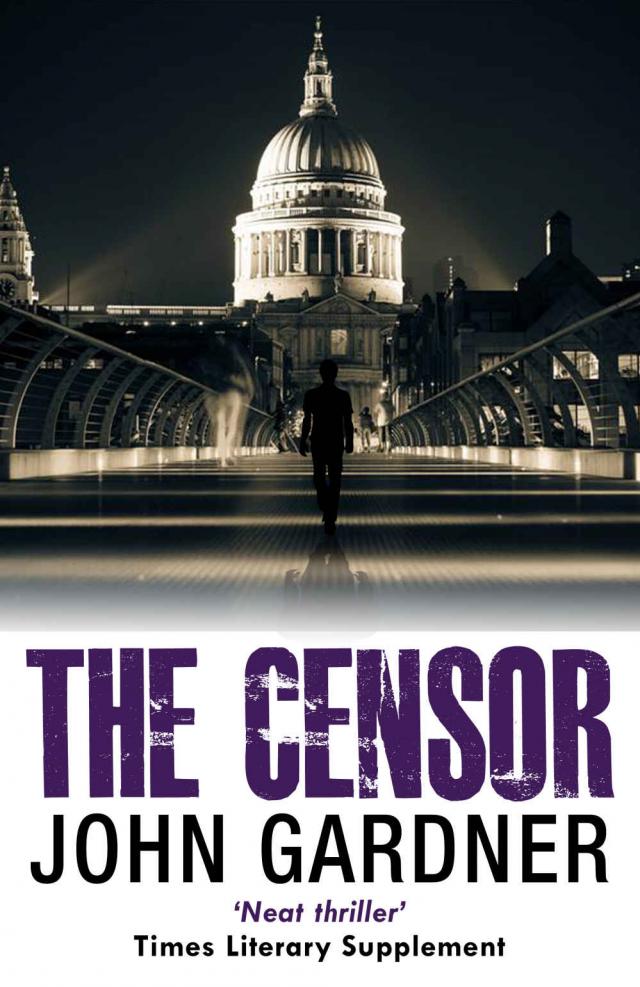
The Censor, page 30


He called John Sutton as his first witness. Partly to get that particular agony over for John’s sake, partly as a strategic move in order to clear up the facts about publication and the publisher’s motives.
‘Mr Sutton,’ Harrington asked after the preliminaries of identity were over, ‘why did you decide to publish The Golden Spin?’
Sutton answered in a clear, steady voice: no outward sign of the nervous clamour within. ‘Because I felt it was a good book to publish.’
‘Good in what way?’
‘You mean was I publishing purely from a motive of profit?’
‘If you wish to put it that way.’
‘Any publisher who buys and publishes a book which has already had a success like that of The Golden Spin is operating from some profit motive. But the profit is not all that high. This book was so successful in the United States that we had to pay a considerable sum to acquire the rights. This means we have to sell a lot of books in order to break even. And this, in turn, puts up the production costs. But, after all, we are in business to publish books which we think the public need …’
Harrington cut in. ‘Did you think the public needed this book?’
‘Yes we did. I felt that it had a great deal to say. I felt it would make people aware of things, the things you spoke about, in a sharper, more forceful, clearer light than anything else available at this time.’
‘Are you saying that you are doing a public service?’
‘No, I couldn’t put it like that. I do think the book is written with public interest at heart though. I grant that it is fictional, but the kind of events and circumstances it describes are taking place all over the world. Sometimes fiction is the best way of making facts and ideas known to a large number of people.’
‘Were you conscious of any undue obscenity, indecency or violence in the book?’
‘I realised, as did many others, that there are some strong passages in the book which might offend a certain type of person. But there are parts of the Bible that offend people.’
Sir Walter Turk’s cross examination was straightforward and there was only one uneasy moment, when the barrister asked Sutton if he had taken legal opinion before publication.
‘As you well know, it is standard procedure, under the present law, with this kind of book. Yes, we asked counsel for opinion,’ Sutton replied.
‘And what opinion did you get?’
‘We were advised that certain passages should be deleted.’
‘Indeed?’
‘For this country, yes.’
‘And were those passages deleted?’
‘No.’
‘Why not?’
‘Because our contract with the author contained a clause requiring his permission to delete or alter anything from the text already published in the United states. He would not give his consent.’
‘How many passages were there?’
‘Not many. There were a number of individual words, and several small scenes.’
‘Several? That is a vague number, Mr Sutton. How many is several? Five? Fifteen? Fifty-five?’
‘I really cannot recall. Oh I remember one thing.’
‘Yes?’
‘There is a short passage in the book which describes a girl’s pregnancy. Within that sequence there are three separate descriptions of the girl and one of the boys, Rod I think it is, engaging in oral intercourse. Counsel advised that this be cut to one description.’
‘And Askelon did not agree?’
‘Mr Askelon felt that each description was necessary. He said the three scenes showed a growing together of the characters.’
‘I see. You cannot remember any of the other passages?’
‘Not off-hand. When Mr Askelon refused to make the cuts we simply discarded them.’
‘You were quite happy to go ahead against counsel’s opinion?’
‘It was merely a legal matter.’
‘Is it still merely a legal matter? Taking into account the circumstances in which you now find yourself?’
‘Yes, I regard it as a legal quibble. I still maintain that the book, in its entirety, is to the public good and in no way obscene.’
Harrington continued as he had started, presenting his expert witnesses with a rare confidence, pressing home, again and again, the point that, whatever the book contained in sexual or violent description it was socially in the public good.
Freddy Cadogan began to feel a sense of satisfaction; The Golden Spin, as presented by D’Arcy Harrington. assumed the proportions of a great moral tale.
There were two high spots: the evidence of Irving Scholes and that of Price. After Scholes had given a reasoned, detailed, literary view of the book, Harrington asked him, ‘You may have seen, or read, that Mr David Askelon is supposed to have told an American journalist, a lady, that he wrote some passages of this book with the explicit idea of being sensational. The passages were mainly concerned with sex and sexual deviation. If this was proved to be true, would you change your opinion of the book?’ It was an audacious question, but Scholes did not hesitate.
‘No,’ he said, shaking his head, ‘it certainly wouldn’t make me change my opinion. It’s quite possible that, after writing the book, the author could be slightly shocked at himself. It may well be that lurking somewhere in the back of his mind is the idea that some passages of the book were written for the purpose of sensationalism. But the point is that David Askelon writes too well to carry that sensationalism onto the page. After careful examination of the text I would deny that any one passage has been included merely for the sake of titillation or sensationalism.’
‘You would say this is a book of our time?’
‘Very much so.’
Price gave his evidence in a simple, understandable manner. He first outlined the way in which he had approached the job of examining the book. ‘I tried to look at it,’ he said, ‘in three different lights. I asked myself what effect the reading of this book was likely to have on adolescents, when their sexuality has yet to be clearly directed. What effect it was likely to have on persons suffering from some latent perversion, and what effect it was likely to have on those who are potentially violent offenders who might find some outlet in sexual aggression.’
‘And what are your conclusions?’
‘Only a fool is going to deny that there are sections of this book which lay bare sexual and violent detail to a very high degree. Some of these passages disgust, as they are meant to disgust. Some shock, as they are meant to shock. Some stimulate. Taken out of context, these scenes do have an effect on the mind, and they will continue to do so. But I would add here, that I could name a dozen other books which contain scenes of a similar, vivid nature and nobody has ever suggested that they have a corrupting influence.
‘But remember, here we are concerned with the total impression of the book, and the total impression is a very different thing from extracts taken out and put under a magnifying glass. It has already been pointed out that there is a morality within this book. A morality which sheds light on the true obscenities of our age, and traces the dangers and pitfalls which run across the early, free-range tracks of life. I would have thought that, far from being a stimulant, this book, viewed as a whole, would act as a deterrent. It paints vivid pictures, but they are vivid pictures of the truth: truth which is often shocking, unpleasant and unpalatable.’
It took three days for Harrington to present his entire evidence. At the end of that time, few could have had doubts that the jury would be forced to bring in a verdict of ‘Not guilty’.
But the prosecution had yet to show its teeth. Sir Walter Turk began with a cutting attack.
‘We’ve heard this book called a deterrent,’ he started. ‘We’ve heard that it was published for the common good. We’ve even heard my learned friend decry the fact that this case has been brought at all. And he decries it on the flimsy grounds that there is no point in proving a book to be obscene when a great number of people have already read it. Ladies and gentlemen, a very great number of people have smoked cigarettes in ignorance over the years. This did not stop the medical profession pointing out the dangers of smoking when the facts became known to them.
‘Certain facts are known about this book. It is a book stuffed full of violent detail: detail so obnoxious as to be appalling. No person who has read this book can truly deny the filthy taste which trails behind it. I am sincerely sorry for those who have tried. Consider: there are, within the pages of this book, eighty brutal, uncompromising acts of violence, rolled out in deplorable, microscopic description. There are also seventy-four separate sexual descriptions, most of which lower the act of love to that of an animal, bestial grappling. These sensual, sexual scenes are written, and related, with what I can only describe as relish. As are other sequences. We are asked, for instance, to picture groups of filthy, smelling, ragged young humans enjoying moments of liberation under the influence of drugs. The whole pattern and background of the book paints a mural of terror, sensuality and carnage which cannot do anything but repulse the normal, level-headed man or woman. To claim that this is published in the public good is like claiming that venereal disease is present in this world so that we can enjoy it.’
Turk had assembled a convincing array of experts, not least of whom was the psychiatrist, Norman Eade, who made an undoubted impression with his cool and reasoned argument that the brilliance of The Golden Spin’s authorship left behind it an unpleasant and disturbing memory trail.
‘The kind of disturbance which, in your opinion, would corrupt the mind?’ Turk asked him.
‘I would say so. Yes.’
D’Arcy Harrington could not shake him. ‘This disturbance you claim is left in the mind after reading the book.’ He faced the psychiatrist, ‘You say it could have a corrupting influence. Did you, yourself, feel the disturbance strongly?’
‘Most strongly.’
‘Because of this would you think of yourself as a corrupted person?’
‘I’m trained to examine things, and people, objectively. In dealing with diseases of the mind, all types of mental sickness, one often comes near to corruption, that does not mean one is contaminated. You have to take mental precautions.’
‘Wouldn’t it be more correct to say that the effect of this book is one of shock rather than of mental disturbance?’
‘They can often be the same thing.’
‘But surely it is the duty of creative people to shock and disturb us from time to time. To make us more aware.’
‘Possibly, but it depends on the way in which it is done. If it is done through violent obscenity it can be very dangerous.’ Harrington did not pursue this line of questioning.
Turk’s big literary guns were also difficult. Richard Wood, for instance, dragged all the danger points out into the open, briefly analysing scenes. In particular he dealt with the drug episodes, some of the more controversial sex scenes, including the now famous ice cubes sequence; the fight between the two negresses; the riot and the horrific moments at the end of the book, which he described as ‘a field day of depravity, a finale which reeked of the worst possible sadistic, mass-hypnotic, abnormal sexuality’. By the time he had finished, The Golden Spin had assumed the gross proportions of an unsavoury bundle of ragged pulp, capable of warping facts and infecting the mind.
Or so it seemed to Freddy Cadogan. Looking up at the gallery, he viewed the flock of watching faces with a sort of loathing. In spite of their calm features and neat clothes they could, he thought, be a kind of rabble: like those who once sat and watched the guillotine in the Place de la Revolution, getting some physical or mental stimulus from watching, and hearing, a man’s work being decapitated.
Faced with Turk’s onslaught, Sutton almost gave up hope; only Harrington’s calm appraisal of the situation kept him going. ‘My dear John,’ Harrington said, ‘apart from Norman Eade’s evidence they haven’t come near cracking it. In fact, Wood made a terrible mistake picking out all those extracts. My final speech, and the Judge’s summing up will put things in balance. They’ve got to find the book obscene as a whole, which I never tire of telling them. They’ve also got to be clear that if it is obscene it is likely to corrupt a large majority of those who will read it. The prosecution hasn’t come near to doing either of those things.’
Yet it was not until the fifth day that D’Arcy Harrington was able to break down any of Turk’s witnesses. On the fifth day, Humphrey Carmichael was called.
Walter Turk presented Carmichael as a man who had been in the public eye for many years, a champion of moral issues, a man who lived with the public good at heart.
Holding up a copy of The Golden Spin, Turk began his examination.
‘Sir Humphrey, you would consider yourself a normal, happily married man?’
‘I would.’
‘You have a wife and two children?’
‘I have. The children are grown up. Adults.’
‘You have read this book?’
‘Yes.’
‘Would you recommend it as reading for your wife?’
‘Certainly not.’
‘What about your children?’
‘I know my daughter has read it. I don’t like the idea of anybody reading it.’
‘Why?’
‘I think it’s a vile book. Degrading. Obscene in every sense.’
‘Sir Humphrey, we have been told by Mr Norman Eade that the way in which this book has been written is so brilliant, so vivid, that it leaves what he described as a memory trail upon the mind. A disturbing aftertow. Were you left with such a sensation?’
‘Yes, I would say that was a very good description. An unpleasant disturbance in the mind.’
‘Reading this book disturbed your mind?’
‘Very much so.’
‘Would you say that you have been corrupted by this book?’
‘In the sense that I shall carry certain disturbing factors with me for the rest of my life, yes.’
‘These disturbing factors, are they concerned with things about which you feel you should not be aware?’
‘I was aware of them before. As we are all aware of evil practices and moral wrongs. But this book tends to infect one, to bring one into close contact. To my mind, that is unnecessary, and that is the corrupting influence. My site will not be the same again.’
‘Thank you Sir Humphrey.’
Harrington rose to cross examine. He began quietly, most conscious that here he had an opportunity to damage the prosecution.
‘Sir Humphrey, is it not true to say that you have been concerned in the prosecution of a number of books under the Obscene Publications Act?’
‘I have always carried out what I believed to be my public duty.’
‘You have personally prosecuted certain individuals in the past?’
‘I have.’
‘Would it not be true to say that the whole question of obscenity has become an obsession with you?’
‘I would not say that.’ Carmichael appeared unperturbed, but in the depths of his mind the merry-go-round began to turn, the wheel, the spinning circle of anxiety.
‘I put it to you that you are obsessed by the very fact of obscenity. I can provide the Court with names and dates of private prosecutions brought by you during the time when it was possible to bring private prosecutions of this nature. They are legend.’
Turk was on his feet. ‘My Lord, I object to my learned colleague …’
The Judge nodded him into silence. ‘Mr Harrington, your examination has taken an extremely personal turn. We are not concerned here with past prosecutions. We are only concerned with establishing whether or not The Golden Spin is an obscene article under the Act.’
Harrington smiled. ‘Quite so, my lord. If you will give me a moment. I simply wish to make the Court aware of the fact that, as far as The Golden Spin is concerned, Sir Humphrey Carmichael has a personal bias.’
‘I do not think that is the concern of this Court.’ Mr Justice Baird peered over his glasses.
‘With respect, my lord, I feel it may be of interest to you. I have evidence, including written evidence, that Sir Humphrey Carmichael personally instigated a considerable proportion of the protests made to the Director of Public Prosecutions regarding this book. Those protests led to The Golden Spin being examined by the Director’s Department and finally prosecuted.’
Carmichael had gone grey, his hands moved nervously along the rail of the witness box. Within him the merry-go-round built to a scream. What was this suave, bewigged young man trying to do to him? To him? The pictures in the book. Large hats, half shading faces; the plump thighs and the breasts, the voluptuous girth of waist.
‘Is this true, Sir Humphrey?’ Baird had a reedy voice, when raised it sounded as though someone was trying to choke him.
Carmichael swallowed visibly. ‘I don’t know what I’m being asked my lord.’
‘Mr Harrington?’ queried the Judge.
‘I merely wish to state that I have a copy of a letter, written by Sir Humphrey Carmichael, to a Mr Gavin Herod asking plainly for assistance in protesting, and getting other people to protest, against the publication of The Golden Spin.’
‘People have the right to protest, Mr Harrington. Even against me if they so wish.’
‘I realise that, my lord. But I have reason to believe that this protest was organised in a way aimed at misleading the Director. I have Mr Herod’s signed statement that he took part in a lengthy meeting with Sir Humphrey, during which Sir Humphrey outlined a plan to get an exceedingly large number of people to make personal protests to the Director. He solicited a number of people to assist him in this and I maintain that many of the protests made to the Director were by people who have not even read the book. I believe that the result of this plan is the prosecution now in progress.’
Mr Justice Baird still peered over his glasses. For a brief moment all action was suspended: the Court held frozen in a dramatic second until the Judge spoke.
‘These are not matters for this Court. Nor, at this stage, do I see that anyone has broken the Law. However, Mr Harrington, I agree that they are matters about which I should be aware. I would advise the jury to forget what they have heard in this cross examination and the exchanges between Mr Harrington and myself, the information is, so far, only hearsay and in any case of no value to you. Mr Harrington will make his information available to me in Chambers after the Court has risen.’