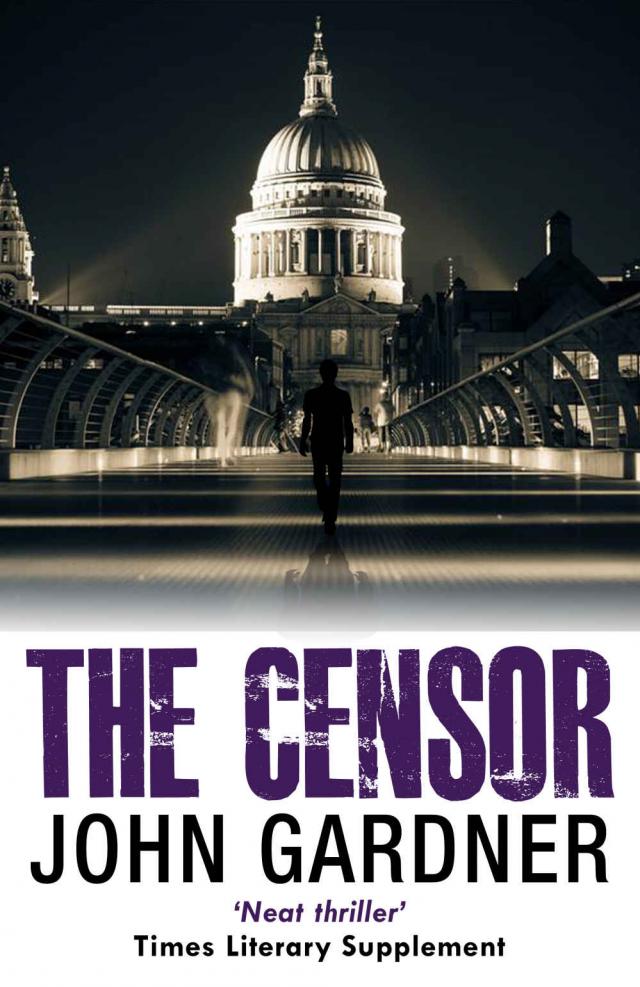
The Censor, page 15


‘The reps?’
‘Yes. The reps getting the books into the shops. And the shops will take more if the book is made a talking point through subliminal advertising. TV chat shows that aren’t actually pushing the book, the dust jacket and the name showing as part of some decor in a TV play. Magazine interviews. Radio. As long as the thing rolls naturally. Too much advertising these days has the kiss of death on the product before it starts because it’s so obviously contrived. I’d rather see a clearly thought out promotion programme that is self-perpetuating. That’s how I like to think about it.’
It was also exactly how Ed Coin liked to think about it. They got on well and talked for nearly two hours, though one thing disturbed the Publicity Manager greatly.
As he was about to leave, Askelon made his first reference to the content of The Golden Spin. ‘One thing really puzzles me,’ he said.
‘Yes?’
‘It’s no secret we’ve had some trouble, what with me refusing to have any of the book cut and everybody else saying there should be changes; but what’s strange to me is that not one person has suggested changes to the ending.’
‘The ending knocked me sideways.’
‘Thank you. A lot of people say that, and I believe it works. But it’s a one shot. Read it again and examine it. The boys get mixed up in all kinds of depravity before they make it. They get shot at from all sides once they’ve made it and they end the whole scene by being involved in the book’s most horrific incident. And that’s a prophecy baby. It’s going to happen some day when one of these groups really blows its corporate mind. Follows as natural as night follows day. I’ve been with them, Ed. These kids that have made it big before you can shout shit, they can really freak out. The end of Spin is the final kick and nobody seems to have grasped that it’s the one totally obscene moment in the book. It took seven drafts to write and even then it worried me. The fucking around and the four letter words, the drugs, the descriptions and the violent moments: they’re nothing. It’s this end sequence that sets you screaming.’
That night Coin re-read the final couple of chapters from The Golden Spin. The second half of the book traced the rise of the four boys, Pete, Dan, Rod and Shelton from their dreams and individual experiences to their emergence as a chart-topping group calling themselves The Essential Hypertension. Askelon took you along on an almost journalistic coverage of their massive tour of the States and Europe. But by the time they return to San Francisco they are changed and altered out of recognition as individuals.
They have come back to give a huge free concert in the open air. The kids are gathering in the city and the penultimate chapter drew a vibrant colourful picture of pent up explosive force building as the streets and parks begin to fill with youngsters out for a good time: the police and authorities getting edgy about the outcome. And cutting in and out of this warm vivid picture, Askelon gradually brought the reader closer and closer to the four boys sitting alone in their hotel room, thrown back on themselves and getting high on pot and booze to pass the time.
In a passage of almost fifty pages he had created a great spiral world of freaked out sound, conversation and colour in which the group examines a whole range and spectrum of ideas. Their words leap, spring, bubble and drip onto the pages as they begin to dwell on their own lack of roots and the flaws in society which they see as flaws in themselves. Wealth, which has been thrust upon them, is nothing but a corrupting influence. Slowly the conversation degenerates into obscene spasms of verbal graffiti aimed at the society they reject.
Dan picks up a newspaper carrying a story about a young coloured singer, Kitty Blake, with whom they have had a friendly clash on television while in London. The girl is now in San Francisco, resting between tours.
They disguise themselves and leave the hotel by the rear entrance, mingling with the swelling crowd of young people. At last they break into Kitty Blake’s house, overpower her two companions, and, in a scene of revolting, bizarre violence, rape and kill her, washing themselves in the blood which sprays from her ripped body.
The brilliance of its style, the fire generated by Askelon’s gift of handling words in a unique manner made it compulsive reading. One needed little thought to see what lay behind the sequence: a thesis on the ultimate, lemming-like, murderous death-wish of a consumer society, fat, bloated and without values. The horror was sickeningly explicit. The pattern remained painted on the mind. Coin spent a restless, brooding night.
On Thursday morning he was still depressed, in a way he had not been after the first thrilling reading of the book. It took genuine effort and will-power to sound cheerful when he finally got Wilfred Brookes on the line.
‘Edward. How super to hear from you. Look, I’m in conference, is it important?’ Brookes’ voice held a natural urgency, a warm blush of schoolboy open-handedness. They were tricks of the trade beloved by the general public, detected with knowing smiles by those who were intimate with the great untamed world of media.
‘It could be important to you, Wilfred.’ Coin played it flush and even. ‘You know a writer called David Askelon?’
‘The Golden Spin Askelon?’ The effect was immediate. For a second Wilfred Brookes dropped his guard.
‘That’s my boy.’
‘Never met him, but I’ve read the book. Great.’
‘I’m doing publicity for his publishers here: William Sutton & Son.’
‘Yes.’
‘Askelon’s in town, Wilfred. We publish Spin in September but I don’t know if he’ll be coming over again,’ lied Coin. ‘Thought you might like a crack at him.’
‘How long’s he here for?’
‘End of next week I think.’ If they wanted to build a campaign now was the time to start. Let Brookes think he was the once and only man. The pause was long.
‘You still there Wilfred?’
‘Yes. Yes Edward. Splendid idea. Slightly nervy though, I’ve got the Minister of Defence tentatively slotted in for next week’s bundle of goodies. Give me your number.’
Coin gave.
‘Call you back in ... fifteen?’
‘Be waiting.’
Wilfred Brookes put down the telephone and grinned at the six-man, two-women team seated round the table. ‘Our problem is solved. I always bring you miracles,’ he said.
They had already spent half the morning frantically trying to map out and organise a really sharp programme for the following week.
Brookes looked round the faces, eyelids drooping. ‘Who has read a little number entitled The Golden Spin?’ Nobody reacted. ‘Who’s heard of it?’
This time the whole production team raised hands, nodded and showed knowledge.
Brookes looked at his watch. Years in television had taught him the necessity of accurate timing. When he said he would call someone back in fifteen minutes he meant fifteen minutes. ‘As it happens I have read the book. It’s being published over here and, as a collection of words, it is pure ammonium nitrate folks. The sales will be terrific. The reviewers will be split in twain. In short, ladies and gentlemen, it’s a dodgy book and we can have the author on Tuesday’s show: on toast with the hot Worcestershire sauce and cream cheese.’
‘The general public won’t have heard of the book or the author,’ commented a youth with shoulder-length hair: head of research for the Brookes team.
‘Then they shall be made aware.’
‘You going to do a straight chat with him?’
Brookes furrowed his brow. ‘I think not. Impact of the book in the States. Book on display. Comments. Quick chat with Askelon, then we’ll roast him. Put him to the Brookes torture.’
‘How?’
‘On the spit. Skewer him and see how he stands up to it.’ Offhand as though serving lunch.
‘How skewer him?’
Brookes pressed his palms together as though praying for the right inspiration. ‘How would it be it we had an independent review of the book read on the show by a wholly biased reviewer? After which, Askelon and the reviewer could scratch each other’s eyes out.’
There were nods.
‘Who would you get?’ asked one of the girls. ‘One of the Sunday heavy boys or a daily chopper?’
‘What’s the author like on camera? Do we know? If he’s an oddball we may have trouble stimulating.’ From the research head.
‘All in good time. Will everybody start checking out David Askelon.’ He spelled the name and there was a flurry of note taking onto the clip boards. ‘I’ll get you numbers for publisher’s contacts and all the usual after I’ve talked to them.’ Picking up the telephone.
By the time he finished speaking to Coin, Brookes was alone in the conference room, except for Dan Sheard his producer. Brookes had warned Coin that his research people would be on quickly; at the same time he had probed gently into Askelon’s ability within the medium of television.
‘I should imagine he’s good. He’s certainly no novice to the game,’ Coin replied to the careful questions.
‘Is he cool, or are we likely to needle him into an outburst?’
‘Couldn’t say, Wilfred. You want me to get you a list of questions that will blow him?’
Brookes smiled as though the mouthpiece of the telephone was the camera eye. ‘We’re nice people here, Edward. If there’s any cool blowing it won’t be our fault.’
Dan Sheard sat at the table listening. When the call was over he asked, ‘The review idea’s good. Who are you thinking of getting?’
When you looked closely at Wilfred Brookes you could see he was not the boy wonder who came through on the screen. There were dark blemishes under the eyes and worry lines already carved in a bursting cluster between the brows. It was a face that betrayed strain: the total worry of taking irrevocable decisions and carrying one hour of peak viewing each week showed; not simply around the eyes, but in the whole structure. It was easily disguised on set, but here with the knowledge that tensions were already building towards their apogee of nine o’clock on Tuesday evening, the whole story of environment, pressures and the collision between talent and performance was mapped out in relief.
Brookes waited, tumbling Sheard’s question in his mind, not really reaching for a solution. ‘I’m hoping desperately, that one of the team will come up with that answer. Would we need the publisher’s okay to do a review?’
‘I don’t see it. The book’s out in the States. It isn’t privileged.’
‘We can’t use anyone who’s under contract. You can forget about people like Connelly or Peter Grosvenor. I want a tricky man, someone we know is going to pick up the obscenity bit.’
‘It’s bad?’
‘The lot. A long book with a narrative line as solid as Mount Rushmore, but it goes through some very rough country, Dan. Parts of it make Last Exit read like A Child’s Garden of Verses.’
‘Perhaps we should have someone else: as well as the reviewer.’
‘Like?’
‘Like Anti-Hump.’
‘Sir Humphrey himself: scourge of the West.’ Brookes rolled it round his mouth. ‘That’s good, Dan. We could try it. You want to do that?’
Sheard nodded. ‘But I still want the review thing. That above all. It’s a great idea, so let’s get the right man today.’
‘It’ll have to be today. I’ve got a couple of copies of the book coming over within the hour, but there’ll be an awful lot of people wanting to do a crash course on David Askelon.’
*
Dorothy Carmichael’s second session with Gerald Price, on Thursday afternoon, was not easy.
He started gently, but briskly, with purpose.
‘I want you to think back a long way. Back to your earliest experiences of intercourse. Then I would like you to tell me what it was, in those early days, that gave you true sexual pleasure.’
The question hit her mind and was swallowed into a blank void. ‘What gave pleasure? What gives pleasure? The act itself ... I don’t follow you.’
Price was patient. He tried to take it step by step. ‘There’s a whole spectrum of sexual enjoyment which can differ from woman to woman, man to man. I’m not trying to pop you into a pigeon hole, but I want to discover where your need, your desire, stands in relation to your pleasure.’ He stopped to let it sink in before continuing. ‘The other day you talked to me about having men, and about the need. But you talked in general terms. Now I want to find out about the end product. What you get out of it. Some women go through life without realising any true satisfaction. Some get it only from the foreplay or from some particular act that is regarded as a deviation. Let’s try the question another way. We’ve talked about your need. How does the need manifest itself?’
She stumbled, answering in little bursts coaxed from her by Price. The itch in her mind. The obsession that built up over two or three days, or, sometimes, within an hour.
The itch, followed by her preoccupation with the image of a male phallus. Walking, shopping, her gaze homing on men’s crotches, particularly in summer on the young men in their tight jeans, watching television pop shows to get a glimpse of the bulge. The wondering and imagining of what she already knew. The phallus erect in the mind: so real that she could almost sense the firmness in her hand.
The itch going from her mind and translating itself to the body. The readiness of her vagina. When it was bad, working up to the moment of going out, taking action, and finding a man, she often had to change her underwear five times in an afternoon, the readiness was so great. She was almost shocked when he asked her if she masturbated.
‘Really. I don’t think …’
‘You’d be surprised how many women, and men for that matter, carry the habit from adolescence into their adult lives.’
‘But it’s no use.’ It was a cry. Passionate.
Price clawed onto that as a bird of prey will wrap its talons, crushing, round a victim. ‘It gives satisfaction. Release of tension. You can’t say it’s no use at all.’
‘I mean it’s ... I’ve never found it …’
He quietened her. Again the careful questions, knowing exactly where he was going, until — ‘Lady Dorothy we’re getting nowhere today. Nowhere at all.’ A small outburst to shock her into truth. ‘Let me ask one more thing. Describe yourself at climax. Describe an orgasm.’
Silence among the leather, the hypnotic glass and the books. ‘It’s not easy.’
‘Some people find it very easy. They can write pages and pages of description.’ Almost harsh: critical.
‘The little pulse throbbing. Tingle? The wave of ... of ...’
‘Of what?’
‘Excitement. Pleasure.’
The revelation. Price knew now. The session had brought him a hundred miles along the road. Providing there were no hidden rocks, her problem was clear. Dorothy Carmichael had never experienced a complete orgasm and was unaware of the fact.
‘And after? What’s the feeling after intercourse?’
‘Relaxed of course.’
‘Moody?’
‘Sometimes.’
‘Ever get depressed afterwards?’
‘Often.’ That was easy. She went on talking: once more he had touched the flood gate. Not despair but a sense of barren emptiness.
‘As though one’s mind and emotions have been suddenly deserted,’ she put it. Price thought that was good: it showed an intelligent subconscious awareness to her problem which was, at its most basic, a quest for bodily satisfaction.
They talked for another half hour and when the time was up Dorothy once more felt that the demon within her was slowly being denuded of its power.
‘I want to be sure your problem isn’t in any way connected with a physical disorder before we go any further. So I’d like you to have a thorough examination by a gynaecologist before our next meeting. Do you object to that?’ Price made her feel that she had no choice in the matter. He wrote a short letter, addressed and sealed it, then gave her a number to ring for her appointment.
Before she left, Price casually told her that in the next session he wanted to concentrate more on her husband. If she had any thoughts about this would she make a note of them.
Dorothy had no idea what lay behind the remark. Nor did she attach any special importance to it. But Price was on the scent of abnormality. His one interview with Humphrey Carmichael still left behind it the trace of maladjustment which bothered him. He wondered at the strange emotional and social forces that had brought two people like Dorothy and Humphrey together, paired them off and mated them. The end game would be of intense psychological interest. He also felt the duty to ensure that the outcome of the two lives, lived only vaguely together, was not one of deep tragedy. Not the day to day tangled tragedy of the divorce court, which seemed the most immediate and obvious solution, but a tragedy of violence and reverberation in which many people might be caught.
*
By Saturday morning Humphrey Carmichael had received replies to all his letters: each asking for copies of The Golden Spin and pledging support to whatever steps Humphrey decided to take.
In all, they had ordered almost forty copies of the book (Gavin Herod wanted ten) which Humphrey dispatched personally.
It was a time for stealth. He had waited for the right book and the right conditions: all appeared to be in the right position and it would be folly to make an error this early in the game.
It was for this reason alone that Humphrey had turned down the television show. On Thursday afternoon a man called Sheard had telephoned.
‘Sorry to bother you, Sir Humphrey. I’m the producer of The Wilfred Brookes Show. We wondered if you’d be interested in coming on the programme on Tuesday night.’
It was too smooth. In any case, Humphrey did not care for Mister Wilfred Brookes. The boy was a surface performer and the show had the smell of being rigged.
‘Who else will be appearing?’ asked Humphrey.
‘Well, we’re not sure yet. Probably a literary critic and an author.’
‘What author?’
‘I don’t suppose you’ve ever heard of him. David Askelon. He’s had great success in the States with a book called The Golden Spin. They’re publishing it here in the Autumn. We’d be most interested in your comments. We can supply a copy of the book.’