Collected Short Fiction, page 2


FORTRESS OF UTOPIA is a science-fictional answer to that question. It is a story, too, about young Jay Cartwright and dramatic Captain Drumm and grave Lyman Galt and cynical Martin Worth and lovely Pat Way land—all of whom I learned to know and love during the months that I shared their strange adventures in the world of tomorrow.
Originally appeared in Startling Stories, November 1939
MEET THE AUTHOR
World Without Water
By JACK WILLIAMSON
Author of “The Gateway to Paradise” and Many Other Scientifiction Yarns
THE real beginning of this story happened last summer, when your editor and your art director came to Hollywood. One hot afternoon, with Art Barnes and Ed Hamilton, we were having a story conference on Santa Monica Beach. I woke up into the middle of a brilliantly somnolent discussion. Somebody—or else I dreamed it—had said something about the political question of isolation.
Well, why not?
The staunch isolationist, apparently, would like to build a Chinese wall around America. The Ring, in the story, is a modern scientific version of the Chinese wall—in the light of the new theories of space-time and matter and energy. I don’t think it is too impossible.
The passing of the dark star would supply reason enough for the building of such a wall. That, unfortunately, isn’t impossible, either. Non-luminous bodies are difficult to detect. If the Dwarf does pass, we won’t have much warning.
But politics, in science fiction, shouldn’t be taken too seriously. Those ideas were just a sort of gateway. They led me into a world of the future.
There I found the peaceful American Corporations, within the shelter of the Ring. And the dome-cities under the Black Star, their people grimly struggling to survive in the airless Outside.
Beyond that gateway, I found real people. Lieutenant Barry Shane, of the Ring Guard. Captain Glenn Clayton, the cool, daring Outsider. Lovely, skilful Dr. Della Rand. Beautiful Atlantis Lee, of the dome-city on the dry sea-floor.
GATEWAY TO PARADISE is their story.
Originally appeared in Startling Stories, July 1941
AUTHOR, AUTHOR
Jack Williamson
To the long-time reader of science-fiction, the name of Jack Williamson is a promise of truly entertaining reading. Outstanding for their careful craftsmanship, his stories carry the reader enthralled, from intriguing start to logical ending.
Williamson is the creator of a number of the most memorable characters in modern fantasy. Who can forget whining old Giles Habibula, of “The Legion of Space” or Garth Hammond, villain/hero of “Crucible of Power” ?
Coming early to his chosen field, Williamson has, in the twenty years since his first appearance, written story after story that ranks high among science-fiction’s classics.
A number of his stories have been reprinted In England and several others are scheduled to follow “Legion of Space” In book form under the Fantasy Press imprint. Currently, “With Folded Hands. . . .” is available in Groff Conklin’s new anthology, “A Treasury of Science Fiction”.
In “The Legion of Time”, Williamson was the first to utilize the theory of branching time, since so widely used. John W. Campbell, Jr. heralded this story as a “mutant” when it first appeared.
Though his work is widely known, comparatively little is known by his many admirers of Jack Williamson, himself, so it is with interest that we now turn the stage over to him.
My parents, both living, are Texans of Southern stock. Both had been school teachers, but they turned about the time I was born to ranching and farming – – – – in a climate which surrounds both vocations with certain hazards.
I was born on April 29, 1908 at five minutes of midnight, I understand – – – in the mining town of Bisbee, Arizona Territory. My first few years were spent on a mountainous cattle ranch on the headwaters of the Yaqui River in Sonora, Mexico – – – – a colorfully grim setting which I remember mostly from hearing it talked about.
When revolution came, in 1910, the family moved to an irrigated farm near Pecos, Texas, and migrated again in 1915, by covered wagon – – – – with a few cows In a trail herd and the chickens in a coop on a hack behind the wagon – – – – to the Llano Estacado of eastern New Mexico, where my parents and my brother are still in the cattle business.
The first lonely homestead in the sand hills was a good many Biles from the nearest little school, and I was taught to read at hose. Later I attended grade school two years, and graduated from a country high school around 1925.
Another student whom I used to admire from a timidly safe distance was a pretty blonde athletic girl named Blanche Slaten. The Christmas before I graduated, she married another guy.
Times were pretty hard. I wanted to go to college, but there wasn’t money enough. I stayed at home, working on the farm. My own little herd of cattle had all been wiped out by the dry weather. The crops were regularly ruined by sandstorms and hail, or else worthless on the market. Altogether, life seemed a little grim.
In such circumstances, a friend gave me a stray copy of the old Gernsback AMAZING STORIES – – – – the November 1926 issue, I remember, which contained Stribling’s “Green Splotches”. I talked my sister into helping finance a subscription, and the next issue I saw plunged me again into a wonderful new world of escape from all the harsher aspects of life, with the second installment of Merritt’s “Moon Pool”.
Immediately I started dreaming up stories while I was riding a horse or plow or leaning on a hoe, and soon started writing “science-fiction” – – – – as Gernsback used to call it – – – – on an old typewriter with a faded purple ribbon. AMAZING rejected four or five yarns, and then printed “The Metal Man” in 1928 – – – – before I was told of its acceptance. It was complete with a gaudy Paul cover – – – – sight of that was a moment I shan’t forget!
By that time my father had found money to help me start to college at Canyon, Texas. I went there two years, as a science major, and later attended the University of New Mexico for another year, presently selling enough stories to pay my own way.
Since, with a few interludes of various kinds, I’ve made a living writing science fiction. While it hasn’t been all moonlight and roses, there are compensations. I’ve been able to spend a good deal of tile in more or less carefree knocking about odd corners of North America – – – – often in the pleasant company of Edmond Hamilton, whom I first met in 1931, when we went down the Mississippi in a small boat.
The writers and editors and readers of science fiction proved to be a friendly fraternity. I’ve enjoyed knowing a good many of them, in several cities. There are too many names to list, though I might say a word of my debt to such editors as John Campbell and Leo Margulies and the late Farnsworth Wright of the old WEIRD TALES. I’m still a science fiction and fantasy fan – – – – although it’s unfortunately impossible to find the time to take much part in fan activities.
When the war came, I had been living in Los Angeles for a year and was more or less a member of that famous, but highly informal organization, the Manana Literary Society, composed of Bob Heinlein, A.P. White, Cleve Cartmill, and a number of other individuals who had discovered how much exertion can be saved by talking stories instead of writing them.
I served three years as an enlisted weather forecaster in the Army Air Forces, stationed most of the time in New Mexico. I went overseas in the spring of 1945, in time to hare an interesting air trip to the Solomons, by way of Leyte and New Guinea, and to accompany several Marine air missions of the milk run variety over Bougainville, New Ireland and New Britain – – – – points which now seem as remote as Mars.
While I wasn’t wounded – weather men had a pretty soft spot – – – – a medical misadventure in a veterans hospital came very near killing me soon after my discharge. I’ve recovered almost entirely, but the affair had a somewhat sobering effect on my general outlook.
“. . . And Searching Mind” was written on the ranch, after I got out of the hospital in the spring of 1947 – – – I’ve a little house there, furnished mostly with old science fiction magazines, which has been a permanent base of operations; Edmond Hamilton, by the way, lent a hand one summer with the building of it.
When that story was finished, in the middle of 1947, I moved into Portales, the county seat town, to take a job as wire editor on the local daily. Six months at the desk was enough to satisfy me about the glamor of newspaper-work, but the episode is important to me because I found Blanche again, unattached. We were married in August, 1947, and are still living in Portales, New Mexico.
Except for a brief excursion into the mystery field, all the eighty-odd stories I’ve written are science fiction or fantasy. My own favorite of the lot is probably “Darker Than You Think”, which I’ve recently rewritten to 90,000 words for Fantasy Press.
I read most of the current science fiction magazines with a good deal of pleasure and a keen appreciation of such new writers as Ray Bradbury. However, I must confess a lingering fondness for such of my old favorites as Merritt, with his exotic atmosphere, and “Doc” Smith, with the galactic scope of his adventures. And H.G. Wells, in my estimation, remains the greatest figure in the science fiction field; he was a pioneer with most of the common themes, and I believe that many of his earlier stories are unsurpassed in their convincing presentation and their feeling for the impact of science on human life.
—— Jack Williamson
Originally appeared in The Fanscient #4, Summer 1948
The People Who Write SCIENCE STORIES
One day last fall I had a pleasant surprise. A letter from Bea Mahaffey. She enclosed a photostat of a Bok cover painting and asked me to write a story about it. One story idea in my files seemed to fit the picture. It was one that I had reluctantly decided to shelve because it seemed a little too far off-trail. But I’ve known Ray Palmer since the days when we were both trying to break into the old Gernsback AMAZING STORIES, and it occurred to me that he has a healthy irreverence for scientific orthodoxies. I decided to write the story; it was fun, for a change, to see science come off second best.
As for the vital statistics: I was born in an Arizona mining town, in 1908, and spent most of my boyhood on isolated southwestern ranches. When I discovered science fiction, it was an exciting new world. Hugo Gernsback bought my first story in 1928. I’ve been writing ever since-with three years out for World War II. when I served as a weather forecaster in the southwest Pacific.
After the war, I came back to the county-seat town of Portales. New Mexico, served a short hitch as wire editor on the daily paper, and married Blanche—whom I’ve known since we were in the sixth grade together. She hadn’t waited for me the first time: consequently we now have a son who is a Navy frogman, a married daughter, and two grandchildren who are usually very charming.
Though I remember the days when book publishers felt that science fiction was suicide, nearly a dozen of my novels are now in hard covers. One of them had a sequel. The book reviewer for the New York Times conceded that SEETEE SHIP was this and that, but he went on to say that unfortunately the writing made it seem like a comic strip. The editors of the New York Sunday News read the review. It happened that they wanted a new science fiction comic strip. They looked up the book, and telephoned me. For the past year or so, I’ve been writing the script for BEYOND MARS—
Originally appeared in Science Stories, October 1953
BIOLOG
by Jay Kay Klein
l Jack Williamson
Many of Analog’s authors are remarkable people, and none more so than John Stewart Williamson, born 70 years ago in a poverty stricken farming area of the southwest, who discovered his way out through science fiction, first as a reader, then as a writer. Thinking an extensive academic background irrelevant or even inimical to science fiction writing, he left a Texas teachers college after two years. His first sale to Analog (Astounding Stories then) came shortly after, appearing in the March, 1931 issue.
The remarkable part is not the beginning itself, but the continuation over the next half century. He kept pace with the rise in levels of story and character sophistication as science fiction matured from its early beginnings. After most of the writers of the ’20s dropped out, Jack reached a pinnacle of fame and popularity with the Legion of Space in the April, 1934 issue. In the July, 1942 issue he became a “new” major discovery as Will Stewart with the first of a series of antimatter stories. Five years later With Folded Hands . . . led to the immensely popular The Humanoids.
For his early successes, he received the First Fandom Hall of Fame Award in 1968. Fellow science fiction writers recognized his all-time status with a Grand Master Nebula in 1976. And his continuing popularity as a contemporary great was confirmed at last year’s world science fiction convention in Miami as Guest of Honor.
After several years during WWII as an air force weather forecaster, he went back to school intending to improve his grasp of science. Receiving a BA and MA from Eastern New Mexico University, he went for a PhD in English Literature at the University of Colorado. He taught in Eastern New Mexico’s English department from 1960 until a year ago, retiring as a full professor.
Not the least remarkable of Jack’s many successes is discovering and marrying his high school sweetheart after a separation of twenty years. Now headed toward three million words of published science fiction, Jack has a new novel under way to be called Brother to Demons, Brother to Gods. And after this, a Humanoids sequel.
Originally appeared in Analog Science Fiction/Science Fact, February 1978
BIBLIOGRAPHY
NOVELS
The Legion of Space (1947)
Darker Than You Think (1948)
The Humanoids (1949)
The Cometeers (1950)
The Green Girl (1950)
One Against the Legion (1950)
Seetee Shock (1950)
Dragon’s Island (1951)
Seetee Ship (1951)
After World’s End (1952)
The Legion of Time (1952)
Undersea Quest (1954)
Star Bridge (1955)
Undersea Fleet (1956)
Undersea City (1958)
The Trial of Terra (1962)
Golden Blood (1964)
The Reefs of Space (1964)
The Reign of Wizardry (1964)
Starchild (1965)
Bright New Universe (1967)
Trapped in Space (1968)
Rogue Star (1969)
The Moon Children (1972)
Farthest Star (1975)
The Power of Blackness (1976)
The Humanoid Touch (1980)
The Birth of a New Republic (1981)
Manseed (1982)
The Queen of the Legion (1983)
Wall Around a Star (1983)
Lifeburst (1984)
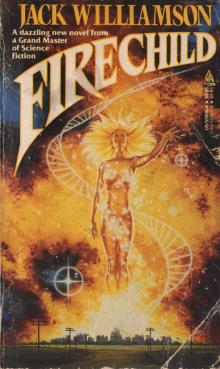
Firechild (1986)
Land’s End (1988)
Mazeway (1990)
The Singers of Time (1991)
Beachhead (1992)
Demon Moon (1994)
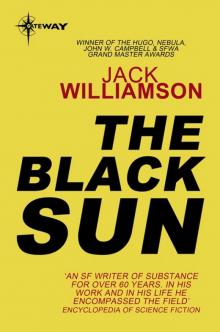
The Black Sun (1997)
The Fortress of Utopia (1998)
The Stone from the Green Star (1999)
The Silicon Dagger (1999)
Terraforming Earth (2001)
The Stonehenge Gate (2005)
BIBLIOGRAPHY
MAGAZINE-PUBLISHED NOVELS
The Birth of a New Republic, Amazing Stories Quarterly, Winter 1931
The Galactic Circle, Astounding Stories, August 1935
The Ice Entity, Thrilling Wonder Stories, February 1937
After World’s End, Marvel Science Stories, February 1939
The Fortress of Utopia, Startling Stories, November 1939
Mistress of Machine-Age Madness, Marvel Tales, May 1940
The Sun Maker, Thrilling Wonder Stories, June 1940
Darker Than You Think, Unknown, December 1940
Gateway to Paradise, Startling Stories, July 1941
The Humanoids, Two Complete Science-Adventure Books, Spring, April 1952
Dragon’s Island, Startling Stories, June 1952
BIBLIOGRAPHY
SERIALS
The Alien Intelligence, Science Wonder Stories, July-August 1929
The Green Girl, Amazing Stories, March-April 1930
The Stone from the Green Star, Amazing Stories, October-November 1931
Golden Blood, Weird Tales, April-September 1933
Xandulu, Wonder Stories, March-May 1934
The Legion of Space, Astounding Stories, April-September 1934
Islands of the Sun, Astounding Stories, September-October 1935
The Ruler of Fate, Weird Tales, April-June 1936
The Cometeers, Astounding Stories, May-August 1936
The Blue Spot, Astounding Stories, January-February 1937
Released Entropy, Astounding Stories, August-September 1937
Dreadful Sleep, Weird Tales, March-May 1938
The Legion of Time, Astounding Science-Fiction, May-July 1938
One Against the Legion, Astounding Science-Fiction, April-June 1939
The Reign of Wizardry, Unknown, March-May 1940
The Alien Intelligence, Captain Future, Spring-Fall, March-September 1942
Opposites—React!, Astounding Science-Fiction, January-February 1943
. . . And Searching Mind, Astounding Science Fiction, March-May 1948
Seetee Shock, Astounding Science Fiction, February-April 1949
The Reefs of Space, If, July-November 1963
Starchild, If, January-March 1965
Rogue Star, If, June-August 1968
The Moon Children, Galaxy Science Fiction, July-November 1971
The Org’s Egg, Galaxy Science Fiction, April-June 1974
The Stonehenge Gate, Analog Science Fiction and Fact, January-April 2005