

Deep Cuts, page 24
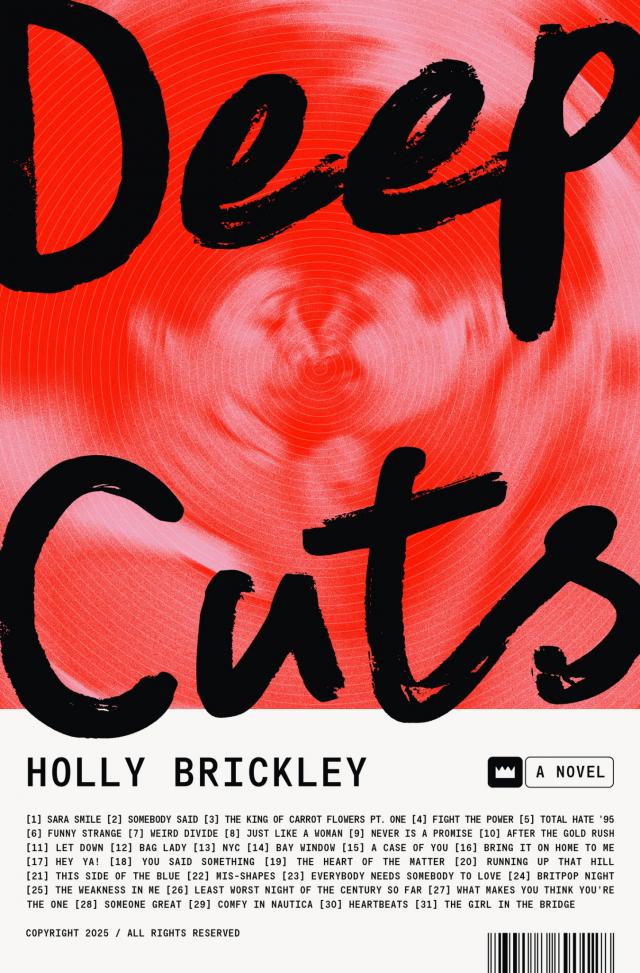


Envy arrived, almost by habit—how lucky Murphy was to be able to express this pain, achieve such catharsis—and suddenly I felt so incredibly bored with myself I wanted to jump out of my skin. I wanted to pull the plug on my own damn heart. I had my name on a Billboard-charting hit, and I still saw myself as a musical idiot. Was I no better than Luke Skinner, dumbing my life down to fit the limitations of my talent? Why couldn’t I follow the advice I’d given him? Why couldn’t I be someone great?
* * *
—
The next day at work I hired the agency’s designer to help me fold my blog into a professional website. I sketched out what I wanted: Percy Marks, Song Jerk, in old-school soda-fountain lettering to clarify the pun, with three buttons: Songwriting, Producing, Writing (where the blog lived). It still felt ballsy to call myself a songwriter and especially a producer—no matter how little musical talent Rick Rubin had, I was certain I had less—so I didn’t tell anyone about the site. I just let it sit there, waiting for someone to google me, or more likely to google “who wrote Bay Window.”
While I waited, I bought myself a keyboard, which I set up in the window of my bedroom next to the desk, and my own marbled composition notebook. I used them to finally scratch a lifelong itch: jotting down a line here, a couplet there, molding them into melodies. I sat in my window every morning before work as I drank my coffee, brutishly picking at the keys. My activist ex was now working for the Obama campaign and had given us a stack of Shepard Fairey posters, which we’d plastered in our windows to such a degree that the morning sun sent a pleasant blue-and-red cast over my room.
And then, while I was visiting Indiana for the holidays, sitting on my brother’s bed, it happened. I got an email through the site from Meg Vee, an objectively badass indie front woman I had admired for years.
Hi, so, I don’t know if you’ve ever had a boyfriend-slash-musical-collaborator but it really sucks to find out he’s been cheating on you with your fans so you kick him out of your band and then you have nobody to write with. And everyone in Brooklyn’s already in bed with each other song-wise. So I was asking around and Dennis from Lowtop Studios mentioned you, then I looked you up and was like OH HER! I’ve come across your blog a bunch of times, always so good. Any interest in punching up a few songs for me? Might be nice to make music with a woman for once in my damn life.
I dropped my laptop and screamed into my brother’s pillow.
Comfy in Nautica
I arrived in the lobby of the denim company at 8:55 a.m., sweating in the only outfit I owned that checked both the hipster box and the corporate-hotshot box: a pair of high-waisted slacks, a cashmere shirt that was 75 percent off at Loehmann’s and still the most expensive thing I owned, and woven oxfords from Goodwill. It wasn’t technically uncomfortable, but I could never put it on without counting the minutes until I could return to my jeans and black T-shirt.
I hated pitching new clients in the best of circumstances, and this was the worst. It was September 2008 and the economy was in a free fall, though projections varied; nobody was sure if the entire fantasy of America was grinding to a halt or if it would just be a slow fourth quarter. All our pitches had been canceled except this one, and a third of the agency had been canned, including my beloved twenty-two-year-old employee. I’d be lying if I said I wasn’t nervous. I had co-written a song for Meg Vee’s upcoming album, likely a single, but I knew better than to expect it to provide a livable income. I’d received two royalty checks for “Least Worst Night of the Century So Far,” one for songwriting and one for producing, and neither could buy me a bag of groceries. Even the “Bay Window” checks hadn’t covered rent. I needed this stupid job.
My boss was waiting for me in the lobby, all sharp angles as usual, blazer and flat-ironed bob and those permanently pursed neon-red lips. She was wincing at a TV screen mounted above the receptionist’s desk. Feds Seize Washington Mutual, read the ticker.
“Less than ideal pitch conditions?” I said, coming up beside her.
“This is a farce,” she said grimly. “I can hear research budgets going through the paper shredder as we speak.” There were dark moons under her eyes under a too-thin veil of cover-up. She shuddered like a dog shaking off the rain and turned to me brightly. “Shall we kill it anyway?”
I mimed violent stabbing. She called me a millennial and summoned the elevator.
“You know, they keep changing the cutoff year,” I said as we stepped in. “I think I’m Gen X now.”
She looked alarmed. “That never leaves this elevator.”
When the doors opened, a bald man stood waiting with his hand extended, and talked about the weather and the bailout package as he led us down a glass-walled hallway to a conference room.
We busied ourselves setting up the projector, fumbling over the inevitable Mac-to-PC transition. We were presenting an abridged version of our 2008 trends package, including a hastily developed slide about the trendsetters’ response to the economic doom (“Break It Down Again,” I’d titled it). It was all a teaser for the annual subscription that we were hoping they’d purchase, that we desperately needed them to purchase. The bald man provided introductions as the clients filed into the room, carrying plates of bagels and coffees—a breakfast meeting, ugh. I prepared myself mentally for the discomfort of watching twenty people chew. And then a girl sauntered in, a girl who was younger than me, and much cooler.
“This is Casey,” said the bald man. “Assistant brand manager.”
Casey had long dark hair in a hand-raked side part so aggressive it created greasy, individuated strands across her forehead. Smudgy eyeliner traveled well below her eyes, as if it had been applied the day before. She took a seat near the back of the long oval table.
As I started presenting, Casey’s presence became comical to me, helping me tolerate the symphony of chewing noises. She probably knew most of what I was saying! They could just ask this hungover kid! But she took notes through the first section on macro-trends. She nodded gravely during the “Break It Down Again” slide: trendsetters don’t see the economic collapse as a bad thing, necessarily, I said; they see it as an opportunity for our culture to reprioritize, start over. Casey’s elders grimaced.
During the segment on nightlife and socializing, I went to great pains to avoid looking at her. I was just about to move into fashion when a man interrupted.
“I have a question about sourcing.” He was in his thirties and wore a blazer over a hoodie, facial skin glistening with product. “I know you get this information from a panel of trendsetters, but how do you find them? Who decides what constitutes a trendsetter?”
We kept a slide hidden at the back of the deck for this question. My boss quickly navigated to it and gave him a quick rundown of my recruiting process.
“So it’s her, basically,” the man said, looking at me. “You’re the arbiter.”
“My mother is very proud,” I deadpanned, and they all laughed. I saw some of them sit up straighter, the women adjusting their blouses, the men smiling a little too hard. It always happened: they wanted to impress me. I was the arbiter.
But the shiny-faced man wasn’t smiling. His squint moved from me to the projected slide, where I had assembled snapshots and bios of a handful of trendsetters. Jesse Jams, DJ, Miami; Liv, writer and eBay reseller, NYC; Jorge, hairdresser and activist, SF. Jorge was my favorite, with his pink braids and intense gaze; he was a vocal opponent of Proposition 8, the anti-gay-marriage legislation that was on the verge of passing in California, and had cofounded a “No on 8” organization to which Zoe was currently devoting the majority of her free time.
The shiny face looked around the table, then back at me. “But your trendsetters don’t seem cool to me. They seem more…granola.”
“That’s why you hire us, though,” I said. “Because you don’t know what cool is.”
My boss inhaled sharply and I felt myself pale, like she had sucked out my soul. The man didn’t try to hide his shock.
“Excuse me,” he said. “We’re on the cusp of an actual depression. This time next year, you think anyone’s going to care what these hippies think about anything? Shouldn’t we be asking the people with money what they think? People can be cool and still have money, you know.”
Casey raised her hand, then used it to flip her aggressive side part to the far opposite side. “Coolness is having courage,” she said.
“Right!” I said desperately, pointing at her with both forefingers. “Panda Bear!”
The man got over his shock and began to look enraged. “Panda Bear?”
My boss was staring at me icily, but I kept going. “It’s a song lyric, but I think what Casey’s getting at is that the leaders of today’s youth culture might not conform to your white-collar idea of what’s aspirational,” I said to the shiny man. Casey shrank in her seat. “Trendsetters tend to reject the ‘comfy’ path, and that takes courage.” Color had rushed too swiftly back to my face after its earlier departure; my lips throbbed with heat.
“Hey,” said the guy, fingering the drawstring at the neck of his hoodie. “Watch who you’re calling white collar.” The man next to him laughed.
I had the perfect comeback. It would be dropping a grenade, but that Panda Bear quote had flipped a switch in my brain. I wanted out. So I said it: “A hoodie under a blazer is the worst collar of all.”
His eyes widened into white-hot circles.
“Let’s move on!” my boss chirped. “Percy, shall I take over?”
* * *
—
My boss drove me home in dead silence. When I could stand it no longer I said, “I think you finally just met the real me.”
“Were you trying to get me to fire you so you can claim unemployment?” she said. “If so, congratulations. You’re fired.”
I felt both panic and relief. My mind spun with numbers: rent, loans, the moderate total in my savings account. Nobody was hiring. “This job has always been bad for me,” I said.
“Everything is bad for you. I just read that walnuts are bad for you.”
I wanted to explain myself in a way that would make sense to her. “When I was presenting the ‘Break It Down Again’ slide, all I could think was man, if society is really collapsing, I don’t want to be on the side with these jerks. I want to be on the side with the granola kids. You know?”
She didn’t know. She merged into the Broadway Tunnel.
“I’m sorry.”
She accepted my apology with a nod. “I did enjoy the look on his face when you started talking about Grizzly Bear,” she said, with the crack of a smile.
The image returned to me: a patchy redness blooming through his moisturizer. “Panda Bear, but yeah. How dare I humiliate him with my hippie rock ’n’ roll! Do you want to hear the song that girl was talking about?”
She nodded, barely, and I plugged in my iPod. The militaristic rhythm of “Comfy in Nautica” filled her SUV, followed by the glorious contrast of layered vocals. When Panda Bear sang about courage, he meant the opposite of how the shiny-faced man would define the word. He meant being softer inside. He meant remembering to have a good time—to resist the lockstep, percussive world that pulsed behind his singing. To resist the percussive world that maybe pulsed inside yourself.
She pulled up at my building just as the song ended. “Are you under the impression that you just communicated something significant to me through that song?” she asked. “Because I couldn’t understand a word that boy was singing.”
I smiled. “I won’t leave until you find my replacement.”
“Hah,” she said bitterly. “Replacement, that’s funny. No, you’ll leave immediately—after you do one more thing for me.”
She told me she was finalizing a deal with the alcohol company in New York to sell them our trendsetter panel. They wanted to call them “influencers” now, a subtle but important shift that meant less research, more marketing. For our trendsetters to survive in this economy, my boss explained, they had to evolve downstream, closer to the sale.
“Gross,” I said. “But okay. What do you need me to do?”
“One last recruiting tour. I promised them a round of fresh blood. But none of your intellectuals this time. Give me bloggers, big Facebookers. Kids with clear ROI.”
The fact that she didn’t realize I could find these people online was probably one of the reasons her company was about to fold, but I wasn’t going to turn down my last paid loop around the country. “On it,” I said, and added, sincerely, “Thank you.” Then I clamored out of her car, my legs shaking slightly under me as I looked up at my building, its windows screaming at me in block letters: Hope, Hope, Hope.
Heartbeats
My final tour was startlingly unpleasant. I was given only two nights per city, less than half the time I was used to, and my hotels had been downgraded to whatever level is well below room service but just above bedbugs. I spent Miami and LA mostly in the hotels, messaging trendsetters online and half-heartedly searching job bulletin boards.
In New York they put me in Times Square. I met about half my quota online the first day, sitting at a microscopic desk with a view of a giant Planet Hollywood sign, but the next morning I was dying to get out. I met Nomi for lunch at Dojo, a cheap NYU-area restaurant that just a month earlier we would’ve thought ourselves far too mature and successful to patronize. Nomi had ascended to Vogue, but magazines were the worst place to be, and she knew her days were numbered. She showed up in all black, dressed for the funeral of her industry.
Halfway through our four-dollar plates of noodles I asked, spontaneously, if she wanted to make some extra cash as a trendsetter—like many journalists she’d been hustling to amass a following online; I’d been enjoying how well the snitty comments she used to make in the margins of my stories translated into the language of social media—then remembered with a wave of horror that she was well into her thirties now, far too old for the panel.
She rolled her eyes. “I’m too old for this conversation. Keep your blood money.”
We talked a lot about how the other creatives in our orbit were faring, hunting for clues about our options. She told me Raj was writing a book about spices, had been paid a decent advance for his proposal. Harrison had ended up in tech. Nomi wasn’t ruling anything out.
“What about your guy, the wedding singer?” Nomi asked as we descended into the West Fourth station.
“I wish I knew,” I said.
We stopped at the entrance to her platform and she noticed my expression, which I could feel was suddenly unsettled. “People will always go to shows,” she reassured me as we hugged goodbye.
I waited a long time for my train. Commuters moved through the station with a different energy than usual, slower, on edge. A busker played a minor-key tune on a violin that ricocheted off the white-tiled walls and hit me on a cellular level. I knew Nomi would be fine; she would seize her impending free time to design a new, more interesting career path for herself. I’d be fine too, eventually. But Joe didn’t do well in times of upheaval. I told myself he had a reliable if modest source of income, not to mention a girlfriend—he didn’t need me. But by the time my train arrived, I’d decided: I wanted to see him. I wanted it for me. The thought sounded profoundly comforting, and it sounded, now, like something I could handle. It had been more than two years since I’d seen him onstage at the Troubadour, five since the night on the Brooklyn rooftop.
But only one since my last unanswered email.
Back in the hotel I logged in to Zoe’s Facebook account and searched his name: still living in Brooklyn, not currently touring. That very night he’d been tagged in an invitation to a show at Union Pool, a Williamsburg mainstay where I could probably find a few trendsetters, though he hadn’t responded to the post. Scrolling further, I saw he was regularly tagged at Union Pool. There was even a shot of him behind the bar.
I played the scene out dozens of ways as the afternoon crept by: he would be with her, in all of them, and I would be ready. I would be cool. That’s what I wanted, more than anything: a low-pressure way to say hey, we’re cool, how are you. No need to be weird anymore; we’re too old, and the world is too fragile.
* * *
—
Williamsburg had gentrified visibly in the past year. A nearby diner had been given a shiny makeover that seemed both incongruous and perfect for the times, a garish embodiment of overspending. But inside the bar, everything felt worn and comfortable. Ceiling tiles in a random pattern of turquoise and white evoked the building’s original purpose as a midcentury pool supply shop, and looked, in a few spots, like they might fall on our heads.
I did a quick loop: a meager crowd for a Thursday; loud, unfamiliar music; no Joe. I allowed myself a drink and then got to work, but the pickings were slim. People were staying home, saving money, watching the news. Finally I found a brash twenty-five-year-old girl named Liza-Beth—not Elizabeth!—who thought trends were “beautiful proof of human frailty.” She wasn’t on Facebook, but I took her info down anyway in case I got desperate.
I was reviewing my quotas at a corner table and beginning to accept it wouldn’t happen when it did: the silhouette of his upper half materialized against the warm lighting of the bar. The soft curls and square shoulders—my adrenaline surged before I was even sure. He was talking to someone, mid-nod, when our eyes met. He froze briefly and then resumed his conversation, his gaze returning to me every few seconds, then flicking away again. No wave or expression of shock, which seemed strange, though I realized I hadn’t done either myself. It was hard to know what kind of greeting would be appropriate for a history like ours.




