

Watergate, page 50
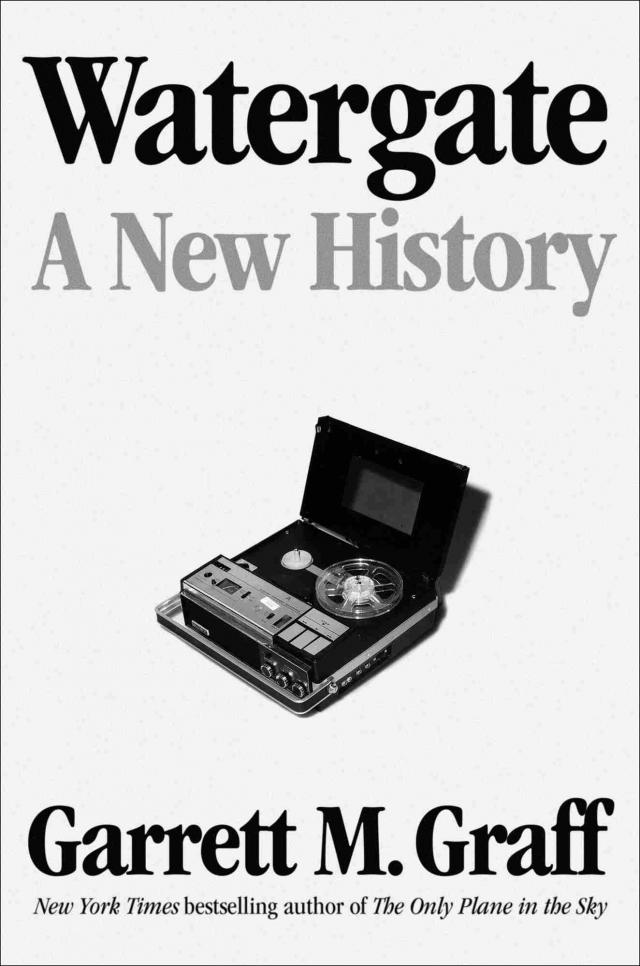


A fight it would be. But where to start? “The immediate problem was to pinpoint a small number of tapes that the courts would be hard-pressed to deny the special prosecutor,” James Doyle recalled later. “The trick was to pick not those tapes which common sense told you would be most revealing but those which would help make a strong-but-narrow point in court—that these conversations were important criminal evidence in the cover-up investigation and ought to be turned over despite the normal traditions of presidential confidentiality.”
On July 18, Cox sent Buzhardt an artful letter requesting eight specific tapes, all informed by the Presidential Daily Diaries and carefully chosen because either they were fantastically suspicious—like the first meeting post-burglary between Nixon, Haldeman, and Ehrlichman—or because a participant had already spoken publicly about the contents of the meeting, which would weaken any confidentiality claims and give Cox ground to investigate their truthfulness and whether perjury charges would be warranted.IV Ultimately, the goal was to fight for what they were most likely to win. As Doyle explained, “Once you convinced the courts that some of these tapes were indispensable to justice it would be easier to go back for more.”V
* * *
Richard Nixon had been stunned by the public revelation of his secret taping system when he received word at the hospital of Butterfield’s testimony. “I had believed that the existence of the White House taping system would never be revealed,” he recalled in his memoirs—at the very least, he had felt confident no staffer would confirm its existence to anyone outside the White House without invoking executive privilege.VI The idea that Butterfield had just up and mentioned it when asked was appalling. These conversations, recorded surreptitiously, represented the literal and figurative inner sanctum of the presidency, as close to the thoughts in a commander in chief’s head as possible. Protecting them and ensuring they avoided public scrutiny required the full weight and power of the office—not just for Nixon, but for all who would come after.
For the moment, no one seemed to know what to do with the tapes. Haig, Buzhardt, and Garment met with the president at his bedside. “Destroy the tapes,” Buzhardt recommended, a surprising response for a lawyer. (Spiro Agnew, in another meeting, took it a step further, suggesting that the president do so in a bonfire on the White House lawn.) The other staff, however, weren’t so sure; Garment cautioned that anyone who destroyed the tapes was almost certainly staring down an obstruction of justice charge, and Nixon doing it himself might well be an impeachable offense.
Nixon wasn’t sure he wanted the tapes gone in the first place either; perhaps, he thought, they could protect him. “We know that Dean lied and the tapes proved that,” Nixon told Haig, according to the White House chief of staff’s memoirs. “We don’t know what other lies may be told by people who are trying to save themselves. Who knows what Ehrlichman might say or even Bob Haldeman? The tapes are my best insurance against perjury. I can’t destroy them.”VII
Outside the hospital suite, public speculation ran rampant: Why would the president record himself while under investigation for wrongdoing—and why would he keep proof? No one will ever know for sure why Richard Nixon never destroyed the Oval Office tapes, but there are two prevailing theories. The first is precisely what he intimated in the hospital: He actually wanted—even needed—the tapes. Nixon had hoped for years to use the recordings to his advantage (Tip O’Neill recalls at one White House meeting listening to Nixon speak boldly and grandly, as if he were speaking directly into history, and wondering if somewhere there was a recording device), and the president had long counted on the tapes to secure his legacy, particularly to secure himself from people like Kissinger who said one thing inside the Oval Office and another outside. He had an administrative record to be proud of, one where he felt he changed the course of the nation for the better. The tapes were what would someday convince others of what Nixon already saw.
The second theory is that, by the time he realized that the tapes might—or would—become public, Nixon thought them too politically explosive to hide. “[Nixon] didn’t believe he could survive their destruction,” Pat Buchanan said years later. “I think he could have. There would have been another fire storm and it would have been over: The tapes would have been gone.”
Garment’s view was more sanguine. As the president’s lawyer saw it, “[Nixon] relied in the end on the simple, traditional mental safeguard against certain disaster: Hope.” Garment recalled an old tale of a Russian peasant who gets money to feed his family by promising the Czar that he can get a dog to talk within a month; if he fails, he’ll be killed. The peasant’s wife berated him for the deal, but the peasant explained, “Keep calm. The Czar is a busy man and may forget. He may get sick and die. There may be a war. And who knows—maybe the dog will talk!”
Nixon, Garment realized, was crossing his fingers and betting the dog would talk.
* * *
Nixon, still pale, left the hospital on July 20 and rejected calls for his resignation as “just plain poppy cock,” insisting, “What we were elected to do, we are going to do, and let others wallow in Watergate, we are going to do our job.”
On Monday, July 23, Haig called Elliot Richardson with an official answer: Nixon was going to publicly refuse to release the tapes. He had a warning for the attorney general too. “The President is uptight about Cox. He wants a tight line drawn. No further mistakes, or we’ll get rid of Cox,” Haig said.VIII
Publicly, Nixon’s team argued that Cox didn’t even have standing to ask for the tapes in the first place. Article II of the Constitution vested the president with overseeing the executive branch and all aspects of its power, which meant the president’s decision trumped one made by an employee of the Justice Department. In a formal letter to Archibald Cox, Nixon lawyer Charles Alan Wright argued, “You are subject to the instructions of your superior, up to and including the president, and can have access to presidential papers only as and if the president sees fit to make them available to you.” It was a powerful defense that undermined the very core of a legal challenge, positing that in reality there was no dispute between separate entities to be judged by an impartial court because the executive branch was a single and ultimate entity where the president’s word trumped Cox’s—this was just a routine workplace dispute, unreviewable by a court, in the same way that an assembly line worker can’t sue the factory owner simply because he doesn’t like his boss’s decision.
Ervin and Cox, naturally, felt otherwise—Ervin viewed Congress as having an important role in overseeing the executive branch, and Cox believed, simply, that the president was beholden to the same law as anyone else. Separately, he and his team and Ervin and Dash on the Hill moved ahead to formalize responses.
In the end, Ervin’s committee asked for five conversations between Dean and Nixon, plus about two-dozen other conversations; Cox’s official demand added a ninth conversation to his original request for eight. By the end of the day, both had issued subpoenas. Cox spoke at a press conference at the Commerce Department, saying the tapes were necessary for “the impartial pursuit of justice according to law.”
Signing the official subpoenas for the president, Ervin became emotional. With his wife, wearing a light brown polka-dot dress, sitting in the audience, her eyes closed as she listened to the hearing, Ervin explained how much his action pained him. “I love my country. I venerate the office of the President,” he said, before continuing, “I deeply regret that this situation has arisen, because I think that the Watergate tragedy is the greatest tragedy this country has ever suffered.… I used to think that the Civil War was our country’s greatest tragedy, but I do remember that there were some redeeming features in the Civil War in that there was some spirit of sacrifice and heroism displayed on both sides. I see no redeeming features in Watergate.”
Now only one hurdle remained for the the investigative bodies: How do you serve a subpoena on the President of the United States? Normally, U.S. marshals handled the process, but when Cox’s counsel Phil Lacovara spoke to them that afternoon, the marshals wanted nothing to do with it. Without another option, Lacovara and Peter Kreindler summoned a taxi and rode the half-dozen blocks over to the White House just after 6 p.m., where they were escorted to meet Buzhardt in Room 188 ½ in the Old Executive Office Building. Lacovara had never met nor seen the White House lawyer before, and they spent a few minutes engaging in small talk—partly, Lacovara explained later, so he could feel comfortable saying he had established that the man behind the large desk in the ornate room was indeed the president’s lawyer if the White House ever argued the subpoena hadn’t been properly served. After a digression into some of the stranger cases that Buzhardt had worked at the Pentagon, like a pregnant air force member whom the service had wanted to discharge, the moment of history arrived.
“What is there I can do for you?” Buzhardt said.
“I have something for you—a subpoena,” Lacovara said.
“I expected you would,” Buzhardt replied, solemnly, taking the document and signing it, per standard practice. A similar scene unfolded with the official—and equally historic—Senate subpoena.
Cox, in his office, watched the evening news about the historic day, and then dismissed his spokesman, Jim Doyle: “I guess all we can do is keep chopping wood.”
As expected, Nixon rejected both orders, from the Ervin Committee and the special prosecutor, two days later. He had spent a year anticipating that the end of Watergate was right around the corner; Henry Petersen himself had said in May that the investigation was 90 percent done before Cox even started—yet almost every day seemed to spread the process in new directions. He’d endured months of embarrassing revelations, but so far no crime that had touched the presidency itself. “The subpoenas, as Nixon himself put it, were nothing more than last-ditch applications for a fishing license,” Haig recalled.
Everyone involved knew that the case would be bound for the Supreme Court. Cox, in conversations with Lacovara and Kreindler, broke down the four paths forward, none of which sounded ideal: First, the court could establish for the first time an absolute presidential privilege, creating true immunity from prosecutor’s prying eyes. Second, it could decide as a routine administrative matter that the special prosecutor, as an employee of the Justice Department, was subordinate to the president and thus could not pursue an action that contravened the chief executive’s wishes, creating a de facto immunity from prosecution. Third, the court could validate the subpoena only to see the president resist or refuse to comply—which certainly, given Nixon’s behavior thus far, seemed likely. It wasn’t like Cox had an army to force White House compliance, nor could he envision a team of U.S. marshals bursting into the White House and ransacking the presidential quarters to seize the tapes. “For a man who had devoted his life to the law and whose assignment was to vindicate the rule of law, Cox was understandably uncomfortable about setting in motion a process that not only would generate a constitutional crisis but that might end with the President’s defying the Supreme Court—and getting away with it,” Lacovara recalled.
The fourth option seemed the least likely of all: The courts could (a) reject the president’s authority over the special prosecutor as a subordinate employee of the executive branch, and also (b) recognize the validity of a presidential subpoena and dismiss any executive privilege claims, and then have the president (c) completely and voluntarily comply with the court’s decision.
Cox was ready to move the moment word came of the president’s rejection, and he summoned the grand jury to petition Judge Sirica to enforce the subpoena. In a regular ritual of the American justice system, made unique only by their target, the grand jury, one by one, asked the court to order the compliance of the president. It was the first time the country had glimpsed the men and women sitting in judgment on the case. Sirica’s clerk struggled in the moment to pronounce each name, and so the foreman, Vladimir Pregelj, a Slovenian analyst at the Library of Congress who commuted to the court from his home on Capitol Hill, offered to help. Pregelj, the papers noted, had a large Van Dyke beard and impressed observers with his “muted but mod clothing.”IX The group moved ahead with a formal “show cause” order, directing the president’s lawyers to appear at an August 7 hearing to argue that the requested tapes and documents should not be turned over to the court.
After the subpoena drama unfolded, Richardson issued a halfhearted statement that managed to leave all three players in the drama unsatisfied, accepting the separation of powers argument blocking the Hill’s access to the tapes, while praising both Nixon’s decision to protect the confidentiality of presidential conversations and Cox’s dedication to his work. At the next press conference, a reporter asked Cox about what he thought of his former Harvard Law student’s statement: “Do you think you taught [Richardson] well?”
“I taught him labor law,” Cox quipped.
* * *
On July 31, 1973, Massachusetts representative Robert Drinan—a Jesuit who had used an antiwar platform in 1970 to oust a three-decade incumbent and become the first-ever Roman Catholic priest in Congress—introduced a resolution calling for President Nixon’s impeachment. Drinan’s censure had nothing to do with Watergate, though, and instead focused on the “high crime or misdemeanor” of Nixon’s decision to secretly bomb Cambodia without congressional notification or assent.
Tip O’Neill was furious with Drinan; O’Neill believed that Democrats needed to let Republicans come around to the need for action themselves. Worried that there was no broad support for impeachment at that point—especially if tied to the Cambodia question—the majority leader talked Drinan out of pushing his resolution further. “It would have been overwhelmingly defeated—by something like 400 to 20,” O’Neill argued. And he knew that if representatives voted to oppose impeachment, it would be enormously difficult to get a second vote on Watergate down the road. (“Politically, he damn near blew it,” O’Neill recalled.)
Even though Drinan agreed not to call for a vote, O’Neill feared another representative with a sense for mischief would; it seemed political catnip for the GOP. For weeks, O’Neill and his two main Democratic whips—John McFall and John Brademas—rotated turns watching the action on the House floor, ensuring one of them could table any quick call for a vote.
Eventually, O’Neill asked minority leader Gerald Ford if the GOP ever planned to bring up the resolution, only to learn that Nixon’s party was just as eager to avoid the subject. “I took this up with the White House,” Ford explained. “The feeling was that if we brought up this motion, people might think that where there was smoke, there was fire.”
O’Neill couldn’t help but think that Ford and Nixon had made a fatal miscalculation. “The Republicans could have turned impeachment into a party issue, which might have allowed Nixon to remain in office and blame the Democrats for harassing him,” O’Neill recalled. “In the summer of 1973, the White House just couldn’t imagine that Watergate would end in the downfall of the president. I, on the other hand, couldn’t imagine anything else.”
I. Butterfield’s motives at this moment would become a point of debate in the years ahead. He had been hired based on his old friendship with Haldeman, but in Haldeman’s own 1978 memoir, he wrote that Rose Mary Woods believed that Butterfield had been planted as a spy at the White House by another agency, just as Yeoman Radford had been. Her theory was CIA. “I have to agree she may have a point,” Haldeman concluded.
II. Dash also met with Dean that weekend to explain that the committee believed there was a record of Dean’s conversations with the president; Dash wanted to surprise his star witness with the news to test whether the former White House counsel would suddenly grow concerned about the accuracy of his testimony. Dean didn’t flinch.
III. While Haig would later maintain that the Butterfield revelations were the first time he understood the existence of the taping system, there had been at least two conversations since he took over as White House chief of staff where Nixon had mentioned its existence, on May 8 and 11—so it’s unclear if Haig just didn’t really register those exchanges or was lying, later, when he said he didn’t know about it. “Just between us, I have a record of everything [Kissinger] said here, at Camp David, the Lincoln Sitting Room, the EOB, everything. Everything! Everything in the national security arena has been recorded,” Nixon told Haig on May 11.
IV. Moreover, Cox explained in his letter that providing the tapes to him, for the purposes of a grand jury investigation by the Justice Department, avoided any questions about separation of powers that might be relevant had the Ervin Committee requested the tapes.
V. Cox’s office wasn’t even originally sure how to write their demands. “We could not even make up our minds whether the legal pleadings should say, ‘the United States move for such-and-such action’ or ‘the Government moves…’ or ‘the Special Prosecutor moves…,” Ben-Veniste and Frampton recalled. Who was who when you’re investigating the commander in chief?
VI. Larry Higby had testified the week before, on July 5, and had sought advice from the White House about what to say if asked about the taping system; he was told to claim executive privilege, but managed to make it through the interview without being directly confronted on the question.
VII. Since one of the first actions Haig took after Butterfield’s revelations was to shut down the White House taping system, it’s worth noting that from here on out in the Nixon presidency, there are no further verbatim records of what’s said. Instead, the words of the president and his advisors are all filtered through memoirs, testimony, and news accounts. So maybe Nixon said this—or maybe he didn’t.


