

The Lost Ticket, page 13
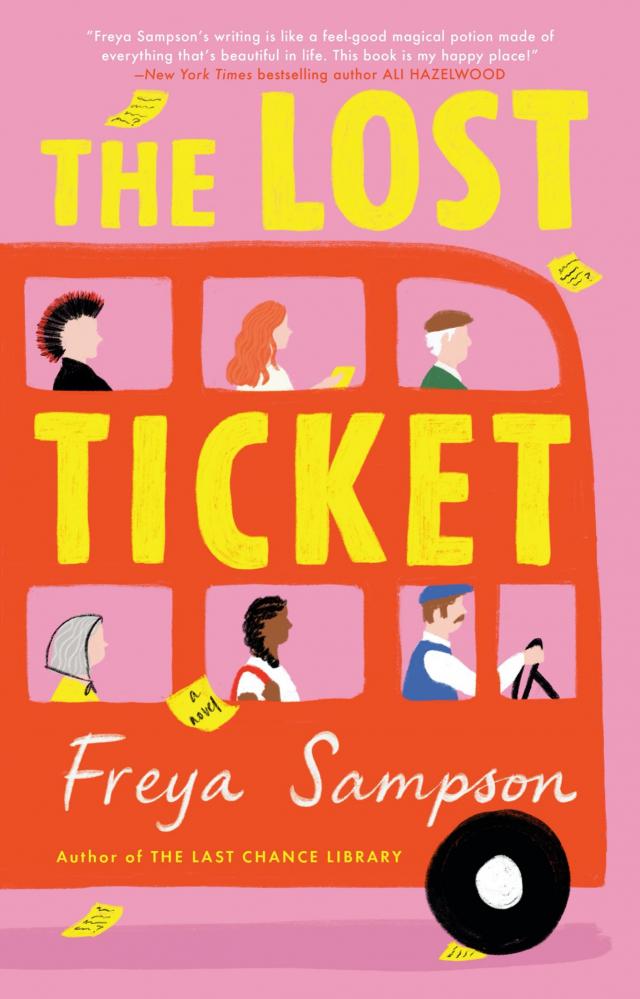


“Like painting the Forth Bridge, a job that never finishes.”
“We’ll be like Frank, still doing it when we’re eighty, out on the bus every day.”
“Come on, Libby, dear.” Dylan put on an exaggerated old person’s voice. “Time to catch the 88, we’ve got more posters to put up.”
“All right, Dylan, let me put my teeth in and I’m coming,” Libby croaked, and Dylan threw back his head in laughter.
“Can you imagine?” she said when his laughter had died down.
“Yeah, that’s probably not a good idea. I guess we should stop when we’ve done this last bit; otherwise we never will.”
This was the first time either of them had mentioned the imminent end of their project, and for a moment neither of them spoke.
“So . . . I guess that means we’ll be finished soon?” Libby said.
“Well, you’re the one with the spreadsheet, but I reckon one more trip should do it.”
They didn’t look at each other, both studying the bins opposite. When would they see each other again once they’d finished? Libby wondered. They might bump into each other through Frank, but the chances of that were pretty slim. She thought of the electricity she’d felt a moment ago, the feeling of Dylan’s body so close to hers, and she felt her face getting hot again.
“You must be looking forward to your life getting back to normal,” Dylan said.
“I’m not sure my life will ever be normal again.” As soon as Libby said it, she regretted her choice of words. “I mean, what with everything that’s happened to me recently,” she added quickly.
“Of course.” Dylan was staring at his boots. “Have you got any thoughts about what you’ll do next?”
“To be honest, I have no idea. I need to find somewhere to live and a new job. These past few weeks helping Frank have been a wonderful distraction, but I have to start making some decisions.”
“Might you move back to Surrey?” Dylan said it innocently, but Libby could hear his question mark hanging in the air.
“That’s definitely not happening.”
“Oh, okay . . . Look, if you don’t mind me asking, what happened between you and your ex?”
They’d skirted round this conversation before, but Libby had always found ways to change the subject. Now she paused, trying to work out how best to explain.
“Simon and I had been together for eight years and he got bored of me. We’d got stuck in a bit of a rut, and Simon said it was all too dull and predictable. He said he wanted more from his life than I could give him.”
She heard Dylan inhale next to her, but he didn’t say anything.
“We’d always been a bit of an unlikely couple,” Libby continued. “Simon is this rugged, outdoorsy type; he’s never happier than when he’s playing rugby in the pouring rain on a Saturday morning. And I like spreadsheets and color-coded maps, as you well know.” She laughed at this, but Dylan didn’t join in.
“But were you happy?” he said.
Had she been happy? No one had ever asked her that question about their relationship before.
“At the time I thought I was, yes. I loved Simon, and I liked our routines and stability. We had our future all planned out: engaged at thirty, married at thirty-one, and then start trying for kids shortly after. I honestly thought we were going to spend the rest of our lives together.”
As she said this, Libby remembered something Dylan had said last week, about not wanting marriage and 2.4 kids.
“I guess Simon and I were on the long-term relationship treadmill, and it never occurred to me that I might want anything else,” she added.
“I get it. There’s a lot of pressure in our society to live a certain way, to conform to the patriarchal-capitalist agenda of work, marry, procreate.”
“I really thought that was what my life had to be like,” Libby said. “A good daughter, a good girlfriend, one day a good wife and mother. But since spending these past few weeks in London, I’m beginning to realize that might not be the only way.”
“How do you mean?” Dylan said.
“Well, look at Frank and his girl on the bus. She rebelled against her parents and went to art school, and Frank has spent his entire life looking for a woman he met once, even though his own daughter disapproves. They both had the confidence to chase their own dreams, but I’ve given all of mine up to make other people happy.”
“It’s not too late to change that; you could still go to art school. You’re only, what—”
“About to turn thirty,” Libby said. “And as you said yourself, thirties is a bit old to be going back to college. Besides, I’ve not drawn in years.”
“What about that sketch pad Frank gave you?”
“Honestly? It’s sitting beside my bed, gathering dust.”
Next to her, Libby felt Dylan adjust his position. “You know, this might be a crazy idea but there’s this pub in South London that does a weekly life-drawing class. A mate told me about it—apparently it’s very casual; people just turn up and have a few drinks and get to practice drawing a model. You could give that a go?”
“Thanks, but I’m not sure I’d ever have the confidence to walk into a room full of strangers and start drawing.”
“I could come with you if you want?”
He said it quickly, and Libby was so surprised that for a moment she didn’t know how to answer.
“I mean, I’m terrible at art,” Dylan continued, sounding unusually flustered. “I once got a detention at school because we had to draw a classmate and mine looked like a pig and my teacher thought I was taking the piss. But I’m happy to give it a go with you.”
“Oh. Well, that would be cool, thanks.” Libby hoped Dylan couldn’t sense the joy that was suddenly radiating out of her whole body.
“Cool,” Dylan said, and when Libby glanced across at him, she could see he was trying to suppress a grin as well. “Shall we get on with it, then? These posters aren’t gonna put themselves up.”
CHAPTER
21
Libby! Don’t you look radiant this morning,” Frank said as Libby approached him at the bus stop. It was Saturday morning, but rather than their weekly walk up Parliament Hill, Frank had asked Libby to meet him at the stop near his house.
“Thanks, Frank. How are you today?”
“Very good. And here’s our bus right on time.”
Frank signaled to an 88 as it pulled up, its doors opening in front of them. He took hold of the side of the bus to steady himself as he stepped on board.
“Mr. Weiss!”
The bus driver, a middle-aged woman with black corkscrew curls, was beaming at Frank from behind the steering wheel.
“Patience!” Frank said. “How are you? How’s your father?”
“Oh, you know him, still making trouble,” Patience said. “When I visited him on Saturday, the nurse told me he’s been entertaining them all with Jimmy Cliff songs.”
Frank laughed. “Ah, well, please give him my love, and your dear mother.”
“Of course.” Patience pressed the button for the doors to shut. Libby waited for Frank to move toward the stairs, but he stayed standing where he was, holding on to the nearest pole.
“This is my friend Libby,” he said to the driver, and Libby heard something like pride in his voice. “She’s been helping me with the search for my girl.”
“Oh, is that right?” Patience said, her eyes on the road as she pulled the bus out into the traffic.
“Yes. She and Dylan, my carer, have been putting posters up along the 88 route. You must have seen them?”
“Are they the yellow ones that have been popping up over the past few weeks?”
Frank nodded. “They’re the ones! We’re hoping that either my woman will see it or someone will tell her about my search.”
Patience chuckled. “Good on you. Dad will be pleased to know you’ve not given up your search.”
“Never!” Frank said. “I have to say, your parents’ marriage has always been something of an inspiration to me. To see how those two adore each other, even after everything they’ve been through. That’s true love, I tell you.”
Patience didn’t say anything, focused on the road in front of them. But in the mirror, Libby thought she could see a flash of emotion in the woman’s face.
“I tell you what, Mr. Weiss,” Patience said after a moment. “I’m not supposed to do this, but how about you give me a few of your posters and I’ll pin them up down at the bus depot? And I can put word out on our message boards too. Bus drivers love a gossip; perhaps one of them can help find your lady.”
“Would you do that?” Frank said.
“Of course. After all you did for my dad over the years, it’s the least I can do.”
“Libby, did you hear that? How wonderful!”
Libby reached into her bag and pulled out a handful of posters, handing them over. “Thank you so much.”
“I’ll get the word out on the drivers’ network,” Patience said with a nod.
The bus pulled up at the next stop, where a small queue of passengers was waiting to board.
“We’ll get out of your way, then,” Frank said. “It was lovely seeing you, my dear. Tell your old man I’ll pop in to see him soon.”
“All right, Mr. Weiss. You take care now,” Patience said as the bus doors opened and new passengers started to push on.
Libby followed Frank slowly up the stairs, where his usual seat was free.
“She seems lovely,” Libby said as she slid in next to him.
“Oh, yes, I’ve known Patience since she was a baby,” Frank said. “Her father was a bus driver too. I met him on here and we became good friends. He’s in a home now. Parkinson’s . . .”
Frank trailed off. Downstairs, Libby could hear Patience greeting new passengers. When she glanced at Frank, he was frowning.
“Did Dylan tell you about Sunny?” Libby said, suddenly remembering her and Dylan’s encounter on the bus yesterday.
“Who’s Sunny?”
Libby recounted the story the young man had told them. Frank listened with a growing smile.
“Of course I remember him!” he said, clapping his hands together. “He was such a charming young man. He told me all about India, which is a place I’ve never had the pleasure of visiting. Fascinating lad.”
“Well, you clearly made an impression on him too. And he took some posters to put up because he said he wanted to help you.”
“How marvelous,” Frank exclaimed. “Between you, Dylan, and Sunny putting up the posters and Patience spreading the word among bus drivers, we’ll find my woman in no time.”
“Frank, remember what Dylan said. She might have left London years ago or—”
“But I know she’s still here in this city,” Frank interrupted. “Even if I’ve never seen her, I sense her all the time: the laugh of a woman in a café, a flash of red hair on an underground escalator. I wouldn’t have spent all this time looking for her if I wasn’t certain she’s somewhere nearby.”
“I hope you’re right.”
“I know I am. And now all it will take is for her to see a poster or pick up a copy of the Metro, or someone to mention it to her, and we’ll be reunited. Just in time . . .” Frank trailed off again, and when Libby looked at him, he was staring out of the window.
“What do you mean?” she said.
“What?” He looked round at her.
“You said you’ll be reunited just in time.”
“Did I?”
“Has something happened?”
Frank rubbed his forehead, and Libby could tell he was trying to remember. Then he shook his head and let out a sigh of frustration. “I’m sorry.”
“That’s okay, take your time.”
“It scares me, Libby. I keep forgetting things, silly little things. I’m an actor, for god’s sake. I used to be able to recite the whole of the Duke of Gloucester’s soliloquy in Henry VI. But now . . .”
He stopped and turned to face her, and Libby could see his face was full of doubt.
“What if I wake up one day and I can’t remember my girl on the bus?”
“Oh, Frank. I’m sure that won’t happen.”
“But my memory is getting worse every day. She might get lost in there, like so many other things. And then I’ll never get her back.”
“I’m sure you won’t forget her. Not after all this time.”
Frank shook his head. “My daughter has been preparing me for the worst. She says this dementia means that one day I won’t even remember my own name.”
This was the first time Libby had heard Frank use the word “dementia.”
“I’m so sorry you’re having to go through this, Frank. It’s not fair.”
“Clara’s been on at me about the care assessment again. I’ve been having these funny turns and she wants to set one up for next month.”
“And what do you think about that?”
Frank took a deep breath before he answered. “I think we need to find my girl, Libby. Time is running out.”
* * *
• • •
“SO, do you want to know where we’re going today?” Frank said as the bus reached the bottom of Haymarket.
“Yes, please.”
“I decided it was about time you finally revisited the National Gallery. You’ve been in London for weeks now; it’s crazy you’ve still not been.”
“Oh, amazing, Frank, thank you!”
“I thought we could start with the Renaissance masterpieces on the second floor, visit my old friends Bacchus and Ariadne, and then stop for lunch in the café. After that we can pop down to see the Monets and Renoirs on the ground floor,” Frank said as the bus turned left toward Trafalgar Square.
“You clearly know the place inside out, so I’m in your hands.”
“Well, I’ve been visiting for sixty years, ever since my girl on the bus first told me about it, so I do know it pretty well. I was so intimidated to begin with; I didn’t dare tell any of my friends in case they laughed at me. But now I’ve been to art galleries round the world, and this is one of the finest.”
“I loved it the one time I went with school. I remember this one huge room with a domed roof, and there were so many paintings that I didn’t know where to look. I’d never seen anything like it in my life.”
Frank beamed. “Well, it’s time to reunite you now.”
He reached past Libby to hit the stop bell and then began to pull himself up. Libby stood up to help him and felt a sudden rush of blood to her head.
“Everything all right?” Frank said as she grabbed the bar to steady herself.
“Yes, fine. I’m just a bit dizzy.”
“Let’s get you off this bus, then.”
Libby followed Frank down the stairs, grateful for his slow pace. When they stepped onto the pavement, she took a deep lungful of air.
“That better?” Frank said.
“Yes, thanks. I didn’t have any breakfast, so it’s probably low blood sugar.”
“Well, in that case, let’s head to the café first and get you something to eat.”
They began to make their way toward Trafalgar Square, Frank pointing out details of the statues. But Libby couldn’t concentrate; her head felt like it was full of cotton wool, and small white dots were swimming in front of her eyes.
“The fourth plinth over there is now used for contemporary art installations,” Frank said as they walked past the stone lions. “There have been some wonderful ones over the years and . . . Are you sure you’re all right, Libby?”
“I think I might need to sit down,” she said, feeling herself sway.
“Of course, let’s get you to—” Frank started, but Libby didn’t hear the rest of his sentence, because she felt her knees buckle and then everything went black.
CHAPTER
22
PEGGY
Excuse me if I don’t stay long today, love, but I’ve had the strangest morning.
Have you ever woken up and known that something bad was going to happen? You don’t know what it is, but you’ve got this feeling, deep in your bones, that trouble is on its way. My mother used to say it was like someone walking over your grave, that cold shiver that passes through your body.
Well, I woke up with one of them this morning.
My first thought was that something had happened to David or Maisie and the boys, but I checked my mobile phone and no one had been in touch. I wanted to call David to check, but you know what he’s like; he’d have got annoyed and said I was fussing. So I told myself it was nothing and got up to make my cup of tea. But I couldn’t shift this feeling; it followed me round the flat, whatever room I went in. I tried watching a bit of TV but I couldn’t even concentrate on This Morning, and you know how much I love that Phillip Schofield.
Anyway, I had my breakfast, got dressed, and headed out to catch the bus. But the whole time I kept looking over my shoulder, like death himself was following me. And then I’m sitting on the 88, trying to distract myself by listening to the conversations around me, and I see a man and his young son get on board, carrying a kite. And that’s when I suddenly remembered.
The last time I felt like this, the same sense of creeping dread.
It was the day you nearly died.
I’m not sure if I ever told you this, but I woke up that morning knowing something bad was going to happen. I thought it was about David, who was always getting into trouble in school at the time. And I remember fretting round the flat all day, waiting for the moment I got the call from the headmaster to summon me in again.
And then there was a knock at the front door, so faint I almost didn’t hear it. So I pulled the door open and there you were, slumped against the frame, looking like you had only hours left for this world.


