

Ravenswood Dreaming, page 1


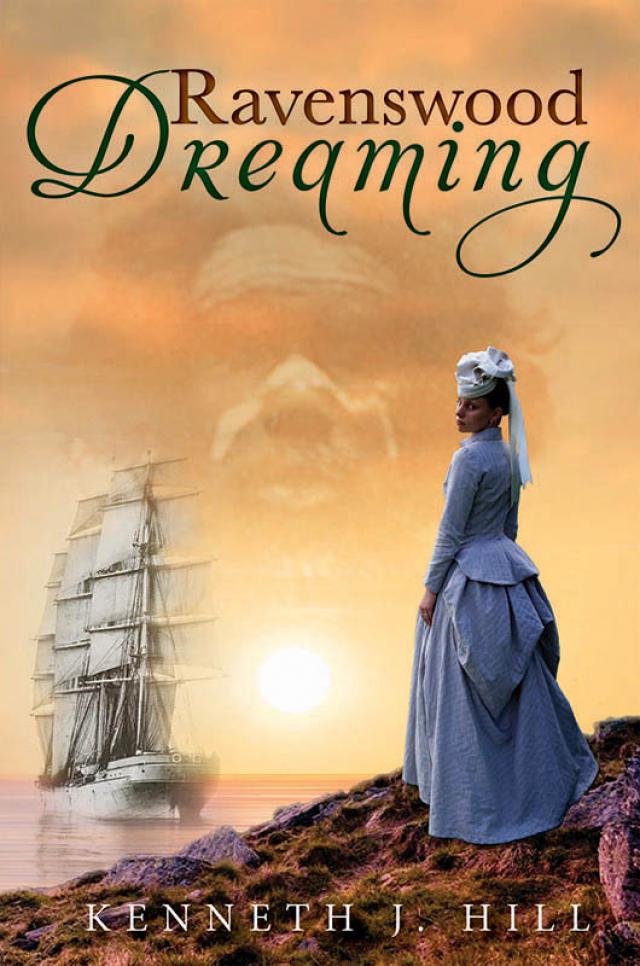
As an indentured servant with the Peel Scheme, John Thomas senior and his family arrived at the Swan River settlement in 1829 aboard the Gilmore. They and many other families were landed 5 miles south of Fremantle at a place which became known as Clarence.
Within months poor organization, dysentery, influenza, scurvy and starvation began to threaten the venture. By winter of 1830, 37 people had died and the scheme failed. The remainder of the family moved to Fremantle and began a lightering and transport business on the Swan River and out to ships anchored off shore.
Shipwrecks and personal tragedy continued to dog the family. Despite these setbacks the company expanded further and prevailed under Young John’s leadership.
Much of the story takes place in Fremantle and the Murray District and on the water in boats and ships. Ravenswood Dreaming is an incredible story about the Thomas family’s struggle in the face of adversity and personal tragedy. Their rise from labourers and boatmen to highly regarded citizens of Fremantle and the Murray district was accompanied by their emerging consciousness of the plight of the Aboriginal people.
They, along the coast, along the rivers, and in the hinterland, led by such leaders as Yagan, Midgegooroo and Calyute, were fighting against overwhelming odds with spears, clubs and fire, for their survival, their culture and ownership of their traditional lands.
To find out more about this book including the paperback edition, please visit:
www.vividpublishing.com.au/ravenswooddreaming
Copyright © 2022 Kenneth J. Hill
ISBN: 978-1-923078-43-7 (eBook edition)
Published by Vivid Publishing
A division of Fontaine Publishing Group
P.O. Box 948, Fremantle
Western Australia 6959
www.vividpublishing.com.au
Version 1.1. All rights reserved. No part of this publication may be reproduced or transmitted in any form or by any means, electronic, mechanical, photocopying, recording or otherwise, without the prior written permission of the copyright holder.
AUTHOR’S NOTE
Basically this book is a true story with real events, births, deaths and marriages with characters and well known people who existed. Other characters introduced into the story probably existed under another name. I must stress that the work is a novel not a history book.
When considered as a whole it is an incredible story which needed to be told as a testament to the courage of settlers who survived the hardships and those who did not survive.
Quite early in the process I realised that it was impossible and indeed misleading to try and write about the arrival of the British settlers at the Swan River in Western Australia without acknowledging the impact of the invasion on the incumbent Aboriginal people. Their story, at first, was one of amazement at the audacity of these strange people occupying their land. This was followed by a short period of tolerance of the invaders. Then, upon realising that these people intended to stay and take over their land, there was a prolonged period of fierce but futile resistance with fire, spears and clubs. They were out numbered and out gunned. The final result being the almost complete destruction of their culture and way of life and the loss of the country they had occupied for thousands of years.
So, throughout the writing of this book I was conscious that in the background a war was being fought for survival and there could only be one outcome.
The new arrivals thought that the Aboriginal people would die out, that they were a doomed race. They were wrong. We now know that the Aboriginal people are an intelligent, tough and resilient people. They are the oldest surviving civilization on the planet. The first Australians. They have lived here on this continent and its islands for over 50,000 years. What a wonderful gift to bestow on the Australian Nation.
Note: The Mayan civilization began about 4600 years ago. The Pyramids of ancient Egypt were built about 4000 years ago. Jesus Christ was born about 2020 years ago. The British started a colony on the Swan River, Western Australia about 200 years ago. When these facts are considered, 50,000 years of occupation comes sharply into perspective.
THE TRADITIONAL OWNERS
The author wishes to pay his respects to the Noongar People, the original owners of the land in the south west corner of Western Australia. They had occupied the land since time began. In particular I wish to acknowledge the Whadjuk, the Balardong, the Pinjareb, the Wardandi and the Pibelman people for they were the first to experience the onslaught of the invaders. I have tried to refer to these people respectfully, carefully choosing my words and at the same time trying to keep my writing authentic and true to those times. If I have failed and been disrespectful please accept my apology.
Note: The use of the words native and blacks was the language of the time. I don’t like it. I have used these words to give authenticity.
I must go down to the sea again
To the lonely sea and the sky
And all I ask is a tall ship
And a star to steer her by
John Masefield
ACKNOWLEDGEMENT
Once again I wish to affirm the immeasurable contribution of Bev, my wife. She has been my inspiration, my determination, my strength and my persistence for the last five years. Without her this book would not exist. I can assemble the story and embellish the text. Bev is my editor in chief, my proof reader and my technological adviser. The year 2020 was tough on both of us. Thank you my love, without you I could not have done it.
I also wish to thank our friend Marie Ginbey for her help with the proof reading.
In Memory of my Grandmother,
Amy Eleanor Sweetman (nee Thomas).
CONTENTS
Prologue 1 - Governor Stirling
Prologue 2 - Thomas Peel
The End Of The Journey
Part One - Clarence
Part Two - Fremantle
Part Three - Kelmscott William Gaze
Part Four - Robert Lyon Milne
Part Five - A New Beginning
Part Six - The Conflict Escalates
Part Seven - Fishing and Trouble
Part Eight - The Venus
Part Nine - Diversifying
Part Ten - The Empress
Part Eleven - The Rory O’ More
Part Twelve - Ravenswood The Dreaming
Epilogue - Back to Fremantle
Postscript
Prologue 1
GOVERNOR JAMES STIRLING
James Stirling had an outstanding naval career prior to being appointed Governor of the Swan River Colony. He saw action in the American War of Independence and the Napoleonic wars.
He was sent, by the British Government, to explore the west coast of Australia and assess other nations’ interest in the region. He was also required to look for suitable sites for British settlements.
Having completed this assignment, he returned to England and lobbied the British Government to establish a settlement on the Swan River. In 1828 he was appointed to the position of Lieutenant Governor of a future colony to be established in that location.
The settlers were to be granted land according to how much capital they were prepared to invest in the new colony. This was calculated by assigning value to the actual capital they brought with them, the amount of tools, building material, seed, and stock they brought and finally the number of indentured servants they had.
Stirling, as Governor, was entitled to a grant of 100,000 acres. He chopped and changed the parcels of land he took possession of numerous times, finally settling on large properties at Upper Swan and Beverley, Harvey, and bordering the northern part of Geographe Bay. In addition to these he owned smaller blocks in Perth, Fremantle and Rottnest.
Despite orders from the British government to provide for the Aboriginal people and despite advice from several prominent citizens, Stirling never acknowledged that the Noongar people owned the land.
Initially, Stirling was instructed by the British Government to make provision for the Aboriginal people. He made no effort to do this. Later in his period as Governor he received correspondence from the government that he must make provision for the Aboriginal people and set aside land for them. He made a token effort to do this. A few prominent citizens among the settlers also urged him to provide land for the Aboriginal people. Robert Lyon-Milne, a well educated and wealthy settler, was ostracised and criticised for writing articles in the press that pointed out that the settlers had occupied land that belonged to the Aboriginal people and they had no right to do that. They needed to be compensated.
There were some opinions expressed, that the massacre at Pinjarra was to enable Thomas Peel to sell blocks of land along the Murray River for development without resistance from the Binjareb.
The early settlers at Vasse believed that barracks were set up in strategic positions at the northern and southern ends of Stirling’s holdings, south of Bunbury down to Wonnerup, thus leaving Vasse vulnerable to attack from the Wardandi. The Bussell family were not happy about this situation. Conflict between the Wardandi people and the settlers at Vasse resulted in the tragic loss of many lives. No official count of Aboriginal people killed was kept, perhaps deliberately. Only a small number of white settlers were killed
Stirling retained ownership of his land holdings for several years after he left the Colony. They were finally sold on his behalf by his nephew Andrew Stirling.
Prologue 2
THOMAS PEEL
(this book is not about Thomas Peel)
Thomas Peel was a first cousin of Sir Rob
Young Thomas was attracted by James Stirling’s plan to set up a free settlement, meaning no convicts, on the Swan River. He devised and negotiated a deal with the British Government to bring out four hundred settlers, many of whom were indentured to him. In return he would receive a land grant of one million acres on the banks of the Swan and Canning Rivers, providing he arrived before November 1st 1829.
Secretly Peel had entered a partnership with Solomon Levy, a Jewish ex-convict from Sydney. Levy, together with his partner Daniel Cooper, also an ex-convict, had amassed an immense fortune trading and investing in wool, buying, importing, exporting, real estate, shipping, ship building, whaling and sealing and they owned a general store in George Street, Sydney.
Levy backed the scheme and in the first few months sent supplies for Peel and his settlers. He received very little communication from Peel and no information about the transfer of half of the land grant which was still in Peel’s name. Information finally reached him that Peel had arrived late and the land along the Swan and Canning Rivers had been cancelled and other land would be substituted. This, together with rumours back in England, that the scheme and the colony were in trouble caused Levy to stop sending supplies and he subsequently cancelled the proposed shipments of stock and farm machinery.
The adjacent substitute land was not very fertile and it was too dangerous to send settlers down along the Murray River to farm because the Binjareb people were very hostile. Peel was short of currency to pay his servants. The food supplies had all but run out. Scurvy, dysentery, influenza and starvation were taking a toll on the indentured settlers and their families. (37 people had died). Peel had deserted his people and was living on Garden Island. The Peel Scheme collapsed.
By 1836 Peel and two of his indentured servants, Tuckey and Eacott, together with their families, were the only Europeans living at Mandurah and the Murray.
Finally, after numerous failed attempts to restart business ventures, Peel, in order to survive, resorted to selling blocks of land along the Murray River and tools, kitchen utensils and hardware, garden tools and other surplus paraphernalia left over from the failed scheme at Clarence.
In order to facilitate the sale and the take up of land along the Murray River, Peel was instrumental, probably because of his connections in the British Government, in encouraging Governor Stirling to attack the Binjareb encampment and took part in the raid.
In his final years he retreated to living in a cluster of primitive huts, with his young son and mother in law, in Mandurah. His wife had returned to England with their two daughters. She and one of the daughters died of consumption. The second daughter returned to live with her father. During his last few years he lived alone in one of the huts with three kangaroo dogs for company. He died on the 22nd of December 1865.
RAVENSWOOD DREAMING
The End of The Journey to the Great South Land
For weeks now there has been only the ocean. A seemingly endless horizon of water and sky. The sun rising over the water. The sun setting over the water. Constant movement of the deck underfoot during the day. Constant swaying of the hammocks during the night.
The ship is asleep now. The only sound is the gentle snoring of her rigging and her masts. Her course is a few points north of due east. Long, slow rolling swells are overtaking her. Each wave appears out of the darkness and silently approaches, slides effortlessly under her keel, then continues on its relentless quest towards self-destruction.
A barely noticeable breeze is propelling the ship towards the mysterious west coast of the Great South Land. The destination is the new Swan River Colony. The ship’s maddeningly slow progress is frustrating to the boy standing on her deck near the bow. Adding to his frustration, is the still invisible sun’s glow in the early morning sky. It is beginning to dazzle him so that he has to squint, in his desperate bid to be the first to catch sight of what he knows will appear on the horizon ahead.
He is joined by his constant companion and friend William Gaze. Good morning John.
The boy smiled and returned the greeting. Good morning William.
Can you see anything yet? William’s voice was barely above a whisper.
John shook his head, no nothing.
They both continued to stare impatiently at the now crimson glow in the east.
John is fifteen years of age and has embarked on the voyage with his parents, two brothers and a sister. His father, a carpenter, and mother are indentured servants to Thomas Peel. They hoped that in a few years they would have worked and accumulated enough capital to begin successfully farming on one of Thomas Peel’s allotments which they would eventually own freehold. A dream they could never achieve back in England or Wales.
William Gaze is three years older and is travelling alone. He has paid his own passage and has agreed to make himself available as a labourer to work for Thomas Peel.
The only other people on deck are the captain and the helmsman and Mr Thomas Peel. They are at the other end of the ship.
The rest of John’s family are still asleep as are most of the passengers. He had woken before dawn and slipped out of his hammock without a sound, picked up his bundle of clothing and shoes and carried them up onto the deck and dressed in the dark. He had been standing looking into the darkness at first, then just the hint of light, then a definite glow and now a fire in the sky.
John’s eyes were beginning to ache. He closed them briefly to ease the pain.
Suddenly the call they had been waiting for came from the crows-nest, Land ho!!
The Captain reached for his telescope. Where man! he called to the mast head?
Two points off the starboard bow Cap’n!!
The two boys turned their eyes in that direction but could see nothing. Just then a hatch banged open and several passengers and crew joined the boys. One of them had a telescope and he raised it to his eye and stared into the distance for what seemed like an eternity. I see it, he said excitedly, there and he pointed with one hand. The passenger then offered the telescope to the man standing next to him and he also held it to his eye for what seems to be a ridiculous amount of time. Yes, there it is, thank God! he exclaimed and glanced at the sky. He returned the telescope to its owner. John has been willing the man to offer it to him. He looked pleadingly, the man smiled and to his relief, held the telescope out in his direction. He thanked the man profusely and trembling ever so slightly, lifted it to his eye. It was clear now, a long, low, thick, irregular, black line sitting between the ocean and the sky. John turned to hand the telescope back to the owner but he waved it away and indicated for John to pass it on to William. Other passengers and crew were now crowding along the railing. An impromptu queue had formed and the generous passenger seemed quite happy to allow others to look through his telescope.
John stepped back and moved along until he found his father and the three younger children. Old John was holding Janey up and pointing to the horizon. The little girl was unimpressed and struggled to get down. John took hold of her hand and promised that later on in the day she would be able to see Swan River more clearly. She seemed satisfied with that.
Excited chatter had broken out amongst the passengers. The feeling of gratitude and relief in the air was palpable. The long and perilous journey was nearly at an end and by the grace of God and the Captain and his crew, their destination was in sight.
For the rest of the day the ship sailed north along the coast. By evening the Captain judged that they were adjacent to the entrance to the Swan River. According to the charts the Captain had available to him the approach in to a safe anchorage in the lea of a large island, which lay parallel to the mainland, was quite treacherous. The ship had to negotiate a passage between two smaller islands where the currents were often unpredictable and wave heights could be increased. Fortunately it was the southern summer and they still had two hours of daylight left and the prevailing westerly winds had subsided to a light breeze. With some trepidation they negotiated their way between the islands without incident, turned south into the sound between the mainland and the largest island where they dropped anchor.


