Dead, to Begin With, page 16
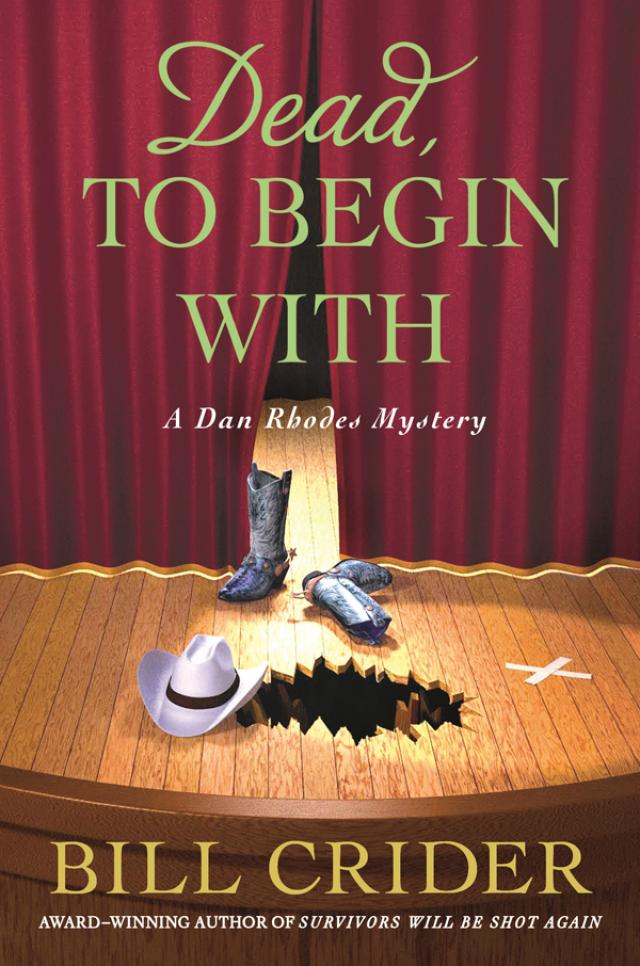


“Sounds like a ghost to me,” Hack said. “How ’bout you, Lawton?”
“Bound to be a ghost. Boards don’t break themselves.” He gave Rhodes a critical look. “’Course it wouldn’t hurt some of us to shed a pound or two.”
“Never mind that,” Rhodes said. “Tell me what was going on in town last night.”
Hack went through a litany of the usual sort of happenings, a broken-down car abandoned on the side of a county road, a couple of domestic disturbances, an incident of road rage that resulted in a fistfight, a home invasion …
“Hold it,” Rhodes said when Hack came to the home invasion. “You’d better tell me about that one. Sounds serious.”
“Well,” Hack said, “it wasn’t the usual kind of home invasion.”
If Rhodes had possessed an extra leg in the proper place, he’d have kicked himself because he realized he’d fallen into Hack’s trap. There was nothing he could do now, however, except carry on.
“What kind was it, then?”
“Started with a call from Cassie Winston. You know Cassie? Married to Lester? Lives out toward Obert?”
“I’ve heard of Cassie and Lester. What about them?”
“We got a call from Cassie. Prob’ly came in about the time you was hanging from those boards. That about right, Lawton?”
“Sounds right to me,” Lawton said. “See, Cassie and Lester—”
Hack swiveled his chair the better to glower at Lawton. “I’m the one tellin’ this.”
“Well, you asked me—”
“I asked you if the time was about right, and you just kept on goin’.”
“Don’t start,” Rhodes said. “Just tell me, Hack.”
“See?” Hack said to Lawton. “The sheriff said ‘Just tell me, Hack.’ Wasn’t no Lawton mentioned or even hinted at.”
“Hack,” Rhodes said.
“Okay, okay. Where was I?”
“Cassie called,” Lawton said.
“Who asked you?”
“You didn’t ask anybody in partic’lar, so I thought—”
Rhodes sighed. There were times, and this was one of them, when he wondered if Hack and Lawton rehearsed their dialogue when he was out of the office. He wouldn’t have put it past them.
“You two are going to be the death of me,” he said. “Tell the story, Hack. You keep quiet, Lawton.”
Lawton looked hurt. Hack looked smug.
“Like I was sayin’,” Hack continued, “Cassie called and said somebody was trying to break into the house. Poundin’ on the door, yellin’, takin’ on. She was there by herself, ’cause Lester was in town pickin’ up a couple of frozen dinners at the Walmart. They like those organic enchiladas that they get there. I don’t know whether organic food’s any better than any other kind myself, but ever’body has a different taste, I guess.”
“Hack,” Rhodes said.
“All right, all right, you don’t have to rush me. I told her to keep calm and asked if she had a gun in the house, which she did, like just about ever’body who lives in the country. Said she already had it out and pointed at the door, so I told her I’d send out a deputy.”
“You told her not to shoot anybody, I hope.”
“Sure did. Told her, ‘Don’t you pull the trigger ’less you just have to. You don’t want it on your conscience if you kill a man.’”
Lawton couldn’t hold back. “’Specially if it’s your husband, ’cause that’s who it was. See—”
“That does it,” Hack said, pushing back his chair and standing up. “You’re always takin’ over, and this time you’ve broke the camel’s back.”
“Sit down, Hack,” Rhodes said.
Hack sat down. Rhodes didn’t think he’d have done anything, but it was good to make sure.
“Now let me get this straight,” Rhodes said. “Cassie Winston called in a home invasion report, but it was really just Lester coming back from Walmart. She got her gun but didn’t shoot him. Is that about it?”
“Yep,” Hack said, “but if it hadn’ta been for me, she mighta shot Lester right through that door. I’m the one told her not to shoot, but do I ever get on the Internet? Heck, no, not me. I’m just the dispatcher, good old Hack, doin’ his job and savin’ lives instead of fightin’ ghosts and actin’ like Burt Lancaster.”
“Lester forgot his key,” Lawton said, and Hack didn’t even bother to shush him.
“He’ll remember next time,” Rhodes said.
“I bet he will,” Hack said. “Cassie finally figgered out who was bangin’ on the door, so she let Lester in. Still had the pistol in her hand. She said he dropped those frozen dinners right there on the floor.”
“She’s the one who told you all this?”
“Nope, Andy told me. He’s the deputy I sent out there. He got there just about the time Lester and Cassie were gettin’ it all straightened out. They even offered him a bite of enchilada if he wanted to stay, but he had to get back on patrol.”
Rhodes thought briefly about the chile relleno he’d eaten the previous night. He’d decided against two after all, which had been a good decision. One had been plenty, and it had been delicious, far better than some frozen dinner would’ve been, organic or not.
“That’s all you have to tell me?” Rhodes asked. “No serious accidents, no injuries, no break-ins?”
“Nope,” Hack said. “The big excitement was the home invasion.”
“’Cept it wasn’t a real home invasion,” Lawton said. “It was just—”
Rhodes held up a hand to stop him. “I’ve heard enough about that. I’m going to interview someone this morning, and maybe even two. I’ll check in again later.”
“You gonna tell me who you’re gonna interview?” Hack asked. “Or do you want me to guess?”
“Glenda Tallent and Al Graham.”
“Where you gonna find ’em? Might be at church.”
“Not this early,” Rhodes said.
* * *
Glenda Tallent lived on a shady street that had once been in a nice part of town. Most of the houses were run-down now, but not Glenda’s. She and her husband had kept the house in good repair through the years, and after her husband’s death, Glenda had continued to do so. The other houses had cracked walks in front, and one or two of them sat a little off the level, but the walks in front of Glenda’s house were almost new, and the house was as level as a pool table. The paint was fresh, and the flower beds were weeded. Glenda’s car, a red Cadillac, was parked in the driveway under a big pecan tree that had shed leaves all over it.
The car was a sure sign that Glenda was at home, so Rhodes parked the Tahoe in the street and got out. He looked at the Caddy as he went up the walk to the front porch. He hoped Glenda didn’t leave the car there all the time. It wouldn’t be long until the pecans started falling, if they hadn’t already begun.
The cold weather had all blown on through, and the day was warm and sunny. The temperature would probably get into the seventies later. That was one thing Rhodes liked about living in Texas, not just the changes in the weather but the changes for the better, particularly later in the year.
Rhodes took the three steps up to the covered concrete porch and went to the door. Glenda didn’t have a doorbell, so Rhodes rapped on the frame. After a couple of seconds, Glenda Tallent opened the door.
Glenda was a slight woman who had once had red hair, but it was now fading to blond. Her green eyes still had a bit of sparkle, however.
Younger people these days, and a lot of the older ones, too, dressed comfortably and casually for church. Not Glenda. She wore a lime green skirt and jacket with white shoes that had a short heel.
“Good morning, Sheriff,” she said when she saw who was standing on her porch. “Did you come to proselytize me for the Baptists on this nice Sunday morning? It wouldn’t do you any good if you did. I’m a Methodist born, sprinkled, and raised, and there’s no way I’m changing now. I’m too old to be dunked.”
“I didn’t come here to proselytize for the Baptists,” Rhodes said. “Just to talk for a minute or two.”
“Well, in that case you can come in,” Glenda said, stepping aside and allowing Rhodes in the house. “Come on back to the kitchen and have a cup of coffee.”
“Thanks, but I don’t drink coffee.”
“Don’t drink coffee? What kind of sheriff are you?”
“The kind that doesn’t drink coffee.”
“I didn’t know there was that kind. How about a doughnut? I have an extra.”
Rhodes hadn’t had a doughnut in years. “That sounds good.”
“Come along, then.”
Glenda led the way across the hardwood floor of her living room, through a short hall, and into the kitchen, where there was a small round Formica-topped table and two chairs that might have been in the house for fifty years or so. On the table sat a coffee cup beside a saucer with a glazed doughnut in it. A fork lay on a cloth napkin beside the saucer.
“You sit down,” Glenda said. “I’ll get your doughnut. It’s just a plain glazed one.”
“That would be fine,” Rhodes said.
Glenda brought him the doughnut in a saucer like hers. She put the saucer on the table and laid a napkin and fork beside it.
“I don’t like to eat with my fingers,” she said, “but you can if you want to.”
“I’ll use the fork.”
“Fine. You go ahead and take a bite while I get you a glass of water. It’s just tap water, but you need something to wash down that doughnut.”
She ran water from the sink faucet into a glass, set the glass in front of Rhodes, and took her seat at the table.
“You haven’t taken a bite yet,” she said.
Rhodes took a bite. The doughnut was fresh, and the sugar glaze melted in his mouth.
“Good,” he said. “Very good.”
“I got it at the Daybreak Doughnut Shop,” Glenda said. “You should get you some there. They have all kinds.”
Rhodes was sorely tempted, but he knew the last thing he needed was doughnuts.
Glenda took a sip of her coffee. “Coffee’s cold. I need to freshen it.”
She got up and brought a glass carafe to the table. She poured coffee into the cup and put the carafe back on the counter.
“You’re quite the athlete, Sheriff,” she said when she returned to the table. “I saw the video of you swinging around above the stage last night. I don’t believe many people could’ve done what you did.”
“I was lucky,” Rhodes said. “Scared, too. Being scared helps.”
“Pooh. I don’t believe you were one bit scared. You just swung up on that platform like an acrobat.”
“Burt Lancaster,” Rhodes said.
Glenda brightened. “Exactly! My, he was something in the old days. I saw him in a movie called Trapeze when I was a girl. And that Tony Curtis wasn’t bad, either.” She considered Rhodes. “Not that you’re too bad yourself.”
“These are mighty good doughnuts,” Rhodes said, turning aside the compliment.
“They are indeed,” Glenda said, smiling.
She and Rhodes ate their doughnuts without any further comments about athletes or appearances. When he’d finished, Rhodes drank some of the water, wiped his mouth with his napkin, and told Glenda why he was there.
“I thought that was probably it,” she said. “I was really sorry to hear about Jake. We used to be friends, back in high school, but you must know that already.”
“I’d heard you were,” Rhodes said. “What happened to change that?”
“I expect you know that already, too. Jake wasn’t the same after his sister died in that car accident. He stopped seeing all his friends and started to withdraw. After a while, he withdrew completely. Nobody could reach him. He might as well have been dead himself.”
“Did he get in touch once he decided to come back to life?”
“Yes, he did,” Glenda said.
Rhodes was surprised. He’d been prepared for her to say she hadn’t heard from Jake, the same as everyone else had done.
“He called me about insurance on the building he bought, the old theater,” Glenda said. “I didn’t even have to use my feminine wiles, which was a good thing.”
“Why was it good?”
“Because at my age it wouldn’t work. I don’t have any feminine wiles left.”
She paused and looked at Rhodes as if waiting for him to contradict her, so he obliged.
“I wouldn’t be too sure of that,” he said.
Glenda smiled. “Thank you, Sheriff, for saying so. Feminine wiles might work for some people, though, if not for me.”
“Anybody in particular?”
“That was purely hypothetical. I was happy to help Jake out. I told him that on a building that old, I’d have to have someone look at it, but he told me he’d had it inspected before he bought it. Once he provided me with the paperwork, I wrote up a policy for him.”
“Who did the inspection?”
“Rick Shepherd. I’ve used him before. He’s good at the job. Jake brought the report over to the office, and I looked it over. I did a policy for him. He was happy with it, and we had a deal.”
“Did you talk about the past, about high school? The old gang?”
“No, it was strictly business. I’d never bring up that accident. He’d grieved for years about that. Why remind him, now that he’d finally gotten better?”
“Someone was out at his house yesterday,” Rhodes said. “Was that you?”
Glenda looked puzzled. “Why would I be at his house?”
“Maybe to pick up something you’d left there.”
“I didn’t leave anything. All our business was over and done with.”
“Maybe it wasn’t business.”
“Then it wasn’t me.”
Rhodes didn’t think he’d get any further with that line of questioning, so he shifted directions. “Did Jake ever tell you about the play he’d commissioned for the theater?”
“No, we didn’t get into that. As I said, strictly business. I knew about the play, of course, but that was because I read about it on the Internet.”
Everybody read things on the Internet. Rhodes was going to have to start keeping up better.
“On A Clear View of Clearview?” Rhodes asked.
“Yes, there, and of course on the ‘Talk of Clearview’ Facebook page.”
Rhodes knew that the city had a Facebook page, but it was devoted to civic facts and meetings and such. He didn’t know anything about a talk page.
“It’s gossip,” Glenda said, “and more. You can ask about getting a lawn mowed or a house cleaned, and people will give suggestions. That kind of thing.”
Rhodes had a feeling that was one more thing he’d need to look into when he had time. Seepy Benton probably knew all about it.
“Was there any gossip back when Gwen Marley had her accident?” Rhodes asked.
Glenda looked at the ceiling. “I don’t remember. It’s been so long.”
“I wondered if there was anyone with her in the car when she had the wreck.”
“She was alone. Everybody knows that. I remember reading about it in the paper. We were all very sad.”
“Not as sad as Jake.”
“No. When Gwen died, a little of Jake died, too, I think. It was so nice to see him when we talked about the policy on the theater. He was almost like himself again.”
Rhodes had more to ask, but Glenda stood up and took his saucer, glass, napkin, and fork. She carried them to the counter and then came back for her own dishes.
“Was Jake’s death an accident?” she asked after putting them on the counter. “I read on the Internet that it was suspicious.”
“It was. Do you know anybody who’d want to hurt Jake?”
“Of course not. Who even knew him?”
“Hardly anybody,” Rhodes said.
“That’s right. I hate to chase you out, Sheriff, but you know we Methodists start church a half hour earlier than everyone else. We like to get out in time to beat the Baptists to the restaurants.”
Rhodes stood up. “Did you know you had a part in the Christmas play?”
“Yes, I’d heard that. I won’t be doing it, though. I’m not an actress. I just sell insurance. I’m going to have to show you out now. I don’t mean to be rude, but I really do need to get ready for church.”
She looked ready to go to Rhodes, but he didn’t argue. He let her lead him to the front door.
“Thanks for the doughnut,” he said. “It was very good.”
“I’m glad you enjoyed it. I hope you catch whoever killed Jake. If it wasn’t just an accident, that is.”
“I’ll do what I can,” Rhodes said.
* * *
Rhodes knew that Al Graham wouldn’t be going to church. He kept the A+ Auto Repair shop open seven days a week, and while he sometimes turned things over to his son and took a break for a day or two, he was the one who worked on Sundays so his son and his family could go to church. As for Al, he wasn’t a churchgoing man.
Al’s business was located not far from the south edge of town in a big tin building that had a tall, wide opening in front and a concrete floor. Beside the opening was a regular door, and behind it was Al’s office.
The parking lot was hard-packed dirt, and there were five cars and two pickups parked there. One of the pickups belonged to Al, and Rhodes figured the other one and the cars were waiting for repairs. Rhodes stopped beside the cars and got out of the Tahoe. He didn’t see anyone working inside the building, but he did see a car with the hood up. Beside it was a large red piece of equipment on rollers. Rhodes figured it was a diagnostic computer, but he couldn’t tell. It might’ve been a toolbox. The interior of the building wasn’t well lit. Al used trouble lights for his work, and Rhodes saw one dangling from the hood of the car. The light wasn’t turned on, though.
Rhodes walked across the lot to the door to the office and went inside. Al sat at an old desk that was covered with papers. The walls were hung with calendars that advertised auto parts. Some of the calendars were flyspecked and dated back decades. The office smelled of auto grease.
Al put down his papers, and Rhodes noticed grease under his fingernails. He looked up at Rhodes. “Whatcha need, Sheriff? Time to get the county vehicles overhauled? Need new spark plugs for that Edsel of yours? An oil change? How about a ring job?”