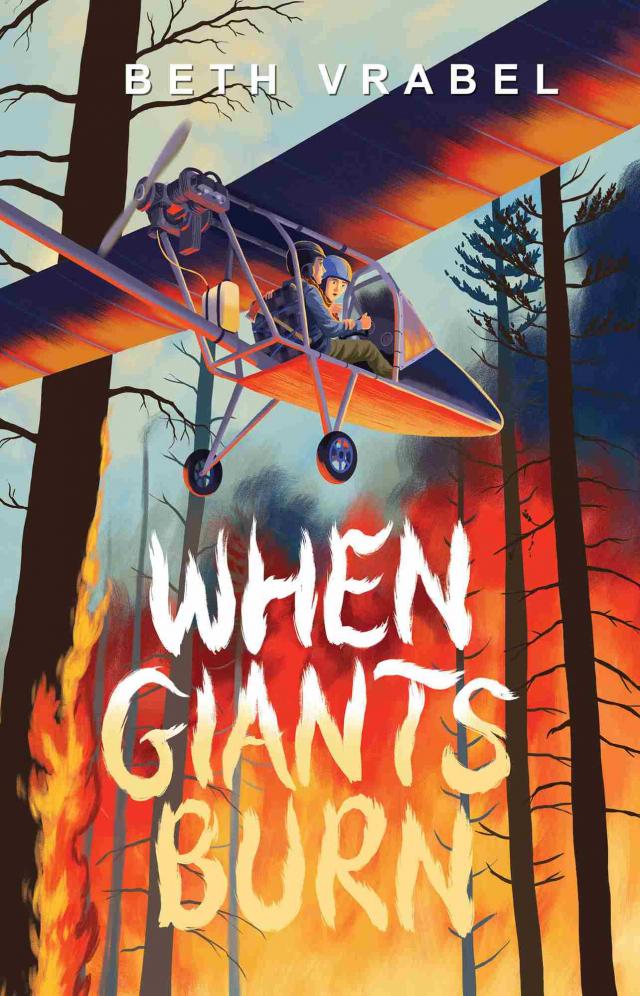
When Giants Burn, page 8


The whole time the man stands in front of us. I’m too shaken at first to notice the tells that he’s not as casual as he appears to be. It’s the way his fingers flex at his side. The way his pulse hammers in his neck. His bottom lip juts out. “I didn’t think anyone lived out this way, so deep in the woods.” The man turns his head as though taking in the wilderness around us. “Not one for neighbors?”
“Not particularly.” Alex shifts so he’s squarely in front of me. I smell the pine soap he uses and feel the soft flannel of his shirt against my cheek. “Seems you’ve lost your way, Waylan. How about I walk you back to the road while my daughter gets herself cleaned up.”
“Oh, now that’s not necessary,” the man says, that whistling sound again escaping his nose.
Alex straightens. “I insist.” Without looking away from Waylan, he grabs my shoulder, turning me back to the house. I’m not sure my body will listen when I tell it to move, but it does. I back away from them. “These woods are dangerous if you don’t know the way,” Alex says. I don’t think Alex is talking about the bobcats and bears.
“Gerty, my shoes,” Alex says without taking his eyes off the stranger. I kick them off and he slides his bare feet inside.
My father moves forward deliberately, swiftly, and it terrifies me. This is how Alex’s body shifted that time we saw a cougar in the woods. This is how he trained us to act when we’re in danger. Another memory tugs at me, of Alex back when I was a silly kindergartner and we lived in a house with a yard and neighbors and a car parked in the driveway. Back when I called Alex “Daddy.”
I remember sitting on a rug with dolls all around me when he barged through the door with the same forced calm and clenched jaw. He strode toward Jennifer (“Mommy” then) and said something about how, on top of the thing that had happened a few weeks before—the one we don’t talk about—there had been a shooting in his office that day. He said we had to act, that we couldn’t wait, that the world wasn’t safe for us, that we were too soft. He said we were in danger if we stayed. I remember hearing him say we couldn’t stay, and it made sense to me that the world wasn’t safe, that it was out to get us. After all, only a few weeks before the shooting, everything had shifted right in our own house when Matthew…
I slam the door on the memory of what first splintered our world and turned it jagged, the moment that none of us talk about and never acknowledge. The shooting was what prompted Alex to decide we had to leave. But sometimes I think we really left everything behind to shake Matthew’s ghost.
Now we’re in danger again because I was soft. “Get inside, Gerty,” Alex says as these memories rattle and kick inside my mind.
I sprint across the wet dirt. The door swings open and Jennifer’s hand darts out, then yanks me inside and shuts the door. She pushes me behind her. “Mommy,” I whisper. For just a moment she becomes soft too, pulling me into her side.
* * *
“Tell me again,” Alex says an hour later.
My scrubbed-clean hair is wrapped in a towel, and I’m in my last clean outfit, my sweatshirt hood pulled up like a hug around my ears. The washing is going to have to wait another few days. There is too much gasoline on and around the generator to start it. Alex used what was left of our dribbling water supply after my long, long shower to clean the ground around where I spilled the fuel.
“Focus. Take stock. Always be aware of surroundings. Listen. React. And make sure someone knows where you are and what you’re doing.”
“And?”
“Leave the generator alone,” I add, dropping the bad words he has been using all morning when listing that rule.
“What were you thinking, Gerty?” Alex snarls. “Even if that man hadn’t been lurking in the woods, your actions put us all in danger. We depend on that generator!”
Jennifer clears her throat behind Alex. “But if Gerty hadn’t been there, we wouldn’t have known he was around.”
Alex stiffens. He doesn’t like when my mom contradicts him. “I knew something was wrong. I would’ve found him.”
“No, you knew Gerty left the percolator going.”
Alex spears Jennifer with a glare. Lilith whimpers, and Jennifer shifts so that the carrier goes from her back to her front. My little sister rests her head against Jennifer’s chest, listening to her heartbeat.
“Why can’t I call you Dad anymore?” The words are out of my mouth before I know I’m speaking them. Another broken rule: action without consideration.
Alex’s jaw flexes and his eyes narrow. “You know why.”
“I don’t,” I say, and this time the edge to my voice is intentional.
His nostrils flare. He’s fighting to stay calm; I know because he taught me how to do the same. He backs up, arms crossed, eyes to the window, focusing on the distance. “We decided it’s better for you to be independent. To know you need to count on yourself. That you’re as important in this family as anyone else.”
“But I’m not.” My bottom lip shakes, and I bite down hard to steady it, take a breath and continue. “You decided one day that I shouldn’t call you Dad. Like you decided that we shouldn’t live in town anymore. Or spend Christmas with Nanny Pat or even celebrate it at all. And you decided it was better to have generators and buckets of water and woodstoves and—”
“It’s my job to keep us safe!” Alex yells, his control slipping. Alex’s control never slips. Lilith whimpers again, and Jennifer, eyes wide, pats her bottom, taking a couple of shuffling steps backward as she does.
“I miss him too,” I whisper. The words are tissue thin, barely there, but they hit my parents like shrapnel. Both flinch. Neither speaks. I’ve already broken so many rules; now I’ve defied the biggest one: don’t talk about what happened before; don’t remember; don’t mourn.
Alex shudders. Then he juts a finger toward me. “Pack your stuff.” He turns to Jennifer. “You too. Pack everything. That man was scouting. I’m sure of it. He probably has a crew. They’re either laying low between jobs and think this is where they can camp, or they’re going to rob us. We aren’t safe here.”
Jennifer’s gaze darts to me and down to Lilith. Her voice shaking, she says, “You said we’d wait for Gerty to finish the school year before we move. Give her this time to—”
“That was before this,” Alex says. “It’s time to go to Oregon, like we talked about. The land outside Portland that my father bought. We know enough now. We can do it right. There’s a well on the property. A trailer we can live in until we can build something sturdier. A pond. Some time away from everything will set us right again, get fool ideas out of Gerty’s head.”
“No,” I whisper. I know he hears me, but he doesn’t answer.
“We’ll leave as soon as we can,” Alex says. “I’m getting supplies.”
“No,” I say again, but no one reacts.
“We’re getting out of here,” Alex says. “That man, the wildfire, they’re red flags. We’re leaving.”
“No!” I shout. Pando has lived through countless wildfires.
Alex’s nostrils flare. His jaw clenches. His arms bow slightly outward as he turns toward me. Fury. These are signs of fury. “I said we’re going, Gerty! We’re not taking chances. We’re leaving! And you will call me by my name. Understood?” Before I can answer, he stomps from the room.
“Mom,” I whisper.
Jennifer shakes her head and then buries her face in Lilith’s neck. “Listen to Alex.” Another impossible condition: be independent, think for yourself, rely on yourself, but listen to Alex, listen to Jennifer, listen to Nanny Pat, follow the rules.
Maybe I’m tired of following rules.
Maybe I’m tired of being a paperweight.
11 HAYES
Jacey’s voice wakes me. “Come along. You don’t have to stay. You don’t have to say anything at all. Remember, we’re on the outs now. You can go places, Tara, just because you want to, and the worst thing that happens is someone tells you to leave.”
I open my eyes, the smell of coffee hitting me at the same time as Jacey’s words, both trickling in from the kitchen. Charlie is sitting cross-legged on his bed, face smeared with the innards of a jelly doughnut. I groan and look at my phone. I slept in later than I usually do, even for a Saturday morning. It’s already that weird zone between being too late for breakfast and too early for lunch. I hope there are more doughnuts for me.
“Hey,” I say to him as I pull on some clothes. He pretends not to hear me. His eye is now the same grape color as the jelly. I tie on my sneakers. Grandma is bending the no-shoes-in-the-house rule because of the opossum babies. They’re not exactly potty-trained. Better safe than sorry. “Are there any more doughnuts?”
He pushes up from the bed, leaving purple streaks on the sheets from his fingers, and stomps down the hall.
I sigh and rub at my eyes. I had the same dream last night, of running toward fire only to have it creep farther away. It’s Jacey’s fault, I think as I hear her voice again, this time asking Grandma Louise if there’s any cream for her coffee. I hate Jacey.
But I love doughnuts.
I’m going to grab a doughnut, first one I see, even if it’s glazed, and head back to my room. Charlie already broke Grandma Louise’s strict no-eating-in-your-room rule (started mostly so the opossums don’t start sleeping under our beds with the crumbs), but I’ll be so fast, she won’t even notice. In and out.
“What’s the point?” I hear Mom ask. I’m at the doorway now and can see into the kitchen. Mom’s hair is down, hanging to her waist in thick waves. Her face is scrubbed clean, but there are dark circles under her eyes. Maybe she had bad dreams too.
“See if it sparks any interest,” Jacey says with a grin.
“Terrible pun.” Mom rolls her eyes. “Fine, I’ll go. But I’m not sticking around.”
“Yes!” Jacey says, and slurps her coffee.
“Go where?” As soon as the words are out of my mouth, I wish I could gulp them back in. Mom, Jacey, and Grandma Louise startle, one of the baby opossums on Grandma Louise’s shoulder opening its mouth in a gaping hiss. So much for my in-and-out plan.
“To fire camp,” Jacey says when no one else answers. “A spike is setting up south of here, in case winds change.”
With those words, I swear I hear that ocean of fire roaring in my ears. “No,” I say. The room blurs in front of me. My hip hits the table, knocking over a chair. “You can’t go. You can’t.”
Mom’s jaw clenches, and then she’s in front of me, her hands cold on my cheeks. “I’m right here,” she says.
I shake my head to make her hands fall. Grandma Louise is hovering behind Mom, her eyes wet. In the doorway, though, is Charlie, a grin splitting his face. “You’re going to fight that fire, Mom? You’re going to save people?”
Jacey’s chin pops into the air. “Your mom is the coolest, isn’t she, kiddo?”
“You can’t go,” I say again. “They won’t let you.”
Mom stands and holds her elbows. “I’m going to drop off Jacey. Maybe talk to a captain there, see if what she said about expunging my record is even possible.”
I shake my head again. I realize I dropped the doughnut. One of the opossums is nibbling on it at my feet. “They won’t let you. They’ll see you’re a criminal and they—”
Mom rears back like I slapped her. Charlie pushes in front of her. “I hate you,” he yells at me. “I hate you so much!”
I can’t breathe. Because in that moment I hate him, too. I hate how he brags about her being a firefighter, even though it was while in prison. I hate how he smiles and has friends and forgets. I hate how he forgives.
“Hayes!” Mom calls, but I’m already running. I can’t be there, standing in the kitchen eating doughnuts, talking about her leaving again. Talking about her going into fire. I can’t. I can’t. I can’t breathe. I can’t breathe. I can’t—
I trip running from the porch, slamming to my knees. Twisting, I see what snared my shoelace: the Pulaski. I grab it, holding it across my chest, and take off. Maybe it doesn’t make sense, but if Mom can’t find the Pulaski, maybe she won’t go. Maybe she’ll stay.
Because here’s the thing. During those years when Mom was gone, she wasn’t the only one who was scared. I was always scared too.
* * *
I spend the next few hours walking in the woods, wishing I had eaten that doughnut. And then I find myself standing at the entrance to Nanny Pat’s barn. I realize two things: I’m still grasping the Pulaski, and I don’t even know if Gerty will be here. She finished the plane the day before. Maybe she’s off joining CAP and making cool soon-to-be pilot friends.
A truck rumbles down the road toward the barn, kicking up dust and going way too fast. A hand thrusts out from the shadows of the barn and encircles my upper arm. “Get in here. Now,” Gerty whispers as she yanks me toward her.
Gerty’s hand slides from my arm to cover my mouth. “Shh!”
I nod and she drops her hand. We press against the inside of the door as the truck screeches to a stop. I lean the Pulaski against the wall and follow Gerty toward a small window. We peek out the side.
A man in a flannel shirt and faded jeans hops from the still-running truck. He’s walking so fast that he’s nearly running, his fisted hands covered in dirt. Mud is smudged across his forehead, too, as though he smeared it there while wiping his brow. “Pat!” he yells. “Patricia, I need to talk to you right now!”
Nanny Pat’s door opens. She looks totally calm, white button-down shirt pressed and navy slacks crisp, her face smooth as she walks toward him. “To what do I owe the pleasure, Alex?”
Alex? This is Gerty’s dad? I poke her side, but she doesn’t look away from the window.
“What did you do with the money?”
Nanny Pat raises her chin. “What money?” Her words are crisp.
“The money I buried in the woods. Almost all of it is gone!”
Nanny Pat’s eyes flick to the barn for a moment. Both Gerty and I pull back from the window. Gerty’s breathing fast, her shoulders rising and falling. I peek again out the glass.
“I assure you, I have no idea what you’re talking about,” Nanny Pat says. “But perhaps you should’ve considered a bank. Maybe an animal found your cache.”
Alex crosses his arms. “Jennifer didn’t tell you about the money?”
“No. My daughter hasn’t spoken to me in more than a year.” Nanny Pat holds her hands behind her back, rocking on her heels. “Might I assume you’re in need of funds?”
“Not from you,” Alex snaps. Then he stills. “Gerty. You don’t think she’d—”
“What use would an eleven-year-old have for money?” Nanny Pat asks. Beside me, Gerty sags a little, her mouth opening in a circle as she finally breathes out. Nanny Pat continues, “What’s going on? You seem harried.”
“We’re leaving,” Alex says. “The lot of us. The money’s a setback, but we’ll get by.” He rubs the back of his neck.
Nanny Pat stiffens. “You’re leaving.”
Alex nods. “Tonight. Tomorrow first thing at the latest.”
“I’m supposed to head to the CAP headquarters in Cedar City this afternoon, figure out how to be of aid if the Bryce Canyon wildfire heads north.” For the first time Nanny Pat doesn’t seem collected. She’s leaning toward Alex. “I’d like to say goodbye to Gerty, Jennifer, meet the baby.” Her voice hitches on the word baby.
Alex pauses, staring at her for a beat too long. Finally he says, “Gerty ran off this morning, I imagine to let all her school friends know. The rest of it, that’s Jennifer’s decision.”
“I’ll be gone tonight,” Nanny Pat says. “Where are you headed? How will I stay in touch with you?”
Alex looks away. “Jennifer knows how to reach you.”
Nanny Pat slowly closes her eyes. When she opens them, Alex is striding back to the truck. “Wait!” she calls. Alex pauses, not turning around. “Gerty! She could stay with me. Finish school. I’ll make sure she has everything she needs.”
Alex keeps walking.
“Did you ask her,” Nanny Pat calls out, “if she wants to go? Did you even ask?” She stands there, as still as a statue, as Alex gets into the truck, turns it around in three quick movements, and drives back down the driveway.
Next to me, Gerty is just as still. Me? I’m shaking all over, so hard that I swear I’m going to knock over the buckets and tools surrounding me. I know what that’s like, to have grown-ups steal your choices, decide what happens next without giving you a vote. How everything can change with one decision. I swear, Alex’s footsteps back to his truck sounded like a gavel slamming down.
Slowly Gerty raises her finger to her mouth. I peek again. Nanny Pat smooths her palms along her pants. Nods once and then turns on her heel toward the pole barn. “She’s coming!” I hiss to Gerty.
But Gerty slowly shakes her head, again pressing her finger to her lips, and I see Nanny Pat isn’t coming into the barn after all. Instead she gets into her SUV parked out front. Soon she also disappears down the driveway.
“She covered for me,” Gerty says. “She must’ve known I stole the money for the plane from Dad—I mean, Alex. But she covered for me.” Her eyes flash to the ultralight, assembled in front of the garage doors.
“What did your dad mean, about you leaving?”
“Why are you here?” Gerty asks instead. “And why did you bring a Pulaski?”
Figures Gerty would know what it is, but it’s annoying anyway. “My mom, it was hers. Her friend says the wildfire might head this way.”
Gerty watches me for a second. Then she strides across the barn to a cluttered workbench. She opens a drawer and pulls out a plastic water bottle and a couple granola bars, which she thrusts at me. “You look peaked.”
I grunt thanks and tear into the snacks. “Tell me what your dad meant,” I say between bites. “You’re leaving?”
Gerty steps toward the plane. I don’t think she fully heard me. She pulls off her sweatshirt, tying it around her waist, and I see her arm is scratched, a bruise blooming around the cut just above her elbow. “I wish I could’ve seen him, just once. This time of year he’ll be green. But in a month? A bright yellow. All the aspen clones, they change color at once. That’s how you know they’re all rooted in Pando.” She presses her forehead against the windshield. “I wish I could’ve flown there.” She hums something, and I realize she’s singing “Happy Birthday.”