When Giants Burn, page 4


Those types of Is this real life? moments happened a lot those first few weeks. Some things still don’t make sense (I’m looking at you, lunch lady serving me “turkey ham” sandwiches). But it turns out that gaga is a game where you stand like a gladiator in that chest-high hexagon and either get hammered by or dodge playground balls other players throw to the ground in a way that they’re sure to slam into you.
My reflexes are incredible, though.
I grin a little, thinking about that first day when I stepped into the gaga pit. I skipped, twisted, and leapt out of the way of every ball thrown toward me. Once I grabbed the ball, it took me fifteen seconds to execute four perfect head shots, which, according to the principal, were “not allowed” and “excessively violent” and “not even how the game is played.”
Jaxson had a red splotch in the middle of his forehead for an hour.
I’m banned from the gaga pit.
Hayes and I sit under a picnic table beside the playground, not talking to each other.
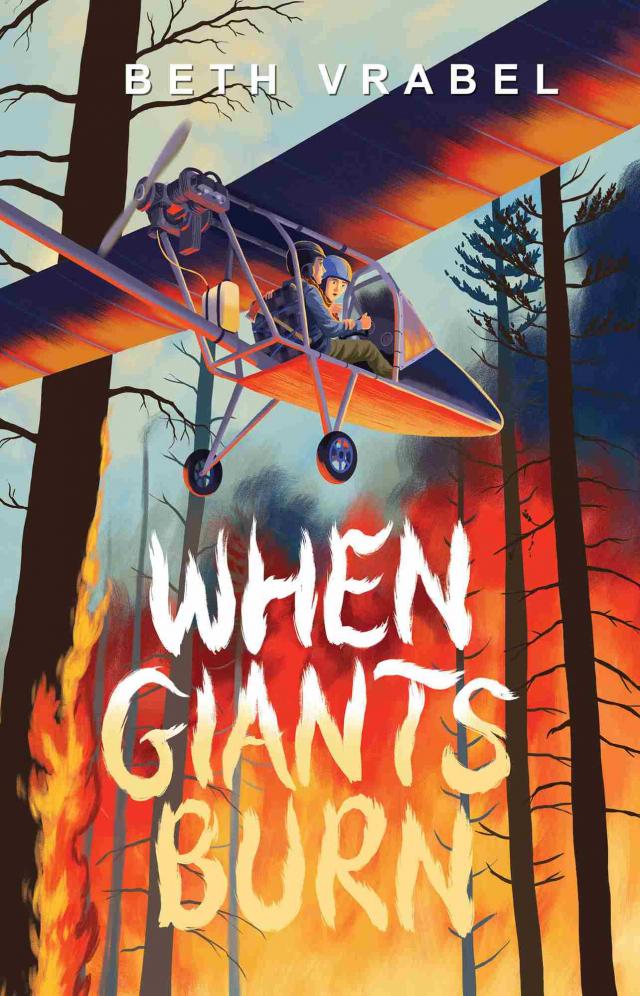
I don’t know if I’d call him a friend, really. I suspect we simply dislike each other less than we dislike everyone else. Okay, maybe the truth is that everyone else dislikes us more than they dislike everyone else. Either way, we’ve been hanging out together after school now too. And he’s been helping me build the plane. (By “helping,” I mean handing me tools. Most of the time the wrong ones, but I like that he tries.) I’m nearly finished. I might even finish the ultralight tonight.
I want to tell Hayes that it’s almost finished, but I also don’t. Once it’s done, my plan isn’t going to be just an idea. It’ll be real. And the next step—telling Alex and Jennifer about it and CAP—is going to be even harder than building a plane. Plus, I don’t know if Hayes will still follow me when I turn from the bus toward our woods if the plane is finished. I swallow. Alex says survivors compartmentalize feelings so they can take action. They regulate their breathing—three counts in, five counts out. I practice until I stop thinking about how this year’s squadron of CAP members must turn in forms by the end of the week, until I stop remembering that ultralights are responsible for more aviation crashes than any other craft, until I forget how sweaty and flushed Alex was when he buried all that cash that I dug up to pay for my plane.
And it nearly works. Or maybe it’s just that I’m distracted by how Hayes’s face keeps twisting, his jaw clenching and nostrils flaring. I know he doesn’t know how to regulate his feelings the way that I do, thanks to Alex and Jennifer’s training. His mind is snagged back to what happened before lunch.
“Do you want to talk about it?” I ask. He knows what I’m referring to and shakes his head. Mrs. Wayne, the math teacher, crossed her arms and stood over his desk. She peered at him while he took his math quiz—a different one from the test the rest of us had finished a few moments earlier. He had gotten 100 percent on that one, and she was sure he was cheating, so she had written new problems on a piece of paper and made him take that one too. “It makes no sense that you would suddenly know how to multiply fractions, when you could barely track the order of operations last week,” she had sneered.
I didn’t say anything in class, even as Hayes’s face flushed and his hands flicked again and again. “I studied,” he muttered. But I saw the big ink score Mrs. Wayne wrote at the top of his different quiz: 85 percent. I bet Hayes made sure he messed up some answers, just to get her off his back.
I wanted to say more—like that last month Hayes had slept through every class, but this week he had paid attention. That we had done our homework together, working through the problems while he ate too many of my chips. That if a teacher is going to go on and on about trying your best, then that same teacher shouldn’t harass a kid who listens to her. That it isn’t right that people expect him to be a cheat because they know his mom has been in jail. But I didn’t; the words clogged in my throat. I push some of them loose.
“Mrs. Wayne sucks.” I grab a fistful of the long grass growing along the picnic table legs. The blades are thick, more like yucca than lawn. I straighten a few so they’re lined up and bend a twist (Alex calls this a “bight”) to the side. Then I braid the blades, folding and rolling them, pushing them toward the bight. After a few twists I grab more grass and keep adding to the rope.
Hayes looks away, not reacting to my words, but I know he hears me from the way his jaw tightens. I nudge him.
The sun is streaming down, the breeze pushing around the limbs of the apple tree in the playground, shooting spears of light onto his face. Hayes winces as it flashes over his dark eyes.
His hands curl and open, his wrists flicking. Jennifer says repetitive movements are fine in non–survival situations, that they help alleviate inner turmoil. She says everyone does them. But Alex says every situation is a survival situation; you’re always a single bad decision away from disaster. They’re not exactly optimists, my parents.
Hayes shifts beside me, leaning forward slightly as something captures his attention. I follow Hayes’s eyes across the recess field to where his brother is playing. Charlie runs across the field, kicking a soccer ball in quick, steady strides. He’s smiling wide, the sun pouring down over him enough to make his hair look like a golden halo. I wonder if Hayes ever smiles like that, happiness pouring through him like sunshine. As though he’s never worried about a thing. Beside me, Hayes tenses as Jaxson trots toward Charlie. Jaxson shoots out an elbow and twists his leg to get the ball. Charlie laughs, the side of his foot hitting the ball just enough to pop it away from Jaxson, and keeps dribbling down the field.
Hayes leans back, his legs stretched out and elbows on the table. Here’s what it looks like when someone is proud: chin tilts upward, lips stretch back but not apart, eyebrows slightly rise. Hayes’s hands rest in soft fists.
Charlie scoops up the ball with the top of his foot, kicking it to his arms. He and four other kids are at the edge of the gaga pit. They are too far away to hear what they’re saying, but soon Charlie drops the ball and kicks it lightly out onto the field, and they hop inside the pit.
“What?” Hayes snaps at me.
I startle, eyebrows raised. Here’s the thing: I know what he’s asking, even if he got the word wrong. He’s asking why, as in why am I watching everyone so carefully? I shrug rather than answer. The truth is, I’m studying him and his brother. The purpose of going to school, Alex told me, is to see how “regular” people live so I understand his and Jennifer’s decision to opt out of society. By the end of this school year, Alex thinks we’ll be entirely self-sustaining. “Be an anthropologist,” he told me back in June as Jennifer moaned over the school paperwork she had to sign. “Look at the evidence in front of you, use your skills, and reach a conclusion.”
I know the scientific method. An experiment is flawed if the researcher is trying to prove a conclusion rather than allowing the experiment to reveal its own evidence. But Alex still thinks that by the end of this school year, I will be done with society at large.
Watching Hayes and his brother, I think he’s probably right. Regular people are too complicated.
Pain flits over Hayes’s face, and I don’t know why. Is it the math class? Is it the way his brother is shining? Something else altogether?
Hayes clears his throat. “I showed Mrs. Wayne I could do the math. Again.” Hayes nabs some long grass under the table and hands it to me. I don’t point out that what he gives me is too weak for the rope to be decent.
“Yeah, but aren’t you mad about it? I’d be pretty angry.”
“Oh, are you Mrs. Freid now?” His words are sharp, but the corner of his mouth twitches.
“Anger is a feeling, Hayes,” I singsong in a bad imitation of Mrs. Freid. “And every feeling is…”
I wait for him to join in with “temporary,” but he doesn’t. He stands, and then he bolts, barreling toward his brother.
Charlie is pressed against the corner of the gaga pit, Jaxson against him, hissing something in the smaller boy’s face. Hayes hurtles over the side of the pit, grabs Jaxson by the shoulder, and tosses him to the ground. I hardly realize I’m on my feet until I’m peering over the edge of the pit, seeing Jaxson scurry backward as Hayes turns to Charlie. Hayes’s face is twisted. Here’s what it looks like when someone is furious: forehead wrinkles like wings above each narrowed eye, mouth opens in a silent snarl, bottom jaw juts forward.
The gym teacher is on duty, and he comes running, blowing his whistle as Jaxson scuttles like a crab to the other side of the pit. “What is wrong with you?” Jaxson screams.
Hayes flips back to him, arms bent by his sides like a wrestler. “Leave my brother alone,” he growls.
“I can take care of myself,” Charlie says, but neither Hayes nor Jaxson seems to hear him.
“We’re just playing the stupid game,” Jaxson says as he scrambles to his feet.
Stay down, stay back, I silently plead with him. The look on Hayes’s face—it’s a warning, as clear as a bright red berry’s promise of poison. But Jaxson stomps toward Hayes. No one seems to hear the teacher’s whistle screeching over and over. Adrenaline rush—I know all about it. Survivors must focus on every detail around them, or their mind edits reality into a story, cutting out the background noises. Jennifer says it’s like how moviegoers don’t hear loud popcorn chewers when watching the film, but I don’t really get that, since I’ve never seen a movie and loud chewing makes me want to go gaga gladiator on people in the cafeteria.
Jaxson barrels into Hayes, his shoulder ramming into Hayes’s chest. Charlie is now pinned between Hayes and the low wall. His face, already flushed with embarrassment, is now slick with tears from pain, too. Neither Hayes nor Jaxson notices. Hayes’s fisted hand slams into Jaxson’s ribs. This is bad bad. The teacher pushes through the crowd of kids watching the fight, all of them buzzing.
“Stop!” I shout, and for some reason it works. Hayes’s fist drops to his side. When Jaxson steps forward, Hayes’s hands come up to shove him back—but once Jaxson is at a safer distance, Hayes ignores him and suddenly seems to remember his brother. I see the realization flash across his face, the intake of breath and the name on his mouth. He turns to Charlie, seeing his red face, noting how he holds his stomach, understanding he felt the impact of each punch and shove. “Charlie,” he breathes, just as the whistle blows so loudly that it could be a siren. Just as Jaxson smashes into Hayes from behind so hard that his head slams forward, whacking Charlie right over his eye. Hayes whips toward Jaxson, but no anger twists his face. Guilt, I think, and snapshot the expression in my mind. That’s what guilt, maybe even horror, looks like.
The teacher jumps over the edge of the gaga pit and grabs Jaxson and Hayes in each fist, holding them as though he ripped a single sheet of paper in two.
Mrs. Freid comes barreling out of the school, the lanyard around her neck slapping against her stomach as she runs. The gym teacher’s grip on the boys tightens enough that the knuckles of his fists are white against his tan skin. “I’ve got ’em,” he grumbles, his jaw twisting. But Hayes struggles, the neck of his T-shirt stretching as he tries to pull away.
“Charlie!” he says, and though his mouth opens wide as if to yell, his voice comes out as a whimper.
Sprawled in the gaga pit dirt, Charlie holds both hands over his left eye, his legs up as he rocks back and forth on his back. He sobs. “Mama.”
The word shifts something in Hayes, and he goes still. For a moment I picture him as a tree, roots spilling through his shoes, deep into the dirt, limbs hardened to bark. He seems not to feel the gym teacher’s yank of his T-shirt, not to hear anything else anyone says. Until Jaxson laughs, bitter and mean. “Aww, li’l baby wants his ma—”
Hayes lunges at Jaxson, ripping his T-shirt as he tackles the other boy. I watch them both rolling in the dirt.
6 HAYES
Feelings are temporary,” Mrs. Freid says, her voice soft despite the hard lines of her face. “The anger you felt then, the…” She seems to taste different words in her mouth before speaking. Her dark brown eyes narrow as they dart across my face. “The remorse you feel now,” she decides, “also is temporary. It’s what you do while you’re feeling them that matters, Hayes.”
I nod, figuring it’s the best way to get her to stop talking. The ice pack I’m holding against my forehead chills my whole body. I’m so tired. I want to leave. Not just Mrs. Freid’s office. Not to go to Grandma Louise’s. I want to be alone, be dropped in the middle of nowhere. Somewhere without Mrs. Freid’s panicky face, Gerty’s watchful eyes, Mom’s scowl, or, worst of all, the black smudge over Charlie’s eye. I don’t want to see anyone. I don’t want to feel anything. I don’t want to think about the anger crackling inside me all the time.
She lays her hands on the desk, palms up, as she takes a deep breath. “What do you think would be a good way to handle anger?”
In California a couple of sixth graders got into a fight, and it wasn’t nearly as bad as what Jaxson and I did. Both of them were expelled. But in Rabbit? I’m not sure what’s going to happen. After the nurse told Jaxson he was fine and gave me and Charlie ice packs, Mrs. Freid pulled me into her office. She scowled when Gerty slid through the door behind me but didn’t tell her to leave.
I stare at the counselor. She stares at me.
Gerty lounges in her chair beside me, gnawing on a piece of jerky. “This better be good, because I’m pretty sure my dad and mom are going to be handling some anger soon. My birthday is in two days. We don’t give presents anymore, and that’s okay because all I want is permission for CAP. The sign-ups are due by the end of the week. And tonight I’ll probably finish my—”
Mrs. Freid interrupts. “I’m talking with Hayes right now, Gerty. We’ll talk about your new hat in a moment.” She doesn’t move her eyes from me. Gerty nearly told her giant secret. Later I’ll wonder why she did it—if it was to give me cover, or if she really was ready to talk about the airplane.
“Uh,” I say, “handling anger, you mean, like, not shoving Jaxson into the dirt?”
Gerty snorts and Mrs. Freid sighs. “Yes, Hayes. Aside from pushing your friend into the dirt, what would’ve been a smarter way of handling this situation?”
“He isn’t my friend.” Mrs. Freid’s eyes narrow further, so I continue. “And he was shoving my little brother around. Right, Gerty?”
Gerty sucks on a tooth, probably trying to dislodge the jerky. She shrugs. “I guess so. I didn’t see it.” Mrs. Freid’s head tilts at that. I know why. Gerty sees everything. Was Jaxson shoving Charlie around? My mind rewinds to the moment I saw Jaxson hovering over my brother in the gaga pit. Okay, so maybe he wasn’t actively shoving Charlie, but it looked like he was going to anytime. “I’m down to the last step,” Gerty says. “Nanny Pat says she’ll help me talk to Alex and Jennifer, but I actually think that would make it even wor—”
“As it happens,” Mrs. Freid says, “Jaxson’s parents don’t want to press charges for your assault.”
“Assault?” Gerty huffs next to me, but I can’t turn to see her. I can’t move at all. Charges. A gavel smacking down, a door clanging shut. They don’t send kids to jail for fighting on the playground, right?
Gerty sits upright. She’s not looking at me, but I know she’s watching all the same. Slowly her hands curl, wrists flick, then open. She repeats the motion, this time even slower. It’s what I do when I’m peeling away throwaway thoughts. Gerty turns toward me, just a little bit. I swallow the sourness that flooded my mouth with that too-loud word and then copy her movements.
Mrs. Freid folds her hands on her desk and stares down at them. “I can help you, Hayes,” she says softly. “Strong emotions are overwhelming, but if we don’t give them fuel, they burn out. There are ways to sit with these feelings, to let them sizzle out.”
“Fizzle,” Gerty says.
Mrs. Freid ignores her correction. “Meditation, for example.” She holds up a slim hand. “Now stop it, don’t roll your eyes at me. It works.”
Gerty shrugs, turning fully toward me. “She’s right. Meditation has been around forever. Samurai warriors meditate on death so they can fight without fearing it.”
“I’m supposed to sit here and think about how angry I am, and that will make me not angry?” I groan. “I’m not even angry anymore, okay?”
Mrs. Freid presses her lips together, then says, “Perhaps we could just close our eyes and think of something peaceful. Like a tree. I have a favorite tree that I think about when I want to feel more tranquil.”
Gerty, for some reason, straightens. Her focus intensifies in a way that reminds me of a wolf closing in on elk or something. “Tell me about it,” she says. “Your tree, I mean.”
Mrs. Freid’s eyes flare in surprise. Gerty doesn’t show a whole lot of interest in these conversations, generally speaking. “Well,” Mrs. Freid says slowly. She reaches behind her and grabs a framed picture from the bookshelf under the window. It’s her, but younger, maybe just a few years older than us. She’s with her mom. Whoever took the picture must’ve stood on a bench or something, because the angle is top down. Over her shoulders is a large tree with slender limbs and bright red leaves. The trunk can’t be seen; it’s growing below her, the building behind her designed with a giant open square for the tree to grow in.
“This was taken at my college in Cambridge, Massachusetts,” she says. “There’s a library that goes into the ground, and right in the middle is this Japanese maple. The whole building encircles it. When you walk by, the canopy is barely to the top of the enclosure. When you’re inside the building, you’re technically underground, but all the windows look out into this courtyard where the tree stands, making you feel like you’re aboveground.”
She swallows, staring at the picture for a beat longer. When she looks up, her expression is already more peaceful. “Anyway,” she says, “when I’m feeling overwhelmed, I close my eyes and I think of this tree. Of how, when I was a student with hundreds of pages of reading to do, I could look out and see this tree and feel connected to nature.” She twists to put the photograph behind her again. Beside me, Gerty scowls, crossing her arms, nostrils flaring.