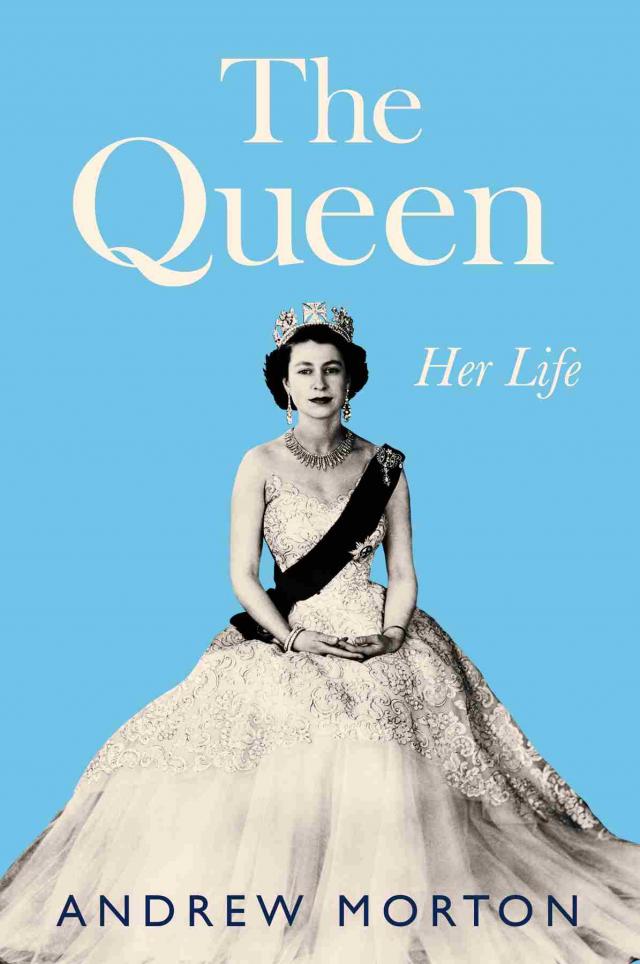
The Queen, page 36


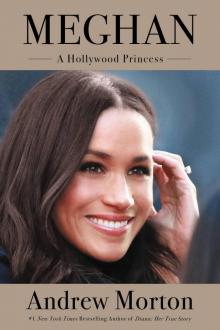
The arrival from California of Meghan, Harry, and their children, Archie and Lilibet, for the jubilee celebrations also had the potential to become a family calamity and a media circus. There were fears, inside and outside the palace, that the couple, who have contractual deals with Netflix and other media outlets, would say or do something that would take the spotlight away from the queen. Royal observers cited a previous trip to London in April 2022 when Prince Harry was on his way to the Netherlands to preside over the Invictus games. At that time he told NBC that he had visited the queen to make sure that she was protected and “has got the right people around her.”
His words were seen as a swipe at the courtiers close to Her Majesty, notably her private secretary, Sir Edward Young, and her influential dresser, Angela Kelly. It was Kelly who clashed with the prince over access to a tiara that the queen loaned to Meghan for her wedding day.
During their brief visit the couple deliberately maintained a low profile and watched the traditional Trooping of the Color ceremony from inside a government building, where the couple were photographed marshaling some of the noisier royal youngsters during the occasion. There was, however, no place on the Buckingham Palace balcony for Harry, Meghan, their children, nor the sprawling cast of junior royals. Those invited to watch the spectacular flypast were limited to “working royals” only, the queen standing with her immediate successors—Princes Charles, William, and George—in a public demonstration of continuity.
Privately the California-based couple introduced Lilibet to both the queen and Prince Charles. After an “emotional meeting” Charles described himself as “absolutely thrilled” to see his granddaughter for the first time and to be reacquainted with his grandson, Archie. Though the couple brought along a photographer to capture the scene of one Lilibet meeting another, the queen indicated that she was too tired and, as her eyes were bloodshot, she was not up to a photo session. More cynical media observers suggested that this was a diplomatic way of preventing the Sussexes from exploiting the historic family meeting.
Within hours of that brief family reunion, the Sussexes boarded a private jet to take them to back to California with little if any sign of a rapprochement between the feuding brothers. Instead there was the inevitable realization that though Harry and Meghan had previously pledged their undying allegiance to Her Majesty while criticizing the institution she presided over, one day in the not-too-distant future their most affectionate, forgiving, and influential supporter would no longer be around to defend them. It is doubtful that Harry’s brother and father will lend the couple the same welcome as the queen. Indeed it would be an indulgent king who gave his querulous and critical son the same easy access as the previous incumbent. It is almost history repeating itself: George VI’s relationship with his elder brother, Edward VIII, who later became the Duke of Windsor, was never the same after Edward abdicated the throne to marry the twice-divorced American Wallis Simpson.
Just as Prince Andrew’s folly will cause problems for the monarchy for some time to come, so the Sussexes’ rival royal court in California may provide a more overtly political and radical counterpoint to the House of Windsor. Meghan and Harry have already dipped more than a toe in the American political scene; the couple joined in the widespread condemnation of the Supreme Court’s dismantling of the Roe v. Wade decision regarding abortion rights. A speech by Harry to the United Nations celebrating the life of the late South African president Nelson Mandela in July 2022 demonstrated the prince’s continued reach and relevance—with or without an HRH title. Similarly George Vl and Queen Elizabeth were always wary that his charismatic elder brother and wife who, like Meghan and Harry, lived abroad, would steal the spotlight away from them.
Ironically it was not the behavior of her family but her fourteenth prime minister, Boris Johnson, that threatened to cast a pall over the jubilee celebrations and drag the monarchy into a national crisis. Even as the crowds sang the queen’s praises, other voices in his own ruling party urged Johnson to go. This was in response to numerous scandals that had assailed his premiership. In the heady days of the crisis it was thought that Johnson would refuse to resign. Like a scene out of an action movie, the cry went up: “Activate the queen,” suggesting that if Johnson stayed put in spite of losing the confidence of his cabinet and party the queen would be dragged into the political arena. She would be obliged to sack him. It was a murky constitutional area that was never tested. In early July Johnson tendered his resignation, which was duly, perhaps gratefully, accepted by the queen. It was proof, if any were needed, that the queen had to be on her constitutional toes, no matter how long she had reigned.
During her reign the monarchy has moved away from platitudes and bromides to commitment to and concern about some of the most challenging issues of our times, notably the environment. Planting trees, not just the odd ceremonial sapling but entire forests, was the overarching theme of the jubilee. The queen was acutely aware of the symbolism of a growing tree; like the institution to which she has devoted her life, it represented change amid continuity.
She was an enthusiastic exponent of the green monarchy, a sentiment symbolized by the “tree of trees” which was planted outside Buckingham Palace. During the jubilee celebrations she referred to the pioneering environmental work of her late husband and indicated that she couldn’t be more proud of his legacy and the work of princes Charles and William. As William told the boisterous crowd gathered outside Buckingham Palace for the jubilee pop concert, “The pressing need to protect and restore our planet has never been more urgent.” He shared his grandmother’s optimism that the planet could be saved for future generations. The focus on the environment, arguably the greatest issue of our time, was a further sign of how far the monarchy had changed during the queen’s reign,
While the constitutional importance of the monarchy has waned, the queen has presided over the transformation of the institution into a national cheerleader with members of the family becoming enthusiastic activists and promoters for causes they hold dear. The days of the white-gloved, big-handbag, do-not-touch monarchy are long gone.
Just before his fortieth birthday in June 2022, Prince William gained global headlines when he went on the streets of London to sell the Big Issue, a magazine sold by the homeless to help them get a hand up out of poverty. He admitted that he was inspired by the work and example of his late mother, Diana, Princess of Wales, who took him and his brother on excursions to meet rough sleepers. At the time, her work with the underprivileged and marginalized was seen as unconventional.
Now it is mainstream. The queen presided over this important change in royal work, and the behavior of the coming generation helps to ensure the continued relevance of the monarchy long into the future. As William observed in an interview with the Big Issue: “I have always believed in using my platform… to bring attention and action to those who are struggling. I plan to do that now that I’m turning forty, even more than I have in the past.”
It is deeply satisfying for the queen to know that her successor not only shares her commitment to service but enjoys a solid, committed family life that is reminiscent of her own happy childhood. As she observed in a BBC documentary, Elizabeth: The Unseen Queen, which she narrated herself: “In my experience a happy family is one of the positive features of human existence that has not changed.” She revealed, too, the bedrock values that have sustained her during the triumphs and disasters of her long reign: “Faith, family, and friendship have not only been a constant for me but a source of personal comfort and reassurance,” she said.
A single sentence in her televised reflections gave a telling insight into her character and helped explain why the queen excites such universal respect from world leaders to the men and women in the street: “It is not enough to do our job, service demands sacrifice.”
This sentiment has served as a lodestar throughout her long reign, comprised of sterling values she has endeavored to pass on to the generation who will come after her. For most of her reign she has seemed impregnable and immovable, the “golden thread” who has linked disparate and often competing nations, organizations, and constitutions to one another. The monarchy has always been based on contradictions, ambiguities, and paradoxes, conflicts that have been largely left untouched.
With thoughts turning to the prospect of King Charles and Queen Camilla, fundamental questions about the future of the monarchy will be raised in a very different political climate to that which existed in 1952, when Elizabeth first became queen. With the waning of deference and the questioning of ancient and modern institutions from the church to Parliament, the monarchy and its purpose and relevance will come under close scrutiny at the beginning of the new reign. Why, for instance, should a white, Anglo Saxon Christian family automatically represent a diverse multiethnic nation and Commonwealth? With Scottish independence still a live political issue, could King Charles realistically reign over this independent northern realm? How, too, will Queen Camilla be accepted by the general public, given her part in Charles’s divorce? And will the Commonwealth, so carefully tended by Elizabeth, still have a purpose in the long-term? Will a pared-down, streamlined monarchy, which is Charles’s aim, be able to cope with a demanding international constituency?
Though the queen will have left a formidable legacy of service, selflessness, and respect, it remains to be seen how the new players will respond to these challenges when Queen Elizabeth II finally leaves the stage. One thing is certain, though; she will be a hard act to follow.
After more than a decade of war and grinding austerity, the prospect of a young and glamorous new Queen lifted the spirits of a weary nation. For the Queen and Prince Philip, their new duties and responsibilities exacted a high price. The Queen placed duty before family, while her husband resigned from his promising career in the Royal Navy. Here she is in 1953, at a concert in central London organized by the governments of Australia and New Zealand, who were expecting a six-month visit Down Under by the royal couple. Prince Charles and Princess Anne were left behind for the duration of the visit.
Princess Elizabeth, an enchanting curly haired blonde, with her parents, then the Duke and Duchess of York. Only Hollywood child star Shirley Temple could match the royal infant for international appeal. Her winsome features appeared on stamps, plates, mugs and tea towels.
A rare picture of eight-yearold Princess Elizabeth and her sister Margaret, then four, with other children. Here they are at a fancy dress party, Elizabeth dressed as a Tudor lady, Margaret as a fairy. For most of their day-to-day lives the sisters were in the company of adults who controlled every aspect of their welfare.
After the shock of the abdication in 1936, when King Edward Vlll gave up the throne to marry the twice-divorced American Wallis Simpson, the Windsors were keen to re-establish themselves as models of home, hearth, and humble family life. Here are what the new King, George Vl, called “we four” posing for happy family snaps with their dogs in the setting of “Y Bwthyn Bach,” or “The Little House,” a miniature cottage given to Elizabeth by the people of Wales.
For the coronation of King George Vl, their father designed lightweight coronets and gowns for his daughters. Margaret, however, complained that her train was shorter than that of her elder sister. On the morning of the coronation, Elizabeth looked out from her bedroom at Buckingham Palace at the crowds who had waited all night to watch the ancient ceremony.
The King and his daughters out riding in Windsor Great Park. Ever since she was a little girl, Elizabeth was fascinated by horses. She not only enjoyed riding horses but became involved in their management and care. Those in the racing community believe that if she hadn’t become Queen she would have made an excellent trainer.
The Second World War changed the lives of most, none more so than that of the future Queen. It was vital for morale that the country knew that Princess Elizabeth and her sister remained in England rather than seek safety in Canada or elsewhere. In 1940, with Britain on the ropes, the Princess, Margaret by her side, made her first broadcast to the nation’s children, speaking with words of good cheer to those forced to leave their homes and families in the cities and move to the countryside or abroad.
After months of badgering her parents to let her do her bit for the war effort, in early 1945 the King and Queen finally allowed Princess Elizabeth to join the ATS (Auxiliary Territorial Service). She learned to drive trucks, change tires, and perform mechanical repairs. The Princess showed off her skills when she drove a truck through central London to Buckingham Palace.
This was the moment when sharp-eyed journalists realized that Princess Elizabeth was dating the handsome naval lieutenant Prince Philip of Greece, when he helped her off with her fur coat prior to the wedding of Lord Brabourne and Patricia Mountbatten at Romsey Abbey, Hampshire, in October 1946.
On her 21st birthday, April 21, 1947, Princess Elizabeth gave the most important address of her life when she dedicated her future, “whether it be long or short,” to the service of the nation and the Commonwealth. Many listening to the radio broadcast, relayed from Cape Town in South Africa, were moved to tears by her simple humility.
Princess Elizabeth and the newly minted Duke of Edinburgh celebrate their wedding day on November 20, 1947. The duke soon realized that he had not just married a Princess, he had taken on a dynasty. In the early years he found the going difficult.
Princess Elizabeth cradled baby Prince Charles, who was born on November 14, 1948, during his christening at Buckingham Palace shortly before Christmas. The happy event was overshadowed by general concern regarding the King’s health.
The royal couple dancing reels at the Phoenicia Hotel in Valetta, Malta, where Philip was stationed in 1949. Princess Elizabeth was able to lead a relatively normal life away from the shadow of the palace. She handled money for the first time, went to the hairdresser on her own, and drove or sailed around the island unnoticed. It was one of the happiest periods of her life.
Bareheaded, the King sees off his daughter from London Airport, before she and Prince Philip headed to Australia via Kenya on a much-delayed royal visit. He died in his sleep at Sandringham days later, on February 6, 1952.
Elizabeth, now Queen, walks down the aircraft steps to be greeted by Prime Minister Winston Churchill and other senior politicians.
During the threehour coronation, the Queen, now wearing St. Edward’s Crown, accepted the formal declaration of loyalty from her husband. Initially the Queen had opposed the televising of this historic event but in the end she gave in to popular demand.
The newly crowned Queen Elizabeth II waves to the crowds from the balcony of Buckingham Palace, alongside Prince Philip and three of her six maids of honor. It was hoped that the new reign would herald a dynamic Elizabethan age of change, innovation, and reform.
Princess Margaret inspects the troops followed by (far left) her secret lover Group Captain Peter Townsend, a war ace who held the post of comptroller inside the Royal Household. Her sister’s affair with a divorced man would present the Queen with an early problem that tested her character in full measure.
The Queen, shortly before giving her first televised Christmas broadcast, in 1957. Her broadcast came at a time of mounting criticism of the “tweedy sort” who made up the Queen’s court. Her critics, though, were very much in the minority as the broadcast attracted a substantial audience of sixteen and a half million viewers in a nation where television ownership was still in the minority. With the success of the first broadcast, the queen’s Christmas message became a festive must-watch.
She may be the Queen and Head of State of Britain and the Commonwealth but that means nothing to her dorgis and corgis who appeared reluctant to follow her lead as she prepared to board an aircraft of the Queen’s Flight at Aberdeen Airport, near her private estate of Balmoral in the Scottish Highlands. Her corgis, a breed which she had since childhood, were instantly recognizable symbols of her reign.
The Queen in her favorite habitat – the countryside. Here she is chatting away with an unconcerned Highland shepherd at a gun dog trial in the early 1960s. If she hadn’t been the Queen, she wanted to live in the country surrounded by children, horses, and dogs.
Photographer Cecil Beaton captured the domesticity of motherhood in the grand setting of Buckingham Palace. The birth of Prince Edward in 1964 completed her family. Prince Andrew, who was intrigued by his baby brother, looks on.
The Queen tours the site of the mining disaster in the south Wales village of Aberfan, when a slag heap collapsed and slammed into a school and local houses, killing 144, mainly children. The Queen always regretted not going earlier.
Prince Charles pledges his loyalty to the Queen at his investiture as Prince of Wales at Caernarfon Castle, July 1, 1969. The ceremony helped reignite interest in the monarchy.
In the unlikely setting of a fair in the New Zealand town of Greymouth in March 1970, the Queen made history when she mingled with her subjects, the first monarch since Charles II to do so.