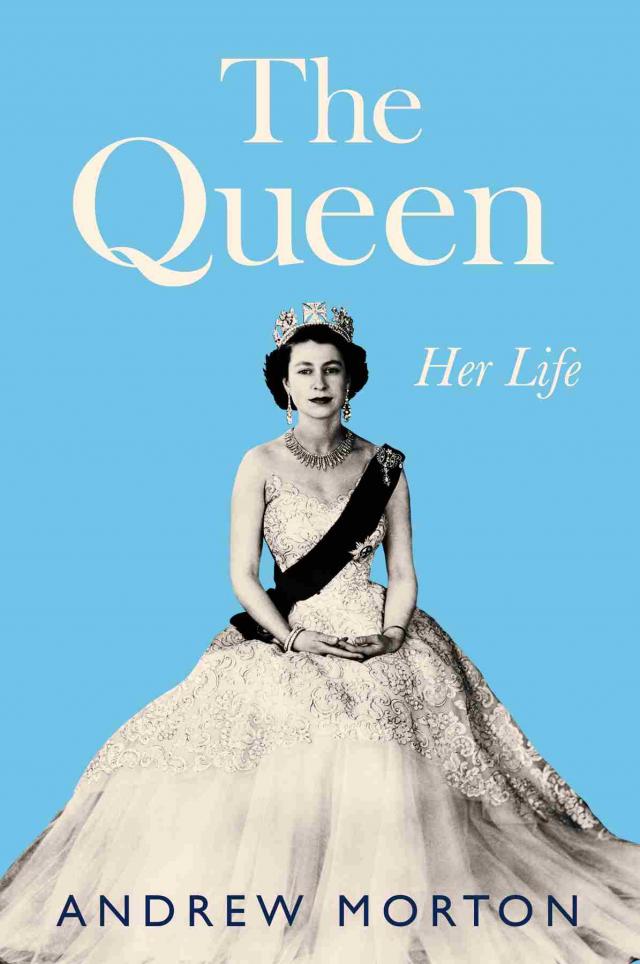
The Queen, page 32


Along with her faith and her family, her relationship with the Duke of Edinburgh was at the core of her life. In short Prince Philip was the only man in the world to treat her like a normal human being, a quality that she truly valued. Appropriately they spent their sixtieth wedding anniversary on Malta, the island they called home when they were a young married couple.
Now grandparents and great-grandparents, they enjoyed a close relationship with their young brood. They would join them for afternoon tea or sit on the sofa and watch Mickey Mouse and other Disney cartoons. The palace switchboard knew to patch the youngsters through to the queen wherever she might be in the world.
Though the queen paid special attention to Harry after he lost his mother at such a young age, she carefully monitored the development and well-being of her eventual heir, Prince William. Their relationship blossomed when he was a boarder at Eton, just a short walk from Windsor Castle. Every Sunday he joined the queen and Prince Philip for lunch or afternoon tea. Once they had finished the meal, the duke would make a discreet exit so they could talk further. In between chitchat about his schoolwork, their meetings were an early chance to impress upon the thoughtful teenager the need to protect and sustain his birthright, the monarchy.
As the queen’s friend Lady Elizabeth Anson once observed: “The Queen spent a huge amount of time with William. They are exceptionally close and the Queen has been a wonderful mentor for William over the years.”33 Her thoughtful conduct was reminiscent of the way her own father, George VI, gradually inducted his eldest daughter into the family “Firm.”
She and the Duke of Edinburgh always ensured that their diaries were free in order to watch William mark the major milestones in his life. They were present at the University of St. Andrews on the northeast coast of Scotland on June 23, 2005, when, at the formal graduation ceremony, he was presented with an upper-second-class degree in geography. His girlfriend Catherine Middleton earned the same grade for her subject, the history of art. Though she and her parents were introduced to the queen and Prince Philip, few palace insiders expected the romance to last long after college.
Catherine confounded the critics and stuck around to the point that the queen invited William and his girlfriend for a quiet dinner at Windsor Castle. This time around she was not going to leave anything to chance. The queen took a particularly close interest in the woman who might one day become queen consort. And the mood music was almost entirely favorable. A lady-in-waiting gave her the thumbs-up. She reported: “The Queen has taken genuine delight in Kate Middleton. She sees in Kate a young woman who has no interest in being royal but loves William for himself. The Queen is very positive about the match. She sees in them two young people who are capable of capturing the affection of the people.”34
Such was the hysteria surrounding the possibility of an engagement announcement on Catherine’s twenty-fifth birthday in January 2007 that she was mobbed by paparazzi as she walked down the street to her car before driving to her job in a retail fashion company. A seething Prince William, astonished that the paparazzi had learned nothing from his mother’s untimely death, issued a statement condemning the harassment. The incident was a turning point. William was so concerned that Catherine did not truly realize what she was getting herself involved in that, in April 2007, he ended the relationship.
He later explained: “I wanted to give her a chance to see in and back out if she needed to before it all got too much. I’m trying to learn from the past. I just wanted to give her the best chance to settle in and to see what happens on the other side.”35
After the well-publicized breakup Catherine simply kept smiling and carried on having a good time. It was not long before William realized his mistake and renewed the romance. This time he was back for good. The queen kept a watchful but benign eye on the burgeoning romance, for example inviting Kate to watch William when he was inaugurated as a royal knight companion in the Order of the Garter during a ceremony at St. George’s chapel. She also suggested that Catherine affiliate herself with a charity. She took the point, involving herself in raising funds for Starlight Children’s Foundation, a charity for seriously and terminally ill children.
When William trained as a search-and-rescue pilot based at Valley station in Anglesey, an island off the northwest coast of Wales, the queen gave her approval for Catherine to live with him in a rented cottage. This courtship was so very different from that of his father. Charles only spent a few weeks romancing Lady Diana Spencer before asking her to marry him. His eldest son was much more circumspect. William followed his mother’s advice, which was to “marry your best friend.” He had spent years with Catherine before he finally asked her to marry him during a fishing expedition on a holiday in Kenya. Shortly after the engagement announcement on November 16, 2010, he was calling the queen for advice.
At the first meeting with palace officials he was presented with a list of 777 candidates to be invited to the wedding. He had never heard of most of them let alone met them. The prince and his bride wanted to organize the wedding their way. Noticeably he went to the queen rather than his father for advice. She suggested he scrap the first list and begin by writing down the names of those he and Catherine actually wanted to share their big day. Then work from there.
The wedding day itself, on April 29, 2011, was a splendid confluence of pomp, pageantry, and family intimacy. Catherine looked stunning in her Sarah Burton satin-and-lace gown while William seemed nervous as he watched the bride make her way down the aisle in Westminster Abbey. Their departure in a vintage Aston Martin for Clarence House following their balcony appearance at Buckingham Palace was a brilliant coup de théâtre.
The queen was positively playful on the wedding day, “practically skipping” said one observer, absolutely thrilled at the way the public responded to the royal newlyweds.36 It seemed that, in her eyes, the future of the royal family, her family, was now secure. The monarchy was once again held in admiration and affection by the public. Prince Edward reflected on her response some time later. “The Queen was surprised at how the public took William and Catherine to heart. I don’t think my mother ever expected the public response or thought people would come out in such support of her family as they did during William and Catherine’s wedding. It was wonderful. My mother really cares about the British people and their welfare. It was wonderful to see the warm and heartfelt support.”37
Clear skies however rarely lasted long over the House of Windsor. The buildup to the wedding had overshadowed an embarrassing family matter. Prince Andrew came under intense scrutiny over his position as special representative for trade and investment. Concerns were raised about the costs of his extensive travel and the people he was linked with, who included the son of the Libyan dictator General Gaddafi and another associate who was described as a gun smuggler. Most damning was his continued relationship with New York millionaire sex offender Jeffrey Epstein. Even though Epstein was convicted in 2008 for procuring a child for prostitution, in 2010, after his release, Andrew was photographed together with him in Central Park in New York.
Much as the queen indulged her second son, both financially and emotionally, the media and political criticism was unrelenting. It went up a gear when it was learned that Fergie, the Duchess of York, had accepted a loan from the sex offender. Shortly after a difficult hour-long conversation with the queen Andrew resigned from his position as trade envoy. His surrender was, noted BBC royal correspondent Peter Hunt, “inevitable.” This was a classic example of a witless royal falling prey to the generosity of wealthy friends of dubious provenance.
William and Catherine knew little of the brooding scandal as they enjoyed their honeymoon on an island in the Seychelles in the Indian Ocean. Prince William spent time on his computer trying to find out about a visit that had the queen, a veteran of dozens of royal tours, very excited. For the first time since 1911 when George V visited Dublin during its days as part of the British empire, a reigning monarch was about to step foot on Irish soil.
The long history of animosity, resistance, and revolution between these two neighboring islands had previously made an official royal tour unthinkable—until now. After months of back-and-forth, the two countries agreed an agenda that placed the emphasis on peace and reconciliation, a key element of the Good Friday Agreement.
As Prince William told writer Robert Hardman: “She was so excited about it and really looking forward to it. It was quite sweet.”38 From the moment she stepped off the aircraft wearing an emerald coat, dress, and hat, Irish eyes were smiling, cooing at the compliment paid to the Irish nation in her choice of color scheme.
During the four-day state visit, the queen and Prince Philip visited the Trinity College Library in Dublin where they saw the Book of Kells, one of the world’s most ancient volumes, laid a wreath at the Garden of Remembrance dedicated to those who died in the struggle for liberation from Britain, visited a trio of stud farms—and watched a pint of Guinness being carefully poured. At the state banquet the queen began her speech in Gaelic, which earned warm applause from President McAleese and other dignitaries.
In a careful and well-judged speech, the queen acknowledged the “sad and regrettable” mistakes of Britain’s troubled relationship with Ireland, referring to the “heartache, turbulence and loss” of the past. “We can all see things which we would wish had been done differently or not at all.”39 Prime Minister David Cameron described the queen’s visit as a “game changer”40 that heralded a new era of Anglo-Irish relations. This official tour helped embed the peace process between the peoples of Ireland and Northern Ireland. The queen continued to play her part. Three years later, in June 2014, she visited Belfast where she shook the hand of Martin McGuinness, deputy first minister of Northern Ireland and former hard man of the Provisional IRA terrorist group. It was one of the most symbolic actions of her reign. Her handshake was seen as a gesture of forgiveness and reconciliation with a man whose terrorist organization had killed Lord Mountbatten and others. The simple act demonstrated how far the peace process had come.
There was constitutional housekeeping taking place much nearer to home. As the Diamond Jubilee of the queen’s reign approached, she agreed to sweeping but long-overdue reforms to the royal succession. At the heads of Commonwealth meeting in Perth, Western Australia, in October 2011 British prime minister David Cameron put forward proposals, unanimously agreed by the other fifteen leaders, to change the law so that firstborn girls could become queen. It meant that should William and Catherine’s first child be a girl, she would be the sovereign. In fact their firstborn was a boy, Prince George.
The leaders unanimously agreed to reform the 1701 Act of Settlement, which discriminated against women, and also repeal the Royal Marriages Act of 1772. The scrapping of the latter act lifted the ban on a monarch marrying a Roman Catholic and also removed the requirement for all those in line to the throne, apart from the first six, to obtain permission to marry from the sovereign. They were made law in the 2013 Succession to the Crown Act.
Not only did these constitutional changes bring the House of Windsor into the twenty-first century, they also deliberately coincided with a radical change in the funding of the monarchy. The age-old Civil List was replaced by the Sovereign Grant, the monarchy now subsidized by a percentage from the profits of the Crown Estate, the independent corporation that is owned by the monarch but is not the private property of the sovereign. These much-needed reforms effectively wiped the constitutional slate clean for the queen’s immediate heir, Prince Charles.
For some years he had been a firm advocate of a supple, slimmed-down monarchy. During the Diamond Jubilee celebrations in June 2012, the future direction of travel for the monarchy was on full display. When the queen and Prince Philip stood on the deck of the lavishly decorated royal barge, Spirit of Chartwell, to review the stunning thousand-boat flotilla on the river Thames in central London, they were joined only by the Duke and Duchess of Cambridge, the Duke and Duchess of Cornwall, and Prince Harry. The remaining senior royals, Princes Andrew and Edward and Princess Anne, were assigned to other boats for the pageant.
It was noticeable, too, that the Duchess of Cornwall, for so long a royal outsider, was now on easy and convivial terms with the queen and every other member of the royal family. As the specially built royal row barge Gloriana passed the National Theatre the queen nudged her daughter-in-law to point out Joey, the puppet realization of Michael Morpurgo’s War Horse, which had reared up in greeting. The queen was a fan of the production, having seen the original play in London and hosting a special screening at Windsor Castle for members of the Household, the performance also attended by director Steven Spielberg.
The one casualty of the four-hour festival, which took place in chilling June rain and wind, was Prince Philip, who was subsequently hospitalized with a bladder infection. He never really fully recovered. He missed the spectacular three-hour firework concert outside Buckingham Palace with performances from, among others, Elton John, Paul McCartney, and Kylie Minogue. In a symbolic moment, the band Madness played their hit “Our House” from the roof of Buckingham Palace, a clever light show turning the frontage into a block of down-market apartments.
In a touching speech to his mother, Prince Charles paid tribute to the queen’s selfless duty, service, and “making us proud to be British.” The grand finale of the celebration was the reappearance on the Buckingham Palace balcony of the Magnificent Seven (minus Prince Philip). The signal was clear—the succession was assured.
“An incredible day, absolutely wonderful,”41 the queen said to her eldest son as they watched a flypast by the Red Arrows display team as well as World War Two fighter planes. The experience had been, she said in a short broadcast of thanks, “a humbling experience.”42 The jubilee festivities marked not only the queen’s magnificent sixty years on the throne, but also the beginning of a new era for the royal family.
14
Good Evening, Mr. Bond
On a balmy summer’s night the eighty-six-year-old queen gave herself a license to thrill and surprise a worldwide audience eager to watch the opening ceremony of the 2012 Olympic games.
“Her Majesty,” wearing a peach dress and pearls, leapt from a hovering helicopter, her Union Jack parachute illuminated in the night sky as she fell safely to earth, somewhere offstage. The next shot was of her in that same colored dress and fascinator walking to the podium at the specially built Olympic stadium in east London to formally open the games.
There were many among the watching millions who genuinely thought that the real queen had made the most daring and dangerous entrance of her reign. Former health secretary Jeremy Hunt later told Elizabeth that a Japanese tourist remarked that it was wonderful for the queen to be involved in the Olympics in such a daring manner as back home they would never get their emperor to jump out of a plane.1
In the beginning there were some inside Buckingham Palace who never thought that the queen would agree to becoming the highest-profile “Bond girl” ever and, for good measure, agree to utter the immortal lines: “Good evening, Mr. Bond.”
Yet the longer the queen reigned, the more willing she seemed to kick back and take a chance. Irish film director Danny Boyle, who had the daunting task of arranging the choreography for the opening Olympic ceremony, wondered if she would take a chance on him.
Some months before he had the idea of using the queen in a short promotional film just before the official opening ceremony. She was to be rescued from some unseen threat by 007 himself. James Bond, in black tie, would meet her at Buckingham Palace and escort her to a helicopter where “the queen” would fly over and under various London landmarks, such as Tower Bridge and the Houses of Parliament, before dramatically jumping out of the helicopter into the night sky.
Would the idea fly with Her Majesty? Initially Boyle put the scheme to Lord Coe, the London 2012 chief, who in turn spoke to Princess Anne. In her matter-of-fact manner she said simply: “Why don’t you ask her?”2
Within days Boyle was inside Buckingham Palace sketching out the scenario to the queen’s deputy private secretary Edward Young and her dresser Angela Kelly. She loved the idea and went upstairs to speak to the queen in person.
It found immediate royal approval but with one proviso: She had to speak the iconic—and much parodied—line “Good evening, Mr. Bond,” as actor Daniel Craig, who played the evergreen hero, stood at attention waiting for her to finish some paperwork at her desk. Then the queen, her corgis, and her page, followed by Commander Bond, would walk to a waiting helicopter, ending with that iconic parachute jump in an evening gown.
Not only was the sketch one of the highlights of a memorable Olympic games but it revealed a daring, almost mischievous, side to the queen’s personality that came to the surface from time to time. During that Olympic year she told her dresser Angela Kelly that ever since she was young she had harbored a secret wish. As a child her elders, especially Queen Mary, had insisted that she keep her hands out of her pockets. Just to make sure, the pockets in all her clothes were sewn up.
For years she wanted to make a childhood dream come true and to be photographed more informally, with her hands in her pockets. However, the queen mother as well as her advisers had always suggested it was not an appropriate look for the sovereign. Then, as with so many things, she had given in to their arguments.
Not this time. Kelly brought in photographer Barry Jeffery who shot her as she mimicked the poses of a professional model—with and without her hands in the pockets of her white dress.
For several years the pictures remained private. Officials from the Royal Collection argued, according to Kelly, that these more candid informal photographs of the queen could bring down the monarchy and therefore were not suitable for the public.3 Some years later the whole set of photographs was released—and the sky did not fall in on the institution.