

Violets, page 1
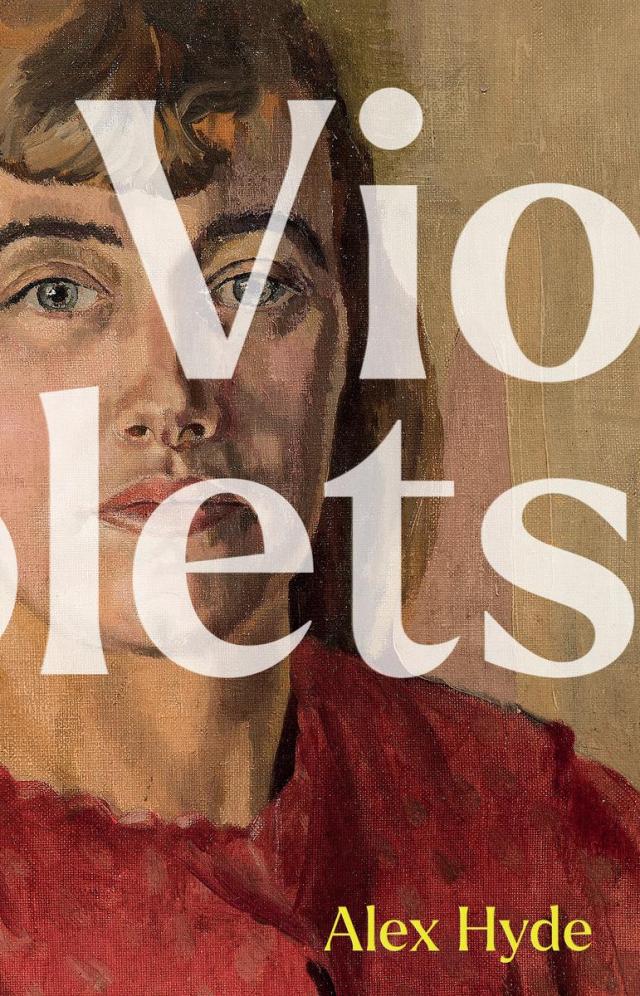


VIOLETS
Alex Hyde
For my father,
in memory of my
grandmother.
Contents
Title Page
Dedication
Part One
1
2
3
4
5
6
7
8
Part Two
9
10
11
12
13
14
15
Part Three
16
17
18
19
20
21
22
Part Four
23
24
25
26
27
28
29
30
Part Five
31
32
33
34
Part Six
35
36
37
38
39
40
41
42
43
44
45
46
47
48
49
50
51
Acknowledgements
Copyright
PART ONE
1
There was the enamel pail of blood. She couldn’t think what she had done with it. She hated the thought of someone else emptying it.
Was that what it meant, lifeblood? Placental, uterine. She had seen the blood drop out of her into the pail. It came with the force of an ending.
And the pain. Her lower right side. The gush of the blood. Thinnish, not thick. Not like anything carrying life.
Violet opened her eyes.
She had been carried. Down the stairs.
Yes, Fred had been there.
She thought of her nightie, sopping wet. Someone had brought the motor car, must have borrowed it from Reg. She had been concerned about the blood but Fred had already thought about towels and blankets, that was good.
She was in a day-lit space. The large windows were criss-crossed with brown tape. Nurses passed and the floor shone under their shoes. The walls were thickly painted and white.
Bright.
Fred was there.
Violet, love?
He’d been holding her hand but now let go. He filled her field of vision, a thin smile on his lips. He looked tired.
You look tired.
Your mother’s been round, he said. Everything was fine. At home, he meant.
Maybe her mother had emptied the pail. She must have moved it from the landing where Violet had crouched down. It must have clattered and slopped. All that blood.
She should have seen to it. She would have known. A dark reflection, a depth of loss.
Fred was talking about Reg and the Morris, and Father Lewis had dropped by.
He was meant to be on exercise, that was right.
Elizabeth had packed her some things, he said. He indicated the suitcase at his feet. Her sister would know what she’d need. A mirror, clean clothes, her bedjacket with the tie at the neck.
Had he collected their rations and told Mrs Oldman to save him some eggs?
Vi. You just need to rest.
He took her hand again in his. His hand was square, thick.
Violet? he said.
She thought that if she stared straight ahead, she could keep it all in.
Yes?
You know the baby’s gone?
See?
See her, there?
Yes, you.
Pram Boy, pill-boy, you know who.
No flood for you,
no gush or release
of blood into water,
filaments and threads.
For it is you who will be carried
while the others are shed
(I’ll take the one with the curls, your mother said).
~
Violet slept some more and when she awoke some of the others were up and about. She recognised it now, the same ward she’d been on before. Birmingham Women’s Hospital. Nothing to do with the war.
It was later when the doctor came. Violet pushed herself up and tried not to wince. The pain was immense.
Just a few stitches, Mrs Hall.
He was clipped and matter-of-fact.
I’ve spoken to your husband. You were aware of the pregnancy, yes?
Violet nodded.
Ectopic, the doctor said.
An egg, fertilised, but attached to the wrong place. Growing all the same and for weeks.
About fourteen, we think. That’s quite a stretch.
Violet cast her mind back. Missed periods, skipped beats. October it was, Fred was on leave. And she could hardly believe it had happened straight away. She was one week late, then two, then three. Then time slowed right down. Like cocking your head to catch a very faint sound.
And she’d watched the nights draw in, the trees lose their leaves, thinking all the time about next July.
July 1945. A summer baby, bright blue skies.
There’s one more thing.
The doctor coughed.
It seems that it was twins, Mrs Hall.
Violet felt the air hauled out of her lungs. She couldn’t take it in. There had been two of them, holding on.
Two children at once?
What a handful! she thought, until she remembered they were gone.
Gone, Pram Boy, done for, through.
Not you though, Pram Boy, son of a Pole
Son of a soldier with his gun.
So let’s just say
(for you will always get your way)
it’s for the best.
Oh yes.
Coo-ee cuckoo, find your nest.
Had they held on to her, or she to them? It didn’t matter, in that wrong place. The enamel pail, its dark blue rim, and the thin metal handle with the wooden grip. She might have rolled up her sleeves and plunged her hands right in. Searching in the rust-tinged liquid.
For twins.
The doctor was looking through her notes. Saying something about her history of cysts, the removal of her left ovary a couple of years ago.
Perhaps her mother had been in. She would have known what to do. Cold water, not hot. She would have got down on her hands and knees and tamped the stains with a cloth. Then she would have carried the pail downstairs and rested it on the mat while she unlocked the back door then poured it out.
Into the drain in the yard, with the suds and the silt and the dirt.
The foetuses had been surgically removed, the doctor said. Along with her womb.
Violet blinked. One of the other patients shuffled slowly past her bed.
And so.
There was a pause.
You’ll understand that you will not be able to bear children, Mrs Hall?
He looked suddenly small, like an awkward schoolboy in his collar and tie.
Thank you, Doctor.
Violet smiled politely. The doctor nodded and moved on.
2
No. Still nothing.
Violet pulled up her knickers and swilled out the pan.
Every time she would check. Every slight feeling of wet. She would go to the lavatory or somewhere she could pull up her skirt, hoping for a bleed. But no, there was only the pale slick smeared on her inner thighs, the glistening string like egg white.
She shut the lid and sat down again, lit a cigarette.
She didn’t feel like going back to the house, across the yard. Back to her mother sitting there chewing each mouthful too many times. Sitting there silent, watching for signs.
Signs of what? She couldn’t have known.
Usually, they had their periods at the same time. Since Violet was about fourteen, just after her father died. They never said anything but they would know, taking bowls of water with bicarb of soda upstairs, the rags soaking under the beds, the water turning redder as they slept.
Violet sighed in the smoke that she had just exhaled. She stared at the back of the door. Torn-up squares of the Rhondda Gazette hung on a nail in the wood. News about farming and sport mixed up with the Western Front.
Best use for it, wiping your arse.
Violet stretched up her arms, rubbed her lower back. Her breasts had been sore, there was that. She was constipated, bloated. Though not in any way that showed.
No. Her mother couldn’t possibly know.
Oh ho, Boyo!
But you are there,
pretty as a picture, coming down the stairs
Caught on a moon-edge, you came with the tide,
A boy all coy and evolving,
known only by what you are not.
Son of a bloodflow, stopped.
By the time Violet came in, her mother was clearing away.
I thought you’d finished, you took long enough.
Violet rinsed her hands, flicked the water off.
No, Mother. Here.
She took back her plate and ate the rest standing up.
She had always had an appetite. When her father was alive, he used to say that she had hollow legs. She was tall and lanky like him. Big feet, broad shoulders, flat chest.
Taller than her mother by the time she was ten.
Then he had died and her mother bought the shop. Then the war came and someone had suggested they take lodgers in. Wounded men, sent by the convalescent home, bille
Her mother’s friends would all call in, coo and fuss, say it was good to have a man about the house again.
Until this last one. There’d been no one else since then.
No, because that was the end, Pram Boy,
where you began
Clinging on,
with your Papa seed, semen dried, long gone
on the train to Aberdeen.
For you saw your moment,
his seed barely spattered and his cock withdrawn,
forming like you’d found a place
to burrow down, laughing.
Now you’re furiously filling up womb-space,
a keeping, a kept place
Lurking like a bad joke,
like something about her no one can quite put their finger on
For now only an inkling
(your Papa’s eye a-twinkling)
sometimes,
a sick feeling.
Upstairs, Violet pulled the blackout curtains shut. She threw her clothes onto the chair. She took her knickers down, checked the crotch, twisted the seams so that the stiff stain cracked and she picked a few bits off.
Her skin pimpled in the cold. Her sides were straight and long, stomach flat as a board. Her nipples were darker than before. She moved her hands across her breasts, felt the slight weight of them drop.
She could hear her mother coming up. Violet listened for her tread on the landing, the creak of the boards underfoot. She would know that Violet was awake by the strip of light under her door. They could have called goodnight, but they never did.
Violet turned off the light.
She closed her eyes, counted the weeks in her head.
It was just before Christmas when the soldier left. She hadn’t written to him yet. He’d given a little shrug when they said goodbye. To show that he couldn’t help it, that he thought it was a shame.
Sorry I’ll never see you again.
3
When the nurse came to change her dressings, Violet asked to have a look. The incision was low down, a puckered line about two inches long. It was oozy and puffed-up. You could see where the black thread had been knotted off.
She winced as the nurse swabbed.
They’ve made a pig’s ear out of that!
It was meant to be a joke but the nurse was a bit off.
Still, most of the others were nice enough. When her sister Elizabeth came to visit she would watch them busy about. Liked their white uniforms, she said. Violet wondered at the rubbish that went through her head.
It was another few days before Fred could come again. He’d had to go back to his unit straight away.
We nearly lost you, Vi. That’s what he said when she woke up.
No bad thing for the men to realise what they’d got, her mother said. But Fred wasn’t really like that.
He was in uniform when he arrived. She saw the others stop and look. He wasn’t tall but he carried himself well. He went to the desk, took off his cap. The matron was smiling at something he said.
Yes, everyone liked Fred. A bit of a laugh but never too much.
He brought her some toffees in a paper bag. Where he got these things she never asked.
They went for a walk around, better than everyone on the ward listening in. She moved slowly, holding on to Fred’s arm. Their shoes squeaked on the lino floor. He was telling her about the jobs he would do at the house. He’d fix the porch roof, he said, ready for when she came out.
There was a pause.
Vi?
She knew there was something else, something more.
He’d had his orders to deploy.
Sod’s law, he said, with a helpless look on his face.
But she remembered he was on the list for overseas? He thought they had agreed, he’d told her that he’d volunteered.
Then something splintered and broke and she said the words like she was spitting them out.
Sod’s law, is it? Sod’s law? For Christ’s sake, Fred.
Because she was sick of it all. After France, and Africa before. That stupid bush hat he still wore for the summer when he came home. And the boy in the Gold Coast who fetched him water for his bath, the boy he taught to play draughts, who stole his cigarettes and Fred just laughed. And all their stories down the pub, all the souvenirs and photographs of men with their chests bare, shorts square with pulled-up socks and boots.
Sod’s law.
They were quiet for a while, standing at the end of the corridor. Outside it was nearly dark. The wind whipped the rubbish from the bins across a scrappy bit of grass.
Fred tried to take her hand.
It was Burma, he said, and Violet asked him where on earth was that.
East of India, against the Japs. They were shipping people right away for decent pay and a jump in rank.
Come on, Vi. It won’t be so bad. And things are a bit different, now.
Violet flashed him a look, quick as a dart.
Different how?
Now there won’t be the baby, I mean.
No, Violet said. Now there won’t be the twins.
4
The factory was on the outskirts of town. They bussed the women in from all over the valleys but Violet came on her pushbike. It was a fifteen-minute ride. The only other was a girl called Gwyn. She was untidy and slow. She would come loping up to the bicycle racks as Violet was untucking her trousers from her socks. They’d say hello but not much else.
The overalls they’d been given were the same as the men’s. Some of the girls had cinched theirs in at the waist but Violet left hers loose. She liked to feel her body move beneath, where they were tight, where they were slack.
She sat down on a bench and watched the rest of them on their break. Clumps of men smoking, girls looking over their shoulders, laughing.
Not that it helped. The men still resented them coming in. Doing their jobs better than them.
They had half an hour for lunch. Violet pulled an apple from her satchel and took a bite. Its flesh came away in a hard, crisp flank. She flipped it into her mouth and spat out a pip. Then she took out a piece of paper and a pen.
She’d only got as far as the date and her address. Because what did she want? For the soldier to come down from his billet, propose marriage and take her away?
That’ll be the day, Pram Boy, girls like her.
The trudging moor-girls,
poor girls,
war-working knocked-up shop girls.
He would ask if the baby was his. If she was sure. Which she was.
Which some weren’t, of course.
Those that hid themselves away,
gave birth to babies
on cold floors
alone, groaning them out,
babies born carping for breath
flailing their limbs
and some of them, Pram Boy,
dark brown skinned.
It couldn’t have been any of the others, Violet thought.
It couldn’t have been Ted Barnes, when the room had smelled of mildew and coal dust trodden into the rug. The ceiling was stained with smoke. He had kissed her like a hole he could poke through, pawed at her blouse. She knew it would happen when he stood up and took off his boots, looking down, hopping about as if she might get away. Then the slap of his belt as he bent it back on itself.
It was easier with Len Shale. Under the bridge in the summer when the river was low. He pulled her knickers to the side. She didn’t mind. He asked her afterwards if it was nice.
Nice.
Then he’d said, buttoning his trousers and straightening his cap, I’ll leave you to mop up.
No, the soldier hadn’t been like that.
No, Pram Boy, lucky you.
As the last slick of come came out of her later,
standing in the queue.
Call it an opportunity, Little Boy Blue.
She remembered when they first met. He was sitting at the sewing machine in the kitchen and she came in through the back.
There was something about the way he moved. Stiff round the middle with his wounds.
And the rattle when he pressed his foot to the treadle.
And the silence when he saw her, and stopped.
And they had been all in a rush. With what? With the flush, for him, of not being dead? Having shrapnel spinning through your middle and your organs miraculously untouched? Just a scar like a tear, still tender when he pressed his body against her in the woods. Still making him flinch even as he was rough, lifted her up, his fists full of her flesh, holding her thighs, butting her face to the side like a bull breathing into her neck.


