

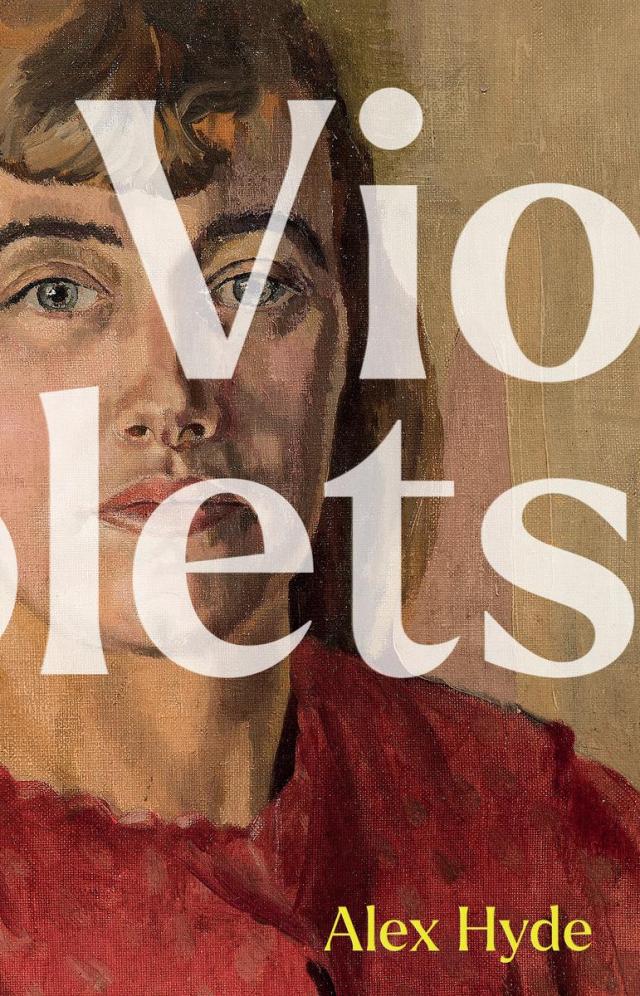
Violets, page 8


When Violet looked up again, Maggie was standing naked on the shore. The high burn of the sun illuminated her shoulders, the full weight of her breasts. There was the jut of her hips, the dark ‘v’ of her pubic hair.
Violet stayed there treading water. It rose close to her chin and she spat little mouthfuls out. She moved her arms gently either side, watching all the time.
See that, Pram Boy?
Your Mama and her vision
of what you will become
You
and her lover’s son,
Two sons
kissing like sailors out at sea
King-chested, mermen, tails entwined
Fork-tongued,
serpentine.
They swam for a long time.
~
They drove back in the calm of the late afternoon, the roads emerging round each bend and disappearing just as fast. The light was slanted with the end of summer. Maggie talked about her plans, the people she knew in France. Artists, émigrés, people who had fled during the war, fought in the resistance, been captured then escaped. Or Americans with interests overseas, reporters, mistresses of dignitaries.
People of independent means.
Maggie stopped the car just down from the hospital gates. She got out and walked around, opened the door and offered Violet her hand. They stood in the fading heat, the car clicking and creaking as it cooled.
Vi?
Yes.
Tell me, what are you going to do?
Violet sighed. Her skin felt like it was stretched taut across her face, her cheekbones high, her brow wide.
They’ll send me home, Maggie. That’s all I know.
I just think there are other places you could go. If you wanted to.
What, Maggie. Like you?
Violet picked up her bag, shifted her weight to the other foot. She knew what Maggie was trying to say, but now, finally, the refusal was hers to make. Perhaps she had been waiting all along. For the moment to bring it all crashing down. To show Maggie that she was wrong.
Because it was a ruse, a play. They were just the same as everyone else. Every other poor sod at the end of the war. They would all just go back to their rightful place.
It’s not a game, Mags. There’s nothing I can do.
She attempted a smile but Maggie caught her hand, pressed a piece of paper into her palm.
If you write – if you change your mind – they’ll find me, wherever I am.
Violet looked down. Scrawled in pencil were two addresses. One was the British Embassy in Paris. Violet gave her a questioning look. Maggie shrugged.
And Violet knew, standing there in the dust, in the soft afternoon heat, that Maggie was a fantasy, a myth. Still, she stepped closer and took her face in both hands.
Maggie. With her delicate limbs, her lamblike bleating.
And she thought for a moment that she understood how it was. Men like Ted Barnes, Len Shale, how they wanted to possess women, still them with rough palms over their mouths.
But Maggie, this city, the baby, they were part of the same complex web. Violet had been caught, trapped. She was hollowed out.
No. They took too much, could not be kept.
When she looked back, Maggie was still there, leaning against the car. She held Violet’s gaze, still with a direct stare, a smile that was a challenge, a dare. She had taken an orange from the bag. The peel spiralled brightly down from her hands as she broke it apart, put a segment in her mouth.
28
Violet walked and walked. Walked so that the cramps came, hitching up. Bitching at her lower back.
She walked across the courtyard. Men stared. As at a rare bud sprouting in the dust, or juicy apples, something moist and plump.
Violet let her cigarette end drop, trod it into the ground, stood watching people come and go.
Painfully slow.
She saw the injured transferred out, waiting for a convoy round the back. She watched as looters stole supplies, siphoned gasoline through a tube.
There were soldiers with their clothes pinned up around lost limbs, others with nervous tics. There were winks, double takes. A young man rubbed his crotch.
She moved on. Bad-tempered, swearing under her breath, wishing she had never done what she had done.
Smile! Might never happen, love.
Laughter.
Too late for that.
~
Later, Violet sat in a deep, tepid bath. She opened her eyes to stare at the ceiling above.
The baby inside was still.
She tapped her finger on the faint star of her navel.
There, and again there, that was it. A shift like a sigh across her belly. Jutting, cupped.
She pushed gently, felt the lamb-limb retract.
She stood up, muscle tight. Full at pelvis and ribs. She bent to hold the side, near-slipped as she climbed out onto the mat.
Looser again, she stood naked in the heat, dripping, strong. Then another thronged clenching, a hardening rise.
There.
Then gone; a breath.
She stretched her hands round the base of her back, licked her lips.
Looking down, she held her belly all veined, faintly mottled with red.
Come on now, let’s be having you, she said.
29
Turn then, Pram Boy
Turn your sweet head.
As the afternoon falls quiet
in the dry September breeze;
rustling,
leaves
Turn,
swim down,
take your last amniotic sips
Before you’re
squirming
in the boundless air
Nowhere
it will feel like,
cold and shrill
Until
you can cling to her flesh, both of you
inside out.
Hear her shout, Pram Boy?
There. So come.
Uterine-clencher.
Heart-wrencher.
Down through the heartbeat, down, down,
and if your lungs fail
there’s purgatory waiting
or else hell,
so live!
Out then, come.
Yes.
There she is,
bent double
Now on her knees,
belly hard and
slung beneath,
cervix
flattening,
a compression of herself
pushing at the fleshy mass
of you,
Out!
Come now, hush.
A moment’s respite,
release
Before your
un-knit skull
crowns
to the air
To the burn of a ragged tear
And your Mama a cat
panting its
litter-runt
free
And you are caught there
before,
there there,
you are limb-free and lung-kicked
into the air!
Oh! flailer boy,
vernix-smeared and purplish
Chest
concave
for breath
Slapped to a wail,
crying,
held aloft.
Oh!
There.
Breathe, Pram Boy, hush.
Mother-lover,
Mother
Son.
Now, the
hunger has begun.
Now the pulsing cord is cut,
knotted off
And you,
Behold your true mother-love
Already not enough.
So move!
Move your tender snap-neck,
your sucking mouth,
all needs now outside yourself.
Grubbing about for food,
head bouncing,
seeking a tongue-click latch
to work the glands beneath the flesh
Nose wet like a cub
And she is sweet and salty with sweat
and metallic with blood.
And you?
You are pinking up.
There. Find her, then.
Press
your face, fill
your mouth
with her flesh
pressed
into your working jaw,
your sucking tongue,
Lungs quivering wetly in your ribs,
nostril flare.
There.
Open your eyes, she says.
Yes, you.
See her float at the edges of your field,
your heartbeat stilled,
you are wrapped and warm.
And for your Mama,
a blood-pour,
the sweat not yet dried in her matted hair,
blood not yet stemmed
and there is piss and shit pooled on the floor,
blood in the towels and
warm water bowls
All to be swilled away.
But not you.
Look how she holds you.
Look!
How you keep to her,
there now, hold it in,
A feeling,
damply slipping away,
the memory of her milky skin,
your claw at her breast.
Remember.
Remember this.
And everything now in sharp relief,
clear and cold as a glass-edge.
Focus your eyes, find her gaze.
There.
You meet again.
30
A boy.
Better that way, she heard someone say.
Then the baby was wrapped up tightly and taken away.
She strained to hear him cry in another room.
~
Soon, where the blood had flowed they were mopping up.
Her own flesh was swabbed and stitched and she winced with pain but did not cry out, instead tried to listen, stay alert.
He was brought to her again. The midwife came, her breasts were adjusted and handled, the milk manipulated from her nipples, his head shoved about.
~
For three days in a separate room there seemed only flesh, soilings, milk. A recurring tide that took her in and out of sleep. Split nipples, nipples that cracked and bled, red-orange and erect, flat to a gummy gnaw, her stomach an empty sack.
And she bled from inside and from other cuts; knuckles raw from wringing out wet cloth and other places torn, swollen out of shape. Agape, like a schoolboy’s joke.
She moved slowly about; small steps around the bed, crouching on the pot, pissing messily, gritting her teeth until the stinging stopped.
And yet. When she saw him she would forget. They were sea creatures in the deep. Tendrils and fingers and suckers and limbs. When they were pulled apart she clung on, rushed back, became entangled again.
~
Back on the ward, the nurses came clattering on their daily rounds.
Her milk flowed. It seemed to engulf them both, spurted and missed his mouth. They were frantic and maddening, the baby blindly gasping.
Or else she held him, piss-wet, the liquid warm against his skin. And she laid him out on the bed, his penis pissing in an arc again; bathed his navel where the two of them had once been joined; cleaned the folds of his groin of yellow shit; felt the thin membrane of his scrotum drag; tipped his head back, wiped the milk-sick from the creases of his neck.
~
At night he suckled in the dim pool of the bedside lamp. After, she held his lolling head in her hands.
His hot cheeks, his pink mouth.
And she peeled his fingers from his palm, felt the sharpness of his tiny fishbone nails; watched his chest for signs that his lungs inhaled, breathed breaths. His mouth was a bow to the arrow of his tiny tongue that popped out, or lay flat in his mouth when he wailed.
And his toes, all ten.
And his softly rounded head.
And his ears, nose, eyes with their lashes growing in.
She could not believe him, could not take him in.
PART FIVE
31
The city yawned and cracked its bones, a giant waking from sleep.
Bomb sites where boys jeered and goaded dogs with sticks were cleared. Nettles and dock leaves, steel and coal. Prefabs sprang up with concrete slabs for walls and thin wooden doors.
Families moved in and out. No Irish, no blacks. Tradesman’s entrance round the back. People saved scraps and boiled bones like before, ate offal or the tail end of things, mended, repaired.
Men came home from the war, some rich, some poor. VD, the clap, worse things were gone, some were fit to work but there were some who couldn’t get it up because the war was done.
And the women were beaten, or adored. Slack-wombed, baby-boomed. Deflowered or else not getting enough. Or getting too much, that one. Wayward daughters, wandering-eyed, were chastised, their mothers nagging on and on.
What’s wrong with you, woman?
Back in the house, in the kitchen, in the bedroom lying there not saying a word. And in the morning, washing the sheets of beer-piss and come, down on their knees, the stains all stripped and scrubbed and bleached.
Then they made their beds, these women. Shifted shape, got on.
~
The last Violet heard, Fred was in France. Everyone else was already home. Frank and Bill, Tommy Knock. People had stopped asking about Fred, must be wondering where he was.
To get that far had taken four months, from Rangoon to Calcutta, across India then up through the Suez Canal. And now the winter had settled in. The veg patch was crisp with frost. Violet stood at the sink and watched a magpie hop from light to shade across the yard.
The letter had come last Friday, from Marseilles. She’d waited for him at the station every day since then. She’d cleaned the house, got some of his things back out. His winter hat and coat, the ashtray by the chair. They were all sitting there, gathering dust.
Violet finished the washing-up and dried her hands, then fixed her hair in the hall mirror. She looked at her watch.
If she left now she’d be in time for the twelve o’clock.
See her, Pram Boy, for you did not know her then.
Strong arms, jaw set,
in the kitchen over suet
and pickles and pastry edges.
Rationed on the dregs,
powdered milk and eggs.
Wait then, Pram Boy.
Then wait some more.
Pinny-frill, milk spill, knock on the door.
Wait like she is waiting
for your daddy,
gone to war.
Will he come, your daddy,
a soldier clean and new?
Grinning like a boy
made to love a boy like you.
Violet pulled the front door shut. Her breath misted the air. She turned the corner, past her mother’s. Mrs Grey from number twenty-two came out.
Violet mouthed that she couldn’t stop.
Off to wait for Fred.
Any day now, the neighbour said, and they’d all be glad to see him home and do send him round to say hello.
That’s right, Violet thought, they’d all want to see Fred. With his wavy hair and strong arms, whistling through the gap between his teeth.
After the miscarriage, and everything taken out, some of the girls had asked Violet what she was going to do. She never quite knew what to say. Of all the girls from the factory she was the only one. Married, keeping house. There was Elizabeth but that was hardly going well. They lived with Tony’s sister and mother in a tenement flat. His family spoke Italian all the time. She held little hope of liking the food they cooked, she wrote, and they still hadn’t been to New York.
Then there was Flo, hiding away in Worcester at her aunt’s.
No, she was lucky, she thought.
She’d reached the tram stop outside Norton’s Department Store. It didn’t take long until Violet got off in the centre of town and walked the rest of the way. At the station she stood in her usual spot and watched. You had to look for the khaki caps. The soldiers always sidled off in twos or threes. Shifty-looking, ill at ease.
The stationmaster caught her eye. Violet smiled, rubbed her hands together to lament the cold. He nodded, stamped his feet.
Nice-looking, Violet thought. Always neat. Probably on a decent wage.
The train came to a slow stop. Violet waited for everyone to get off, stood on tiptoes to scan the crowd. There were a few stragglers, a soldier strolling off with his girl. She was all pink and smudged, he’d knocked her hat askew. He kept squeezing her shoulders, pulling her close to his side, almost tripping her up each time.
Violet turned, the low sun in her eyes.
No Fred today. She was suddenly anxious to get home. She smiled again at the stationmaster and he tipped his hat. Outside she looked right then left before crossing the road.
On the other side was a familiar silhouette.
Sitting on a bench, leaning forward smoking a cigarette, was Fred.
Look, Pram Boy.
There they are.
How she catches her breath, shallow in her chest
The way he turns his head,
stands up, grins,


