

Cocoon, page 1


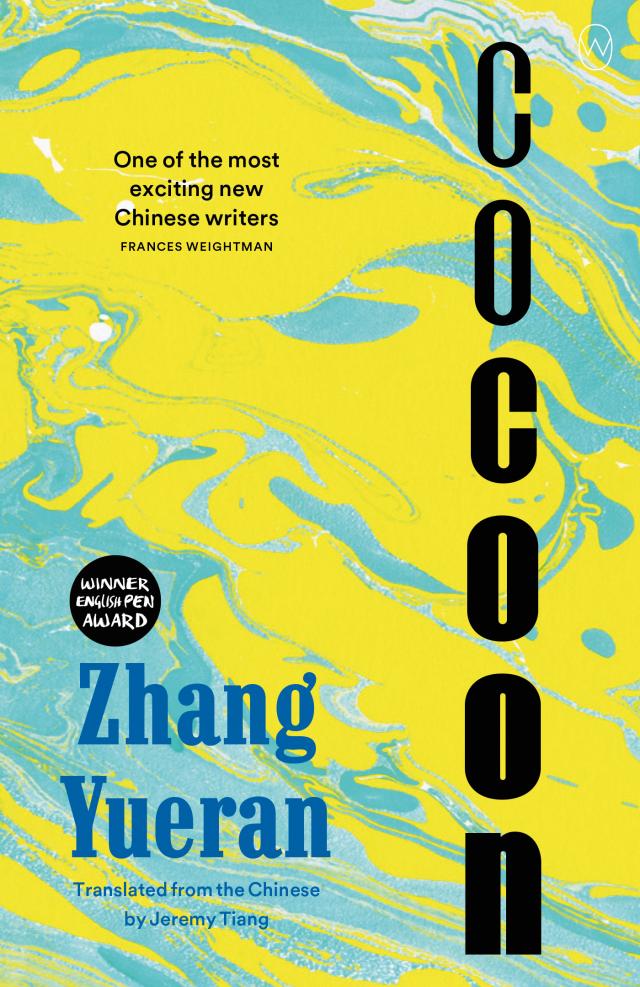
Zhang Yueran
cocoon
Translated from the Chinese
by Jeremy Tiang
WORLD EDITIONS
New York, London, Amsterdam
Translator’s Note
Zhang Yueran has long been a leading voice of China’s “post-’80s” generation (that is, born after 1980). While her earlier work—such as The Promise Bird, a fantasy about a blind woman going in search of her lost memories—has been compared to “a magical bottled garden,” Cocoon takes place in a more realistic vein, looking through millennial eyes at the Cultural Revolution. This decade-long trauma has had no shortage of literary exploration; the entire genre of “scar literature” is dedicated to excavating this world, usually by those who lived through it. But what of writers such as Zhang who were born a few years after the catastrophe ended, and who grew up amid its detritus?
Zhang’s cohort was destined by the one-child policy of 1980 to be a generation of only children—and indeed, the absence of siblings in Cocoon contributes to the younger characters’ sense of alienation. These “little emperors” grew up at a time of plenty, the sole recipients of their parents’ resources and attention. After such a rapid change in circumstances, it must have been hard to comprehend what these parents had lived through. All the adults in Cocoon are damaged in one way or another, while their society charges ahead, trying and failing to outrun its past.
This generation gap is perhaps the greatest in recent memory, and it is in this in-between space that Zhang situates herself, portraying both the violent ideological terror of the past and the alienated, sterile prosperity that her generation has grown up in. How can young people process the strife and suffering of those who went before them, when the country as a whole has not done so? Like strands of a cocoon unraveling, Zhang lays bare the many layers of her generation’s coming of age.
Jeremy Tiang
“My poor child, the best thing I can send you is a little misfortune.”
—William Makepeace Thackeray, The Rose and the Ring
Li Jiaqi
I came back last month and didn’t tell a soul. The night I arrived, the Central Gardens streetlights were busted, and all I could see were the inky shapes of trees, naked branches thrashing in the wind. Moonlight made the protruding goose-egg pebbles on the path gleam faintly. I’d forgotten the cluster of jagged rocks near the artificial lake, jutting unevenly as if the night were baring its teeth. From this distance, the white mansion on the opposite shore could have been a lone island.
The doorbell was broken, but the door was unlocked. Inside, I followed the noise to the far end of the first floor. Two men at a round table were playing a finger-guessing game, while others swayed and sang in a dialect I didn’t understand. A man and woman sat entwined around each other. Empty beer bottles lay scattered across the floor. On an electric hotplate in the center of the table, a pot of greasy red liquid roiled.
It took some effort to explain who I was. Once she understood, a woman dashed out and rapped energetically at a door across the passageway. The girl who emerged was Mei, Grandpa’s home aide. She was dressed, but the man behind her was still fumbling with his belt buckle. The visitors hastily scattered, leaving Mei biting her lip and swiping viciously at the table. Of course she was put out, having never set eyes on me, or even knowing the old man had a granddaughter. It seemed faintly ridiculous that this grand old house, a symbol of lifelong glory, had become a playground for the help. Grandpa would never know. Since his lung cancer diagnosis six months ago, he’d been bedridden and confined to his room. No one visited. He hated being disturbed, and had cut ties with the outside world a few years back.
Two days later, I told Mei her services were no longer required. I didn’t like that she seemed more the owner of this place than I did. Before leaving, she came to say goodbye to Grandpa, and actually shed some tears. Perhaps she really was fond of him—more than I was, that’s for sure. Grandpa had gotten used to her care, but now that he was frail and nearing the end, he still chose me.
It had been so many years he no longer recognized me, but as soon as I said my name, he instantly trusted me, and didn’t object when I fired Mei. Blood ties are a form of violence, the way they yoke together people who feel nothing for each other.
Jiaqi! Jiaqi! he called out of the blue, as if to keep from forgetting the name. I spent a lot of time in this room, those first few days. Sitting there staring at him, imagining the conversations we could have had. About the tragedy of our family, how he became the person he is now, how I grew into my current self. I went over what I would say to him, rehearsing the cruelty of my tone, honing every word like a pencil till its point was sharp enough to strike a fatal blow.
As it turned out, we didn’t exchange a single word. Instead, the fatal blow was this cold snap. A few days after Mei’s departure, Grandpa caught a chill and started a high fever. I gave him medicine, and his temperature came down after a couple of days, but his mind never recovered. His eyes were clouded, and he didn’t seem to understand a word I said. The illness had arrived just in time to save him from shame and hurt. As if a bell jar had been placed over him, leaving him detached but still in possession of thought and determination. He never lost control of his bladder and bowels, and always held it in until I placed the bedpan under him. In order to test his willpower, I once stayed away for more than ten hours, yet he managed not to soil himself. The discipline cultivated by several decades at the operating table.
Now I stay away from the room, other than feeding him or helping him relieve himself. I don’t want to face him, though he probably sees me as no more than a fuzzy shape. He seems equally unwilling to look at me, and keeps his eyes down. Both afraid we might accidentally glimpse the person caught between us. Giving him a sponge bath, I always go over his shoulder and look at the hot, crumpled sheet beneath him. He’s gotten so scrawny the towel rucks his skin. Like wiping bones. He turns his head and stares at the floor. This must be humiliating. He once had the power to decide countless lives, but now someone has to lift his arms and scrub his armpits. Honestly, for an old man, he’s quite free of nasty odors. Sheer force of will—he doesn’t allow himself to stink.
A couple of days ago, we got our only visitors so far: two kids climbed the fence and snuck into the yard. I was on the couch, reading one of Grandpa’s hardcover classics, which are mostly for show—they look like they’ve never been opened. I chose Wuthering Heights. Then I happened to look up and there they were, faces pressed to the window. A boy and girl, maybe ten years old. Though there was no resemblance, for some reason I was reminded of you and me all those years ago. After a moment of confusion, I jumped up and pulled the door open.
The boy told me their Chinese teacher had set them an essay: “An Admirable Person.” They were both children of professors at the Medical University, and having grown up hearing about Grandpa, they were here to interview him. I said his health was too poor. The girl batted her eyes and said, How about we interview you, then? You’re his granddaughter, aren’t you? I said I didn’t know anything about him, but they refused to believe that, and kept pestering. I told them to make something up. They looked at me, wide-eyed. Okay, they said, but if our teacher comes asking, you have to back us up. Fine, I said, and they left satisfied. An admirable person needs to be surrounded by many touching stories, whether or not they are true.
When Grandpa was appointed a fellow, it caused a stir through the whole university, including the attached elementary school. Unfortunately I’d already transferred out by then, and no one in my new school knew that the most famous heart surgeon in China, whose story took up two whole pages in the evening paper, was my grandfather. Some mysterious force had pulled me away, preventing me from sharing in his glory. Sometimes I wonder: if I hadn’t left, but instead spent my entire life in his halo, would I be a different person now?
The night before last, I was in the living room watching a documentary about Chinese soldiers who’d stayed in Myanmar and ended up teaching Mandarin or opening dry goods stores. The camera lingered on their elderly faces. In a foreign land, even their aging was tentative, and not one wrinkle dared to be too prominent. Their bodies were still sturdy, but some had been deaf or senile for years, as if their senses were deliberately shutting down so this unfamiliar place could feel more like home. Unwilling to take part in the civil war and see their fellow countrymen killing each other, they’d refused to return after defeating the Japanese, sending their lives off track. No longer at the whims of the era. At peace, yet also useless. If a pawn chooses not to cross the board, what further use is it?
The presenter interviewed a veteran’s granddaughter who’d taken over her grandfather’s business, and now owned his shop. I stared at her tanned face. That could have been me, if Grandpa had stayed. Maybe he’d have opened a clinic there, and cobbled together a living with the help of the local Chinese community. Then my father would have arrived, then me—I’d have grown up and maybe fallen in love with a Myanmarese boy. We’d have run through the rain to hear Aung San Suu Kyi speak in the square, then hugged and cheered when we heard on TV that newspapers would no longer be censored. This life that wasn’t mine would have, like a dandelion, puffed into blossom wherever the wind took it. Without the encumbrance of roots, it would have grown in its own manner. That would have been purer, at least. This ancient country was under a thick layer of dust, and leaving would feel like being cleansed. I was drawn to this freedom, even if it came streaked with suffering.
Unfortunately, Grandpa hadn’t had the courage to desert, and the impoverished soil of Myanmar didn’t arouse his ambition. Peixuan thinks he never had any kind of ambition anyway. When she was interviewed for the documentary, she said: Grandpa once told me he just went with the flow; he studied hard at school, and did his best as a doctor. He joined the army at the right time, then entered the Party at the right time. He made sure to put his feet in the right place. The times were changing so quickly, one false step and you’d find yourself no longer on solid ground, plummeting into the abyss. Going with the flow was actually very difficult. Like a signal operator patiently adjusting the frequency, one needed sensitive ears and a still heart to correctly tune in to the era.
Peixuan mailed me the documentary that’s playing on the TV now. While I waited for you this afternoon, I played it on a loop, watching it over and over, though my attention kept drifting. When I have the chance, I’ll tell her I like the section about the soldiers most. I enjoy looking back at the first half of Grandpa’s life, imagining what would have happened if he’d just stopped at a particular point—what that would have done to our family’s destiny.
Since getting back to Southern Courtyard, I haven’t been anywhere except the supermarket. Oh, and the drugstore once—I needed something to help me sleep. Otherwise, I’ve been here, watching a dying man. Grandpa lost consciousness this morning. I couldn’t wake him. It was still dark, and the pressure in the room was low. I stood by his bed, feeling death hover like a flock of bats.
I got my thick coat from my suitcase. The heater doesn’t do enough, maybe because the room is so big. I’ve tried to make peace with the cold seeping through the walls, but I can’t stand it any longer. I went into the bathroom without turning on the light—the thin, stark fluorescent bulb made me feel even colder. I washed my face at the sink and thought about what would happen after tomorrow. Once he was dead, I would change all the lights in the house. The leaky pipe below the sink dribbled hot water over my feet in the dark, the temperature of blood.
Downstairs I fried a couple of eggs and made toast, and took my time eating. Then I got the ladder from the storeroom and pulled down the curtains in every room. The living room seemed transformed. I stood in the doorway, squinting at the large, bare windows. Daylight illuminated every mote of accumulated dust, stirring up secrets.
This afternoon, his body seemed to have shrunk under the heavy goose-down quilt. It was still gloomy outside, and death continued circling the room, refusing to descend. I felt a constriction in my chest, a throbbing at my temples. Slipping on my coat, I fled from the house and wandered aimlessly around campus. The disused elementary school, the veranda behind the library, the desolate bleachers at the sports field—none of these places reminded me of you. Then I got to the western side of Southern Courtyard. The old buildings there had been torn down, replaced by brand-new high-rise blocks with gleaming security gates. When I tried to get around them, I realized with a start that your building was still there, huddled against the boundary wall and hidden by the taller newcomers.
After so many years, I didn’t think you’d still be in the same place, but went to apartment 102 anyway and pressed the buzzer. Someone answered, Come in. I hesitated a moment, then pulled open the door. It was very dim inside and something was bubbling on the stove, filling the air with steam. A man was slumped on the couch with his eyes shut. Even through the gloom and foggy air, after more than a decade, I recognized you. Cheng Gong, I said quietly. You slowly opened your eyes, as if you’d dozed off from waiting so long for me. For a split second, I felt we must have arranged to meet and I’d forgotten. But you didn’t know who I was. Even after I told you, you remained detached. With some effort, I asked about the deserted school and our friends from the old days. Then the small talk was done and we lapsed into silence. I couldn’t think of a reason to stay any longer.
You walked me to the door. I said goodbye, you said take care. When I looked around again, the door was shut. It was very quiet in the corridor. I didn’t want to go back out into the daylight, where we would be torn apart again. Icy wind rattled the security gate, like someone sighing in the dark. Thoughts flared up, embers fanned into flame. I felt I knew why I’d come. Screwing up my courage, I pressed the doorbell again and asked you to come to the white mansion tonight.
Back here, I felt very calm. I got the DVD from the drawer and put it into the machine. Then I made some tea, pulled two chairs together, and waited for you. The light faded outside, and the man in the bed mumbled to himself for a while before sinking deeper into dreams. He was struggling to breathe. The foul air of his rotten lungs filled the house. Suddenly the light brightened and a gust of wind flung the window open. When I went to close it, I realized it was snowing. Would you still come? I waited anyway.
I somehow knew it would have to unfold this way. Soon it was completely dark, and the snowstorm was getting heavier. The road was no longer visible. I stared into the blurry whiteness until I felt I was going blind. Finally, a small black dot appeared, a sprouting seed breaking through the earth.
You didn’t ask me anything, just followed me up the stairs to this room. Seemingly unsurprised to find him lying in bed, you took a few steps forward and studied his face, as if you were weighing up his whole life. But maybe that was too complex a calculation to make. You seemed dazed, until I pulled a chair over and you sank into it.
As you can see, he’s about to die. My grandpa. I ought to call the hospital and have them send an ambulance over. They’d work through the night to save him, perhaps prolong his life by a few days, then prepare for the funeral—a grand send-off for Director Li Jisheng. There I’d stand, the only family member. Everyone would weep as they eulogized him, then slowly shuffle past his casket. People I didn’t know would tell me what a great man my grandfather had been, how noble, how wise, how widely respected. The provincial governor or city mayor would warmly take my hand and offer their condolences, a Steadicam following them like a loyal dog to capture the appreciation on my face. So well planned, I’d have nothing to do but make sure I had a sufficient supply of tears.
And I think I would be able to cry. Not for him, but for the things that will depart with him. Yet I haven’t been able to make myself call the hospital. One phone call, and his death will be an official matter, no longer anything to do with me. He’ll be surrounded by nurses and doctors, his students and colleagues, visiting officials, the media, a surge of people laying claim to his final moments, giving his imminent death the scale it ought to have, commensurate to the importance of his life. The sinking of an enormous ship. I have no right to stand in the way of a great man’s glorious death, but I only have this little bit of time remaining to me and can’t bear to hand it over. All these years I haven’t asked him for a thing—not his concern or affection or regard. All I want, at this moment, is to claim his death for myself. I have been waiting for this moment, for a nonexistent voice to tell me it’s all over.
When I saw you this afternoon, I could feel all this between us. Perhaps you’ve already learned the secret. Perhaps, with the passage of time, it seeped into the texture of your life. No matter what form it takes, I believe it is still present, and like me, you can’t ignore it. Let’s talk about it, for the first and final time. We’ll talk till dawn if we have to, and after that, everything about the secret will be left behind in this night.
Great swathes of snow are coming down now. As if God were flinging back at humanity every letter we’ve ever sent him, ripped into tiny pieces.
Cheng Gong
Yes, let’s talk, although I can’t stay long. As soon as the snow dies down, I need to get to the train station. I’m going far from here. Actually, I ought to have left this afternoon. When you showed up at my door, I thought you were the water delivery guy. If he’d come any earlier, we might have missed each other.
This afternoon, when I was done packing, I went to the kitchen for a glass of water. The dispenser was empty so I called the water place. Half an hour later, there was still no sign of them. I would have cancelled the order, but I’d run out of cash the last time round and still owed the delivery guy. Best to tie up loose ends before leaving. Getting thirstier, I found a battered kettle in a cupboard, filled it, and put it on the stove to boil. The pale blue flame flickered and the kettle hissed. Waiting on the couch, I dozed off and dreamed of Dabin and Zifeng, looking the same as when we were teenagers, sprinting through the nighttime alleyways, drunk and merry. Even our acne was glowing. We ran all the way to the neon-lit main road, where a lot of people our age held beer bottles and walked towards the nearby square. We jumped into a red jeep, cheering and whistling, leaning out the windows as it sped ahead. It felt like a carnival.


