

O, page 1


ALSO BY ZEINA HASHEM BECK
POETRY COLLECTIONS
Louder than Hearts (2017)
To Live in Autumn (2014)
CHAPBOOKS
3arabi Song (2016)
There Was and How Much There Was (2016)
PENGUIN BOOKS
An imprint of Penguin Random House LLC
penguinrandomhouse.com
Copyright © 2022 by Zeina Hashem Beck
Penguin Random House supports copyright. Copyright fuels creativity, encourages diverse voices, promotes free speech, and creates a vibrant culture. Thank you for buying an authorized edition of this book and for complying with copyright laws by not reproducing, scanning, or distributing any part of it in any form without permission. You are supporting writers and allowing Penguin Random House to continue to publish books for every reader.
“A Note on O” by Asmaa Azaizeh. Printed by permission of Asmaa Azaizeh.
library of congress cataloging-in-publication data
Names: Hashem Beck, Zeina, author.
Title: O / Zeina Hashem Beck.
Description: [New York] : Penguin Books, [2022] | Series: Penguin poets |
Some poems in English and Arabic.
Identifiers: LCCN 2021050079 (print) | LCCN 2021050080 (ebook) | ISBN 9780143136897 (paperback) | ISBN 9780525508373 (ebook)
Subjects: LCGFT: Poetry.
Classification: LCC PR9570.L43 H376 2022 (print) | LCC PR9570.L43 (ebook) | DDC 821/.92—dc23/eng/20211103
LC record available at https://lccn.loc.gov/2021050079
LC ebook record available at https://lccn.loc.gov/2021050080
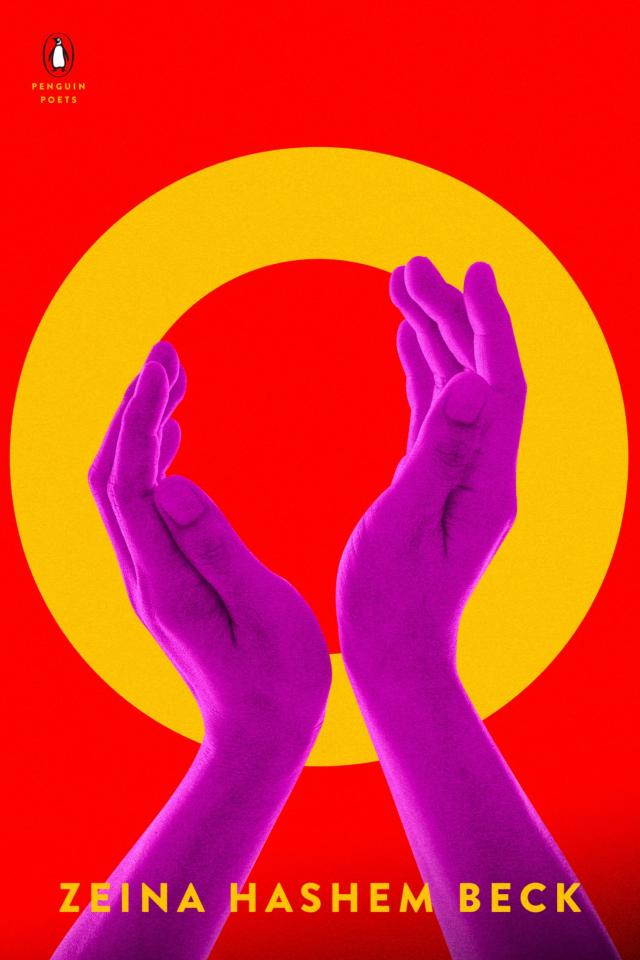
Cover design: Lauren Peters-Collaer
Cover photograph: Issarawat Tattong / Getty Images
Designed by Sabrina Bowers, adapted for ebook by Estelle Malmed
pid_prh_6.0_140380694_c0_r0
Acknowledgments
Thank you to the editors of these publications, in which the following poems, sometimes in earlier versions, first appeared:
Academy of American Poets Poem-a-Day series: “There, There, Grieving,” “Time,”
The Adroit Journal: “Ghazal: Hands,” “Dear white critic, ”
The Atlantic: “The Body Fails in a Foreign City”
The Common: “Sometimes All You Can Do Is Wait”
Cordite Poetry Review: “Ode to My Husband, Who Brings the Music”
Discontent: “Pilgrim”
Iron Horse Literary Review: “Fools Rush In,” “Say it,”
The Lifted Brow: “daily ,” “prophecy ”
MIT Technology Review: “Thank You, Antidepressants”
Modern Poetry in Translation: “Ode to Leaving ”
Mom Egg Review: “triptych: voice”
Nashville Review: “Immortality (or on turning 36)”
New England Review: “Bulbul”
Ploughshares: “ode to the afternoon”
Poetry: “Ghazal: With Prayer,” “Souk,” “Poem Beginning & Ending with My Birth”
Poetry International: “UNBREAKABLE” (and a reprint of “Ghazal: Hands”)
Poetry London: “triptych: you & my country & i”
Raleigh Review: “Ode to Lipstick”
Redivider: “Everything Here Is an Absolute”
The Scores: “Morning Prayer”
Southeast Review: “Heirloom,” “Flamingos”
Triquarterly: “Ode to Babel ,” “Ode to Disappointment”
wildness: “triptych: reprise,” “What the Returning Do”
“blue ” appeared in the anthology And We Chose Everything (Turning Point Books, 2018). “Say Love Say God” appeared in the chapbook There Was and How Much There Was (Smith|Doorstop, 2016). “Ode to Disappointment” was reprinted in the anthology The Long Devotion: Poets Writing Motherhood (University of Georgia Press, 2022). “Ghazal: In this City” was commissioned by Warehouse421 for an exhibition titled The Architecture of Loneliness.
Sincere thanks to the presses and journals that published my work. Deepest gratitude to the Penguin Books team: Paul Slovak and Allie Merola for believing in O and for your moving words; Lauren Peters-Collaer for the gorgeous book cover; Brian Tart, Patrick Nolan, Andrea Schulz, Norina Frabotta, Gabriel Levinson, Anne McPeak, Nick Sturm, Mahmoud Hosny, Sabrina Bowers for your indispensable help ushering O into the world.
Thank you, Naomi Shihab Nye, for your light and support.
Thank you, friends who’ve made Beirut home and listened as I rambled about poetry and life: Huda Fakhreddine, Lina Abyad, Sahar Assaf, and Rami Elnakat.
Thank you, friends who’ve made Dubai home and listened as I rambled about poetry and life: Leila Ghandour, Hind Shoufani, Farah Chamma, Hani Yakan, Nada Kaissi, Lina El-Zein, Frank Dullaghan, Rewa Zeinati, Hajer Mosleh, Danabelle Gutierrez, Farah Ali, Rasha Alduwaisan, Samar Abdeljaber, Maan Jalal, and Michelle Abboud.
Thank you to the community of writers and poets who hold and uplift: Hala Alyan, Lina Mounzer, Zahra Hankir, Kaveh Akbar, Paige Lewis, Tiana Clark, Leila Chatti, Fady Joudah, Deema Shehabi, Lena Tuffaha Khalaf, Safia Elhillo, Asmaa Azaizeh, Golan Haji, Marilyn Hacker, Karthika Nair, Marcia Lynx Qualey, Saleem Haddad, Noor Naga, Tishani Doshi, Joey Ayoub, Nasri Atallah, George Abraham, Raymond Antrobus, Anthony Anaxagorou, Lisa Luxx, and many others.
Thank you to my childhood friend and sister Rana Kamareddine.
Mama, thank you for the confidence and validation and fire.
Baba and my brothers, I love you, thank you.
Amto Yathreb, thank you for the sparkle.
Marwan, partner and childhood sweetheart, thank you for your unwavering love and support.
My husband’s family that’s become mine, thank you.
Leina, my beautiful firstborn, thank you for the laughter and the warmest hugs.
Thank you, Aya, my hero with the scintillating eyes and biggest heart.
Thank you, reader, for spending time with these poems.
Note on the Bilingual Poems, the Duets
The idea of the Duet is that the poems in English and Arabic exist separately and in relationship to each other. The English lines are a poem in English, and the same goes for the Arabic lines. Both languages should also form a poem when read together. When the Arabic and English appear within the same stanza, this means the lines are some sort of translation or echo of one another (sometimes the echo is a contradiction).
A Note on O from Asmaa Azaizeh, author of Don’t Believe Me if I Talk to You of War
“There is no set language for poetry,” as Lebanese poet Ounsi el-Hajj says. And there’s no set language or ready meanings for Zeina. This poet is on the search for meaning as one who wanders at night, without us expecting it, toward parallel and unknown worlds. This is because her poetry is skillful at trying to portray the unseen; it is skillful at destruction—and, I want to say, the destruction of her own temples. Everything can fall apart and be liberated from these temples: homeland, love, longing, city, family, and personal history. Even the poem, at times narrative and at times economical and condensed, is often liberated from its form. This honest and persistent emancipation from form and content is the fruit of free writing.
In O, we read poetry that is free even from the poet’s personal history. For as much as Zeina is emotionally faithful, she transforms and kneads her personal history, shaping it at her whim in order to escape its cruelty. This is how this collection astoundingly captures memory in writing; in this book, memory is open for imagination and interpretation. With captivating images, Zeina adds layers of time and distance to the past, then hurries to shatter them without caring about the losses that result from these brutal confrontations. We will look at ourselves in the mirror and admit we are the first losses, and we are the most changeable things in our memory.
Reading this collection is like walking on the edge of things. Neither home is fully home, nor love is fully love, nor exile is fully exile. Even language isn’t a safe place: “all languages confuse me,” Zeina writes. Readers will feel estranged from their received ideas about things, all the while wondrously belonging to the world that Zeina creates—a world of obscured lives, absent people, and memories that slip from our fingers, but a world that nevertheless feels new, unlived. Only poetry is capable of making up for the fact that everything deserts us, and reading O reminds us how urgently we need poetry.
Contents
Ghazal: With Prayer
1
There, There, Grieving
ode to the afternoon
Ghazal: Hands
Pilgrim
daily
triptych: you & my country & i
Dear white critic,
Everything Here Is an Absolute
Revolution Song
ode to fear of
2
Poem Beginning & Ending with My Birth
Bulbul
blue
What the Returning Do
Heirloom
Every Soul Needs Windows
Ghazal: My Daughter
Flamingos
Time,
3
Conversation with Sun God
prophecy
Ghazal-Ode for My Body
Say it,
triptych: voice
Souk
Incredible
Ode to Lipstick
Sometimes All You Can Do Is Wait
Ode to Leaving
We Are Young We Are Beautiful
UNBREAKABLE
The Body Fails in a Foreign City
4
Fools Rush In
Say Love Say God
Ode to My Husband, Who Brings the Music
when we are we are
Ode to Babel
triptych: reprise
Ghazal: In this City
Ode to Disappointment
Things My Daughters Said
Immortality (or on turning 36)
Ode to Hunger
Ghazal: Dear Beirut
Thank You, Antidepressants
Morning Prayer
Ghazal: With Prayer
The herons were no longer safe in the sky. They flew with prayer,
then fell to us. We hid them from the cats. What to do with prayer?
Decades after the civil war, we enter the sniper’s hole, sew
the sandbags, read words for his boyfriend on the wall, true with prayer.
Write my name & invite me to a wedding. I want a parade
of cars with hazards on, each blinking red, two times two with prayer.
Dear Eurydice, what good’s a heart that can’t resist looking back?
Foolish, music-laden Orpheus. Almost saved you with prayer.
In the museum of memory, the missing accumulate.
They carve through the tiles like grass blades, eager, damp & new with prayer.
I found a photo in a library book: lovers holding hands.
I felt chosen, then lost it. & I didn’t pursue with prayer.
When I interviewed God, I said I moved the plants toward the light,
forgot the water. Is love a lack, always imbued with prayer?
Tarot cards, make me beautiful. Abundance me, O Three of Cups,
spin luck O Wheel of Fortune, I’m through, I’m through, I’m through with prayer.
1
There, There, Grieving
Where are you from?
There.
Where are you headed?
There.
What are you doing?
Grieving.
—Rabia al-Adawiyya
Little brother, we are all grieving
& galaxy & goodbye. Once, I climbed inside
the old clock tower of my hometown
& found a dead bird, bathed in broken light,
like a little christ.
Little christ of our hearts, I know
planets light years away
lie under our tongues. We’ve tasted them.
We’ve climbed staircases saying, There, there.
Little brother, we are all praying. Every morning,
I read out loud but not loud enough
to alarm anyone. Once, my love said, Please
open the door. I can hear you talk. Open the door.
Little christ of our hearts, tell anyone
you’ve been talking to god & see
what happens. Every day,
I open the door. I do it by looking
at my daughter on a swing—
eyes closed & crinkled, teeth bared.
I say, Good morning good morning you
little beating thing.
Little brother, we are all humming.
More & more, as I read, I sound
like my father with his book of prayers,
turning pages in his bed—a hymn
for each day of the week, a gift
from his mother, who taught me
the ten of diamonds is a win, left me
her loose prayer clothes. Bismillah.
Little christ of our hearts, forgive me,
for I loved eating the birds with lemon,
& the sound of their tiny bones. But I couldn’t
stomach the eyes of the fried fish.
Little brother, we are always hungry.
Here, this watermelon. Here, some salt
for the tomatoes. Here, this song
for the dead birds in time boxes,
& the living. That day in the clock tower,
I saw the city too, below—
the merchants who call, the blue awnings,
the corn carts, the clotheslines, the heat,
the gears that turn, & the remembering.
ode to the afternoon
my friend tells me she’s been running
in the cemetery in the afternoon
she calls it just-a-garden-really
first i am afraid & then i am afraid
everything is cemetery & garden
my late uncle’s flower shop
my daughter learning to fold a paper into a boat
sea salt marriage dawn old french music
this vertical line digging deeper
into my forehead each morning
that bicycle in the city tied to a street post
with flowers & a note to the girl who rode it
when i was a little girl i wanted to bury the afternoon
when longing was long & my parents slept & slept
i stood in the corridor & repeated i i i i i until i
flickered in & out of myself some days i even
threatened to fling my body from the balcony until
my brother with such calm looked at me
dangling from the railing my head thrown backward
& explained you don’t own your soul
it belongs to God only He can decide
i stood in the corridor i stood on the balcony
i stood in the desolate afternoon & repeated
because what is repetition
if not a question the way mom every day
with her hair dryer with her grocery list
with her buying this shawl & that
is asking what have i done what have i done
the book says we will see clearly
when the drunkenness of death descends
my uncle saw a man & a woman
standing by his hospital window
& asked his wife who they were
my father with his prayer beads
with his cigarette gestured to the driver
taking my uncle to his grave
to circle back & pass
by his flower shop my father
with his few words said
one last time so he
by he my father meant both
his brother & himself
my uncle taught me to sing que sera sera
he said say it what will be will be
i still dread the afternoon & still ask
will i be pretty will i be missed
& i still haven’t been
to his grave but have driven
past his flower shop again & again & again
the way on the night he died i drove beneath bridges
& saw him on each one & waved
Ghazal: Hands
Do you pine for photograph-worthy limbs, slender hands?
I asked about the soul & mom said God has tender hands.
I worried I’d need a ladder to climb up to heaven.
Or a strong grip. Or an ancestor to send her hands.
I’ve watched them shatter window glass. I’ve watched
them knead flour, water, grief. Render, hands.
Their earthly veneer tells time & the weather. Show us
how love. How green. How remorse. O calendar hands.
What medicine for longing? Salt water lifting
the breathing body. Sun, skin. Scent of lavender. Hands.
The child lets go, charges out to the sea alone. Come
dark, she drifts to her mother’s touch, bends her hands.
The mother recites into the child’s palm: O bird how


