This Is Not That Dawn: Jhootha Sach, page 143


Nath, his face serious, said earnestly, ‘Gill, now you’ll believe, won’t you, that our countrymen are not yet dead, that the voice of people can’t be silenced for all time. It’s the people, not politicians and government ministers, who hold the country’s future in their hands.’
Translator’s Note
ALTHOUGH JHOOTHA SACH HAD BEEN TRANSLATED, FIRST INTO RUSSIAN AND then into Chinese, years ago, and into nearly all major languages of India following the novel’s publication in Hindi in 1960, its English translation had lagged behind for reasons that had more to do with the novel’s politics than with the logistics of translating a book of this size. I, therefore, feel privileged to be able to present to the English-reading public the long-awaited translation of one of the landmark works of Hindi literature.
I was reminded of the need for an English translation of Yashpal’s best-known work every time I came across references to a few English and translated novels as the sum total and the representative of Indian writing on the Partition. Those who read Indian writing only in English apparently could not have known that The Journal of Asian Studies had called Jhootha Sach ‘the most significant novel about the partition of India’ in any language.
It was evident from the widespread celebration of Yashpal’s birth centenary all across India in 2003 that there was a resurgence of interest in his writings and that a reappraisal of his work in the present-day context was going on in India and abroad. For me, the realization that it was time to begin my translation—akin to an epiphanic moment—came, I distinctly remember, during a national seminar on Yashpal organized by the Sahitya Akademi in Kolkata in December 2003 when one of the speakers, in his presentation at the event, mentioned that Bhisham Sahni, the eminent Hindi writer famous for his novel Tamas on the theme of India’s Partition, had once said that ‘The only novel about the Partition is Yashpal’s Jhootha Sach; everything else is merely a footnote.’
Therefore, I was particularly gratified that my translation was well on its way four years later when Kadambini, a literary magazine published by the Hindustan Times group, carried the results of a survey of prominent Hindi litterateurs, critiques and scholars to determine the most influential writer of the second half of the twentieth century. They placed Yashpal on the top of a list of the best of Hindi literature.
A novel with as vast a canvas and being as rich in detail as Jhootha Sach involves serious decisions about the strategies and methodology of translation, particularly of culture-specific concepts, neologisms and metaphors. Those decisions were, for the most part, made easy by the fact that Yashpal, in the seven books that he had translated into Hindi in his life time, had concentrated on the effective communication of the meaning of the original text rather than a word-to-word translation. Keeping Yashpal’s approach in mind and the books translated by him as the model, I freely used the metaphors of the target language, keeping the language supple; I did an English version rather than a literal translation. Having met several people and having witnessed some incidents described in Jhootha Sach, especially in ‘Desh ka Bhavishya’, also helped in conveying the intended meaning of certain passages.
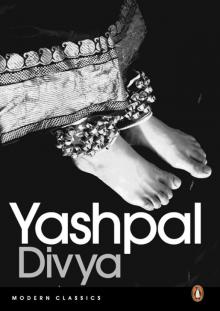
I owe a great deal to Bernard Queenan for making the translation of Jhootha Sach a reality. The time he spent as a British Army officer in India during the dying days of the Raj helped immensely in translating the descriptions of the events leading to the Partition from the point of view of—as I jokingly called it—the sahib log. His enthusiasm and commitment to help never flagged, and it is indeed very sad that he did not live to see our joint endeavour reach fruition. Without his help, as in the case of my translation of Yashpal’s Divya, this work too would have been unforgivably full of errors.
This Is Not That Dawn, from Faiz Ahmed Faiz’s poem, is the title of this English translation. Little is known of Yashpal’s contact with Faiz, except for a memorable photograph taken in Tashkent in 1958, in which, sitting across a food and beverages-laden table at a friend’s home, they seem to be enormously enjoying each other’s company. It’s possible that Yashpal would have written about his comradeship with Faiz in the fourth volume of his reminiscences that he could not finish.
Anand
Spring 2010
PENGUIN BOOKS
Published by the Penguin Group
Penguin Books India Pvt. Ltd, 11 Community Centre, Panchsheel Park, New Delhi 110 017, India
Penguin Group (USA) Inc., 375 Hudson Street, New York, New York 10014, USA
Penguin Group (Canada), 90 Eglinton Avenue East, Suite 700, Toronto, Ontario, M4P 2Y3, Canada (a division of Pearson Penguin Canada Inc.)
Penguin Books Ltd, 80 Strand, London WC2R 0RL, England
Penguin Ireland, 25 St Stephen’s Green, Dublin 2, Ireland (a division of Penguin Books Ltd)
Penguin Group (Australia), 250 Camberwell Road, Camberwell, Victoria 3124, Australia (a division of Pearson Australia Group Pty Ltd)
Penguin Group (NZ), 67 Apollo Drive One, Rosedale, North Shore 0632, New Zealand (a division of Pearson New Zealand Ltd)
Penguin Books (South Africa) (Pty) Ltd, Block D, Rosebank Office Park, 181 Jan Smuts Avenue, Parktown North, Gauteng 2193, South Africa
Penguin Books Ltd, Registered Offices: 80 Strand, London WC2R 0RL, England
www.penguin.co.in
First published in Hindi as Jhootha Sach by Viplava Karyalaya 1958, 1960
First published by Penguin Books India 2010
Copyright © Viplava Karyalaya 1958, 1960, 2010
Translation copyright © Anand 2010
Introduction copyright © Harish Trivedi 2010
Cover painting ‘1984’, oil on canvas, 1985 © Arpana Caur
All rights reserved
This is a work of fiction. Names, characters, places and incidents are either the product of the author’s imagination or are used fictitiously and any resemblance to any actual person, living or dead, events or locales is entirely coincidental.
ISBN: 978-01-4310-313-4
This digital edition published in 2012.
e-ISBN: 978-81-8475-800-9
Yashpal, This Is Not That Dawn: Jhootha Sach