

Operation Bethlehem, page 1


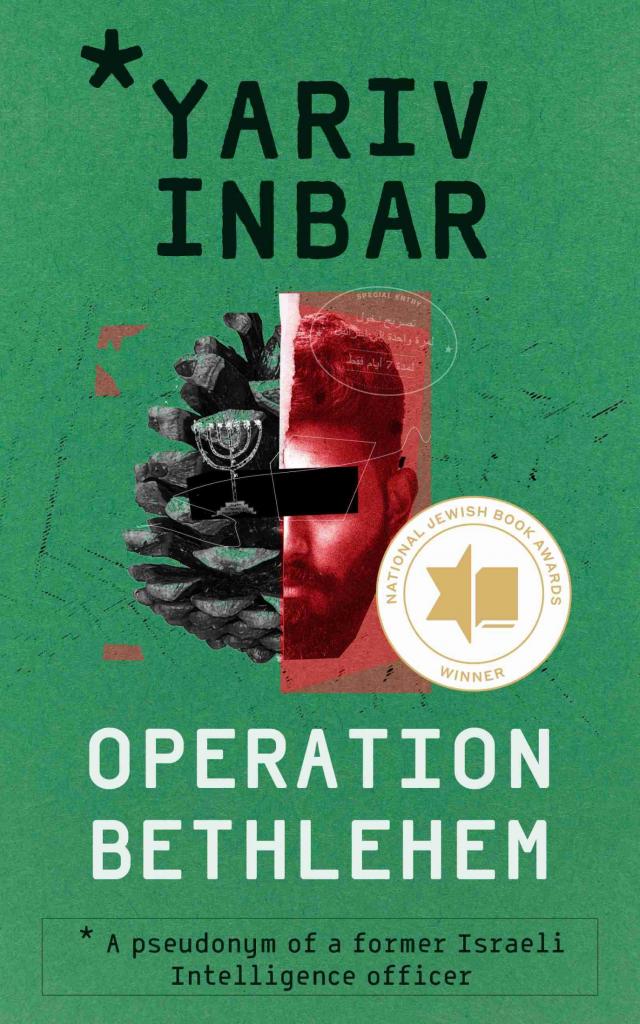
OPERATION BETHLEHEM
YARIV INBAR
TRANSLATED BY DALIT SHMUELI
Dedication
In memory of Nitzan Liebstein
(2004–2023)
This book is dedicated to the memory of the late Nitzan Liebstein, who, at the age of nineteen, was murdered in Kibbutz Kfar Aza on October 7, 2023, along with his father, Ofir, his grandmother, Belha Epstein, and his cousin, the hero Neta Epstein.
Among the countless innocent lives taken that day, the Jewish people also lost a young man of remarkable potential. It is a painful honor to know that he was one of this story’s readers.
May his memory be a blessing.
Epigraph
Home is where the heart is.
Pliny the Elder
Contents
Dedication
Epigraph
Prologue
PART ONE
1
2
3
4
5
6
7
PART TWO
1
2
3
4
5
6
7
8
PART THREE
1
2
3
4
5
Epilogue
your opinion matters!
Copyright
Acknowledgments
About The Author
Author’s Note
In Memory of Nitzan Liebstein
Bonus: Read the First Chapter of Yariv's NEW novel
Prologue
The freezing, howling wind was deafening. At first, it was like freefalling into an abyss. A few seconds later, he felt the exhilarating sensation of floating spread-eagled, cushioned by air. But it was a fleeting pleasure. After one minute, the alert in Daniel’s helmet rang near his ear. He pulled the ripcord handle and the noise stopped. There was no trace of the C-130 Hercules aircraft above, flying without the identifying Star of David, and clusters of orange lights flickered on the ground far below. His eyes didn’t have to adjust to the darkness – it had been dark inside the aircraft, too.
Suspended between the earth and sky, Daniel enjoyed these final moments. It was his first operation in enemy territory. If only Grandpa could see me now, Daniel thought, but maybe he can, from somewhere up above. Only Daniel’s immediate family was still alive, his sister, father, and mother. He had spoken with his mother the night before and felt a twinge of sadness thinking of her. He hadn’t seen her in almost a year. Although video calls bridged the distance, they were no substitute for a hug, a kiss, or her loving, gentle touch. The conversations with his father had always been impersonal and emotionless, but recently something had changed between them. Maybe it was the hundreds of miles that separated them and perhaps the path Daniel had taken – although, officially, his family wasn’t supposed to know about it.
He looked up; the canopy blended into the darkness and was barely visible. This wasn’t his first time. When he served in Duvdevan, the IDF elite unit that operates undercover among the Palestinian population, he trained with the paratroopers and jumped several times with his fellow soldiers. When he returned to his unit after completing the officer training course, he also jumped with the team he commanded. But this time was different. Combat freefall into enemy territory alone was part of the Mossad training. As he fell, he suddenly recalled reading about the legendary Zionist and paratrooper Hannah Senesh and her friends and felt a surge of pride. Like them, he was doing his part; a European-born Jewish intelligence field agent jumping from a plane into enemy territory. Daniel always searched for meaning and found it in unexpected places. His Israeli-born friends often teased him about it. “Israel is a given for you,” he would rant, “You only heard secondhand accounts from your grandparents about what it feels like to be cursed at and called a dirty Jew.” But he never said anything beyond that.
Daniel pulled the parachute steering lines to land. The ground was rapidly getting closer. Seconds later, he landed in the arid desert. Quickly releasing the bag strapped to his legs, he gathered the canopy and rolled it into a tight bundle. He stuffed the rest of the gear into a small cloth bag and placed it on the rolled parachute, peeled off the black jumpsuit that added bulk to his lean body, and added it to the pile. Underneath, he wore khaki cargo pants and a gray plaid shirt. His helmet hid an unruly mass of black hair, which would normally be tamed with gel.
Kneeling on the ground, Daniel tuned in to his surroundings. Howls of jackals in the distance broke the peaceful silence. He retrieved a small, old-school video camera from his backpack, powered it up and set it to night vision. The hidden infrared light helped the sensor to capture and display his surroundings better. He surveyed the area. Not a soul in sight. He put the camera back, pulled out a large multi-tool from a side zipper in his backpack, unfolded a narrow spade, and searched for a suitable cluster of rocks. When he found the right spot, he cleared the ground, dug a hole, then buried the parachute, bag, and jumpsuit. He covered them with dirt and put the rocks back as they were. The camouflage wasn’t perfect, but it was good enough. The desert wind would cover the area in sand within minutes.
Daniel put the multi-tool back, took out a cellular device tethered with a thin, black paracord, and turned it on. The display, set on low brightness, was covered with a filter coating to block the glare so it wouldn’t project into the barren desert. He opened an app that looked like a simple game but was programmed to turn into a GPS navigator by pressing a sequence of buttons. The app showed his navigation route on maps uploaded by the tech team. Daniel identified his position on the map and put the cellular device in a zippered pocket. Every time he entered his exact location, an automatic notification would be sent to command post confirming his progress. Finally, he adjusted his backpack on his shoulders and started quickly walking a route he’d repeatedly reviewed and memorized while preparing for the operation.
Around a mile ahead on the horizon were the slopes he would shortly cross. Besides reflecting on the surprising similarity to the familiar landscape of Israel, Daniel didn’t allow random thoughts to enter his mind. Half an hour later, he was sitting on the ground just below the top of the hill. Daniel took a few sips from his water bottle, feeling the heat and throbbing pulse in his temples. He hadn’t shaved in a few days, and the stubble was irritating. Checking his position on the navigation app, he set out. Forty-five minutes of strenuous walking, crossing hills and ravines, brought him close to the target area – a twisting dirt road between two stone walls, about fifteen feet high. Although he had never been there before, Daniel felt like he knew every rock, bush, and mound of dirt. The intelligence he’d received, satellite photos, and drills in similar terrain – it was just like any other full dress rehearsal. The feeling surprised him – he had expected to feel more excited.
With sure steps, Daniel navigated to the exact spot where he had to hide the device he carried in his backpack. He took out the large multi-tool and a camera disguised to look like part of the surroundings. “A sensor will turn the camera on every time a convoy of vehicles passes by, and it will send us pictures,” the technical operations officer had explained, “that way, we’ll be able to intercept a convoy we suspect to be smuggling weapons.”
Daniel felt a sense of satisfaction. This had been his dream for so long, to play a critical role in the security of his ancestral homeland. The boy who had felt like an outsider in Paris where he was born flipped an imaginary bird at everything and everyone that had knocked him off balance and caused such insecurity.
After a quick assessment of the camera’s location, Daniel worked on the camouflage. Then he took his cell phone, opened one of the apps, and waited. Seconds later, a confirmation message appeared on the screen. The device was ready. “Superbe,” he whispered, smiling as he got ready to leave.
The night vision camera confirmed that nothing was left in the field. When he bent over to lift his pack, he heard a rock hit the ground as if someone behind him had thrown it. Daniel felt his heart race as he rose slowly, slinging the backpack over his shoulders. He looked around and listened closely, using the camera to carefully survey the area around and above the stone walls, but didn’t hear or see a thing. He tried to think of a logical explanation; maybe it was an animal or a loose stone.
Daniel started to walk away slowly and quickened his pace when he felt confident. It was already three am, two and a half hours until the sun was “six degrees” below the horizon, just before dawn banished the absolute dark of night. He covered the distance in an hour and a half and navigated right to the lone tree just a few hundred feet from the meeting point. For the first time that night, he sat down to rest. Leaning against the rough bark, he devoured two sandwiches, drank some water, and stared into the infinite darkness. He put on a fleece jacket and a beanie to protect against the cold wind but kept his ears exposed and alert to any sounds. There was nothing to do but wait patiently and fight the fatigue following the adrenaline rush.
The last few days had been very intense, with final preparations, orders, briefings, memorizing navigation routes, and cover stories to ensure a flawless operation. The accumulated exhaustion and stress demanded relief. Arik, the course commander and the most significant person in his life over the past year, had drummed into their heads during training that the professional life of an intelligence officer entails endless waiting. “It doesn’t matter what your role is in the information gathering process; ninety percent of the time, you’ll be waiting, whether it’s for a meeting with an informant, for an answer, for the person you’re speaking with to say what you want to hear. Just waiting. You’re in the wrong profession if you don’t have patience.”
Daniel had innate patience. An introvert by nature, he could spend hours quietly observing. He stared into the night, listening to the sounds of the desert and fighting to keep his eyes open when suddenly, twin beams of light flashed through the darkness. It was too early for the rendezvous; maybe it was just a car. Now he could make out headlights and the shadow of a cargo van driving slowly. Another beam on top scanned the road, swinging from side to side deep into the desert. He crawled behind the tree trunk. For the first time that night, he felt fear. The intelligence briefings did not mention patrols on this road. Questions raced through his mind, and he recalled the falling rock. Maybe someone had seen him? If they didn’t notice him now, it really didn’t matter what the van was doing there. Daniel saw the light coming toward him and flattened his body against the cold, sharp desert stones. He lay still, breathing in the dry desert dust until the lights drove out of sight.
When the beam of light was far enough away, he got up and watched the van drive off until it suddenly stopped. Daniel froze. The doors opened, and a few soldiers got out. He quickly crawled back into the darkness and lay behind a small ridge. The soldiers circled the vehicle. One of them lit a cigarette and opened the hood. Why here, of all places? He realized that the extraction would likely not happen as planned. Fifteen nerve-wracking minutes later, just before he decided to go to the alternate meeting point, the soldiers got in the van, turned around, and drove back in the direction they came from. Daniel breathed a sigh of relief and walked toward the road.
Dawn was breaking. Daniel climbed down into a dry gorge and walked through it toward the road. Pebbles crunched under his feet. Around fifty feet before the road, he sat by a huge boulder and leaned against it. The sun rose and brought the desert landscape to life, the stones casting long shadows. It was freezing, and Daniel could barely keep his eyes open. Removing the black filter from his cellular device, he pulled out a lighter and burned the plastic film. He released the lanyard loop from the cellphone case, threw it into his backpack, checked that his wallet and passport were in the inner pocket, and reviewed his cover story. A few minutes later, a car drove up and stopped a few feet away from him. Daniel sat still. He heard people speaking in Arabic, then a door opened and slammed shut. He stood up, stretched his limbs, and took a few deep breaths – mentally switching modes from commando operating under the cover of night to daytime field agent with a fake identity. It was a subtle, unnerving shift.
He came out from behind the boulder and climbed up the dirt embankment. A red pickup truck was parked on the side of the road, the license plate matching the one he was given – his extraction.
“Bonjour,” he said to the young man standing outside the vehicle, pulling a faded canvas bed cover over the back of the truck.
The man nodded awkwardly. Daniel came up to him. “Need help?” he asked in English.
The man shrugged and handed Daniel the rope he was pulling.
“Can I get a ride?” Daniel asked as he’d been instructed.
The man nodded and opened the door. Daniel got into the back seat, keeping hold of his backpack. The sweet smell of hookah tobacco enveloped him. A young woman with a colorful head covering sat in the front seat. “Bonjour, madame,” he called out, and she nodded without turning her head.
The man sat behind the wheel, started the truck, and drove. The woman slid a CD into the player, and modern Arabic music filled the cabin. She stole a glance at him in the rearview mirror, and Daniel got a quick look at her almond-shaped, hazel eyes. He tried to imagine the rest of her face, seeing only her creamy complexion. His last relationship had ended shortly after he started the training course. It had been a while, and as time passed, every encounter with an attractive woman stirred a spark of desire. Even now.
“Music okay?” the driver asked.
Daniel gave a thumbs up and smiled. The young woman’s almond eyes met his in the mirror again, and she lowered them quickly. It was six thirty in the morning; he had the whole day ahead of him, hours of driving with the local couple. He would cross this enemy country with them, hundreds of miles, until they reached the isolated area where the commando unit would pick him up to take him home. Daniel stared out the dusty window at the desert view, feeling enormous satisfaction in this unreal situation.
“Checkpoint,” the driver suddenly announced in Arabic, and slowed down.
Daniel tensed. The intelligence briefings hadn’t mentioned checkpoints. He immediately recognized the cargo van as the patrol vehicle he’d seen several hours earlier. It was parked perpendicular to the road and blocked one of the lanes. Images flashed through his mind: the Hercules, the jump, the camera, the thud of the rock, the beacon of light – incriminating thoughts that were better left suppressed. What he felt right now was nothing like in the exercises – that was pure anticipation like before an exam. Now he felt the dread of what might lie ahead: arrest, maybe torture, or even death.
The driver stopped the truck and opened the window for the soldier armed with an AK-47.
“Where are you coming from?” the soldier questioned the driver in Arabic. The driver gave the name of one of the nearby villages. The woman fixed her head covering and avoided eye contact with the soldier. Another soldier circled the truck, and a third sat in the patrol vehicle at the wheel. “Where are you headed?” the soldier asked, and the driver gave the name of another village in the area. Daniel looked outwardly calm even as his heart threatened to explode.
“And who is this?” the soldier asked.
“A tourist. I saw him a few miles back, and he asked for a ride.”
The soldier nodded a few times. “Open the window,” he ordered Daniel in Arabic and mimed rolling the window down.
“Bonjour, monsieur,” Daniel opened the window and greeted the soldier.
“Passport,” the soldier demanded.
While Daniel was digging for his passport, the young woman turned to the soldier and asked through the driver’s window if everything was all right.
“We will see!” he said to her, taking the passport and flipping through it. After examining all the rubber stamps, he compared the picture to Daniel’s face. Then, after a long look at him, he returned to the cargo van and spoke with the soldier sitting inside. After a few minutes that seemed like an eternity, the soldier returned and asked the driver to follow them.
The driver looked worried, “Please don’t be angry... can I ask what’s wrong?”
Daniel, who understood every word, felt his heart drop and tried to keep smiling.
“Is this your wife?” the soldier asked.
“Yes,” the driver affirmed, “my wife.”
“Show me your IDs.”
The driver handed over the plastic card that his wife took out of a small green purse and his own.
“Follow me,” the soldier ordered and turned to the cargo van.
“What’s going on, sir? What did we do?” The young woman got out of the truck and followed him, and her husband silently joined her. Daniel stayed in the car and looked at the woman, who was wearing an ankle-length brown dress with long sleeves.
“Ma’am,” the soldier said impatiently, “get back in the car and follow us, don’t give us any problems. Last night a plane penetrated the border, and we received orders to stop anyone who looked suspicious.”
Daniel’s heart skipped a beat. They had detected the aircraft, but the soldier hadn’t said anything about a parachute. How could they know?
“An aircraft?” the young woman scoffed as she fixed her flowered head covering. “What has that got to do with us? I’ve never even been to the airport. I don’t understand...”
“Move it.” The soldier barked at the man. “Take your wife, get back into the car and drive after us, or you’re coming in the van with us.”
The woman turned to her husband, “What does he want? Are we suspects? Let them take the Frenchman and leave us alone...”


