

The Witch Tree, page 23


Sally stopped, and he went around her, looking for what Ruben had left for Eli. Then saw it.
“Is it all right?” Sally asked, “I mean, that I’m here?” He nodded. And it was, because she’d asked.
He took his cigarettes from his jacket pocket, made a circle of tobacco at the foot of The Tree.
“Nin minigos mashki’wideewin,” he recited, for himself and for Sally, then stepped back.
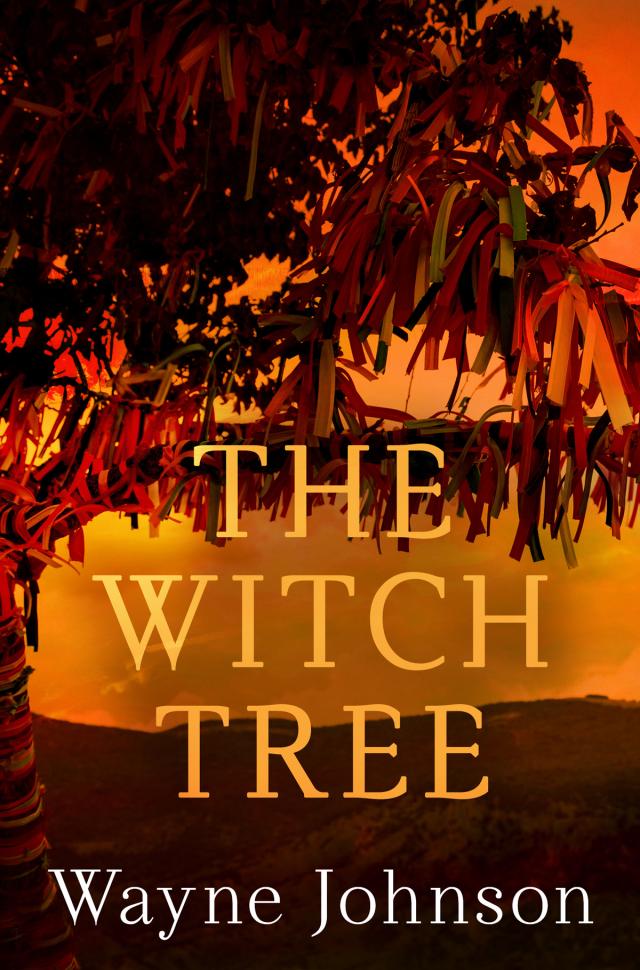
Nodded to the charms festooned in the pines behind them. Took Bear’s, from his wallet, and hung it on a branch. “Dibindowin,” he told Sally, “that’s what they’re called.”
Figures of men and women; of houses, horses, books; of a miniature pair of crutches; small, wrapped balls of birch bark. Here a tiny papoose. Alongside it, a thumb-sized, blown glass Christmas tree ornament, a red and silver car – an early model Mustang – an X in white paint across the windshield. Marking the spot.
“Each is like… a prayer,” Sally said, “is that it? So, what was yours for? Or who?”
He set tobacco in her palm, directed her to make a circle of The Tree with it, which she did.
“Well?” she said.
“It means,” he replied, and grinned at her, “the Big Cookie is behind door number three.”
“I thought you weren’t going to do that,” she scolded.
“All right, so it doesn’t… mean that,” he replied, but still couldn’t bring himself to utter a word of it. Just wouldn’t. “And what’s gotten into you, anyway? Since when did you get so… sanctimonious and all?”
“You’re so… full of shit,” she spat, “you know that? I mean, stop – lying. To yourself, and to me.” She’d stepped closer. “I’m not stupid. And – STOP SAYING YOU DON’T CARE. You do care, and… so goddamn much, you’re terrified if anyone doesn’t like it, it’ll kill you.
“I mean, who’s the one who’s afraid here?!”
“Me?” he said, and pointed into his chest. “I’m afraid?”
“Yeah, you,” she shot back, “so could you, just this one time, not make me pull it out of you?
“Could you just be yourself, for once?”
“Jesus, Sally. Really?”
“I’m NOT a little girl. I need things. And right now I need – for you – to tell me – what you just said.”
When he rolled his eyes, she knit her hands into her hair and pulled up, her face that of a pukwan.
“I’ll scream,” she hissed.
“All right,” he said, “just don’t–” but even as he said it, he felt as if he’d die, all over again.
“People’ve been coming here for nearly four hundred years,” he said. “That’s what–” he pointed with his chin to the dibindowin behind them “–all of that back there is….”
“What?”
“Asking for… you know, things. Safe passage, most of it.”
“But that wasn’t what you did,” Sally said, “was it.”
“No. There is no safe passage. There’s just… life. So you… you ask to have the strength to rise to it.”
“Can I?” Sally asked.
“What?”
“Ask, like you did?”
He nodded, and Sally pressed her eyes closed, stood with her hands clasped in front of her, and when he said, “Ah, shit, Sally,” so choked up he could barely get that out, she took his arm.
“Say it,” she said, “for both of us. And mean it. And don’t–” she glared “–tell me it’s bullshit.”
He did that, and the two of them stood back of the tree, and the wind off the lake in its branches.
“Come on, Dorothy,” he said, after at time, and reached for her hand, and they turned and went up the path.
Going past Ruben’s ornament, he snatched it from the branch there and slipped it into his jacket pocket.
54
They stopped at a Ben Franklin in Duluth, and while Sally wandered the aisles of war bonnets festooned with dyed chicken feathers, and rubber tomahawks, and moccasins beaded in colors no native had ever strung together, purple and silver? he slipped into the Men’s and pulled the door closed.
When he couldn’t get the cap off Ruben’s ornament, he broke the whole works open on the edge of the sink.
Over the drain, with the shards of colored glass, was a brass key, printed on it: #88 / JHO / Duluth, MN 55805.
In the parking lot of John Herter’s Outfitters, he slung the footlocker-sized box onto the back seat, then jumped behind the wheel. It was hot and stuffy in the car, and Sally was anxious to get going.
“What’s in the box?” she asked.
It had been wrapped umpteen times in duct tape and a label slapped across the front of it. In marker there: Sabaskong Bay Lodge / Storage Unit 88 Camping Supplies TENT & DINING FLY. C/O Ruben LaChapelle.
“Oh,” he replied, “we got here about a mill-and-a-half in unmarked bills, give or take a little, I suppose.”
Sally frowned, and he laughed, glanced into the rear view mirror, then spun onto the highway.
Sometimes, if you just told the truth, no one’d believe it – the very reason they were on the road now.
55
On the west side of Cody, Wyoming, on I 14, they stopped at a café, the mountains looming hazy outside, and there, too, the highway in all its desolate, tumble-weeded, cracked two lane glory. He ordered a bowl of chili and devoured it, then ordered another, still ravenous. Sally picked at a tuna-salad. Behind them two men discussed drilling wells in soporific, low voices.
“You’re so quiet again,” Sally said.
He’d taken two of Eli’s speeders, and had driven through the night, looping south. He was certain he’d seen Lester’s car, so had turned onto a service road, and while Sally was sleeping, he’d navigated a patchwork of pot-holed blue highways, which had been exhausting.
A patrol cruiser pulled in the lot, and two staties came in, mirrored sunglasses, Sam Browne belts, guns.
The waitress seated them in the booth opposite, and Buck nodded curtly. He’d bought a knock-off Stetson at a gas station, and he pulled it low over his face and bent to his chili.
Sally kicked him under the table. “After what things were like in the car, earlier, what’s gotten into you?” she asked.
“Just hungry,” he mumbled.
56
They had exhausted Twenty One Questions, small talk, and lies about what they’d been doing, Sally saying about what had happened at home, “Just a kerfuffle,” Sally steering the car into the evening, and the Snowies rising on the horizon big, and purple-majestied as myth.
Sally, from the wheel, tousled Buck’s hair. She had changed into a blue linen shirt, Capri pants, and low-heeled espadrilles.
She glanced over at him and smiled. Was she somehow… okay now, or was she just not so upset? Like she’d been in the restaurant.
At the last gas station, the pump jockey had whistled at her under his breath. And why shouldn’t he have? She’d put herself together, done up her auburn hair and put on make up.
She’d – it seemed – truly won something of herself back, that bright-eyed optimism, what’d he been mooning over earlier, but he didn’t trust it. Or, was it, he couldn’t have it now?
Not with Miller out there. Not when they weren’t safe. Not when he wasn’t even close to being done with it.
She cocked her head to one side, regarded him, as one might something attractively shiny.
“If I told you that… I wanted to go with you, wherever that was, what would you say?” she said.
He glanced in the rear view mirror, to avoid her inquiring look. His heart aching, torn. Just more empty road. When the moment had stretched unbearably – because that arrested thing in her was gone, and he could want her now, and he did, and badly – he glanced over at her, said, “I didn’t say ‘No,’ Sally, all right?”
“No, you didn’t,” she said.
“And if I said ‘Yes,’” he told her, “we’d have to stop somewhere, anywhere up along here.”
“So, why don’t we? It’s not too late. Is it?”
“Because,” he said, matter-of-factly, “we have to get you headed off to where you’re going, to Seattle.”
“Ah,” she said. “That.”
“Just drive,” he said. “Can you?”
“I can now,” she said and smiled, bravely.
Away from the cafe where they’d stopped, Sally paced back and forth, then strode up the graveled shoulder in a snit, and he let her go, angry with himself for having upset her, here the highway narrow, and up ahead a pass, the continental divide, and over that, Idaho.
If they were coming, it would be soon, and out here in the middle of nothing and where they’d be alone.
There was another car at the cafe, and he could see the family inside through the window, the mother harried, and the children sullen, and the father, his jacket still on, watchful.
Sally had dropped over a rise, purpled thunderheads bunched there like a fight about the happen.
“Sally?!” he called out, finally, and headed after her.
He glanced back at the café. There was an arrow on its pitched roof, and under that, blinking in neon: Dine. Then, Here. And finally, Dine Here. But in his mind it flashed Die – Here. Die Here.
57
There was another car in front of the cafe when they got back, a tan Chevy, and the family gone. He took Sally’s hand and they walked now in stride, like a couple, into the lot.
And, after all, they were that, and had been.
“I just want to stay with you,” she was saying, “and you can laugh, when I say things like… that car there,” and she pointed “looks like a… ‘nurse’s shoe,’ and I won’t get in the way.”
He guided her inside, around the front counter. “Don’t,” Sally said. “I can walk by myself.”
Sliding into a booth, she pulled her legs in after her, and he sat opposite. Down the aisle, a cowboy slept, his knees pulled up and his boots propped on a chair. A grizzled man in a ketchup-stained apron came from behind the counter. “Evenin’,” he said.
“Sally?” Buck said. “Whatever you’d like.”
“Special is Salisbury Steak,” the cook offered.
Buck told him to bring two. He sipped at his water. It was in a thick red glass and tasted rusty.
“If I’m just dropping you off soon, I want something to drink,” Sally told him, sullenly.
“Try the water,” he said.
She glared at him, and he looked away, to the register, there a calendar on the wall, WYOMING: LIKE NO PLACE ON EARTH, old and yellowed, a mountain landscape splashed across it in pastel hues.
“Sally,” he said, turning to her, “if things were–”
She put her face in her menu, as if she were reading it, flinched when he touched her shoulder.
He’d brought up when they should go their separate ways. Where. And how, and now, just up the highway. He’d brought it up, pulling into the cafe. It was what had sent her off into the sagebrush.
That and his suggesting she’d need to get another car. For her safety, he’d told her.
“Your brother,” he said, hooking a finger over the menu and pulling it down so he could see her, “you’ll call him, right?”
There was a fan in the ceiling and it spun in heavy circles, twirling the green fly strip hanging from it. Fingering the keys on the juke box set in the wall, he tried to interest Sally.
“I hate all that sentimental crap,” she said. “It’s all just lies. Like why you’re saying I can’t go with you.”
“You’re right,” he said, pressing his hands flat on the table. “But you’re wrong, too.
“You can’t be around me,” he said, and added, “and it has nothing to do with us, okay?”
Sally reached for his hands, worked her fingers into his, pressed them, then let go, her eyes tearing up.
“Why does everything always have to be so… hard?” she said, and glanced up at him.
“I mean,” she said, “who’s after you?”
“How about some Patsy Cline?”
“Sure. That would be just the thing,” she said. “Play ‘Crazy,’” she said, “can you?” and he did.
58
He was knocking back a last cup of coffee, and was about to rouse Sally to go, when he noticed the cowboy again. Behind the divider, he’d turned, so the soles of his boots faced them, and on each were bright, reddish-orange swatches – autobody glazing compound.
It was a color you couldn’t miss.
“Sally,” he said, and shook her. She’d nodded off. She blinked one eye, and then the other, waking.
Under the table, he got his Ka-Bar open, then slipped it, blade-end first, into his jacket pocket. He reached across the table and took Sally’s hands, cupped them in his and squeezed.
“What?”
“You’re going to do exactly what I tell you to do,” he told her, and leaned into the table, “no questions.”
The juke box was playing, Patsy Cline’s voice cheerfully mournful, And I’m crazy for trying, and crazy for cryin,’ and I’m crazy for lov-in’ you. Behind the counter, the cook held up the Sheridan Gazette, shook a page flat, a cigarette in hand, a lazy line of smoke rising from it.
“When I tell you to, I want you to go into the ladies’,” he said. “Go in there, count to thirty, then head out the back door. Go as fast as you can, where you were walking earlier. You run, okay?”
He lifted his cup, motioned for a refill, and the cook slapped his paper flat and came over with a pot.
“Nice night,” he said.
“Sure is,” Buck replied. “Getting much rain?”
The cook launched into the recent wet spell, and Buck nodded, to Sally, and she slipped out of the booth. He took a sip from his cup and stood, and the cook went around to the register, alongside it a stack of newspapers, a piece of bailing wire dangling down the front of it.
“Say, what was that, anyway, jackalope?” he asked.
The cook was not amused. He hit the register drawer, and there was a clashing of gears.
“Some folks,” he said, loudly, so that anyone within earshot could hear, “like our food!”
Whoever it was in the booth, he’d either pulled his boots in now, or he’d gone outside.
He pointed toward the booth. “Short on motels hereabouts it would seem,” he said.
“Nah,” the cook said. “‘Hangover,’ or so he tol’ me. Been sleeping it off all afternoon and then some. He been there in the corner snoring and droolin’ on hisself well on since lunch.”
Buck nodded. At the front door, he stooped, then swept up the wire around the papers.
“Coffee, you don’t buy it, you rent it,” he joked, then went to the men’s and ducked out the rear.
Sally was moving away in the dark, through waist high sage, stumbling, then awkwardly bolting, Vern rangy behind her.
He wrapped the wire around the wrist of his left hand, made a loop on the opposite end, a handle. Came on through the sage after Vern, low over his feet, a hunter again.
Sally stopped to look behind her and, hearing something, drew her shoulders up around her neck.
“Buck?” she cried out. “Buck?!”
Vern, a knife in his hand, rose out of the sage, and Sally lifted her hands to her mouth.
Buck behind Vern, got the wire around his neck. “So help me God,” he said, and pulled the wire tight.
He kicked Vern’s feet out from under him, forced him into the sharp chert, wrested the knife from his hand, then worked the point of it into Vern’s cheek, under his eye, the blue one.
“That’s him,” Sally said, “that’s the one who came at me. It’s his eyes, but I’d swear, they were–”
“Different?” Buck said, and Sally, blinking, nodded.
“How about if I blind you, huh?” Buck said. He hit Vern, hard. “So, where are they?”
“We been followin’ you near since you left the cities,” Vern said. He craned his head up, glared at Sally.
“They’ll get to you, too, sweetheart, you can count on it, with no place to run out here.
“Gonna fuck you’re little pussy, you count on it.”
He bound Vern’s wrists with the wire. “Gonna do me now?” Vern said, and glared, “with your girl here?
“That’s premeditated, they’ll fry you like a side of bacon, you just do it ‘n’ see, brush nigger.”
There was a propane cylinder on a concrete foundation behind the cafe, and he dragged Vern to it. He tied him to the tank stand, bound his wrists to his ankles, then squatted at his head.
Sally circled at a distance, an animal warbling coming from her, “No, no-no-no-no-no….”
“Stop it,” he said to her, “all right?”
Her fist held to her mouth, she stood in the chert, blinking, and Buck dropped to one knee.
“Next time, she isn’t going to be with me, and it’s going be different,” he said, and stood.
Wiping his hands on his apron, the cook came out the back, peered into the dark off the stoop.
“What’s goin’ on here?!” he shouted, and when they didn’t answer, he ducked back in.
Moments later, striding to the parking lot with Sally on his arm, he passed the cook.
“I called the police,” the cook said. “They’ll be coming for you, you goddamn troublemaker. And you, little missy, you shouldn’t be with the likes of him. They’re all just trouble.”
Buck turned, to go back, then thought not.
“Yeah, you. I’m talkin’ to you,” the cook shouted as they got into the car, “You’d better run!”
59
The road lit up behind them like an explosion, there a veritable tunnel of light, no common high beams these. He topped a rise and, coming down the backside, read the odometer, 30,242.2.
It was dark, the landscape bathed in blue white moonlight, and the moon caught in a bank of clouds, a scythe. When the lights reappeared behind them, he checked the odometer. 30,250.2.


