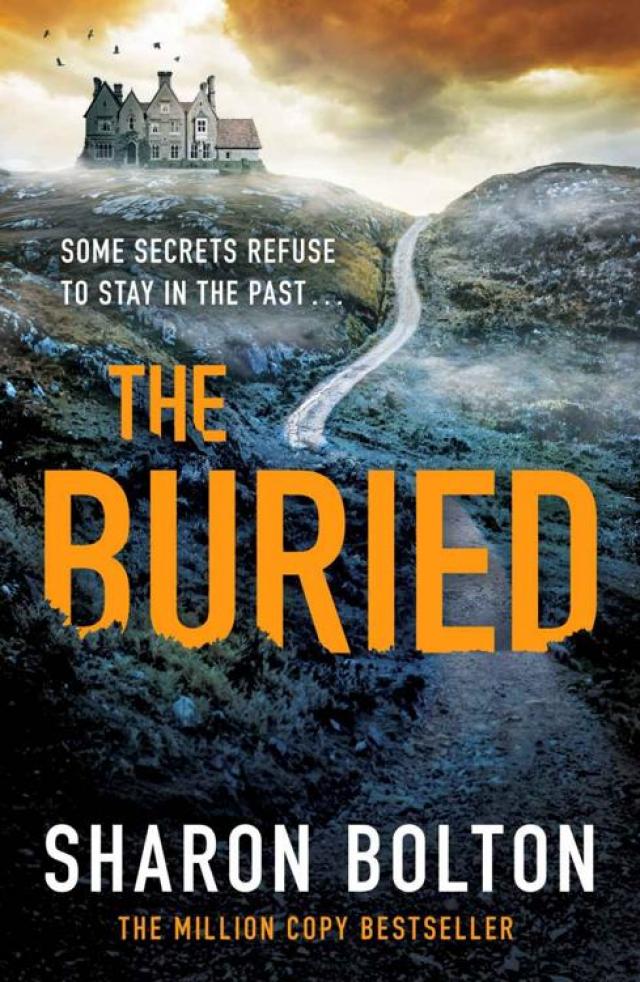
The Buried (The Craftsmen), page 1


For John Sawyer … wisest, weirdest, most wonderful of men
CONTENTS
Dedication
Title Page
PART ONE
1 Florence
2 The Poisoner
3 Cassie
4 Florence
5 Cassie
6 Florence
7 Cassie
8 Florence
9 Cassie
10 Florence
11 Cassie
12 Florence
13 Cassie
14 Florence
15 Cassie
16 Florence
17 Cassie
18 Florence
19 Cassie
20 Florence
21 Cassie
22 Florence
23 Cassie
24 Florence
25 Cassie
26 Florence
27 Cassie
28 Florence
29 Cassie
PART TWO
30 Florence
31 The Poisoner
32 Sally
33 Florence
34 Sally
35 Florence
36 Sally
37 Florence
38 Sally
39 Florence
40 Sally
41 Florence
42 Sally
43 Florence
44 Sally
45 Florence
46 Sally
47 Florence
48 Sally
49 Florence
50 Sally
51 Florence
52 Sally
53 Florence
54 Sally
55 Florence
56 Sally
57 Florence
58 Sally
59 Florence
60 Sally
61 Florence
62 Sally
63 Florence
64 Sally
65 Florence
66 Sally
67 Florence
68 Sally
69 Florence
70 Sally
71 Florence
72 Sally
73 Florence
74 Sally
75 Florence
76 Sally
77 Florence
78 Sally
79 Florence
80 Sally
81 Florence
82 Sally
83 Florence
84 Sally
85 Florence
86 Sally
87 Florence
88 Sally
89 Florence
90 Sally
91 Florence
92 Sally
93 Florence
94 Sally
PART THREE
95 Florence
96 The Poisoner
97 Cassie
98 Florence
99 Cassie
100 Florence
101 Cassie
102 Florence
103 Cassie
104 Florence
105 Cassie
106 Florence
107 Cassie
108 Florence
109 Cassie
110 Florence
111 Cassie
112 Florence
113 Cassie
114 Florence
115 Cassie
116 Florence
117 Cassie
118 Florence
119 Cassie
120 Florence
121 Cassie
122 Florence
123 Cassie
124 Florence
125 Cassie
126 Florence
Author’s Note
Acknowledgements
Credits
Also by Sharon Bolton
Copyright
PART ONE
1999
Larry Glassbrook’s last days
Lancashire Morning Post
9 July 1999
By Abby Thorn, guest editor
Human remains found in land above Laurel Bank in Sabden are to be cremated in a private service later this month, according to a short statement released today by the Lancashire Constabulary.
Black Moss Manor Children’s Home, formerly known as Black Moss Manor Orphanage and Foundling Hospital, dates back to 1893, when it was opened by the town mayor using money raised by local benefactors. It closed in 1969, following a police investigation into alleged neglect and cruelty.
The remains found are believed to be those of four children: news almost certain to raise hackles among those residents of Sabden with long memories. It may be three decades since Larry Glassbrook’s reign of terror caused all parents in the town to fear for their children, but dark memories linger, especially in Lancashire.
According to the official police statement, the four deceased children probably died of influenza or tuberculosis, two diseases prevalent in Lancashire throughout the late nineteenth and early twentieth centuries. Local historian and retired librarian Daphne Reece told the Post that Victorian orphanages typically had their own patches of consecrated ground, though there had been no burials at Black Moss Manor that she could recall. ‘I would expect headstones,’ she said, ‘even very simple ones, although it’s possible they were removed years ago.’
Police Superintendent Tom Devine told the Post that no formal investigation would be launched. ‘These are old remains,’ he said, ‘dating back to when, sadly, infant mortality rates were much higher than they are now. We have no reason to believe a crime has been committed.’
The identities of the deceased children are not known and there are not believed to be any living relatives.
1
Florence
Monday, 26 July 1999
‘Black Moss Manor,’ I say, across the rickety, Formica-topped table in the visitors’ room. I’m picturing the steep, laurel-lined drive on the outskirts of town, the soot-blackened stone, the pointed gable in the centre of the slate roof. I can see large square windows, those on the ground floor barred.
Behind us, an argument breaks out. A whistle is blown; someone barks out an order.
I remember peeling red paint on the front door, the rusting drainpipes and the ferns that sprang from crumbling mortar. I can almost smell the crisp air of the moor, the boiled vegetables, the stink of urine that formed an evil-smelling cloud around the rear of the building.
Conscious of Larry’s eyes on me, I quickly reread the article from the Lancashire Morning Post: human remains found, four children assumed dead from natural causes. I register the byline of the journalist and the references to the local historian and the police superintendent. I tell myself that it is nothing to do with me.
‘That place saw a lot of children through its doors,’ I say, when I look up.
Larry’s black hair has turned snow white, and his skin has coarsened. His nose has been broken more than once, and there is a puckered scar above his right eye where someone tried to remove it with a dinner fork. He is handsome for all that. Anyone wondering how Elvis might have looked had he reached the age of seventy, and kept his weight under control, need only look at Larry.
‘Some of them would have died,’ I finish.
Larry lowers his voice. ‘Oh, they did. I buried ’em all, and not on the premises.’
‘What are you saying?’ I ask. ‘Did you do this? Did you kill them?’
Larry pulls a face, an expression of surprise, of disappointment. ‘Hell, no,’ he says.
‘You can hardly blame me for asking.’
‘Florence, I killed Susan Duxbury, Stephen Shorrock and Patsy Wood. I owned up to it, and I’ve served three decades for it.’
I do not need him to tell me this. Thirty years ago, in 1969, three young teenagers disappeared from near their homes in Sabden and were never seen alive again. I was a lowly WPC, still on probation, but I tracked down and caught the killer. Larry.
‘I’m not getting out of here alive,’ he says. ‘What have I got to gain from lying?’
He has nothing to gain. Nothing at all.
‘I remember every coffin, every casket I ever made, Florence. Does that surprise you?’
Larry, before his imprisonment, was a master carpenter and a part-owner of Sabden’s only funeral directors, Glassbrook & Greenwood. His partner, Roy Greenwood, ran the business and walked before the cortège in black tailcoat and top hat, carrying a silver-topped cane. Larry made the beautiful, satin-lined, hardwood caskets.
‘In all the time I worked with Roy, I made eight children’s caskets for Black Moss Manor,’ Larry tells me. ‘Three were for babies. There was never any budget, but I made ’em nice because I had two kids of my own.’
I cannot help the raised eyebrows. A devoted father who killed the children of others. He either doesn’t see it or ignores me. He starts to cough and pulls out a handkerchief. A bloodstained handkerchief.
‘Ten minutes, ladies and gentlemen,’ the officer on duty calls. Around us, we hear people making their preparations to leave. Some have a long way to travel and are impatient to be out. Behind Larry’s head, I see a couple embrace.
Larry and I never touch. Larry and I are not lovers, spouses or partners. We’re not relatives, or even friends. I have no idea what Larry and I are.
‘My point is,’ he goes on, ‘they weren’t buried at Black Moss. They went to St Augustine’s, the nearest churchyard.’ He taps his finger down on the cutting and says, ‘So where did this lot come from?’
‘They predate you,’ I suggest. ‘When did you start work at the firm?’
‘In 1946.’ He’s anticipated the question. ‘Roy came into school looking for an apprentice good at carpentry.’
I glance back at the cutting. Four small skeletons. ‘So these remains go back further. It says here the home dates back to the nineteenth century.’
Larry sighs, a damp, unhealthy sound. ‘Florence, I know a thing or two about dead bodies and what happens to them in the ground. The soil up there is acidic. And wet. Small corpses wouldn’t last fifty years.’
‘You’re saying these are unofficial burials?’
‘Yep. And recent ones at that. Last twenty years. Thirty at the absolute outside.’
‘Then they’ll be investigated.’
‘Does it look to you like they have an investigation planned?’
I look once more at the newspaper cutting. The remains are to be cremated following a private service. ‘I can’t get involved.’
‘Doesn’t sound like the WPC Lovelady I remember.’
I’m the last visitor sitting. The officer in charge is looking at his watch.
‘Larry,’ I say, ‘we closed the children’s home down. The people who ran it served time.’
I’m trying to remember the name of the two people in charge. Ashton? Aston?
‘A couple of years,’ Larry says. ‘Then they were out again. You might have closed the children’s home down, but you didn’t stop what was going on.’
I’m shaking my head.
‘You know there’s something wrong in that town, Florence,’ he says. ‘You could feel it all those years ago.’
Thirty years ago, in Sabden, Larry was my landlord. I lived in his house, along with his wife, teenage daughters and a couple of other lodgers. It wasn’t the easiest of times: I was struggling to find my feet in a rough Northern town, wondering if becoming a police officer hadn’t been an arrogant mistake, feeling out of place and out of sorts from the moment I woke up in the morning. Larry had been decent to me, his wife kind, almost motherly, his daughters friendly albeit in the self-absorbed way that teenagers have. The Glassbrook family and their home had been one of the few positives about my new life.
Until I found out too much; until Larry kidnapped and tortured me; until he left me for dead in a freshly dug grave.
The third finger on my left hand is hurting. Phantom pain, of course: I lost that finger years ago, but it hurts me all the same, especially when I’m anxious. Normally I tuck it into my armpit and the pressure helps, but I won’t do that in front of Larry.
Something wrong in that town. I could almost laugh. I raise my eyebrows again. This time he sees it and he smiles. ‘More than just me,’ he says.
‘I’m not going back there.’ I mean it. I am never going back to Sabden.
Larry pulls out his bloodstained handkerchief and I notice again how grey his skin looks, how his flesh seems to have dissolved. I shouldn’t be shocked. And yet I am. For the first time in decades I have to face the thought of a life without Larry.
‘How about for my funeral?’ he says.
2
The Poisoner
The poisoner is weak.
The poisoner is your servant, child, spouse, the powerless chattel for whom you barely spare a thought, except when your convenience is disturbed.
The poisoner walks beside you, barely noticed, rarely considered. He knows that you are a fool, blissfully unaware of the patient assassin who cooks your food, plays at your hearth, sleeps in your bed. You are never safe from the poisoner because he is always by your side.
The poisoner has endless patience. He will bide his time, counting out his wrongs and his grievances the way a miser counts his gold, knowing that all will be played out. The poisoner can afford to wait.
The poisoner has skill and craft, the like of which you never dream, because he feels no need to attract either your praise or your attention. The greatest danger is the one you never see coming.
I say ‘he’ and ‘him’, but of course the correct pronouns are ‘she’ and ‘her’, because poison has always been the weapon of choice for those who otherwise have no power. The poisoner is a woman.
The poisoner is me.
3
Cassie
Never underestimate another witch’s power. That’s what my mother always told us, and so I don’t, even when the witch in question is my mother. In her day, Sally Glassbrook was a powerful practitioner of the old craft, and I watch myself when I’m around her.
I say a prayer for strength as I get out of the car, imagining a thin silver cord running from my core right down to the centre of the earth. When I’m calm – God, it pisses me off that she can still do this to me – when I feel calm enough, I head for the door.
The old bitch’s nursing home is a few miles out of Sabden. It’s not nearly as old as it looks and, once inside, might be any modern medical facility. The old stone exterior is fake, like the filial devotion that picked the most expensive home in the area for my mother. I don’t give a monkey’s about her comfort. I chose it for its location.
I never use the front door, preferring to slip in unnoticed through a side entrance. The floor isn’t carpeted, but she never hears me approach. I’m about to turn the door handle when I hear voices inside.
‘All the signs say Larry will pass soon.’ The woman speaking has a rich voice, with Lancashire overtones. ‘Maybe even the day of the full moon.’
My mother gives a faint laugh. ‘He always had a flair for the dramatic.’
My mother? What the fuck? My mother has barely spoken in years. She has early-onset dementia, exacerbated by chronic depression. She lies in bed with her eyes wide open or sits in a chair and stares out at the moor. Sometimes she wanders the room in bare feet and pulls at her hair. Occasionally she mutters to herself. She doesn’t talk to people.
The strange voice says, ‘Cassie has been making enquiries. She wants to hold the funeral in Sabden.’
‘She’s back?’ my mother says. ‘She’s been in town?’
I hear the panic in my mother’s voice. I have been forbidden to set foot in my home town for nearly thirty years: forbidden by Larry, but Sally went along with it. At sixteen years old, shortly after his arrest, the two of them had me sent away to live with relatives, told me that under no circumstances was I to return. I went along with it. I had no choice.
‘No, no, I don’t think so,’ says the other woman in the room. ‘Not in town as such. Just phone calls. It’s not a good idea, Sally. The funeral, I mean. Even ten miles down the road would be better.’
I can hear traces of a West Indian accent. We knew a West Indian family years ago, but I can’t quite bring their name to mind.
‘What difference does it make now?’ my mother asks. ‘People will get excited for a few hours and then they’ll all go away, including Cassie.’
Hearing her say my name feels like an old sore being scratched. It’s been years since she’s even acknowledged my existence.
‘She wants to sell the house,’ says the West Indian woman. ‘She wrote to Avril.’
Avril Cunningham is my solicitor. So much for client confidentiality.
‘So do I,’ my mother says. ‘I’d have sold it years ago. I owe her that, at least, after what I did to her.’
‘Will you go to the funeral?’ asks the woman.
‘No.’
After what she did to me?
Even in the corridor I hear the sigh that comes next. ‘Sally, we need you to come back to us. When it’s over, when he’s really gone, will you leave this place?’
There is silence in the room for several seconds. Then my mother says, ‘What can I do? What can any of us do?’
‘You must have seen the news? About the children’s bodies found at Black Moss Manor.’
I have a subscription to the Lancashire Morning Post. I remember that story. Meanwhile, from inside the room comes a heavy sigh. ‘I did,’ my mother says. ‘So what?’
‘They’re going to cremate them. Not bury, cremate.’
‘It’s the cheaper option.’
‘And it destroys all the evidence.’
I press a bit closer to the door.
‘There’s talk of it being the same day, Sally. All the attention will be on Larry’s funeral. No one will pay any mind to what they’re doing on the other side of town.’
No response that I can hear.
‘They’re trying to hide something, Sally.’
They? Who are they?
‘Sally, you knew that place. That girl you helped, she came from there, didn’t she?’