House of Evidence, page 2
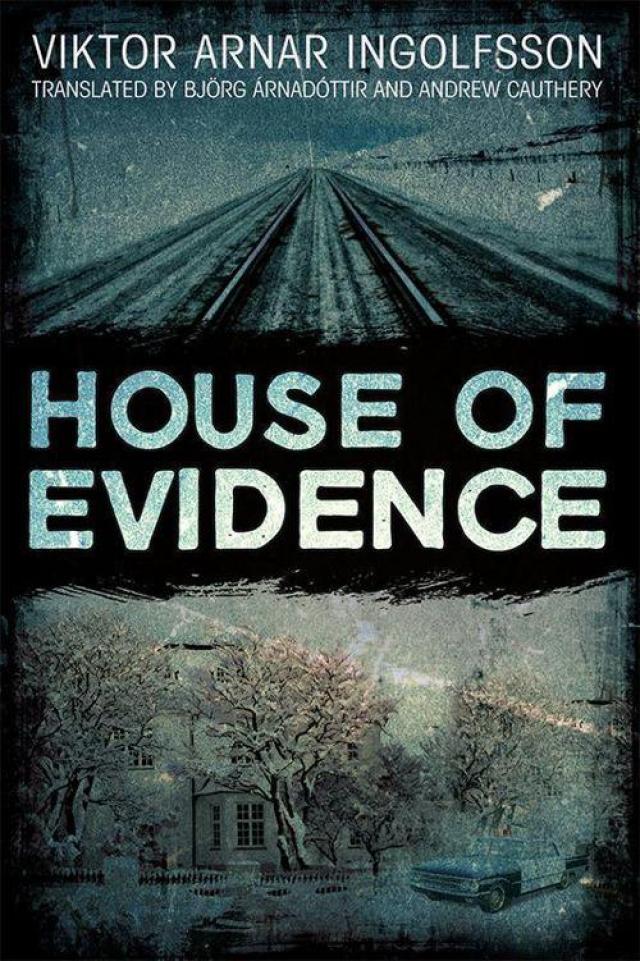


Jóhann was a scientist; he tackled this type of work objectively, dwelling on neither the tragedy that had taken place nor those involved. His job was to discover all the information that these physical pieces of evidence could provide. Either they would lead to acquittal or to conviction.
The building was quiet at this early hour. Now and again creaking and knocking noises from the central heating system could be heard, and outside the distant sounds of an occasional car driving past. There was a faint but distinct chemical smell in the room that was soon overpowered by the aroma of freshly brewed coffee.
Diary I
July 6, 1910. Woke up at seven on board Vestri. Arrived at Hólmavík, docking at eight o’clock a.m. There is still snow lying all the way down to the shore in Steingrímsfjördur, it is cold and raining…
July 7, 1910. Saw Drangey Island. There were men out there in boats, catching birds…
July 8, 1910. Arrived at Akureyri at four a.m., disembarked at six. Walked into town. Sunshine and balmy weather, calm sea. On Oddeyrartangi there were piles of small fish on the quaysides. Helgi and I walked to the church and back. The inhabitants of Akureyri are so wonderfully tasteful; they have beautiful gardens, with trees and flowers around the houses. In some places the trees are as tall as the houses…
July 9, 1910. We borrowed a boat and rowed across Eyjafjördur. We walked across Vadlaheidi to have a look at the new bridge that was built across the Fnjóská River in the summer of 1908. The bridge spans 55 meters from bank to bank, yet the thickness of the arch is only 50 centimeters at the top. Vigfús says that this is the longest arch bridge to have been built in the whole of Scandinavia. The woodland is fenced in, and the trees reach a height of 8 meters…
July 10, 1910. Set off on foot from Akureyri. Breeze from the north and rain showers. We have a picnic for the day…Öxnadalur valley is similar to Hörgárdalur except that it is narrower and there is less vegetation on the hillsides. Toward the mouth of the valley it is almost closed off by sand dunes partially covered by grass, “Hillocks high that half the valley fill,” as poet Jónas Hallgrímsson put it; the farm, Hraun, where he was born, is there…Arriving at Bakkasel, where we shall overnight.
It was almost eight o’clock, and Morgunbladid had still not been delivered. Halldór Benjamínsson opened the front door and looked around for the paperboy. He didn’t want to start breakfast before the newspaper arrived. An eight-inch-thick blanket of snow had fallen during the night, greeting him at the threshold.
“Halldór, dear, your tea is getting cold,” his wife, Stefanía, called from the kitchen.
He closed the door and went back inside. He was tall and slim, with a bit of a paunch. His gray hair, thinning a little, was carefully combed with a part on the right side. He wore spectacles with a thin gold frame. His face usually bore a benevolent expression, though this morning he was feeling grouchy.
“Can’t you read yesterday’s paper, dear?” asked Stefanía.
“I’ve already read it.”
He looked at the kitchen table. There were two teacups and saucers, and plates with toast beside them. A fat teapot stood there, too, with red tea-bag labels dangling from underneath the lid.
He examined the pattern on the china as he bit into his toast. Gold wreaths and braids atop a white glaze—it had been a wedding present from nearly thirty-five years earlier; during the first years of their marriage, it had been used for best times only, but it had long since entered daily use, with another set reserved for special occasions. There were fewer cups than there used to be, though.
“Will you be working for long?” Stefanía asked.
“Probably not,” Halldór replied, glancing at his wife. She was wearing a long bathrobe, but apart from that there was nothing to indicate that she had just woken up. Her blond hair was carefully combed and her modest makeup was in place.
“You remember we’ve got a bridge evening here,” she reminded him.
“Yes,” he lied.
“It’s only once a month and there’s no television tonight anyway,” she said.
“I’ll try and come home early.”
“Since we’re playing here, I must make a cake. What sort would you like?”
“Apple cake.”
“I made apple cake last time. We can’t serve it again.”
“Make something else, then.”
“I’ll make apple cake if that’s what you really want.”
From the lobby came the snap of the lid of the mailbox and a faint thud as the paper landed on the floor inside.
“About time,” he said, rising to get the paper.
He glanced over the front page as he came back into the kitchen.
“Vietnam: Peace Clearly in Sight but No Timeline Yet,” the headline read. He turned the paper over. “Trawls Still Being Cut,” read one headline under the fold, and another said, “Twenty-One Trawlers Out of Action if Strike Goes Ahead.”
Halldór had been a policeman all his working life, and was now a senior officer at the detective division in Reykjavik, in spite of the fact that he had always found the job tedious, and in the beginning had only accepted it as a stopgap measure.
When he moved to the city with his elderly parents early on during the Depression, work had been scarce. He was a good prospect, however—a tall, polite young man. A member of parliament from his home district, who knew his father and knew that he had left behind many relatives in his constituency, had found Halldór a job with the police, where he had come to earn a reputation for conscientiousness and good handwriting. Halldór wrote better reports than almost anyone else, and this was one of the reasons he was offered a job in the detective division. He accepted it in order to get out of the uniform. Much later he had been given a promotion, when his turn came, on grounds of seniority.
When he was younger, he had sometimes thought about becoming a schoolmaster and teaching spelling, but then he had discovered that children scare him; he found it easier to deal with criminals. He had become used to this life, or else he lacked the courage to change it.
Halldór glanced at the clock and stood up. He took a thick gray overcoat from the closet in the lobby, along with a checkered scarf and a fur hat. At the front door he slipped into a pair of well-polished black leather winter boots. His wife handed him his briefcase and kissed him on the cheek.
“Bye, dear, and be careful; it’s very slippery,” she warned. He stopped for a moment on the steps. It was still snowing, and the branches on the big conifers sagged under the bulk of the snow that had piled upon them during the night. It was rare for this amount of snow to fall when it was so calm, and it rather reminded him of a Christmas card. The snow creaked as he carefully descended the steps.
Diary I
July 12, 1910. Skagafjördur. Woke early and crawled out of the tent. The fog had lifted and now there was a view all round. Hegranes is low-lying on the eastern side along the lagoons, but higher toward the west, where marshes alternate with gravel flats and steep cliffs…Crossing the western lagoons by an ancient rope ferry that is hauled by manpower with a winch, an antique if ever I saw one. The ferry carries 8 to 10 horses, and the tariff is 5 aurar per horse and 10 aurar per person. The ferryman is tall, with a full, strawberry-blond beard; a good-looking man, and likeable. He invited us to take a draught from his flask of brennivín after we had paid him a generous fare. He lives on his own in a hovel by the mouth of the lagoon. I felt dizzy during the ferry. Perhaps it was the brennivín. I am not used to it…
July 14, 1910. We set out over Holtavörduheidi. You are hardly aware of the escarpment, although the ground rises steadily. There are a number of watercourses and small rivers to wade across, with concrete arch bridges over the largest ones. In the middle of the heath, there are a number of small lakes with trout, and close by, on top of a prominence, there is a refuge hut; innermost it has a cabin intended for human habitation while the rest is for horses. There are two bunks in the cabin, a table and cooking utensils, kettles, jugs, a lamp, and other things. There are cribs along the walls in front, and in the loft there is hay. The house is built from turf and stone, with a metal roof and wooden gable…
It was eleven o’clock in the morning, and Sveinborg Pétursdóttir, a stocky woman who was getting on in years, was on her way to work from her home in Ránargata, east through the Kvos then up toward Laufás. Day was just breaking, but the streetlights were still lit, casting an eerie glow over the snowflakes that drifted earthward in the stillness. There was not much traffic on the streets; most people were now at work and the new snow had already covered their footprints.
Sveinborg plodded on slowly but steadily. She was wearing woolen socks and a sensible pair of wellingtons that were covered by her heavy, long skirt. She wore a blue nylon parka and had a thick wool hat on her head.
This was the route she had walked most days for nigh on twenty-six years. Before that she had been a live-in housekeeper at her current place of employment, so altogether she had been at the house for forty-five years. It was her opinion that having a good employer and the ability to walk to work was life’s greatest happiness.
She paused at a gap in the ice on the edge of Tjörnin Lake, took a paper bag out of her pocket, and picked out a few pieces of bread, throwing them one at a time to the hungry ducks paddling in the meager opening. She often stopped here in bad weather, knowing that there would be few people around to feed these poor creatures that she counted among her best friends. She watched the birds squabble over the crumbs, and tried on her next throw to divide the bread more evenly between them. One of the ducks seemed to be fighting a losing battle, so she threw the next bit in its direction.
“Here you are, ducky,” she said softly, “there’s a bit for you, and don’t let those bullies take it, now.”
When the bag was empty, she folded it up and tucked it into her pocket.
She crossed Fríkirkjuvegur, plowed through the snow diagonally across Hallargardur Park, and continued up Skothúsvegur. A few minutes later she paused for a moment on the sidewalk in front of her destination to catch her breath.
Birkihlíd was a handsome villa by Reykjavik standards, comprising a single main story with unusually tall windows, a large attic area under its steep roof, and a semi-sunken basement. The exterior walls were pale-gray roughcast and the roof was covered with red diamond-shaped tiles. A large bay window in the front, topped by a balcony leading to a large garret room, lent the house a distinguished appearance. The house name was displayed in relief lettering on the front of the bay, and below it the year it was built, 1910. Broad steps led to the front door on the home’s left-hand gable, behind which was a later addition that, although quite tasteful, somewhat disturbed the balance of the whole.
The garden was enclosed by a tall stone wall topped with close-set metal railings between sturdy concrete posts. Flanking the garden were the majestic birch trees that had inspired the name of the house, their massive branches crowned with a thick layer of snow.
Sveinborg pushed open the heavy gate. Bypassing the front door, she headed toward the back of the house, where there was another, less imposing entrance. She took a large key from her bag and unlocked the door. Brushing off the worst of the snow, she took her coat off and hung it on a hook.
Entering the kitchen from the rear vestibule was like stepping back in time fifty years. Though the kitchen was nicely decorated and everything in it was spotless and perfect, there seemed to be nothing less than half a century old. The room was nearly three times as long as it was wide, and at the far end, just past the breakfast area, was a door leading to the dining room. Large worktables lined the outside wall, and along the inside wall stood a coal-fired range with a steam extractor above it. Antiquated kitchen utensils, pots, and pans hung from hooks everywhere.
Sveinborg looked into the kitchen sink and saw that it was empty. Her plump features registered surprise.
Jacob hasn’t eaten anything, she thought, unless he’s also cleaned the dishes, and it wouldn’t be like him to do that.
On the inside wall, where the ceiling sloped down beneath the staircase to the second floor, there were some large cupboards, one of which she opened to reveal a newish refrigerator. There, on the shelf where she had left it, was a plate of carefully arranged cold cuts covered in plastic wrap.
“Oh, he hasn’t touched his breakfast,” she said out loud.
She looked up toward the ceiling and listened for a moment, but could hear no one moving about.
“Perhaps he’s not up yet,” she said, more quietly this time.
She went back toward the rear entry, turned, and ascended the narrow staircase to the attic rooms. There she came to a wide corridor that stretched the length of the upper floor. A little farther along the corridor was the head of another, much wider, staircase leading down to the main lobby. She continued along the corridor and looked into one of the rooms on the left. There was a made-up bed, a bedside table, a large clothes closet, and a chair. This was a relatively comfortable room, somewhat more modern than the other living quarters in the house.
He was not there. Sveinborg was becoming anxious now, and felt a strange premonition. She went downstairs using the main staircase, and it was when she reached the middle landing, where the stairs turned a full ninety degrees, that she saw him. Jacob Junior was sprawled, legs outstretched, against a pair of double doors that opened into the parlor. His legs pointed toward the parlor and his head hung limply on his chest. Beneath him lay a pool of congealed blood.
Sveinborg felt a chill seize her heart and creep up her neck to the roots of her hair. She made her way down the stairs step by step, leaning on the massive carved-oak handrail for support. When she reached the bottom she hesitated for a moment, as if she dared not let go of the rail, but then moved toward him and tentatively touched his forehead. It was ice-cold.
She pulled her hand back, turned, and ran to the front door.
“Help, help,” she called faintly from the front steps, but there was nobody to hear her cry.
She retreated to the lobby, stumbling toward the old telephone by the window. She retrieved the directory from a low shelf and quickly leafed through it with trembling hands.
“Police, police,” she repeated frantically, paging back and forth until she at last found the number she was looking for, and then shakily dialed 1 11 66.
Diary I
July 16, 1910. Started the day early at Reykholt. Wonderful weather, sunshine and clear skies. Had salmon to eat, with melted butter and bread to accompany. Before setting off today we had coffee and sandwiches with all kinds of fillings, meat, sausage, etc. The pastor refused to accept any money for the accommodation, but we were allowed to pay for the picnic. Traveled diagonally across Reykholtsdalur valley by Kópareykir. Here there were young women washing clothes in a hot spring…
July 17, 1910. As we arrived at Svínadalur, we met a man who told us that a motorboat would be sailing that evening from Saurbær to Reykjavik, carrying passengers. We hastened our journey and managed to arrive in time to be ferried on board…
July 18, 1910. Arrived Reykjavik at six a.m. after a difficult sea crossing. Everybody was up by the time I got home, cold and tired. Slept for the better part of the day…
Halldór was standing by the north window, looking out. There was a good view to both the north and south from the detective division’s floor, though people working on the south side of the building often complained about the heat when it was sunny. Reykjavik’s Criminal Court headquarters was on the floor below, and Halldór knew that despite the good views, the building was cramped and in many ways unsuitable for so many staff.
It had finally stopped snowing, and by now was quite bright, though the wind was kicking up. Halldór could see north across the bay to Engey Island, and in the distance, snow-covered Mount Akrafjall, the dark-blue sea separating the two. The harbor was to the west, and a Coast Guard boat was just putting out to sea; Halldór thought it might be the Thór. The Coast Guard had plenty to do now, defending the new fifty-mile fishing limits.
It was a quiet morning in the detective division. One man had been arrested for alleged assault, and interviews in a rape case had been completed. Apart from that, two men had been taken into custody and charged with car theft and driving under the influence that had resulted in a fatal accident.
Halldór picked up binoculars that lay on the windowsill and followed the Coast Guard boat as it turned out into the bay and headed into the north wind. From the back of the room came a series of rhythmic clicks and squeaks; a man was talking on the phone at his desk, squeezing a small fitness tool with his free hand.
“But he was totally unmanageable!” the man exclaimed.
Halldór put the binoculars down, turned his gaze back to the room, and looked sadly at Egill Ingólfsson, his subordinate. He knew what the case was about. Egill had supervised an arrest the previous Tuesday that had resulted in a confrontation and now complaints were being made.
Egill was tan and semi-bald, with snow-white, close-cut hair and a long pointed nose. His tight white short-sleeved shirt showed off an athletic chest.
“He already had the mark on his face when we arrested him,” Egill said, frowning and squeezing the fitness tool even harder.
The room contained three old desks, a few filing cabinets, and two typewriters. Innermost was Halldór’s small office.
At the other end of the room, Erlendur Haraldsson, another colleague, was trying on some ski boots and had scattered the packaging all over the floor. He had rolled his trousers up above his knees, displaying his hairy legs, and now crouched, rocking back and forth to test the fit of the boots. He was a little over six feet tall, with a slender frame that got wider the farther down you went.