The Lock-In, page 19


‘How so?’
‘I dunno, I can’t see you pushing the alloy rims or the full-spec shit on anyone.’
I grinned. ‘Who needs that stuff?’
‘Right. It’s all guff anyway.’
Stan was lurking in the foyer with his hands in the pockets of his chinos, a navy blazer tucked over his arm. He looked older, heavier, he had a tyre round the waist now, and a slope to his shoulders that I didn’t remember. His hair had always been grey but the pencil moustache had once been dark, as I recalled; it was grey and uneven now. He was never the type to give up on himself, so maybe the world was taking its toll. He squinted in my direction, tried to discern if it was me.
‘Michael, you’re looking well.’ Stan’s handshake wasn’t as crushing as I remembered it; it was limp, in fact, a lame echo of what once was. For a moment I wondered if this was really the same man; had all that bluster been for show?
We took a table beyond the bar, in a broad bay window. I could see the old racecourse from where I was seated. I’d played football matches there as a child, long, long ago. Time was relentless, and I was sure it was gathering pace.
‘Drink, Michael?’ said Stan. A waitress hovered with pen and pad in hand.
‘Just a tea, please.’
‘Same,’ said, Stan, nodding to the waitress. ‘I thought you were a malt man.’
I hadn’t had a drink in ten years, the notion now made me cringe. ‘Once, perhaps.’
Stan moved forward in his chair, placed his elbows on the table. I noticed the age spots spreading on his hands and forearms. He lifted his fingers and tapped the table top in an impatient tattoo as he snatched glances at the bar and eyed the waitress’s progress. I saw he was on edge and it started to head in my direction, made me uncomfortable. The idea of coming up with an excuse to leave entered my head; a fake call, perhaps? I saw myself getting up and my self-interest turned to pity for an old man. I knew this option had come and gone already; I should never have made the call.
The waitress returned; she was silent and proper. I admired the fact that someone, somewhere, still thought it was worthwhile to wait on others. It seemed such a thing of the past, a tradition that we no longer paid the slightest interest.
‘Very nice,’ said Stan, taking another sip.
I nodded my approval.
‘I suppose you’re wondering why I brought you here then?’
It struck like a low blow. ‘Well …’
He looked at the palms of his hands, eye-contact was not an option he was considering now. ‘Well … she’s dead.’
I knew at once who he meant, there was no need to hear her name, but he confirmed it anyway.
‘Carole killed herself a few days ago.’
‘I’m sorry to hear that.’
Stan stared out of the large window. He wasn’t processing anything, certainly not my reaction – which sounded glib now. He seemed to have done all the wondering, all the asking why, but something bothered him. I thought it would now be him that got up and walked away. The chair’s back was cold, uncomfortable. I didn’t know what to say, or do. I wasn’t at all surprised to hear my ex-wife had killed herself, but I was shocked how unmoved I was. I felt nothing.
‘I wanted to tell you face-to-face,’ he said. I sensed his intentions were very different to what he was letting on, but I also knew that Stan would not have any difficulty getting to the point of why he’d brought me here.
When I first met him, Stan was living in a spacious sandstone mansion on the outskirts of Troon, ‘rooms the size of tennis courts’ I remember telling everyone. South Woods was where the gentry-in-waiting went to raise their profile, perhaps also to raise their children, but I’m sure in Stan’s case that was an afterthought. It was, on the surface, a very good life. Carole, Stan’s middle daughter, was the perfect example of the real price of privilege. I knew she was messed-up at the start, but I think I knew nothing else then, quite literally nothing. I was young and dumb and taken in by all the frills and opulence. I was a blank slate and trying to figure out this life would take many more years of falling on my face and picking myself up again.
‘I don’t know what went wrong.’ Stan’s voice was a frustrated drawl; he sounded defeated. I knew the territory, but surely a man of his age would have faced down his demons before now. ‘I mean, I gave her everything, I never denied her, she had it all … you know that, Michael. Even her mother – God rest her soul – could never work her out … she did it before, you know, I mean tried to, but we caught her in time.’
Did I tell him that I knew she’d tried to kill herself before, that I’d wrestled bottles of pills from her hands, been with her in emergency when they pumped her stomach? Did I tell him about the time she’d cut her wrists, about the shame she felt about the scars, and how we had to have silver bracelets made to cover them up? Did he know any of this? If he didn’t know, did I have a right to reveal it, to add to his burden? Maybe he knew, maybe Carole spoke about all of it, sorted things out these last twelve years, to the extent that it could ever be sorted out.
‘I’m sorry …’
Stan cut in, ‘Oh, there’s no need.’
‘I was going to say, I didn’t know Eleanor had passed too.’
‘Yes, three-and-a-half years now … cancer. We nursed her at home in the end, although that place has never really been home.’
As the last embers of my first marriage were being stamped out Stan’s home in Troon was sold off to try and prop up the family business. It didn’t work; three generations of graft was wiped away by modernity. The little suburban bungalow Stan and his wife ended up in looked strange with all the remnants of wealth they’d rescued. The portraits of previous generations, their imperial collars and dickie-bows, dotting the walls like museum pieces. By comparison, my family Polaroids made us all look like Van Gogh’s Potato Eaters.
‘I’d heard you’d become a doctor now, Michael.’ Stan’s face altered, his lined brow receded and his mouth turned up in a fine smile. ‘Went back to finish your studies?’
‘Yes.’
‘Psychiatry or psychology, I believe.’
‘I’m in private practice.’
‘That’s super. I always said you had it in you, even when you were just doing something in the bank.’
‘Mortgage advisor.’
Stan laughed, spluttered, ‘That’s it! Means death-grip, mortgage, did you know that?’
‘I did know.’
I started to see where things were going, why Stan had brought me here. He glanced into the large window again, his gaze settled on the middle distance. ‘Look, a kite … I used to take the girls down there to fly kites when they were young. Carole loved the kite. We named her after Carole … well, somebody or other, the actress, Eleanor picked all the names.’
‘It must be very hard for you on your own.’
‘Oh, you know, you battle on, stiff upper lip and all that.’
‘How are the others?’ The names of his other children escaped me now, except for one, Katryn, the pink-haired one who wore Lycra bodysuits, even to our wedding. Katryn called herself a punk once upon a time and Carole had desperately tried to emulate her, long after the fad had died out. She tried desperately to emulate her older sister, copied her ways, voice, dress – she even adopted the habit of spitting chewing gum out in crowded rooms to gasps of disgust.
‘Oh, they’re married, divorced, married again, divorced again,’ said Stan. ‘I have some grandchildren now, but I don’t see them … there was another suicide, y’know.’
‘Another of your daughters?’
‘No, her husband. Shotgun. Dreadful business really.’
I grappled for a response. ‘I’m sorry.’
‘Why?’ Stan was the sort of man for whom an unnecessary apology was an insult, a sign of weakness. ‘You didn’t have anything to do with it, did you?’
I shook my head. My tea was cold now; Stan raised the pot and poured.
‘I thought you might …’ He returned the pot to the table top and I noticed that his fingers had started to tremble. ‘Well, I wondered if you had any insight, professional as it were?’
I’d seen it coming, but the request still shocked me. How should one answer delicately? I couldn’t play patient confidentiality, as Carole had never been a patient of mine, but neither could I insult him flat-out with a lie.
‘I can only …’ I took a breath. ‘There were some signs.’
‘Signs?’
‘As you mentioned yourself.’
‘Oh, that.’ He waited for me, grew impatient. ‘And is that all?’
I took in Stan’s gaze. His eyes were heavy, hooded, but lined in red like a bloodhound. He was an old man, long past eighty, and if he was ever going to know what I knew about Carole it would have to be now. I just didn’t know if I was – or even should be – the one to do it. I was cowering behind a front of propriety and I felt like such a shit.
‘You knew her better than I did, Stan, and for a lot longer.’
‘Yes, but I was her father, she would never tell me if there was something amiss. Would she?’
I couldn’t answer in any way he’d want to hear. Of course, Carole would never have told him what he was asking me, she would have rather died, and yet now she had. I wanted to say something, to help the broken old man before me, but there was nothing I could do. I couldn’t take him back to a time when he might have been able to intervene, change things. And I wasn’t his doctor, I couldn’t prescribe him something to make these thoughts go away.
Carole had a lot of … difficulties.’
‘Difficulties?’
‘Social problems, anxieties. She had a great deal of trouble adjusting to the wider world, you know, work and so on.’
‘So do lots of people.’
‘Yes, that’s true, but in Carole’s case it caused her a lot of stress, and I don’t think she was able to form the coping mechanisms that might have helped.’
‘Yes, yes … But why? You must have come to some conclusions why, man. After all this time, after all your training, something must have stuck out.’
He was desperate, just to hear me say that he’d no reason to blame himself. There was no answer I could give that would help him and I simply couldn’t bring myself to make things any worse for him. What would he do with the truth anyway? He’d go home and marinate in guilt and at his age that might be fatal. I knew what Stan wanted me to say, that he had done no wrong, played no part in his daughter’s suicide, but that wasn’t true either; I wouldn’t be party to that lie.
Carole had it tough as a child, in that mansion house that Stan called his home. She felt unloved and overlooked, she had an inferiority complex that her narcissistic mother had instilled in all the girls, playing them off each other like ping pong balls. The constant comparisons shattered Carole’s confidence, the hair, the legs, the lips, the boyfriends – they must have felt like heifers in a meat market. But they were children, their children.
The more I unpeeled from Carole’s past, the more I knew there was no hope for us. She couldn’t be saved by anything as simple as love and a normal life. She was damaged goods, long before I knew her, and there was nothing I could do to help her change. People like Carole make their own personal hell, day after day, and I wouldn’t stay there with her.
‘Eleanor once told me about the Auld Brig incident, did you know about that?’ I said.
‘Auld Brig?’ He was perplexed.
‘When Carole was in hospital, after the stomach pump, Eleanor told me about the row she had with Carole, who’d came home drunk in the wee hours … there’d been harsh words and your wife slapped Carol’s face.’
‘I know nothing of this.’
‘Eleanor threw her out.’
‘Eleanor turned her out?’
‘It was a very emotional response and Carole had been drinking, I don’t know what was said or the details, but … Carole threw herself off the Auld Brig.’
‘She couldn’t swim. Always hated the water.’
‘Yes, I know.’
‘Well, I’m presuming that her plan failed somehow.’
‘There were some men, salmon poachers, fishing in the early hours, they jumped into the water and saved her.’
Stan fell silent. I saw he rolled over the new thoughts in his head. I wondered what he was thinking; perhaps he surmised that Carole’s problems had always been there, maybe he thought she was born with them. What I could see was that no further recounting of such horrors would be necessary. The sexual abuse she suffered as a child, the visits to Blackpool for rough trade – the badly bruised breasts and knees – the massage oil, the bottles of wine and cigarettes (she never smoked) I found by the bed time and again, I left it all in the past. I didn’t need to tell Stan, the sex-addicted egoist of old, how his daughter would always leave our flat with a clean pair of knickers in her handbag in case a quickie presented itself. No, he didn’t need to hear any of that, because none of it would change a thing.
‘All right, Michael, I appreciate your time, old son,’ he said. He tried to perk up, to act like the man of high spirits I’d once known.
We rose from the table and walked to the car park. Stan held out his hand again, his shake felt firmer now.
‘You’ll get through this, Stan.’
‘Oh, I don’t doubt it.’
I didn’t doubt him either, not for a second.
About the Author
©Ian Atkinson
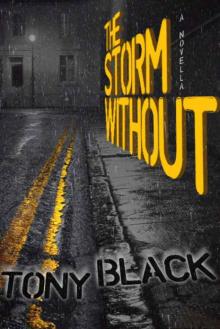
Tony Black is an award-winning journalist, an internationally sought artist and the author of some of the most critically acclaimed British crime fiction of recent times. He has written more than twenty titles, including: The Storm Without (the first Doug Michie crime thriller), the Gus Dury series (Penguin Random House), Paying for It, Gutted, Loss, Long Time Dead, and Wrecked. Literary titles include His Father’s Son and The Last Tiger (runner-up in The Guardian’s Not The Booker Prize). His short story collection Last Orders is also published by McNidder & Grace.
Find out more at Tony’s website: www.tonyblackarts.co.uk
Copyright
Published by McNidder & Grace
21 Bridge Street
Carmarthen SA31 3JS
Wales, United Kingdom
www.mcnidderandgrace.com
First published in 2024
©Tony Black
All rights reserved. No part of this work may be reproduced or transmitted in any form or by any means, electronic or mechanical, including photocopy, recording, or any information storage or retrieval system, without permission in writing from the publisher.
Tony Black has asserted his right to be identified as the author of this work in accordance with the Copyright, Designs and Patents Act 1988.
Every effort has been made to obtain necessary permission with reference to copyright material. The publisher apologises if, inadvertently, any sources remain unacknowledged and will be glad to make the necessary arrangements at the earliest opportunity.
Cover image?
A catalogue record for this work is available from the British Library.
ISBN 9780857162601 paperback
ISBN 9780857162618 ebook
Designed by JS Typesetting Ltd, Porthcawl
Cover designer Tabitha Palmer
Tony Black, The Lock-In