The 2021 Patreon Collection, page 1


The 2021 Patreon Collection
Tobias S. Buckell
Contents
Introduction: 2021 in review
Essay: The Stories We Tell
Essay: A Writing Career Is Like a Stock Market
Essay: From Freelancing to Academia
Essay: But Who Am I to Judge?
The Bars at the End of the World
Holofernes, From His Basement
Crypto Draconis
The Fisher Dragon
Introduction: 2021 in review
I am looking back at the year and I’m not sure what to say other than “we made it?”
I started the year deep in edits of my latest novel The Stranger in the Citadel, which came out in May from Audible as an Audible Original. If you have an account, you can listen to the book for free as it’s part of the Audible Plus program as well.
The book currently has 949 ratings on Audible, so this may be one of the most listened to books I’ve had out there. Here’s hoping we make it to 1,000 stars!
The next question I’m asked is “when do we get a print edition of the book?” Well, good news, I haven’t signed the contract yet, but a publisher has made an offer on bringing out a print version of the book and I hope to share who that is soon. My agent is working on the contract right now, though, and I really can’t wait so see this in print.
In addition to the audio book, I published a short story collection through Fairwood Press. It brings together most of my fantasy stories that I’ve written over the last twenty years. Reviews have been kind. Most recently, Paul Di Filippo at Locus Magazine had this to say:
The twentieth anniversary of Tobias Buckell’s first story appearance, “The Fish Merchant,” in Science Fiction Age for March 2000 (making him one of editor Scott Edelman’s many insightful launches), has come and gone without much ado, although by rights it should have been celebrated widely. For Buckell has become a solid fixture in the genre, one whose byline always guarantees stimulating reading. Curiously, to my mind, he’s kind of a transgenerational figure, with some of his roots and attributes harking back to the pre-internet modes of the field, and some of his concerns and presentations resonating more with the twenty-first century lineaments of commercial fantastika. Really, I think we get the best of both worlds with Buckell’s writing: respect and reverence for the cream of the classics, with an au courant hotline to the zeitgeist of 2021.
…
Ultimately, this collection reveals a true craftsman of the field whose tales exhibit both professional pride of construction and deeply felt personal responses to the demands, challenges, seductions and puzzlements of our glorious universe.
The collection includes “Brickomancer,” an all-new story only available in the book.
It’s been a productive year. I wrote five or six commissioned stories, was a judge for the World Fantasy Award, a first reader for Grist.org’s Imagine 2200 contest of climate change fiction. I had a second kidney surgery to remove a massive stone, recovered, and became a professor at the local university.
It’s been a year of change and challenge.
What’s ahead?
Good question. There will be a spate of short stories that come out next year in various anthologies, and a few places that will be a surprise (I’m under an NDA for two of the stories). I can’t help but write All The Short Fiction.
I’m currently revising my big fantasy novel, In Empire’s Ashes. My agent felt it could work with its current structure, but that I could make it more dynamic. I’ve spent time over the last year looking at how to dismember the corpse, so to speak, and how to Frankenstein it back together in some new shape. I think I found a way to do it, and a way that makes it far more gripping a read. I’m unsure how long that will take, but I’m excited to be back in the world, instead of dreading the giant task of the work needed to pull it apart.
I have a couple other novels that are out on submission, but so far I’ve had just the most terrible luck with them. My agent advises me they are odd projects, and times are uncertain, so it makes sense. We may have to put them away in a trunk for a while longer until the world shifts again. Publishing seems to be going through another sort of generational shake up. But my agent is really excited about “In Empire’s Ashes” and she’s been spot on with her intuition about the business we’re in, so I trust things will turn a corner at some point.
Of course, teaching has slowed down the writing speed. I don’t get the raw blocks of silent time that writing seems to demand of me. I’m hoping to find a balance soon, but this is a tough year for finding a groove with the world on fire.
But, I’m putting my chips on the hopes of a better future, while acknowledging how tough things are right now. I purchased a plot of land in town that we hope to garden and have bonfires on with our close friends and family, and if all goes well we hope to have a new home build there so we can have enough room to have family stay when they visit and host our dearest friends when they pass through town. It’s my down payment on the hope of a better future.
Here’s hoping 2022 is a turned corner. May you be around the people you love, enjoying stories you love.
And here are the essays and stories from 2021 that your patronage created from the void. Creation, pulling something from where nothing exists, is the thing I love most about existing. And you are all the ones who made this creation happen.
I hope you enjoy this eBook version of Patreon 2021, the Buckell edition!
Tobias S. Buckell
Bluffton, OH
12/31/2021
Essay: The Stories We Tell
I think about the stories we tell ourselves a lot.
That sounds obvious; I’m a storyteller. But what I’m talking about are the metaphors we use to go about our daily lives. I think about the stories that fly around our shared consciousnesses every day in a media and information-rich landscape. The stories we use to process the reality around us.
We’ve used stories to handle our world longer than we can remember. Storytellers sat around fires to explain what lay out beyond the edge of the camp’s light, my craft grew out of that ancient tradition. Scientists who run MRI scans of a reader listening to, or reading, a story find that the brain lights up mirror neurons when metaphors are used. Stories manipulate the brain where the metaphor sits in real life. That’s why a character’s betrayal can wound us, why we grieve after a sad tale, and celebrate triumph. We feel it, deep in our psyche.
I celebrate that side of storytelling. The ability to walk in someone else’s shoes can change people. To experience things you never knew you could, that’s why I read stories.
There’s a dark side to the fact that stories can reach into our brain and evoke linkages, though. It can be weaponized against us.
The first time I realized metaphors were being weaponized was when a friend posted on Facebook a very simple analogy that compared the government’s budget to a family budget to alarm readers. Now, I don’t want to get into a big discussion over how much government debt is too much, but a government is clearly not a family envelope budget system. Half of the USA’s debt is between different parts of the government. Does one arm of the government owing another map to borrowing ten bucks from Dad for pizza? Can a family print their own currency? Do families get near zero percent loans? Because the US government does. Non US investors will park their money in auctions in the US debt because even with super low interest it is safe there. Do families get that? The more I examined the metaphor, the more it fell apart. But I understood the basic seductiveness of it. You love your family. You want to protect your family. By presenting government spending as a family’s debts gone out of control it makes a compelling metaphor.
Over the last year, I’ve kept similar metaphors in my Zettelkasten (my external brain of cross linked notes that brews up articles, story ideas, etc) as I spot them.
For example, a simple metaphor that dominated American politics is that of ‘trickle-down economics,’ the metaphor that if you stack a bunch of glasses in a pyramid and start filling the top one, the bubbly spills over into the glasses below it, and then those below those, and so forth. That powerful metaphor shifted American business, tax policy, and a ton of regular policy across the country. The metaphor seems to make a lot of sense to many, it’s a powerful metaphor. Alas, what rich people do with that bubbly as it fills up their glass is… build a much larger glass as fast as they can. Policy is about limiting the size of the glass they can build on top of the pyramid, the pyramid metaphor was used an excuse to relax constraints on the size of the glass.
Human beings mistake stories for theories. Gordon Brander notes “Often, we mistake stories for theories. Stories are a series of causally linked events, but they aren't a rigorous theory of causation.” This allows good storytelling to lever a knife’s edge underneath a careful examination of causation so it can be carved away, weaponizing story. Seema Yasmin, examining disinformation and its spread in our modern world, draws the same conclusion, that its “the pervasive, persuasive power of storytelling. And, as Yasmin notes, “The more fantastical, the better.””
The more embedded the story, the harder it makes clearly seeing how the world works around us. Pre-Victorian scientists struggled to understand how bees created colonies and reproduced. The reason? They thought Queen Bees were Bee Kings, because only a male could sit at the apex of entire society. That was a metaphor. Even though the bee habits, bee dissections, and bee studies screamed Queen Bee,
I write fiction. With conflict, and action, and over the top adventure. But I look at movies where, in my life time, the story has become that the hero has to torture information out of a suspect to stop a crime. In the 80s, only ‘evil communists’ did that. As we internalize these stories, what does that mean for our future?
Metaphors, stories, they’re powerful tools.
As a storyteller, I’ve known that. But now I’m collecting more and more examples of how that power is badly used. And to be honest, it worries me. I think many of them are seriously hurting us.
Find out more about this:
Gordon Brander
Seema Yasmin
The Curious Feminist History of Bees
Essay: A Writing Career Is Like a Stock Market
I was commiserating with a writer online about a setback in their career that they had to publicly announce. It’s been a tough year, normally you’d have several opportunities to end up grabbing coffee with another writer friend or a drink at a bar at a conference to unpack all this. But I hoped that letting them know we’d all been there would help. Many hands, after all, lift.
But it’s not enough to know that other writers have setbacks. It’s also good to know that the longer we’re in it, the more you start to realize that a creative life like this is a full on, straight up, bloody roller coaster.
A friend of mine said the wild thing about a career in making things up was that the most amazing things would happen to you, often on the same day the most gut wrenching failures happened.
So I started to outline just how many setbacks I’d been through, and realized I had a personal mythology of ‘eras’ of my career.
The first era came as a brand new writer, unpublished but writing stories and submitting them with the hopes I’d get published. I started getting more and more personal rejections, rejections where an editor would write a personal note to me. After years of getting form rejections, bad photocopies of a simple form that said something like ‘We are so sorry, this didn’t work for us, try again!” getting a personal rejection made it feel like I was nearing a breakthrough. I remember that I could almost ‘taste’ a win on the horizon. And then came a two year-long string of form rejections.
Clearly, I’d slipped back, right? I’d gotten worse. That two years hurt. But I stuck with it, and then came more personalized rejections again. And then…
The second era began when I sold three stories to a professional magazine, anthology, and then a major contest. I joined the Science Fiction Writers of America, a major personal goal of mine. I felt like I'd broken out. I’d finally made it! Everything was looking up for poor old Buckell.
And then a curious thing happened: I didn’t sell another story for about two years. Sure, the three stories I’d just sold in a two month period came out over the next year and got some attention, but no one was buying. It was back to form rejections and occasional personalized rejections. I thought I’d opened a door and stepped through, but I hadn’t.
My next sale to an online zine felt bittersweet. Back then it was not as prestigious. Felt like I'd fallen back into struggle. I logged almost hundred story rejections in that dark period.
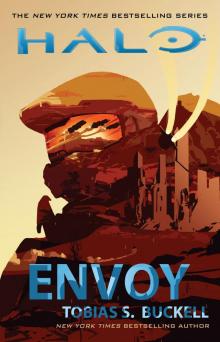
But I kept slogging away and found the third era. And from 2004 to 2008 I felt like I had again broken through. I acquired an agent! I sold a novel. I sold another novel! I was asked to write a novel in my favorite video game world, Halo novel. I closed a three book deal! I'd lost my day job, in there, sure, but I cobbled together freelancing and writing to make a go of it. That all felt like major slope upward. Some award nominations. Getting on the NYT Bestseller list with Halo.
But then came a collapse from a heart defect. Crushing medical debt. And flat book sales. They weren’t dying, but I just couldn’t break any tighter. I was encouraged to not finish my series but pivot to a new set of books.
It made sense, and I did it, and started working on my novel Arctic Rising.
And then, after that two years, 2010 was a great year that was my fourth era! Arctic Rising almost hit a best seller list, had an NPR radio review, Hollywood came knocking, and then the promo cycle ended and things fizzled. Hurricane Fever had no cheap paperback edition, due to some chance things happening, and some deadline struggles, and just bad luck, it didn’t get widely even though I was deeply proud of it. Things deflated.
2012-2018 was another tough period of just career chaos that felt like a collapsing Yorkshire pudding. I had to go on the hunt for a new agent. I left my publisher of 12 years. I felt like I was out in the wilderness!
And now I'm currently in a three year upswing of what I think of as my fifth era. Won my very first award, made some deals that are wild, had some Hollywood option money, done some neat speaking gigs, had some amazing paying commissions, worked on a video game! It's nice after a six year fizzle, but I'm sure there'll be another fizzle.
I think over time you can compare a creative career or practice to something like a stock market. You have booms and busts, but I have to pay attention to the fact that a boom used to mean I had a market cap of 1,500, but that twenty years later, even a bust cycle leaves the market of me, there writer, as a whole at 8,500, and the game is to stay invested broadly and don't jump out or in based on impressions of the moment even though a big collapse from 15,000 to 8,500 feels horrible, it's still a far distance from the days of 500-1,500.
And, the thing is, metaphors are dangerous. Over time, all the work I’ve done adds up. It isn’t a stock market, it’s a flywheel. Even during all those ‘recessions’ I had short stories I sold, or had commissioned, that appeared. My previous books still got read by readers, new, or in used book markets, or handed from person to person, or discovered in ways I had no way to know of. Things always kept going on, things I would have killed for back in my first era. In fact, in the slump of 2012 to 2018, I started being flown and paid to speak.
Although not all of us live this deeply in a creative world, I see many similarities to lives lived. That outpouring of grief when someone passes isn’t just the loss of their companionship, it’s the understanding that there’s a future gap the community loses. People will often deride those who feel loss when an author, actor, or some other creative passes. We don’t know them, the argument goes, so why grieve them? It’s too possessive. But I think a part of that grief is the understanding that there’s a future hole in the community, that their work will no longer be a braid in one’s world. So someone who doesn’t even know that creative will still feel loss.
As a person, looking from the inside out, only looking at the highs, we miss the impacts we have. It’s so hard to see what you look like to others, it’s hard to see the impact on the shape of your community.
But that never means it isn’t there.
And it doesn’t mean one isn’t still having those impacts.
The roller coaster continues. I’m always grateful to be in the park.
Essay: From Freelancing to Academia
Some years ago, a curious thing started to happen. Universities started approaching me to see if I was interested in teaching fiction. Not just smaller workshops, which I've done over the years as a side hustle, but looking to see if I would be interested in being a faculty member.
I have no higher education above a Bachelor's Degree, and that usually killed the conversation pretty quickly. Until a few years ago. I spent a semester teaching an undergraduate course at Alabama State University, and then also started a position that I really enjoyed at a low residency MFA program based out of the University of Maine called Stonecoast.