

Sting in the Tail: Carnival of Mysteries, page 1


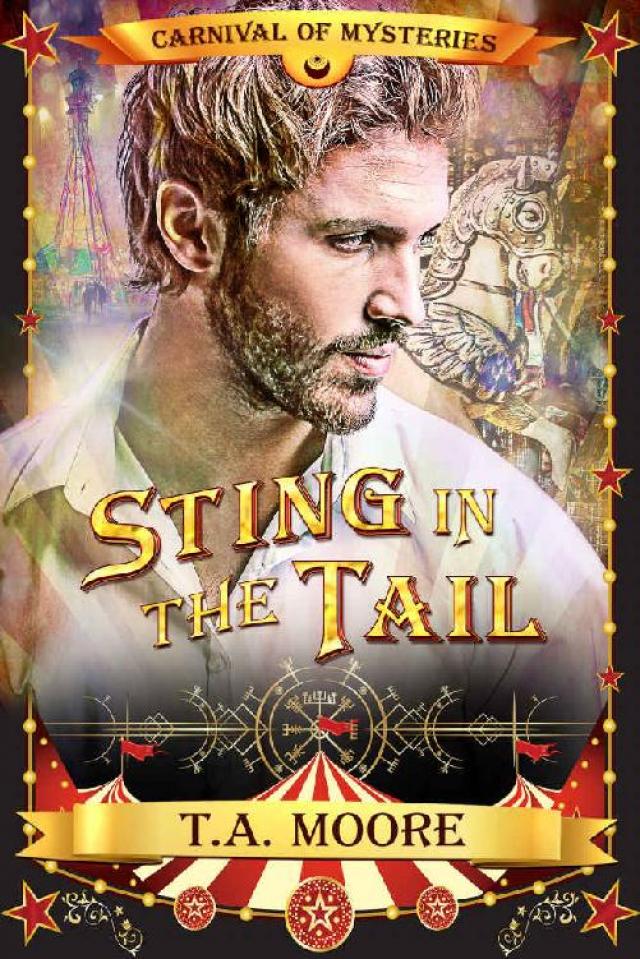
STING IN THE TAIL
CARNIVAL OF MYSTERIES
T A MOORE
CONTENTS
Acknowledgments
Chapter 1
Chapter 2
Chapter 3
Chapter 4
Chapter 5
Chapter 6
Chapter 7
Chapter 8
Chapter 9
Chapter 10
Chapter 11
Chapter 12
Chapter 13
Chapter 14
Chapter 15
Chapter 16
Chapter 17
Chapter 18
Chapter 19
Chapter 20
Chapter 21
Chapter 22
Chapter 23
Chapter 24
Chapter 25
Epilogue
About TA MOORE
Readers love TA MOORE
Also by T A Moore
Also by T A Moore
Also by T A Moore
STING IN THE TAIL
The Carnival of Mysteries just arrived in Sutton County. They say if you cross the fortune teller’s palm with silver she can read your future like a map. Right now all Ledger Conroy wants to know is if he has a future.
Back in Sutton after over a decade, Ledger’s plan had been to bury his father--recently deceased convicted serial killer and less-well known warlock, Bell Conroy--clear the property, and then finally wash his hands of being a Conroy. Instead there’s a cured human heart in the larder, a pissed off pretty boy who is definitely not human at the door, and a debt to the devil that Ledger’s just inherited.
Devil. Monster. Something like that. He’d not asked for its pedigree
Whatever it was, it's given Ledger a week to fulfill the terms of his father’s contract. Or else he’s never going to leave Sutton again. With pretty-boy Wren at his heels, more to make sure Ledger doesn’t skip town than to provide assistance, Ledger tries to track his father’s sins across Sutton. The problem is there’s so many of them.
Ledger is faced with old grudges, a Sheriff that thinks Ledger knows more about his father’s crimes than he’s ever said (and isn’t wrong), and a dead man with a book shop. Not to mention the on-going distraction of Wren, who can't decide whether to be a hindrance, a help, or just hot.
Luckily Ledger has a nose for this sort of work.
Sting in the Tail is part of the multi-author Carnival of Mysteries Series. Each book stands alone, but each one includes at least one visit to Errante Ame's Carnival of Mysteries, a magical, multiverse traveling show full of unusual acts, games, and rides. The Carnival changes to suit the world it's on, so each visit is unique and special. This book contains a dealer in dark collectibles, a man who's NOT people, and a monster with a debt it expects to be paid.
To the Five, all of us and forever. To my mum, who puts up with me wandering around in a daze all too often!.
ACKNOWLEDGMENTS
To Ari McKay for inviting me to be part of this series. I’ve had such a good time! Also thank you to Penny Rogers and Brian Holliday for being the editorial taskmasters that didn’t let me away with anything! Not even one little interrobang. Last, but not least, to Jax and Izzy, the Writing Staffies, who keep me honest!
Published by
Rogue Firebird Press
This is a work of fiction. Names, characters, places, and incidents either are the product of author imagination or are used fictitiously, and any resemblance to actual persons, living or dead, business establishments, events, or locales is entirely coincidental.
Sting in the Tail
Copyright © 2023 by TA Moore
Cover Art by Dianne Theis
All rights reserved. This book is licensed to the original purchaser only. Duplication or distribution via any means is illegal and a violation of international copyright law, subject to criminal prosecution and upon conviction, fines, and/or imprisonment. Any eBook format cannot be legally loaned or given to others. No part of this book may be reproduced or transmitted in any form or by any means, electronic or mechanical, including photocopying, recording, or by any information storage and retrieval system, without the written permission of the Publisher, except where permitted by law. To request permission and all other inquiries, contact Rogue Firebird Press at books@roguefirebird.com
NO AI/NO BOT. Rogue Firebird Press does not consent to any Artificial Intelligence (AI), generative AI, large language model, machine learning, chatbot, or other automated analysis, generative process, or replication program to reproduce, mimic, remix, summarize, or otherwise replicate any part of this creative work, via any means: print, graphic, sculpture, multimedia, audio, or other medium. We support the right of humans to control their artistic works.
http://www.roguefirebird.com/
ebook ISBN: 978-1-954159-16-7
Printed in the United States of America
First Edition
OCT 2023
Created with Vellum
CHAPTER 1
BELL CONROY HAD died alone and unmourned.
There was no one to write an obituary, but he was Sutton County, Ohio’s most famous son. His passing couldn’t go unmentioned, even if it was a “just the facts” death notice in the Sutton Herald.
He’d been fifty-six.
He’d been released from prison on compassionate grounds when he was diagnosed with cancer.
Cause of death: suicide.
The families of his eighteen victims would probably never get the bodies back.
Sorry.
Not famous. Infamous.
Ledger took the second turn after the red barn. The road was technically paved, but one of the downsides of being a well-known serial killer was that the county didn’t spend a lot of money on the upkeep of your properties. The rental car—the only one available on short notice—creaked and rattled as it jounced along the rutted, potholed road.
A half-hearted scarecrow had been strung up on the property line. It hung from a scrubby tree and stared at the road with Sharpie-cross eyes. A shock of red yarn hair had been stitched onto the burlap sack head. That was from the twenty-year-old mug shot. Between age, prison, and cancer, the hair had left this mortal plane years before Conroy had.
Ledger hit the brakes as he reached the gates and let the car roll over the cattle grid. He pulled onto the patchy grass outside the house, turned off the engine, and got out of the car. There was a white van parked in front of the house. Ledger rolled his sleeves down over his forearms and buttoned the cuffs as he stared at the vehicle.
He’d booked the flight the moment he heard the news about Conroy and driven straight here from the airport. It looked like that hadn’t been quick enough.
The vultures had beaten him to it.
Ledger snorted to himself.
One vulture, anyhow.
He started toward the house. The driver’s side door opened as he passed the van, and Benjy Hark scrambled out. The lanky gray-haired man fell into step next to him.
“You’re too late,” Hark said. “I’ve already spoken to the son and made an offer on it as a job lot.”
“A fair offer?” Ledger asked.
Hark took a beat. “Fair enough,” he said, pulling his glasses out of his top pocket. “As far as the son knows, anyhow. It’s not like this lot is worth anything to him. I’m doing him a favor, really.”
“Well, him and your wallet.”
Hark snorted. He lifted his glasses and breathed on them to mist the glass, then polished the lenses with the end of his tie.
“And what?” he said. “You’re going to walk in there and offer him the black market value on his inheritance? Don’t try and kid a kidder, Ledger. You’re not any fucking better than the rest of us.”
Ledger smirked briefly in response. He couldn’t argue with that. In their line of work—sourcing dark Americana for the sort of people that weren’t really people—it was hard to pretend otherwise. They were in this for the dirty money. Their only excuse was that the heirs had no way to capitalize on their dead relative’s collection. As a moral justification, it was thin.
To say the least.
Not that there was moral justification for much in their business. The Catholic Church had a monopoly on the bones of saints and the effects of the blessed. On the other hand, the trade in sinners and their leavings was an open market… and a profitable one. Who wanted to pray—and pay—for a miracle when they could wring a demon’s price from the junk that had soaked in a monster’s misdeeds for years.
And for the low, low price of cold, hard cash, Ledger would find it for them.
“I never said I was,” Ledger said. They reached the porch and climbed the three sagging steps to the door. Something had been scrawled on the wood in red paint, but it had been mostly scoured away. Killer? Murderer? It could have been either, Ledger supposed. Both were true. “But I know that Conroy’s heir isn’t going to take your offer.”
Hark slid his glasses on and squinted at Ledger through the lenses. Despite his best efforts, there was still a fingerprint on the glass. There always was. It was surprisingly easy to pick up minor curses in their line of work.
“You’ve already spoken to him?”
Ledger reached into his pocket. “You could say that,” he said as he pulled out the keys the lawyer had left for him. “I am him.”
He unlocked the door, stepped inside, and closed it behind him in Hark’s face.
Look at that.
It was like having your abusive, cultist dad drop dead was just all brightside and no downside at all.
It had been fifteen years since he’d last stepped over the threshold, but he didn’t even need to look as he hung the keys over the hook on the wall—that was where they went, where they had always gone. Ledger had made the same reach a thousand times before he left. More. He stood there and took in the slightly threadbare state of the hall and the shiny-stepped stairs that led up to the second floor. The house smelled faintly of hospital and strongly of sin.
“I should have told them just to burn the place down,” Ledger muttered to himself as his gaze caught on the notch-scarred doorframe. The tally of heights stopped when they’d been eight and six. Ledger grimaced and pretended he’d not noticed that. Or remembered it. “What the fuck am I going to do with it now?”
Nobody answered him.
That was about right. Ledger had never gotten a good answer for anything in this house.
The coffee was from Walmart.
The disturbing fan mail was international.
And it was probably best not to think too hard on where the human heart had come from.
Ledger lifted the heart out of the labeled Tupperware box and examined it. It was dried out and leathery, lighter than it looked like it should be. A small hooked cheese knife was attached to it by a string knotted twice around the aorta. Slivers had been carved off the fatty sides.
It was probably some folk remedy. Not an effective one, Ledger assumed, since Bell had killed himself rather than see out his last three months.
But then Bell had lost his direct line to Hell decades ago. With no demonic miracles on tap for a remission, Ledger supposed he’d had to make do with what he could get.
Ledger tossed the heart into the box with the rest of the “things I don’t want to have to explain to the firemen/police/nice doctors in the mental hospital two counties over.” The last time they’d put him in there, the only reason he’d gotten out was because one of Bell’s victims managed to escape in the middle of the night and get down to the road. And even after that, they’d not believed Ledger about the magic or the demons. They’d thought that was just trauma.
But you only got one get out of a paranoid schizophrenic diagnosis free because Dad actually was a serial killer card in your lifetime. Ledger didn’t want another grippy-sock vacation because someone thought the jar of human fat in the downstairs bathroom was anything to do with him.
Who even did that anymore? Even the most traditional warlocks just bought their human-fat soap in artisan form on Etsy, with oatmeal added for exfoliation.
The heart slid down in the corner of the box, and Ledger wiped his hands on his chinos as he looked around the kitchen. He tried to work out if he’d missed anything. He shouldn’t have. This was, after all, essentially his day job. It was different here, though. In the house he’d grown up in. Every time he got into his stride, he’d find something—a toy soldier that Bell’s rat had hidden from them in the hideyhole under the stove, their mom’s tarnished silver spoon that had come from her great-grandmother, and a knife that Ledger was fairly sure should still have been in an evidence box somewhere—that threw him.
No. He’d been thorough. The kitchen was clear, and that meant the downstairs was finished. That just left upstairs and the basement.
So, either where Bell had rotted out his last days on earth or the little prison he’d built to keep his victims under the house until he could get time off work.
Basement first, then. Before that, though, he needed to get this stuff cleared out.
Ledger grabbed a handful of old T-shirts he’d liberated from the wash basket and shoved them in on top of the box. It would hide what was in there from casual nosiness and work as kindling when he got around to disposing of them. He sealed the box shut, tape layered over the top of it to keep everything in, and lifted it to carry out to the car.
He tried to ignore the little voice in his head that had totted up just how much he could get for everything in the Weird Shit box. Even if he just sold it to Hark at his clueless-rube rates. It would gall to be taken for a sucker, but if he was going to toss it all on a bonfire, it would still be a profit.
Ledger opened the back door with his elbow and stepped out into the sunlight. He stopped to let his eyes adjust and then went down the steps to circle the house. It would have been quicker to go through the house, but he appreciated the fresh air.
As he rounded the corner, Ledger shifted the box onto his hip so he could fish in his pocket for his keys. Hark had finally left. He’d probably not gone far.
The intrusive little voice in the back of Ledger’s head burst through again: Hark wouldn’t leave without another try at Ledger because this house was a gold mine.
No.
Ledger had done a lot of things in his life that he hadn’t planned. That came with the territory of being Bell Conroy’s kid—before or after he’d got caught. One thing he’d never done, though, was take anything beyond what he had to from his dad.
Some of that was pride, maybe even a bit of self-respect in there, but mostly it was just common sense. Bell had not been a man you wanted to be in debt to. Not when he was alive, and probably best not to tempt fate now he was dead.
Ledger had just fished his keys out of his pocket when a battered black pickup, coated in dust and dirt from the road, screeched up the drive and fishtailed to a stop just shy of driving into the house. Ledger stopped where he was and waited to see if he wanted to get involved in this.
The driver’s door was shoved open, and a pissed-off young man scrambled out. He stalked to the front door and hammered on it with a clenched fist.
“Conroy,” he yelled. “You worthless old bastard. What the fuck did you do?”
When no one answered, he stepped to the side and peered in through the window, hand cupped against the glass. Whatever he saw—or didn’t see—made him swear and kick the side of the house.
“He’s not there,” Ledger said as he stepped out into view.
The stranger jumped at Ledger’s voice and swung around to glare at him. He was almost ridiculously handsome, with scruffy brown hair and a square, strong-boned face. His eyes narrowed briefly, and then he visibly took a moment to adjust his manner. The anger was shoved back down until it was just a hard glint behind dark eyes, and he curled his mouth in an easy grin. Despite the fact that Ledger had seen it done better, he still felt the urge to relax into the charm. He resisted it.
If nothing else, his new visitor was way—well, a bit—too young for Ledger.
“Sorry about that,” the man said. He came down the steps and stopped on the last one. That made him about half an inch taller than Ledger. “Inside joke. You’re…?”
“Busy,” Ledger said. “And like I said, Bell’s not here.”
He turned and headed for the car. If Bell’s angry caller, whoever he was, wanted to continue the conversation, he could do it while admitting he was shorter than Ledger. The lights on the rental flashed as Ledger thumbed the fob. He stuffed the keys back in his pocket and hitched the box up as he reached out to unlatch the trunk.
“Let me.” The man stepped past Ledger to pop the latch, pushing it open with one arm and then holding it up as if it needed the brace. Or he didn’t want to let Ledger slam it closed again.
Ledger hesitated but then leaned in to dump the box in the back with the rest. He could smell the temper-warmed cologne on the man’s skin, a musky whiskey scent over good leather. Or, Ledger reminded the part of him that wanted to fall for the act, the man could just be a day drinker.
“We got off on the wrong foot,” the man said as Ledger straightened back up. He stuck his free hand out and let it hang there expectantly. “Wren Bones.”


