Emily For Real, page 1


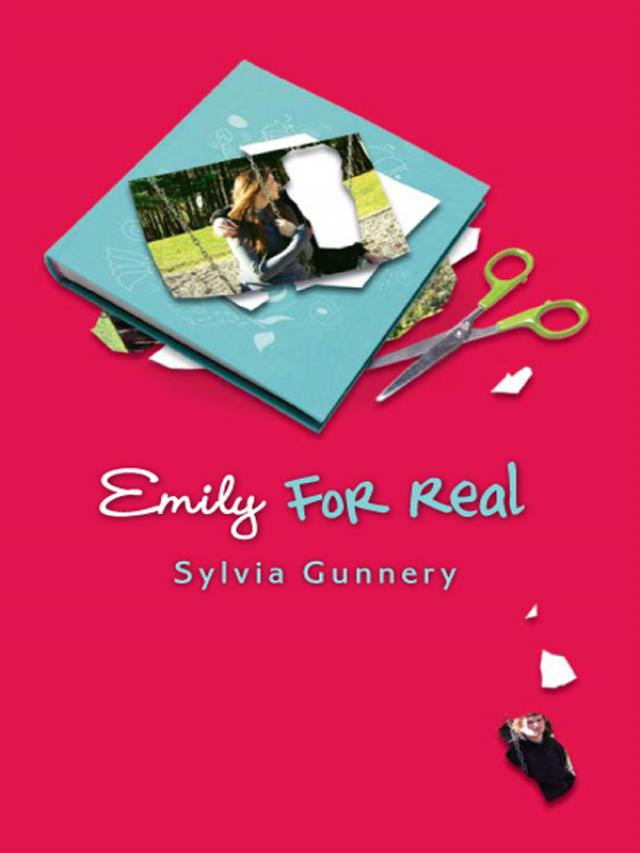
Emily For Real
Sylvia Gunnery
Text copyright © 2012 Sylvia Gunnery
This edition copyright © 2012 Pajama Press Inc.
All rights reserved. No part of this publication may be reproduced, stored in a retrieval system or transmitted, in any form or by any means, without the prior written consent of the publisher or a licence from The Canadian Copyright Licensing Agency (Access Copyright). For an Access Copyright licence, visit www.accesscopyright.ca or call toll free 1.800.893.5777.
www.pajamapress.ca
info@pajamapress.ca
The publisher gratefully acknowledges the support of the Canada Council for the
Arts and the Ontario Arts Council for its publishing program. We acknowledge the financial support of the Government of Canada through the Book Publishing Industry Development Program (BPIDP) for our publishing activities.
eBook ISBN 9781927485033
Book and cover design–Rebecca Buchanan
Photography–James Bell
eBook Development WildElement.ca
Manufactured by Webcom. Printed in Canada.
Pajama Press Inc.
469 Richmond St E, Toronto Ontario, Canada
www.pajamapress.ca
For Jim
Acknowledgments
I acknowledge, with much appreciation, the opportunity to dedicate time to this book in its early stages during my three months as writer-in-residence with the Nova Scotia South Shore Public Libraries. I also thank the Canada Council for the Arts and the Writers’ Federation of Nova Scotia for their support.
Throughout the development of Emily’s story, I was encouraged by students in Bob Hazelton and Paula Munro’s English 10 Plus classes at Forest Heights Community School in Chester Basin, Nova Scotia. I thank them for believing in Emily and Leo, as well as for sharing their own fictions in our writing workshops.
I thank Theo who walked into my high school English class several years ago, criticized Shakespeare as being “a pervert,” soon became my friend, and then stayed on in my imagination as Leo in this novel.
Gail Winskill took my manuscript and quickly moved it along the path to publication, all the while asking the right questions, offering precise and valuable comments…and listening. Thank you, Gail.
…I’ve spent summers watching satellites thinking they were stars and who knows what it is you are.
—Sue Goyette, “So Quite New”
One
I suddenly know exactly what I have to do. It’s more like an impulse than a plan because right now my brain’s on shutdown. I go to the bottom drawer of my desk and dig out my photo album that’s mostly filled with pictures of Brian and me. I pick up the scissors and take everything over to my bed. My heart’s squeezed tight and I’m shaking inside.
Then I start. Page by page, picture by picture, I remove any ones that have Brian in them. If it’s just him, I cut a clean diagonal right across the middle, letting one half fall dead on the bed and throwing the other half on top of the pile. If it’s a picture of him with me, I carefully slice him off, and for some reason I save the piece with me in it.
After a while, there’s a pile of Brian corpses lying there staring at nothing, and the pages of my album are all patched up with slices and triangles and scraps of pictures of me. In every one of these sliced-up pictures, I look stranded. Like there was an earthquake and I’m left on the edge of some kind of half-destroyed world.
Instead of feeling better, I feel worse. Like I’m not really me anymore. I don’t feel like crying. I don’t feel like anything.
I know I’ll have to get rid of the sliced-up pictures of Brian before anyone sees them and has a chance to know how truly crazed I am.
People think I’m depressed because of Granddad. I’m not. Today was his funeral, but I wasn’t close to Granddad even though I’m his only grandchild. You know how some grandfathers sit in big chairs and read you stories while you stare at the pictures and suck your thumb, or how they let you comb their hair, even if there’s not much hair to comb? Granddad is a different species than that. Was.
If this was a movie about me and it was the opening scene, a funeral would be perfect. The funeral of my relationship with Brian.
Brian’s at McGill University and already he has this French girlfriend. Six weeks in Montreal and he has this French girlfriend. If he’d texted me, I could have read it over and over and maybe read between the lines. But he called and said he wanted to tell me because I deserved to know and he was sorry.
Then Granddad had a heart attack and died watching golf on TV, so I haven’t told anyone about Brian. And I already know that life has its ups and downs, that there’s more fish in the sea, that love can be cruel, and any other cliché that’s supposed to make you feel good but only makes you want to puke.
Dad and Aunt Em are having a reception-slash-party so people can pay their respects to Granddad. Meredith would’ve been the only one who really had any respects to pay, but she doesn’t actually remember that she was married to him. When we went to the nursing home so Dad could tell her that Granddad died, all she said was, “Is it raining out?” Then she said to me, “Emma, go look and see if it’s raining.”
I don’t mind when she calls me Emma. She’s not confused saying Aunt Em’s name instead of mine. She actually thinks I am Aunt Em. Dad says Meredith loves them both as much as any mother would love her own children. I believe him.
I always knew how my Grandmother Rita died. No one told me about it, like, Come here, Emily, sit down and I’ll tell you what happened the day your grandmother died. But Dad and Aunt Em talk about it a lot, even though they were only five when it happened. They don’t remember much, except about how sunny and warm it was for January and how she was alone in the car and how the car smashed into one of those supports for the overpass. When they got home from school for lunch, she wasn’t there. The accident was happening around the time they were knocking on the door and shouting, “Mom! Mom!” over and over and wondering where she was. Ironic.
Granddad married Meredith just before Christmas that year. Lots of times Dad says to Mom that who could blame him with two five-year-old kids to look after.
And then Mom says, “Couldn’t be responsible for you and your sister for even a year without finding a woman to do the job for him.” It’s no secret that Mom doesn’t like Granddad much. Didn’t like.
I’m standing here at the front door looking out through the screen, thinking about how normal a day seems to be when actually nothing’s normal at all.
A taxi stops and a woman is in the back alone. She looks pretty old. The cab driver helps her out of the car.
She smiles when she gets close to me and says, “Oh, you must be Emily. Your grandfather told me all about you.”
“You know Granddad?” Knew.
“Oh, yes.”
When she’s all the way into the front hall, Dad comes out of the living room and I can see right away that he doesn’t know who she is. He gets this half-smile on his face like he thinks he’s supposed to know her.
“And you’re Gerald,” she says. “One of the twins.”
I almost say she must be writing a book about our family. But like lots of things I almost blurt out, I manage not to.
Dad’s forehead is crinkling up and I can tell he still has no clue who this person is.
“I’m Cynthia Maxwell,” she says and shakes Dad’s hand. “I’m a friend of your father’s. I worked in Karl’s office in that small house on Maple Street. That was years ago, of course. Before the new building on Victoria Street.”
Dad’s still drawing a blank.
“My husband and I moved to Montreal,” she says. Montreal. “But Karl and I have kept in touch over the years. Karl was always very thoughtful. Very reliable.”
I’m thinking, Wrong Karl, wrong funeral.
“Please come in Mrs. Maxwell,” says Dad. “Emily, go tell Aunt Em that Mrs. Maxwell is here.”
Can’t wait to see Aunt Em draw a twin blank.
So finally Mrs. Maxwell’s in a chair and she has a cup of tea with a small plate of sandwiches. I sit down by her while Dad and Aunt Em walk around, making sure everyone has coffee or tea. Mom’s refilling plates with sandwiches or squares, rearranging stuff so the plates don’t look so picked over.
Dad and Aunt Em don’t know what to make of her. That’s what Aunt Em will say when they’re talking after this reception is over: I don’t know what to make of her.
Cynthia Maxwell is telling me I have Dad’s eyes and cheekbones. Dad doesn’t really have cheekbones anymore but they’re in pictures of him from twenty years ago. Everyone says I have Dad’s eyes and cheekbones.
“Did you know my grandmother?” I ask. “Rita?”
“Yes,” she says.
“For some reason, I’ve been thinking about her today, even though I never met her because she died years and years before I was even born. Granddad must have gone into shock when she died like that.” But I don’t say, that as far as I could see, he stayed in shock all his life because he sure didn’t talk about Rita, and he sure didn’t act like much of a father or grandfather.
“It was a terrible thing to bear,” she says. “Life can be cruel.”
Brian.
“But there are things we can’t change and
French girlfriend. “Would you like more tea?”
“No, thank you, dear.”
“Sandwiches?”
“I’ve had plenty.”
“Sweets?”
“No. No sweets. I have to watch the sweets.”
And I see her watching sweets. Staring at a huge plate of them in her kitchen, wherever she lives. There are so many sweets on the plate they’re stacked high and some are falling off. I’m losing my mind.
“There’s something I’ve always wondered about when my Grandmother Rita died,” I say.
She looks at me like I’m going to reveal the most important revelation.
“How come she was driving that far from the city when she knew Dad and Aunt Em would be coming home from school for lunch, and she was supposed to be home when they got there?”
“Yes,” she says.
“I’ve always wondered that.”
Her sandwiches are gone and her teacup is empty. She just sits there.
So I say, “But I never asked anyone about that because I thought it would hurt their feelings. Because she wasn’t home when she was supposed to be looking after her children.”
“It was a long time ago.”
And I can’t tell if that means she couldn’t remember anything about the accident, or whether it didn’t much matter anyway because Rita is dead and now Granddad is dead and probably she’s thinking her turn’s next. Dad said to Aunt Em the day Granddad died, “We’re orphans now, Emma.”
Mrs. Maxwell doesn’t stay very long. It’s strange that she didn’t ask any questions about our family. But like she said, she and Granddad kept in touch over the years so she probably already knew everything.
“What do you make of her?” Aunt Em’s washing cups and saucers and Dad’s drying them. Mom’s gone to lie down now that the reception is finally over. I’m arranging leftover sandwiches and squares and cookies in plastic containers, thinking I don’t want to take any of this stuff to school for lunch. Not because it was funeral food. Anything leftover should have a salmonella sign stamped on it.
“Seems nice enough,” says Dad.
Aunt Em says, “I don’t remember Dad ever talking about a Cynthia Maxwell, do you?”
“No.”
“Granddad didn’t talk about anyone he used to know,” I say a bit sarcastically.
“That’s not true. He talked about lots of people from his past.”
“But no Cynthia Maxwell or Mr. Maxwell,” I say, like I have a point to prove. Dad just gives me a look and I realize I’m talking like this because I’m getting frustrated with this whole Brian-death-funeral-reception week. “Maybe Meredith knows her,” I say as a peace offering. Sometimes if you say a name, Meredith connects the dots.
“Time to head on home,” says Aunt Em.
“It’s been an emotional four days,” says Dad.
We’re orphans now, Emma.
Aunt Em hangs the wet dish towel on the oven door. “Be nice to be home and put my feet up.” And have a smoke, she doesn’t say. “Blanche is probably meowing at her empty dish.”
Then she comes over and gives me her usual kiss on the cheek, and I give her a hug, thinking I’d like to tell her about Brian, but it isn’t really the right time and place, as Mom would say.
After she leaves I go to my room and listen to music and picture Brian talking slow French to this girl in Montreal and her giggling when his accent sounds English and his smile and brown eyes and just the way he tilts his head sideways when he’s kissing. His soft soft lips and how sweet his breath smells. The pressure of his mouth and how he sometimes moans and pulls me in closer, tighter.
But it’s not me. It’s her.
Crying is not cathartic.
Two
Jenn has her own car. Her father sold it to her for one hundred dollars a month, which she pays out of money from her job at the mall. It’ll take her two years to pay for it, but it’s still a good deal. And she gets 20 percent off clothes where she works.
Sometimes my mind swims with details like how much Jenn pays for her car and what percent she gets off clothes. I don’t really plan to think about stuff like that, it just happens. Even if I look up at this tree and try to concentrate on how beautiful the sun is, shining through those yellow leaves, hundreds of yellow leaves like a brilliant tent over my head, I end up back where I was, thinking about one hundred dollars a month times two years equals $2400, which is a good deal for a car. And I’m thinking all this while I’m waiting for Jenn to pick me up for school.
“You do the math homework?” I ask, even though I already know the answer. Jenn finds school so easy, partly because she does all the work and partly because she’s just brilliant. In grade two she got in trouble for reading a book upside down. The teacher thought she was being a smart-ass (not that she’d ever say it that way), but Jenn was just bored. After that I tried reading upside down. It’s not easy.
“You won’t get in trouble for not doing the math,” she says. “They know about your grandfather, don’t they?”
“I don’t want any sympathetic looks. Pathetic looks.”
Jenn laughs and gives me her best pathetic look. Then she says, “Linda’s having a party Friday. Ronny’ll be there.”
“What’s that got to do with anything?”
“Come on, Em.”
“Come on what?”
She looks at me sideways for a nanosecond because she has to keep her eyes on the road. The look means that she knows that I know what she’s talking about.
But I fake that I don’t get it. “What?”
“I refuse to state the obvious.”
“Well, I don’t get the obvious, then.”
“You can’t tell me Ronny’s not hot. You even thought he was hot in grade four.”
“Okay, so Ronny’s hot. So what?”
She turns into the school parking lot and concentrates on squeezing in between two cars. Then she switches off the engine, checks her teeth in the mirror, and runs her fingers through her bangs to mess them up. “It’s not like Brian’s the only male on this planet,” she says. “You haven’t seen him for almost two months and then he calls you up and dumps you. Come on, Em. Forget Brian. Ronny’s your target.”
Jenn’s like that. Practical. When one situation’s over, move on. She’s left a lot of romantic wreckage behind her and didn’t even hear the last tinkle of glass falling. She has her pick of any guy she wants. It’s because of her looks: short brown hair, green eyes, small nose, big lips, small body, big breasts, white teeth, big smile. I could go on. Target, she says, because she has the power to aim.
“I don’t want a target.”
“Yes, you do. Hey, there’s Ronny.”
“If you say anything that even—”
“Hi, Ronny. Going to Linda’s on Friday?”
Ronny’s not looking at any of the bigs and smalls and whites of Jenn. He’s looking at me. “You guys going?”
“Sure,” says Jenn. She’s smiling because she can see Ronny’s looking at me.
This reminds me of how I’ve been feeling ever since Brian left for Montreal. Just because he’s not in the picture anymore, guys suddenly notice I exist. Like I’m some kind of manikin on display and everyone’s window-shopping.
“See you there, then,” he says, and catches up to the guys he was with.
“Hot Ronny has the hots for you,” says Jenn with this silly grin and with her eyes blinking like flashbulbs are going off in front of her face.
“Don’t exaggerate,” I say and she smirks.
After school I get it into my head to go see Meredith, which I’ve never done without Mom or Dad or Aunt Em. I want to ask her about Cynthia Maxwell, like I’m some kind of detective. I don’t know why my brain’s so fixated on this but it is. Maybe it’s tired of being so fixated on Brian Brian Brian. Desperate for a diversion. Any diversion.
Jenn drives me to the nursing home, which is a big favor because it’s halfway across the city. Harmony Hills isn’t actually built on hills. There’s only one floor, with two long corridors that meet in the middle where there’s a big TV room with huge sofas and chairs that are usually empty. That’s on one side of the hall, and on the other is a dining room that has tables with paper flowers in skinny vases. For Meredith (I’ve always called her Meredith because Mom and Dad and Aunt Em always call her that) life centers on going to that dining room three times a day. She has to walk with a walker but she can still feed herself.