

Stay Gone Days, page 1


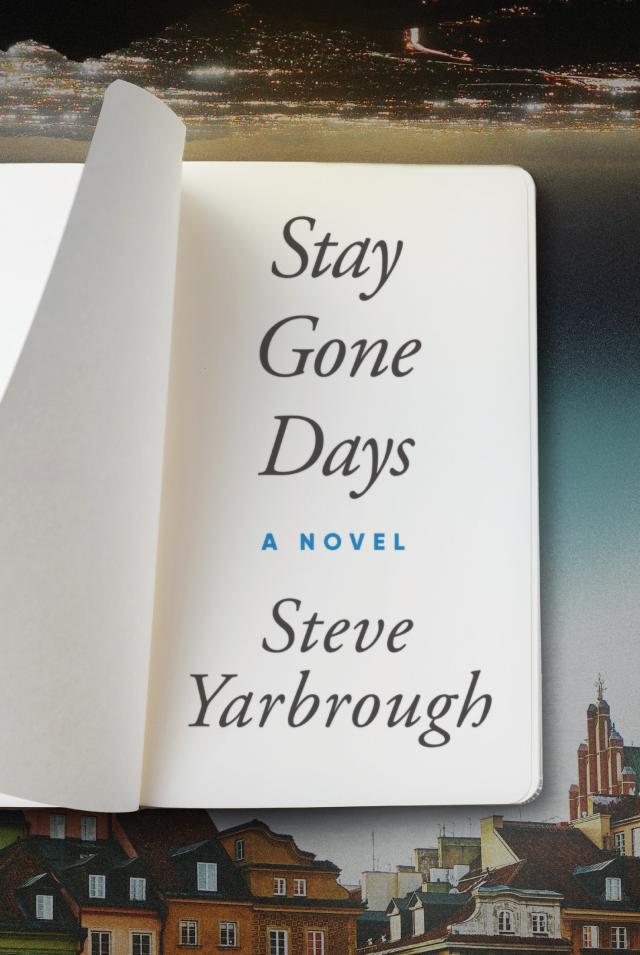
STAY GONE DAYS
a novel
Steve Yarbrough
Copyright © 2022 by Steve Yarbrough.
All rights reserved.
No part of this book may be used or reproduced in any manner without written permission of the publisher. Please direct inquiries to:
Ig Publishing
Box 2547
New York, NY 10163
www.igpub.com
ISBN: 978-1-63246-14-4-5 (ebook)
for Ewa
once more with feeling
The Cole Girls
IN ELLA’S RECOLLECTIONS, THEIR HOUSE stands on the east side of the gravel road, a cotton field to the north, an orchard to the south. It’s a boxy little two-bedroom with Sheetrock siding, hot in spring and summer, cold in fall and winter. They had a window unit, but it mostly just made noise. They had a fireplace, too, but it stayed boarded up because one time they found a dead snake there.
The orchard wasn’t really an orchard, that’s just what her father chose to call it. About halfway between the house and their neighbor’s soybean patch languished a lone Bartlett pear. Some years the fruit was fit to eat but most years not. She thinks the plot used to be a garden, that maybe at one time their parents grew watermelons and tomatoes and whatever else people in the Delta liked to eat. Okra, possibly. Black-eyed peas.
Her father was not officially a farmer then, though he used to be. He drove a propane truck during the day but studied electronics at night via correspondence course through the Cleveland Institute, which was not up the road in Cleveland, Mississippi, but hundreds of miles away in Ohio. Whereas he once spoke the language of agriculture, tossing around terms like “hill-drop,” “strict-middling” and “string-out,” he’d recently adopted a new vocabulary, talking constantly of “triodes,” “diodes” and “electrodes.” One day he went to Jackson to take an exam and returned with a certificate that pronounced him a Certified Electronics Technician. From that moment on, whenever he composed a letter, he typed his name at the bottom, followed by a comma and C.E.T.
On the weekends, he repaired people’s televisions, stereos and radios. Years before she knew the term CD she knew CB. CB stood for Citizens’ Band, the kind of radio that only he seemed able to work on. Why he failed to place periods in this particular initialism she never understood. She accepted it on faith, along with so much else he said and did.
Dear Mr. Stark:
This invoice is a reminder that you still owe $17.50 for fixing your CB on 10/12/74. Please remit at your earliest convenience.
Sincerely,
Alton Cole, C.E.T
The reason she knows what he wrote in those letters is that he kept carbon copies of all communications, storing them in the attic, in a large metal lockbox, which she found right before they moved out. She placed it sideways on the floor, on an afternoon when she was home alone, and hit it hard with a pipe wrench.
She often thinks of the box, how thin the metal was, how it crinkled from a single blow, how little protection it offered in the end, allowing to come to light so much that he would have preferred to keep hidden in the attic of a house soon to be abandoned.
•
They went to a private school. This sounds impressive, as if they were people of means. At various times, Ella’s younger sister Caroline, who after leaving home began to call herself Carin and later on Caro, would with practiced offhandedness remark: “Down south, I attended a highly ranked private school.”
The truth is less savory. Paying the tuition left their parents constantly broke, but the only thing highly ranked at the school was the football team. And it would not have been highly ranked either if it played teams from public schools, which by then the courts had forced to integrate. The school existed for one reason: the maintenance of segregation. All the white kids went there whether or not their parents could afford it. To do otherwise would have incurred disgrace.
The colors were red and gray, the nickname the Rebels, the fight song “Dixie.” There were no buses, and many students drove themselves to school in nice cars. She and Caroline were among those that didn’t. Their mother, who operated a cash register at United Dollar Store, dropped them off just before eight, then drove downtown, parked behind the store and waited until the manager showed up and unlocked the door. In summertime, when it got hot early, she often had to drive back and forth in the parking lot to keep the air conditioner running. Ella did not learn about this practice from their mother but from a high school classmate named Kim Taggart.
The new biology teacher had assigned them to dissect a frog together. This particular teacher would last only one semester, getting fired right before Christmas. She just didn’t understand how things worked, people said, shaking their heads. Every time a student used a racial slur, she issued a public reprimand. This kept her pretty busy.
One of the things she didn’t understand was that a girl like Kim Taggart should not be paired with one like Ella Cole. The Cole sisters were poor girls from the countryside, the kind who up until second or third grade had said fanger for finger. When their mother took them to the circus, they didn’t sit in the reserved seats but at one end of the oval ring, where a single strand of seagrass rope separated them from the small number of black people who could afford general admission. Kim, on the other hand, was the daughter of “Tag” Taggart, a former Ole Miss baseball star and local attorney who’d become rich representing agricultural interests, sometimes traveling on their behalf to Washington, D.C. Their house held a commanding position on Bayou Drive. A plantation-style affair with white columns and a rotunda, it was spot-lit every night. Thomas Jefferson might have felt at home within those walls. They owned another place, too, in the New Orleans Garden District. Word was that when Kim graduated, they’d sell their local home and move on. The town was too confining for people like them, even if they’d been born and raised there.
Each two-person team had to pay for its own dissection kit and frog. Ella, newly resituated up front beside Kim, reached into her bag to withdraw the two dollars her mother had given her that morning. But Kim, a glittering girl with long blonde hair that lay regal on her shoulders, said, “That’s okay. I’ve got us covered.” She stood and walked up to the teacher’s desk, handing her a ten and waiting patiently for change. She wore the kind of plaid wool skirt fashionable at the time, along with a white wool blouse. On her wrist, a hammered heart charm wrap. For days people had been trying to figure out who gave it to her. She wouldn’t say. Kim Taggart valued discretion. She was Tag Taggart’s daughter.
The dissection began smoothly, Ella spreading the frog out on the tray and holding its limbs in place while her partner pinned them down. She’d once watched her mother and grandmother remove the eyes from the head of a newly slaughtered pig, then place it in a brine pot to make head cheese. She hadn’t felt squeamish then, and she didn’t now. Neither, apparently, did Kim. While most of the other girls as well as a number of boys wrinkled their noses and voiced disgust, Kim proceeded methodically, her gaze narrowing each time she pushed a pin in. “I probably ought to be wearing contacts,” she said. “I think I inherited my dad’s vision.”
Mr. Taggart, Ella recalled, wore wire-rimmed glasses with thick tinted lenses. “He’s got bad eyesight?”
“Without those awful glasses, he couldn’t even drive.”
“What about your mom?” Until now, they had never exchanged a word, though they’d been in so many classes together that Ella had lost count.
“My Mom can see to Memphis and back. If there’s a speck of dirt in the corner of the bathroom, she finds it. It’s a rare day when she doesn’t make me plod downstairs and grab the vac.”
“Really?”
Kim pushed the last pin into one of the frog’s webbed feet. “You assumed we didn’t do our own vacuuming. Right? Well, I do all the cleaning. She makes me use a toothbrush on the shower grout. How do you think folks with money stay rich?”
“I don’t know how they stay rich. And more importantly? I don’t know how they get rich.”
The other girl laughed and touched her forearm. “I don’t know how they get rich, either. It happened before I was born. How they stay rich is to make sure they don’t spend one unnecessary dime. My mother carries a calculator everywhere. She conducts spot audits of stuff like the sales receipt at the grocery store. She once pulled the thing out at Commander’s Palace, and while my dad looked on horrified she re-tabulated the check. She is the stingiest human being you will ever meet.”
Ella had never heard of Commander’s Palace. As if she’d read her mind, her partner said, “Commander’s is a restaurant in New Orleans. It costs a lot to eat there. If you ask me, the food’s often nauseating. Can you imagine turtle soup?” She gestured at the newly impaled frog. “It wouldn’t surprise me to see our poor friend on their menu.”
The thing was, Ella had eaten frog meat. Her father and her uncle went gigging, then stewed frog legs for supper. Her aunt and her mom and Caroline refused to eat the stew and had baloney sandwiches instead. To Ella it tasted neither bad nor good. It was food. You ate it.
She knew, in the way she knew all sorts of things without having them explained, that at this point it would not be wise to reveal her culinary history. It seemed like something unforeseen might be happening between her and Kim Taggart, and she wanted to find out what it was. “You’re my curious one,” her father liked to say, “and curiosity’s okay. Now, some folks’ll tell you it killed the cat, and maybe it did. But what they don’t want you to know’s that
Please remit: one life for one surprise.
•
“Kim fucking Taggart?” Caroline says that evening from the bunk below hers. “Are you shitting me? She invited you to dinner?”
Her sister is a year-and-a-half younger. When she was little, she slept in the upper bunk, but then she began to complain about feeling claustrophobic, so Ella agreed to switch. Nobody beyond the family knows this, and most would be stunned by it, but Caroline is prey to many phobias. She’s terrified of cottonmouths, which is perfectly reasonable, but also of dust particles, which is not. She’s afraid of getting food poisoning, though she’s never had it, and is always checking the dates on everything in the refrigerator and occasionally discarding stuff like buttermilk and orange juice a few days in advance, and this drives their father half-crazy. She’s afraid of dogs but pines for a cat, which he won’t let her have. More than anything, she’s afraid of the dark. Beneath her bunk she keeps a small lamp that burns all night. Sometimes Ella has to wear a mask.
“You have a truly foul mouth,” she observes. “Has anyone ever told you that?”
“You’ve told me that like maybe about five hundred fucking times. I find profanity sublime. That’s what I’m doing when I use it. Sublimating base urges.”
“What base urge are you sublimating now?”
“To be frank? I’d like to kill Kimberly Faye Taggart.”
“Kimberly Faye? When did you hear anybody call her that?”
“Actually, I saw it on her driver’s license.”
“You saw her driver’s license? How?”
“Well, to be completely forthcoming, Els? For a while, said document was in my possession.”
Some statements take time to sink in. This isn’t one of them. Six or seven weeks ago, during sixth-period gym class, several items were pilfered from the girls’ locker room. The principal made an announcement over the PA system, demanding that anyone with information about the thefts come forward. But as far as Ella knows, no one did. “Oh, Jesus,” she says now. “Surely, you didn’t.”
“I hate to disappoint you.”
“No, you don’t.” She rips off the mask, swings her legs out of bed and bangs her head on the ceiling. She doesn’t bother with the rickety ladder. Her feet hit the floor with a thud.
Her sister is propped on three or four pillows, her smooth face serene, the tiny mole near the corner of her mouth scarcely visible in the glow from the night lamp. Though neither of them knows it, there’s a running debate among a contingent of high school guys about which of the Cole girls is hottest. Most would vote for Caroline. It’s the dirty language, the wild red hair, the piercing green eyes, the bad grades she doesn’t give a damn about, the rumor about what happened one night behind the old abandoned brick yard and was said to involve the entire first teamoffensive line and the backup tight end. An air of danger surrounds her, and the guys who wage the debate love danger, even as it scares them. Nobody thinks Ella is dangerous. She makes straight A’s, has pale skin and hair so blonde it’s nearly white, and she’s got the placid demeanor of a Christmas tree angel. Which probably means, according to minority opinion, that if you could just get a few drinks in her, she’d fuck you up one turnrow and down the other.
That her sister finds satisfaction in her dismay would be impossible to miss, even if she’d never noted it before. But she has. She detected the same sort of amusement last week when Caroline, having been caught cheating on a test in the only class they’ve ever taken together, announced to their teacher: “That’s the last time I’ll ever lift a finger trying to pass Algebra.” Caroline’s pleasure is bound up with her own discomfort. It has been this way for quite a while. Before that, they were everything to each other. But things change. Ella has not expended much effort wondering why.
“You stole from Kim. What did you take?”
A shrug. “A few dollars. The driver’s license. Her car keys.”
“Jesus. You weren’t … You didn’t plan to steal her car, did you?”
“Hell no. That could lead to some truly bad shit. Now, I’ll admit I fantasized about pouring a quart of Daddy’s Valvoline on the leather seats. But he’d probably miss it. And, of course, if that happened, you know who would catch hell.”
This is her self-defined position in the family: she’s the bearer of blame, the beast onto whose back all burdens are strapped. She’s presumed guilty until she proves herself innocent, and such proof is hard to produce when you’re nearly always at fault.
“What have you got against Kim Taggart?” Ella asks, keeping her voice down because she just heard their mother step into the bathroom. “What did she ever do to you?”
“You know something, Els? If you aren’t careful, Momma’s worries about you are gonna come true. She’s scared you’ll turn into somebody’s doormat. I heard her say so to Grandma right before she died.”
Ella reaches for the ladder, locks her hand around a rung. “What did Kim Taggart do to you?” she asks again.
“Do you know what was in her fucking purse? A hundred and fortythree dollars. Momma probably makes less in a week for standing on her feet eight hours a day.”
“That still doesn’t make it right to steal from her.”
“I bet you she didn’t even know how much she had. You wanta hear what else was in there? I mean, besides the keys to her hideous little BMW?”
She ought to say no, and she intends to, but words fail to emerge.
“Two condoms, still in their packages. Two of those little bottles of whiskey they give people on planes. And—get this—a note saying Brad, there’s much more of me where last night came from.”
Brad Moss is the quarterback, the most popular guy in town, reputedly being recruited by both Ole Miss and Auburn. People think he’s the one who gave Kim the charm bracelet. He recently broke up with his girlfriend.
Ella turns loose of the ladder and sits down on her sister’s bed. “Why are you telling me this?” she asks. “Why now?”
“Because,” her sister says, her mouth beginning to quiver like it used to when in an effort to win attention she’d posed a silly question—Is snow made out of cotton?—only to be met, yet again, by their father’s derision. “I don’t want you to become one of her play-things. She already has plenty of bright toys. What have you got? What have I got? Who in the hell are we?”
“WHEN WE WERE BUILDING THE HOUSE,” Mr. Taggart said, “we had some … well, let’s just say spirited discussions about whether the dining room ought to look onto the street or the bayou. I’ll be the first to admit that a case could be made for either one. But I argued that every December, when the Christmas floats go out, we’d regret it if we’d put it up front.”
“And of course, being a lawyer,” Mrs. Taggart said, sipping from her fourth or fifth glass of red wine, “my husband won.”
“That’s a simplification.” Mr. Taggart gestured over his shoulder at the bayou, where a brightly-lit Santa manned a sleigh pulled by a pair of neon-antlered reindeer. “In my profession, it’s often necessary to arrive at a compromise. So yes, we put the dining room where I wanted. But notice whose back is turned to the window so he can’t enjoy the sights. Seems fair to me. Don’t you think so?”
Later, after she saw the news about Tag Taggart in the local paper, she would feel no small measure of sympathy for Kim’s mother. But that night, she couldn’t muster a shred. If Mrs. Taggart kept drinking, it wouldn’t be long before the lights and the float dissolved into mist, if they hadn’t already. On her the view was wasted. “Yes sir,” Ella said. “That seems like a reasonable solution.”
Mrs. Taggart smiled into her glass. She lacked, people said, her husband’s charisma. The only person Ella had heard say a kind word about her was her own father. “In high school, Louise was a real friendly girl,” he remarked a little while ago, on their way into town. “Even back then, that damned Tag was just as slick as if you’d rubbed him in bacon fat. I wouldn’t trust that scutter as far as I could punt him.”
When dinner concluded, Mr. Taggart pushed his chair away from the table and said he’d better get on down to his office, that he was working on an important case and needed to put in several more hours, even though this was Friday evening and Christmas only ten days off. He said good night, and before they heard the front door close, Mrs. Taggart had drained her glass. “Well, girls,” she said, “good luck with the dishes.” She rose, picked up the corkscrew and an unopened bottle of wine that waited on the sideboard, and headed upstairs.


