Old Rage, page 8


What a weird world it was. I didn’t really look the part. I had a good figure but my face didn’t fit the pretty Bunny mode and I have never been good at smiley simpering, which in those days was deemed attractive to the sort of men who frequented these clubs. I say ‘was’ but in January this year there was a report about a similar use of young girls at a function in one of our posh hotels. A male-only dinner organised by a set-up called The Presidents Club, purporting to raise money for charity but actually, as reported by an undercover journalist, an excuse for some men to behave like delinquent boys, treating the girls who were enlisted to keep them happy like dirt. The organisation was closed down when looked at through modern, more enlightened Me-Too eyes and seen for the debasing of relationships between men and women it represented. The sadness was that the businessmen involved could not understand the objections to their sleazy night out. So what if a few breasts got squeezed and bottoms pinched and lewd remarks made? It was just a bit of fun, and the girls were paid and they collected a lot of money for charity, after all. For them money changing hands overrides any moral compass.
Speaking of moral compasses, over my vegan pizza I regaled Martin with slightly embellished stories of my Pheasantry days that left him open-mouthed.
November 2018
I was reminded of another dear gay friend the other day when I was visiting the Building Centre in Store Street, and I discovered the enduring restaurant Olivelli’s was still open. I used to visit Olivelli’s in my 1949 student days at RADA, just round the corner on Gower Street. I usually went with my friend Tony Beckley, classically handsome and camp as a row of tents when it was dangerous to be so. We would have fantasies of being stars, and becoming colleagues in wonderful shows, living together in a Mayfair house, plus a mansion in Brighton, like the one owned by Terence Rattigan, where Tony attended daring parties. His enchanting good looks and ready wit gave Tony entrance to many glamorous star-studded events, which were held in secret locations in that furtive time for gay men. He would delight me with the details over a free meal, given to us and other students by the ever-generous Signor Olivelli. We promised each other that, in the highly unlikely event of us ever getting old and infirm, we would share a room and raise hell at Denville Hall, a retirement home for old actors. It was not to be.
Tony went to Hollywood with one of his lovers, Barry Krost, did some films and tellies, the most notable of which was playing Camp Freddie in The Italian Job. I treasure the out-takes of a scene he played in Revenge of the Pink Panther, in a small lift with three other actors, one of whom was Peter Sellers. Sellers proposed that it would be funny if he farted. The resultant uncontrollable giggling is Tony as I knew him. I watch an interview with Sellers about it on the web, with clips of the struggling actors trying to be professional, whenever I want to remember him.
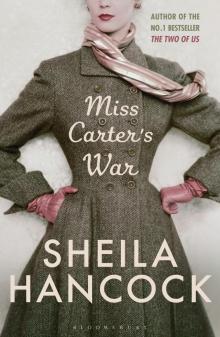
Tony loved LA and had many adventures, but then became ill. Barry having become successful, and rich, organised and paid for me, who hadn’t, to fly over to see Tony, and he died aged fifty not long after my visit, of what we later deduced was the dreadful, then mystery, illness AIDS. I have tried to depict the profound love there can be between a straight woman and a gay man in my novel Miss Carter’s War. This old age of mine would be richer if I could have shared it, as we planned, with Tone.
November 2018
Saw a film of some of the wonderful commemoration artwork for the 2018 Remembrance Day tribute, devised by Danny Boyle, who caught the mood of the country in 2012 with his Olympic opening ceremony. Danny commissioned sand artists, a discipline I admit that I did not even know existed, to sculpt portraits on many beaches around Britain, of people who fell in the war. They were stunning works of art, which made it deeply upsetting to watch them being washed away by the tide, leaving not a trace, as the ex-marine I met in Wales felt he had allowed to happen to his unnamed young comrade in arms. Particularly moving was the portrait of the poet Wilfred Owen on Folkestone beach, where apparently he swam the day before embarking from that beach to fight in France. He was killed one week before the armistice was signed.
In the days of the First World War there were not embedded journalists reporting from the thick of battle, telling the truth of what was going on, as so valiantly they do nowadays. We owe our knowledge of the appalling carnage of the First World War to poets like Wilfred Owen and Siegfried Sassoon, as their poetry gave an insight into what it was really like, as opposed to the romanticised version of the war being spun to the people back home.
Photographers and artists who went to the front have had the same effect. In the First World War, Paul Nash said he was not an artist but a messenger who wanted to ‘bring back word from the men who are fighting to those who want the war to go on for ever’. His painting, ironically titled We Are Making a New World, of a devastated landscape of shell holes, trenches and leafless burned tree trunks, said it all.
Searing photos of the effect and reality of battle can shock us. Who can forget the naked child, her back burned by napalm, running away with her terrified friends during the Vietnam War? Or the tiny mite washed up dead on the shore near Bodrum, in an attempt to escape another vicious war? Film too can be affecting – the little boy dug out of a bombed building in Syria, sitting stunned, coated in dust, his face blank, even when he looked at the blood on his hand that had come from his forehead. His childish guilt as he tried to wipe it on the seat of his chair is unbearable. Conflicts fade from our memories but the work of artists bear witness to them for future generations. ‘Lest we forget.’
There is no more potent picture of the destruction of war than Picasso’s portrayal of the bombing of Guernica. Picasso was in occupied Paris during the war when a German officer saw a photo of the painting and asked him, ‘Did you do that?’
Picasso replied, ‘No, you did.’
2019
January 2019
Went to another funeral. I have reached the age where my friends are more likely to be buried than wed. When he was very old, John Gielgud was reputed to have said, after yet another ceremony, ‘It’s hardly worth going home.’ This was a happy do, which John Thompson, the dear friend we were celebrating, would have thoroughly enjoyed.
My first husband, Alec, died just before Christmas in 1971, when Ellie Jane was seven. A year beforehand, she had also lost her beloved grandma. My dear friends John Dalby and his partner John Thompson came to our rescue. They invited us to stay with them in their colourful flat in Earl’s Court, which had been the scene of many louche goings-on throughout the sixties. There we played gentle games, and ate delicious food, and relaxed into their comforting arms. Dalby was a composer and performer and Thompson a nurse. Theirs was a profound love affair with no rules, which lasted till they died, Dalby in 2017 and Little John, as we called him, following a period of bereft confusion, now in 2019.
They met in 1959 and lived, along with many of my friends, through the AIDS epidemic, and times when their love was illegal. Often, with one singing class, Dalby would restore my lost voice to perform in a musical that night. A cuddle and a pep talk were part of the treatment. Throughout the fifties and sixties we had enormous fun together and right to the end they were experts at friendship.
Little John’s funeral was held in the beautiful St Mary’s Church in Twickenham, with the sun shining on the nearby River Thames. Like all theatrical funerals, it was good-humoured, with beautifully read poems, and his Actors Centre choir singing one of John’s songs. The vicar who conducted the service, Father Jeff Hopkin Williams, had been to the same epic parties in Earl’s Court, so he expressed perfectly what I think we all felt that day, that the departure of the two Johns was the end of an era. An era of some pain, prejudice overcome, loving companionship. And such terrific fun.
I sat in a pew with a plaque saying:
Lawrence Gaskell 19
Died in France of wounds received on the 27th of February 1918
Buried near Arras
So, I shed a tear for Lawrence too, and thought of him in his grave so far away. I hope his spirit, if it was present, enjoyed the lovely ceremony of which he and his family were deprived by another bloody war. Nineteen. My God.
February 2019
For over a year I have omitted to visit Gwynne, my sparky Welsh neighbour with whom I have, in the past, spent time drinking good wine and talking politics. Overcome by my depressing illness, the worry of my daughter and the state of the country, when I have reached home during these last two years I have wanted to shut up and watch telly or listen to music. Or just cry. Now, with a few days free to catch up with friends, I went round to call on him and found he had moved upstairs. There he spends the day in a wheelchair reading his Guardian and the Oldie magazine until retiring to his special hospital bed at seven, where he lies watching television, playing music or reading a book until he goes to sleep about twelve. In other words, he has settled for a bedridden, invalid status. Were he to do something about his knees, probably even now, with physio and determination, he could be mobile. Or even install a chairlift so he could go out and sit by the river, or I could wheel him up to our lovely Italian deli for a coffee. But he doesn’t want to.
‘I’m fine, I sit by the open window from 2 p.m. onwards and keep an eye on you all. And people come and visit and we have a nice glass or two and a chat.’
Had he tackled his knee problem earlier when it was first around, it could’ve been remedied, but I suspect that after the death of his wife, who lovingly tended the roses in our square, he couldn’t see the point. I tried to give him a pep talk – Messiah Hancock – but it was clear he is satisfied with his life as it is. He tells me that the carers who come in every day originate from all over the world, and he is thrilled by their company and by that of a gentle saint of a man who spends the day with my friend taking care of all his needs. Struggling, as I was when I visited, with a flare-up of pain, I ended up almost envying Gwynne. At ninety-one or ninety-four – he has lost count – he can’t be bothered to fight any more; he has worked out a way of life that suits him and he is enjoying it.
The next day I went to Hampstead to visit another of my friends. Her whole life revolved around her husband and family. Much like my neighbour, when her partner died her life lost direction, and not long afterwards she was diagnosed with Alzheimer’s disease. Thankfully her daughter has organised things in such a way that she can stay in her home, where she feels safe. My girlfriend is in the early stages of this horrific disease. She is often consumed by terror but this was a good day. She went through a stage of being alarmed by her mind’s waywardness, but on this occasion she seems quite calm as she wanders from subject to subject, sometimes mid-sentence, struggling for words, and finding odd, often rather good, substitutes. I try to accompany her along the wild paths of her mind, pretending that her long-dead husband will come home soon, and repeating the same information about my family several times over. Then she suddenly blurts out that she is furious with her husband.
‘Why?’ I ask cautiously.
‘He simply will not finish decorating the bedroom.’
Memories of a difficult patch in their marriage, and the pain it caused, are completely forgotten. I can’t help thinking that, despite my sadness at her decline, and my fear for her future, she herself was happier for a little while than many times in our shared history. Forgetfulness in old age is sometimes merciful.
For myself, I am trying to organise my affairs to deal with infirmity and dependence, should they occur. I have installed a lift and made all my cupboards more accessible. I will try to accept graciously the decay of my body. It has always been unreliable anyway. When my specialist explained that my immune system had turned against me, I was not in the least surprised. It has never been particularly friendly. Acne afflicted my youth, cancer my middle years, and nerves have always affected my bowels and bladder so that proximity to a toilet is a lifelong fixation. No change there. I can predict that cold sores will disfigure my lips the day before I am due to film some close-ups, and laryngitis has threatened the first night of every musical I have done. In other words, I don’t think I have ever felt 100 per cent fit, so the ailments of old age are all part of the pattern.
As, of course, is death.
Death is a reality. I still haven’t quite accepted that it is going to happen to me, but from what I have observed in others I will know when to let go. Nicholas Parsons and I had worked together since the beginning of Just a Minute in 1965. I loved his old-fashioned cravat-and-blazer-type charm. Kindly, courteous, utterly professional, reliable and loving. In the last few months of his life, his strong physical and mental persona began to fracture. Obviously loathing this disintegration, with his usual impeccable timing, he took his exit.
I find some people want to cling to life even though to observers it seems to have become intolerable. But what if you want to die? I once sat next to that stalwart man of the theatre Brian Rix, comforting him as he explained tearfully how he longed for his life to end.
Like many comics, Brian was an intensely serious man. All his life he campaigned for people with learning difficulties, like his daughter. When his beloved wife, Elspet Gray, died after sixty-four years together, he was distraught. That, together with a painful terminal illness, made him write to the speaker of the House of Lords, of which he was an active member, saying: ‘Unhappily my body seems to be constructed in such a way that it keeps me alive in great discomfort, when all I want is to be allowed to slip into a sleep, peacefully, legally, and without any threat to the medical or nursing profession. I am sure there are many others like me, who, having finished with life, wish their life to finish.’
Years ago I did a TV monologue written by Hugo Blick, depicting a woman going to Zurich to die. The reality of the bleak procedure and commercial killing machine that the character went through, based on fact, shocked me. When I went on a television programme to discuss it with MP Diane Abbott, at the time shadow minister for public health, she was so adamant that legal euthanasia would lead to people being coerced into dying, to get them out of the way and steal their money, that she could barely bother to engage with me, making it clear a silly actor did not understand these things. When I pointed out that it was her job to frame a law that encompassed any possible danger, she could not be bothered to reply.
I have reached the age when I do consider the manner of my death. I hope it will be, with the help of medical science, relatively peaceful, but if that is not possible, then, like Brian, I want the right to manage my own departure, when I choose, where I choose. Even though I am a vice president of St Christopher’s Hospice, dedicated to aiding people to die with dignity, I would like to end my life at home, as John did, with my loved ones in the house – though maybe not standing round the bed waiting for me to deliver a good exit line. ‘Bugger Brexit’?
When I have a bout of pain and fatigue, with the accompanying depression, or I despair of ‘the great’ and ‘the tyrants’ in the world, I find the idea of there eventually being an ending quietly comforting. As Will said in Cymbeline:
Fear no more the heat o’ the Sun,
Nor the furious winter’s rages;
Thou thy worldly task hast done,
Home art gone and ta’en thy wages:
Golden lads and girls all must,
As chimney-sweepers, come to dust.
Fear no more the frown o’ the great,
Thou art past the tyrant’s stroke:
Care no more to clothe and eat;
To thee the reed is as the oak:
The sceptre, learning, physic, must
All follow this, and come to dust.
I am making practical arrangements for my departure – will, power of attorney, legal set-up for the management of my charity, the John Thaw Foundation, after my death. I am erasing my human animal tracks, gradually destroying diaries and letters, offloading belongings and refusing any more gifts, trying to make it as easy as possible for my daughters to tidy up after my death.
Then, when all that is done and dusted, I will settle down, like Gwynne, with the help of my friends, to bloody well enjoy my decline.
March 2019
One of my grandchildren asked me, ‘What is the difference between the classes?’
I hate the class system, having been a victim of it myself. I have always felt a profound gut reaction against its manifestations in our country. I classify myself as working class, because I believe that is what my family was, but now I am floating about leading a middle-class life, with working-class attitudes. A phony, in fact.
Three of my grandchildren have the odd situation of having grandparents on one side who are upper middle class, verging on aristocratic, whilst on the other side there is me, at least originally working class.
Not long after this conversation, in an ill-advised revelation of his true colours, Jacob Rees-Mogg, when discussing on a radio programme the burning to death of seventy-two people in a tower block called Grenfell, said to the interviewer, ‘I think if either of us were in a fire, whatever the fire brigade said, we would leave the burning building. It just seems the common-sense thing to do.’
So, on reflection, my answer to this question from my grandchildren is that the working class obey orders, often to their cost, and the upper class do what they choose. The upper class know they can get away with a certain moral laxity, legal tax-dodging, that sort of thing, whereas the working class know that if they do not sign on for their benefit at the right time they won’t get the money, and if they are caught shoplifting they will be sent to prison, rather than for a course of psychotherapy. The upper class are confident that they are right.