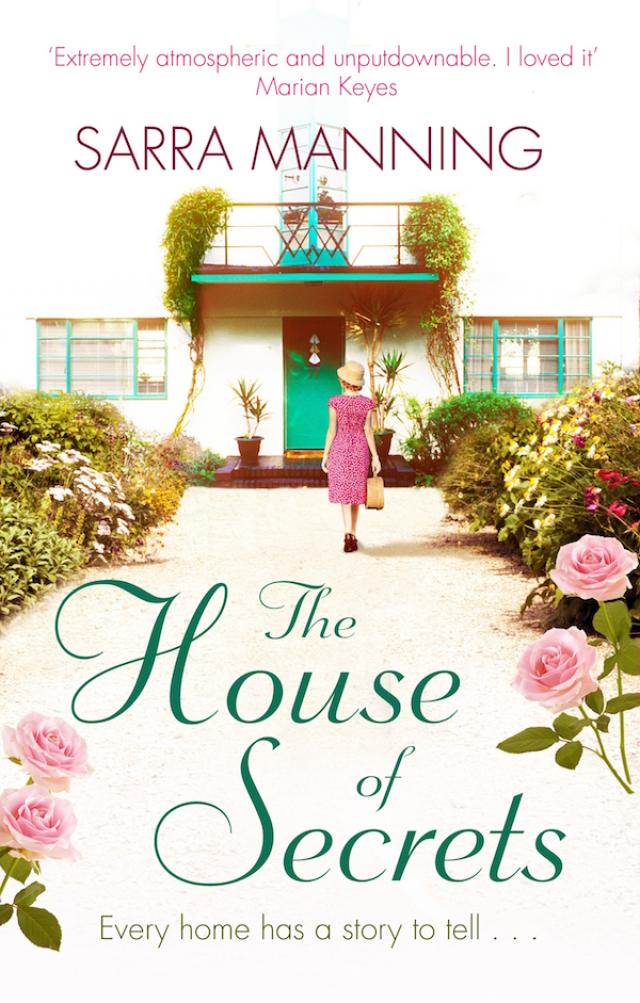
The House of Secrets, page 2


‘Easy, tiger,’ Zoe murmured, but none of this was easy. She’d read somewhere that moving house was meant to be the third most stressful life event after death and divorce. She’d take moving house over death and divorce every time.
Another box was carried in and once again they were asked where they wanted it. From the clenched set of his jaw, Zoe could tell that Win was bearing down on his back teeth and who knew where his mouthguard was – hopefully in one of the boxes marked ‘BATHROOM’.
‘Stop grinding. You’ll end up with lockjaw again.’ Zoe plucked at the damp sleeve of Win’s anorak. ‘Remember, we agreed that we were going to treat this as an adventure. This is a beautiful house and we’re lucky we get to live here.’
‘It’s not beautiful right now.’ Win caught Zoe glaring at him and realised he was off-message. ‘But it will be by the time we’re done.’
They’d never meant to buy a house. They had a plan in place, which involved selling their one-bedroom flat in Swiss Cottage so they could afford a two-bedroom flat at the northernmost tip of one of the Tube lines, the Victoria or Piccadilly, which was as far out as Win was prepared to go, being a born and bred north Londoner.
Then Zoe had seen the ad in the property pages of the Hampstead and Highgate Express. A four-bedroom house in Highgate, in need of a complete overhaul and modernisation, and apparently priced to reflect that, though Win said he doubted that very much.
Some people would have read the forbidding words ‘in need of complete renovation’ and taken fright but Zoe had become quite giddy at the possibility of all those period details left intact. So, the house was a fixer-upper? Well, who didn’t need a little fixing-up from time to time?
As requested, she’d written to the address on the advert and subsequently they’d been invited for an interview with a fusty old solicitor at a fusty old firm in Mayfair.
Once it had been established that Win and Zoe weren’t soulless property developers who wanted to carve the house up into flats and sell them on at a huge profit, they were told the below-market price of the property. It was a quarter of what a four-bedroom, semi-detached house in Highgate should have cost. It was even less than the price of a two-bedroom flat in Cockfosters, right at the end of the Piccadilly Line.
It was far too good to be true. There had to be a catch. And there was.
The house had been built and purchased in 1936 then never lived in, which was very odd but not odd enough to cool Zoe’s ardour. On the contrary, now that Zoe knew for sure that there’d be original period features still intact, nothing Win had to say about dry rot or subsidence was anything that she wanted to hear. She’d made arrangements to view the property on a sunny late-September day.
The house was just across the road from Highgate Tube station on a street off Southwood Lane, which led up to Highgate Village and beyond that the vast green acres of Hampstead Heath.
Although Elysian Place ran parallel to a major arterial road into central London, all Zoe and Win could hear were birds singing as they wandered down the tree-lined street full of solidly built, semi-detached 1930s houses. There were a mix of styles – mock-Tudor, neo-Georgian – but twenty-one and twenty-three had been built in the art deco-ish Moderne style. They were art deco-lite and right now, number twenty-three, their destination, was an art deco fright.
The house stood in an overgrown wilderness that once must have been laid out as a front garden with flowerbeds and a privet hedge. To the left of the plot was a drive, the concrete cracked, weeds valiantly pushing through towards the light. The graceful, minimalist curved lines of the house did give Zoe a little frisson but the white rendering was grey, streaked almost black in places. The original Crittall windows were warped in rotting wooden frames, in a couple of places the glass was cracked. The roof was no better; there were patches of moss clinging desperately to the slates that hadn’t gone MIA.
It still wasn’t enough to put them off. Hand in hand, they’d unlocked the front door, with its stained-glass sunburst panel, and stepped inside the hall, their path marked out by black and white tiles arranged in a simple geometric pattern. In 1936, it would have been the very latest thing in modern living. The beautiful sleek lines of the staircases and doorjambs, the tiled fire surrounds, the simple, understated architraves and ceiling roses.
Off the hall was a large living room, then a dining room, and at the end, a kitchen complete with walk-in pantry and off it, a small scullery. Up the stairs and behind pitch pine doors were a large master bedroom and a smaller boxroom at the front of the house, then a bathroom, a separate toilet and two good-sized back bedrooms.
Zoe had been worried that neither of them had experienced that special, tingly feeling you were meant to get when you were house hunting – that sense that you’d come home, that this was where you were meant to live. But as Win said, who cared about the feeling? This was a house for the kind of money that might have bought them a beautiful manor house with an orangery and a duck pond in the Scottish Highlands but in London, it wasn’t enough for a two-bedroom flat in Cockfosters.
Still, it was Win who went down with a serious case of cold feet first. ‘We might as well give up now,’ he’d told Zoe when they’d moved on to the next part of the application – writing a letter to the anonymous vendors explaining why they should get the house above any of the other applicants. Zoe thought it made the whole torturous house-buying process a lot more exciting and mysterious than Win filling in mortgage application forms and groaning, but Win had other concerns. ‘There’s not one good reason why they’d choose us over a family. A proper family. Two kids. Cat. Maybe a couple of hamsters. There’ll be other houses for us, although we’ll probably have to move miles out of London to afford one. I’m thinking maybe Blackburn.’
Zoe had twitched the solicitor’s letter out of Win’s hand. ‘We are a proper family,’ she’d said, folding the piece of paper and tucking it in the pocket of her jeans. ‘Two people can still be a family. Leave it to me.’
Leaving things to Zoe didn’t always work out so well, because she tended to forget about them, but three days later, she’d presented Win with the handmade book she’d put together. ‘Our House’ proclaimed the cover in a 1930s’ font. It opened on a beaming, #nofilter photo of Win and Zoe on their wedding day in the beer garden of their favourite pub. Win in a vintage Mod-style suit, Zoe in a white lace summer dress with forget-me-nots threaded through her blonde hair, the flowers the same shade of blue as Win’s eyes.
This is Win and Zoe, she’d written in a careful cursive script, who dream of living in a house with enough room for them to live and love and grow old.
Zoe earned a modest living as a writer and illustrator of children’s books so she had the skillset to show the unknown vendors just how she and Win would turn the house that time forgot into their home. She’d included sketches of what the rooms could look like, swatches of original thirties wallpaper, paint samples. Drawn pictures of long lazy summer days with the patio doors they’d install open onto a beautiful garden. Cosy winter nights with the fire in the living room blazing. She’d even drawn the birds and squirrels and hedgehogs that would flock to their garden to feast on the seeds and nuts that they’d leave out for them.
She might not have had ‘the feeling’ when they’d viewed the house, but when Zoe sent off their finished application, she’d known with absolute certainty that she and Win would be the chosen ones.
And three months later, on a rainy January afternoon, here they were. Walking through their house, rediscovering each room. The air that they displaced with their movements was frigid and cold. There was an odd smell too. Something dank and mildewy that seemed to settle on Zoe’s skin, but that was nothing that couldn’t be solved by a new roof, reconnection to the National Grid, central heating, damp-proofing and a few tins of Fired Earth paint.
‘It’s darker than I remembered,’ Win said as their footsteps echoed on the wooden boards. The house had never been carpeted or wallpapered; it was the barest bones of a house. ‘And I’d forgotten about that damp patch.’
They both looked up at the brown tidemarks stretching across the ceiling in the master bedroom at the front. ‘We know the roof is leaking,’ Zoe said. ‘That’s why we have scaffolders turning up first thing tomorrow so we can really endear ourselves to our new neighbours.’
Win stood in the centre of the room, which in a few months would be where they’d sleep, hold each other, make love again. For now it was a cold, musty space. Zoe watched her husband as he stared up at damage that decades of neglect had caused. Win was tall and lanky but there was a hunched quality to him these days. He looked tired and rumpled, had done for weeks and weeks.
‘This is our new beginning,’ Zoe said, because a house that had never been lived in didn’t have any memories. Nothing bad had ever happened here. It was a clean slate in a filthy, dilapidated kind of way.
Win turned to look at her. His thin, clever face was cast in shadow for a second and then he stepped forward and smiled. ‘You really want to rewind?’ he asked.
‘God, yes!’ Zoe nodded.
Win came forward, his smile as wide as his arms as if he wanted to seal their new resolution with a hug and a kiss. Zoe willed herself not to tense up as he pulled her into an embrace. In fact, she hugged Win back as hard as she could because, for once, it didn’t feel as if he were holding every muscle rigid.
How lovely to steal an unexpected moment, a memory of how good they used to be…
‘Jesus Christ! Gonna give myself a bloody hernia!’
The mood was ruined by the prolonged and fluent swearing from one of the movers as they tried to manoeuvre a large cumbersome box around the bend in the stairs.
Win and Zoe broke apart as quickly as they’d come together and stood, hands in pockets, not looking at each other.
‘Where do you want this one then, guv?’
Win turned, his expression eager as if he were grateful for the interruption even as he said, ‘God give me strength,’ under his breath.
3
Libby
Mr Watkins didn’t speak to Libby for the entire journey to Brighton.
Indeed, Libby wouldn’t have been surprised if he’d deposited her in a third-class carriage and hurried away to avail himself of the rarefied air of first class. He didn’t though. There were a lot of other things he failed to do too. Such as ask Libby if she minded sitting with her back to the engine or if she needed help putting her suitcase on to the luggage rack, earning him the disapproval of an elderly gentleman whose splendid handlebar moustache quivered in outrage at Watkins’ cavalier attitude. ‘Chap’s an out-and-out bounder,’ he muttered to Libby as he hefted the case for her, but unfortunately he departed at Clapham Junction.
Then it was just the two of them, Mr Watkins seething from behind The Times, though Libby was sure he must have read it from cover to cover several times.
Libby had borrowed a couple of Angela Thirkell novels from the library but she couldn’t settle to reading. She wrote a list in her diary of things she needed to do on Monday when this hellish weekend would be over, then took out Freddy’s letter. She’d already committed it to memory but the same old lines jumped out to taunt her.
It’s impossible to love you the way you wish to be loved.
I don’t believe that I’ve ever managed to give you one single moment of the true, pure happiness that you deserve.
If only I were a better man, but I’m not and you always knew that, old girl.
It was a letter from a liar. The confession of a coward. Libby stuffed it back into her handbag and pressed a hand to her belly.
At one point, as they were approaching Hayward’s Heath and each jolt of the train along the tracks sharpened the pain in her right side, Libby glanced up to see that Mr Watkins had lowered The Times, so his gaze could flicker over her. He caught Libby’s eye then and made not the slightest attempt to hide his distaste, as if she were some shabby tart whom Mickey had found hanging around Shepherd’s Market.
Then, at last, they were in Brighton. Back in the day when she was still doing rep, occasionally as the female lead, more often much further down the bill, Libby would visit the town at least twice a year to do a run. Sometimes at the Theatre Royal, more usually at the Grand before it became a cinema. The company would take over a ghastly boarding house in Kemptown, sleeping six to a room and three to a bed and staying up to all hours playing gin rummy for ha’pennnies and drinking cherry brandy from enamel mugs.
Now, Libby and Mr Watkins stood outside the station. Libby turned up the fur collar of her astrakhan coat and glanced hopefully towards the one cab that idled on the station forecourt.
‘We’ll walk,’ Mr Watkins decided. ‘It’s not far.’
He set off, not bothering to check with Libby that she wanted to walk, which she didn’t. She was wearing such silly, flimsy shoes because all her others needed mending and when she lifted her suitcase, she winced at the throb of pain in her side.
Libby followed Watkins through the drizzle down Queens Road, which was much longer than she remembered. Halfway down, when all she could see in front of her was a murky greyness so it was impossible to distinguish between sky and sea, the wind picked up. She had to keep tight hold of her hat with one hand, her case with the other, bobbing around people walking towards her, their heads down, their steps brisk, and that terrible wound tightened and pulled so now it felt like the very worst, most agonising kind of stitch.
It was all too soon. She’d only been back in England since mid December, not even six weeks had passed. She was meant to be resting but idling in bed all day didn’t pay the bills. To take her mind off the pain, the thin soles of her shoes sliding over damp paving stones, the bitter wind, Libby stared at Mr Watkins’s black-coated back and cursed him silently.
‘You unutterable bloody sod. Buggering son of a whore. Pox-ridden son of a bitch.’
He suddenly whirled round as if she’d hurled the epithets out loud. ‘Don’t dawdle,’ he barked at her.
‘Oh, you fucking bastard! You arsehole…’
It was that anger that kept Libby going, even once they reached the seafront and the wind all but flattened her against the buildings. Finally Watkins stopped outside a fancy hotel, door held upon by a uniformed flunky. Mr Watkins sailed in before her.
Libby gratefully relinquished her case and with hobbling steps caught up with Watkins, took hold of his sleeve and tucked her arm in his.
Though she already thought him impossibly stiff, he stiffened even further at her touch. ‘We’re meant to be in love,’ she reminded him quietly. ‘As if a weekend in a hotel together isn’t an ordeal by fire.’
‘Very well,’ he muttered and continued his path to the reception desk, with Libby on his arm as if they’d suddenly become attached and he didn’t have the first idea about how to shake her free. No wonder the erstwhile Mrs Watkins had found comfort with another man.
It was as they were taken to their room by a porter, the lift creaking alarmingly between floors, that Libby decided she would simply have to find it within herself to be gay and charming. When she really set her mind to being gay and charming there were very few people who failed to succumb. Mr Watkins might present her biggest challenge to date, but they couldn’t spend two whole days together with him either silent or snapping at her.
They were shown to a large, rather nice room on the fifth floor with sea views and its own bathroom. No bundling into one’s robe and thundering down the corridor in dread of bumping into another guest. Libby smiled approvingly when Watkins tipped the porter half a crown and as the young boy shut the door quietly behind him, she made her smile bigger and brighter.
It was wasted on Watkins. He turned away from Libby to stare out of the window at the rain-lashed view. He hadn’t even taken off his hat and coat. ‘It needn’t be awful, spending time together like this,’ she said to his shoulders, which tightened when she spoke. ‘It’s only two days. That isn’t such a long time. We might as well make the best of it, don’t you agree?’
At first, Libby thought that he hadn’t heard, though she’d spoken clearly enough. She sighed, put a tentative hand to her side where the pain ebbed and flowed, and was just thinking of the drubbing she’d give Mickey when she got back to town, when Watkins turned round.
Libby wished he hadn’t, because those glances he’d given her before, disdainful as they’d been, were nothing compared to the contempt that now contorted his face.
‘Just how do you suggest that I make the best of this damned ugly business?’ he demanded. ‘If you have any ideas then I’d love to hear them.’
‘Two days,’ Libby repeated with less conviction. ‘They’ll be over in a flash.’
‘Two days for you. Twenty bloody years for me gone down the drain and all I get to show for it is a weekend in a hotel with some floozy…’ He stopped then, for which Libby was grateful, though she’d been called much worse.