

The Disenchantment of Narcissa Tarver, page 98


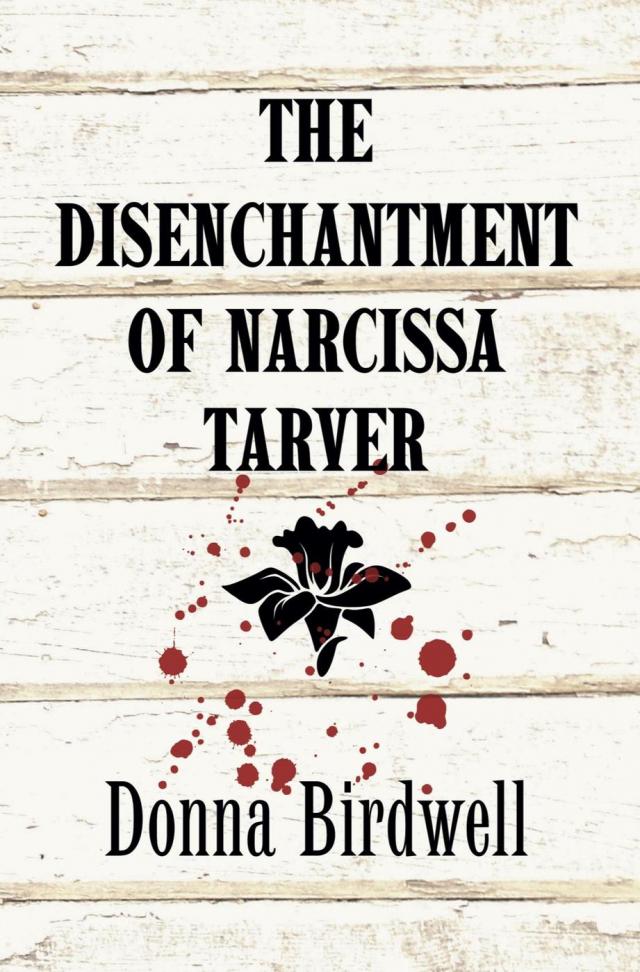
The Disenchantment of Narcissa Tarver
All rights reserved.
No part of this publication may be reproduced, distributed, or transmitted in any form or by any means, including photocopying, recording, or other electronic or mechanical methods, without the prior written permission of the author, except in the case of brief quotations embodied in critical reviews and certain other noncommercial uses permitted by copyright law.
Published by Wide World Home.
8944B Parker Ranch Circle
Austin, TX 78748 USA
donnadechenbirdwell.com
FIRST PRINTING – August 2025.
Publisher’s Note: This is a work of fiction. Names, characters places, and incidents are either the product of the author’s imagination or used fictitiously.
Birdwell, Donna
The Disenchantment of Narcissa Tarver
1. Historical Fiction – Fiction 2. American – Fiction
I. Donna Birdwell II. The Disenchantment of Narcissa Tarver
ISBN: 979-8-9995723-0-1
Library of Congress Control Number: 2025915208
Table of Contents
Copyright Page
The Disenchantment of Narcissa Tarver
PREFACE
Chapter One
Chapter Two
Chapter Three
Chapter Four
Chapter Five
Chapter Six
Chapter Seven
Chapter Eight
Chapter Nine
Chapter Ten
Chapter Eleven
Chapter Twelve
Chapter Thirteen
Chapter Fourteen
Chapter Fifteen
Chapter Sixteen
Chapter Seventeen
Chapter Eighteen
Chapter Nineteen
Chapter Twenty
Chapter Twenty-One
Chapter Twenty-Two
Chapter Twenty-Three
Chapter Twenty-Four
Chapter Twenty-Five
Chapter Twenty-Six
Chapter Twenty-Seven
Chapter Twenty-Eight
Chapter Twenty-Nine
Chapter Thirty
Chapter Thirty-One
Chapter Thirty-Two
Chapter Thirty-Three
Chapter Thirty-Four
Chapter Thirty-Five
Chapter Thirty-Six
Chapter Thirty-Seven
Chapter Thirty-Eight
Chapter Thirty-Nine
Chapter Forty
Chapter Forty-One
Chapter Forty-Two
Chapter Forty-Three
Chapter Forty-Four
Chapter Forty-Five
Chapter Forty-Six
Chapter Forty-Seven
Chapter Forty-Eight
Chapter Forty-Nine
Chapter Fifty
I humbly dedicate this work
to the honor of
Isom,
Margaret,
Rebecca,
Priscilla,
and James,
and to their descendants,
wherever they
may have landed.
Cuimhnichibh air na daoine bho'n d'thainig sibh.
(Remember the people you came from.)
—Scottish Proverb
The struggle to understand is our only advantage
over this madness.
—Ta-Nehisi Coates,
Between the World and Me
PREFACE
This book is a work of fiction but the story it tells is true.
Most of the Tarvers in these pages are my own maternal grandmother’s people. I have spent much of the past two years learning about the things my grandmother never told me.
Delving into ancestry.com and its treasure trove of documents, I applied skills learned in my research work as an anthropologist, specifically the skill of finding living, breathing communities of people in the dry pages of census records.
I dug through newspapers.com, where the words and deeds of some of my family members were laid out in painful black and white.
On two journeys to Mississippi, I visited the graves of many of the individuals who became characters in this book. I found the “big house” my great-great-grandfather started building before the Civil War. I also spent long hours in libraries and archives and museums.
In writing this book, I have tried to embody as much truth about the times as I could. My main character, Narcissa Tarver, is entirely fictional, as is her companion Julia and all of Julia’s family. Characters who are real but significantly fictionalized have been given fictional names. Characters of historical significance appear as themselves.
I wrote this book because I was curious.
I’m publishing it because of what I learned.
Donna Birdwell, July 2025
Chapter One
A Beginning and an End
1909
Cissa should never have been born. She knew that for a fact. Her mother should have been beyond childbearing, but Cissa had come along anyway, and year after year she struggled to find some way to matter amid the sprawling family of Tarvers in the Mississippi countryside.
The Tarver who mattered most had always been her brother Duncan. Duncan, the golden boy who became a doctor like their father and then a politician. Duncan, whose name was in all the papers. In her mind, Cissa composed the headline for tomorrow’s paper: SHERIFF DUNCAN TARVER DEAD.
Cissa stood at an open window in the dining room where the sullen summer breeze barely stirred the curtains. Her throat prickled with the dust stirred up by the feet of men and horses that crowded around her nephew Albert’s house, the house that had been built for Duncan. There were fewer men there now, no more than a dozen compared to the scores who had escorted Duncan’s body from Cowleton where he’d fallen, back here to Callander Road where he’d grown up.
Earlier, Cissa had walked down the road, approaching close enough to hear the men’s words and to know they were not done cursing what had happened. She hadn’t crossed over to join them. Watching now through the window, she easily picked out her brother Monroe, who stood half a head taller than most of the rest. Cissa was thankful they’d had the grace not to bring Duncan’s broken body into their mother’s house, the Tarver big house. The old woman’s mind was fragile enough without having to take in the shock of what Cissa had glimpsed as they carried Duncan’s body up the steps. The memory of it sent an icy shiver through her veins. She glanced toward the hall mirror, which she’d turned to face the wall as soon as she’d heard the news.
Cissa watched as Duncan’s youngest son labored along the road and across the yard to her front door. Robby was at that uncertain age that teetered between youth and manhood. He entered without knocking. There was blood on his shirt and a feverish exhaustion in his eyes.
“Is that you, Duncan?” Mother spoke without turning around.
“No, Grandma, it’s Rob.” He frowned at Cissa and spoke in quiet tones. “Doesn’t she know, Aunt Cissy?”
“I tried to tell her. But you know how she is. How are Lamar and Eli doing?” Cissa knew that two of Duncan’s older sons had been wounded in the affray.
Rob nodded with downcast eyes. “Eli will be alright.”
“And Lamar?”
Robby paused, fiddling with the hat he still held in his hands. “They say it’ll be a miracle if Lamar makes it through the night.”
“They have good doctors down there in Natchez,” Cissa said. Her eyes locked briefly with Robby’s, but the pain there was too much, and she looked away.
“Are you and Grandma going to be alright here by yourselves?” His hand went toward the pistol on his hip. His glance brushed Cissa’s mangled right hand.
“I’m sure we’ll be fine,” Cissa said, bristling at this subtle reminder that even her family still considered her damaged hand a liability.
After a kiss for his grandmother that glanced off her cheek, Rob left.
Cissa watched him all the way back to Albert’s house where men continued to disperse amid the creak of wagon wheels and saddles, the slap of reins, the rhythmic plod of hoofbeats on the earthen road. Cissa thought about the women tending to their tasks inside the house. Cleansing the deceased was a loathsome task at best, but when the body was as damaged as Duncan’s was...
Monroe was the last man left on the porch; he sank down onto the steps. His shoulders slumped and then began moving rhythmically as he let his head fall toward his knees, grieving the loss of his brother. Our brother, Cissa thought.
She snapped the curtains closed against the scene. Before she could stop it, a burble of laughter escaped her throat. She knew it wasn’t proper, but she couldn’t help it. This all seemed so ludicrous.
Composing herself, she moved into the parlor where her mother sat in the big armchair, her head dropped forward, her hands folded in her lap. It was hard to tell if she was drowsing or merely praying. Cissa stood for a moment, her hand resting on the chair tidy behind Mother’s head. Her finger traced the flowers embroidered there by Julia’s expert hand. Her Julia.
Cissa took in a deep breath, wondering how Mother would bear up under this latest loss.
Chapter Two
Born to Wonder
1876 – 1883
Cissa had been a fragile wisp of a child with an unexpectedly lusty cry that wearied her mother. More often than not it had been her young nurse Julia—still a child herself—
As Cissa grew, there were untold hours of laughter-peppered clapping games with Julia and mud pies made from squishy black earth slapped between strong young fingers. “That be a nice one, Miss Cissa,” Julia would say as she placed Cissa’s creation on a sun-warmed stone to cook. Cissa felt most like herself when she was with Julia.
It was on a certain summer day heavy with sunshine and the scent of magnolias that Cissa made an important discovery: She found out where Julia lived. She’d never thought about Julia having a house of her own somewhere. Julia belonged to Cissa’s house, though she didn’t sleep there.
The two girls had followed Julia’s little brother Benny through the forbidden canebrake and a stretch of scrub forest, arriving out of breath at a cluster of rough wooden cabins. Julia went straight to one of the cabins where a solid looking Negro woman sat on the steps, her folded hands resting on the flowered skirt that pulled tight across her knees.
When the woman saw them, warm laughter bubbled up, rising right out of her belly. There was an exchange of words between her and Julia—pleasant words in a back-and-forth that seemed to sort out a misunderstanding.
Cissa clung to Julia’s hand. “Good morning,” she said, edging closer to the Negro woman, uncertain how to behave in this unfamiliar place. She shifted from one foot to the other to relieve blisters that were forming because of wearing shoes without socks. She’d been wading barefoot in the creek and had left her socks behind.
“This here my Mama Zolene,” Julia said.
“Pleased to meet you, Mrs. Zolene.” Cissa smiled and held out her hand, irresistibly drawn by a desire to touch this substantial woman.
“Well ain’t she the polite li’l thing.” Zolene wiped her right hand on her skirt and then held it out toward Cissa, grasping the fingers of Cissa’s proffered hand lightly in her own. “I know you be Miss Narcissa Tarver. I sees you time ’n again with my Julia up t’ the big house.”
Several youngsters edged closer, staring at Cissa with unabashed curiosity. They were all Negroes, all barefoot, all wearing simple shorts or dresses that bore evidence of untold hours of physical activity. Cissa felt taller under their gaze; she watched them with a wary eye and a furtive smile. She tucked a stray strand of fair hair behind a slightly sunburned ear, wondering if children with dark skin ever got freckles like she did.
Zolene turned toward the youngsters and scowled. She waved a hand, and they dispersed, though Cissa could still feel them looking at her from behind the cabins. She pulled her shoulders back and stood up straighter.
Cissa was unaccustomed to seeing so many Negroes in one place other than at the Presbyterian church when they held the afternoon service for coloreds. Once her family had been passing by and had stopped to listen to the singing and they had seen all the Negroes coming out when service was over. Now Cissa looked around the little community with mounting interest. “Do you live here, Julia?”
“Ever since the day she born.” Zolene sounded as if that was some source of pride.
Something bright caught Cissa’s eye. She pulled on Julia’s arm and gestured toward the phenomenon. “What’s that?” she whispered.
Zolene pulled her chin back in astonishment and, as if she were making an announcement to the whole community, said, “Chile ain’t never seen no bottle tree!” And that warm laugh burbled up again. “Take her up close, Julia,” she said, pointing her lips toward the tree.
Cissa had thought in that moment that the bottle tree might well be the most beautiful thing she had ever seen, glittering there in the sunshine pretty as a Christmas tree. Bottles of all colors adorned the ends of an old crape myrtle’s branches, glinting green and blue and golden brown. Cissa approached with wonder, tilting her head side to side to catch each color in its best light. She reached her right hand toward a low branch and touched a blue bottle.
Julia grabbed her arm and jerked it away. “Don’t touch, Miss Cissa.” Julia glanced back at her mother. “Could be haints in there.”
Cissa had heard of haints, though she wasn’t certain what they were. She thought they might be something like ghosts. She knew they could cause trouble and sickness. She drew back her hand and tucked it behind her as she backed away from the tree. A prickle of fear settled in the palm of her bold right hand. The feeling didn’t go away, even as Zolene bid them farewell. “You come back any time, Miss Narcissa. I be right pleased t’ see you.”
When Cissa couldn’t be with Julia, she sometimes felt like she ceased to exist. Mother would look at her with surprise when she spoke, while Pop sometimes seemed to stare right through her. Her sister Matilda treated her like a doll that could be set on a shelf and ignored when she didn’t feel like playing.
At times like these, Cissa would creep out of the house—a thing nobody seemed to mind—and run barefoot through soft patches of clover or squat in the edge of the creek, sorting pebbles and trying to catch tadpoles. The cats that lived in the barn were a frequent source of solitary comfort. There were moments when Cissa’s heart smiled with a fierce joy as she stroked the silky black fur of the kitten Pop called Sambo, the one she herself had transformed from a wild thing into a gentle companion.
Cissa’s birthdays were forgotten as often as not, but the year she turned six was different. Turning six meant she would soon be expected to attend school.
She had mixed feelings about school. On the one hand, she desperately wanted to learn to read and write. She often watched her father pore over newspapers, not noticing her as she sidled up close, staring at the lines of marks, wondering how they could hold Pop’s attention so firmly. She also watched both Pop and Duncan write things on bits of paper that people carried away clutched like magic tokens certain to make them or their loved one well and healthy again. Clearly there was some power to reading and writing, and school was the place where Cissa would be initiated into its mysteries.
On the other hand, going to school would take her away from Julia. “I’ll miss you awfully when I have to go to school every day,” Cissa said, leaning with both elbows on the kitchen table, her chin resting on her two small fists. She was certain that Julia, too, would be desolate without her.
“You be learnin’ so much you won’t think t’ remember me.” Julia tossed her head, causing one of her many braids to fall over an eye. Cissa didn’t believe her.
On the last Monday in October, when most of the cotton had been picked, ginned, baled, and hauled away, Cissa walked the half mile to the wooden building that housed the Mount Eden school. She made the journey in the company of Duncan’s eldest children, Albert and Milly, and a neighbor girl who was almost eleven. It was Albert’s second year and Cissa had tried asking him questions about what to expect. “Don’t you know anything?” he answered and rolled his eyes before scurrying ahead as if he didn’t want to be seen with three girls, two of whom were rank beginners.
A few of Cissa’s schoolmates thought Milly Tarver and Albert Tarver were her sister and brother, which Cissa didn’t mind. Both of her actual brothers—Monroe and Duncan—had been grown and married by the time Cissa was born; her sister Matilda had been almost fifteen. Other brothers and sisters were born who would have been closer to her age if they’d lived.
At school Cissa learned to write her letters with ease. She was captivated by the notion that these letters could be combined into words and then sentences and then whole stories. Her teacher Miss Armstrong praised her for the neatness of her work. “You have a graceful hand, Narcissa,” she said. Cissa treasured that phrase—"a graceful hand.”
Around the time school let out for cotton planting in March, Cissa began hearing talk of Matilda getting married. Mother became testy and bickered with Matilda more than usual. Cissa avoided them both.
She deduced from overheard conversations and quarrels that the fellow paying Matilda court was a young man of some importance. His father owned a shop in Marchelle, the county seat of Hinson County. The young man’s name was Frances Henning, and he was well-mannered and polite, despite being a Methodist. He often brought little gifts for Matilda from his father’s shop. He brought candies for Cissa.
Mother dug in her heels when Matilda declared her intention to move to Marchelle when she became Mrs. Henning. The town was almost twenty miles away, she pointed out, and Matilda was her only daughter. “Well, my only daughter who’s any help,” she said, giving little Cissa a baleful glance.


