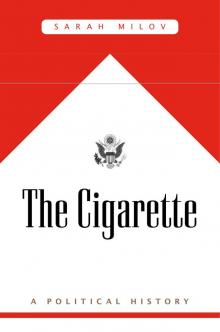
The Cigarette, page 25


Evading the industry’s field officers, Minnesota became the first state to pass a comprehensive “Clean Indoor Air Act” in 1975. The Minnesota law went further to make nonsmoking the social default by prohibiting smoking in all confined public places unless specifically designated as a “smoking section.” Perhaps the most important part of the Minnesota law was that it required nonsmoking sections in restaurants, the popularity of which muted the force of the industry’s argument that such a restriction would lead to a decline in eating out. The industry lamented that in Minnesota “a majority of restauranteurs surveyed found compliance with the law ‘easier than expected.’ ” It was an especially disappointing result for the industry as the survey’s population, members of the Minnesota Restaurant and Food Service Association, “might reasonably be considered to be our allies in this issue.”127
The primary force behind the bill was Phyllis Kahn. Kahn was a Yale-trained doctor of biophysics and state representative of the Minnesota Farmer-Labor Party, a legacy of the state’s tradition of populist progressivism. Kahn presented the bill as a “non-controversial” extension of the “desire to protect our environment from industrial pollution.” After all, “we’re only seeking to establish the right to breathe clean air as a fundamental right.” Supporting the state’s nonsmokers was Jesse Steinfeld, whose ouster from federal office left him freer to advocate for state laws. “Future citizens will regard ours as a primitive, unhealthy, unintelligent era inexplicable except for the greed of those who manufacture cigarettes and to the governments which derive revenue from taxation thereof,” Steinfeld predicted as he testified before the state House of Representatives at Kahn’s invitation. “I couldn’t say that when I was Surgeon General. But I wanted to.”128
Upon questioning, Steinfeld admitted that scientists had not proven “harm to everyone” resulting from sharing a room with a smoker. But he pointed to the 1958 Delaney Amendment to the Food, Drugs, and Cosmetics Act, which stated that if a substance was found to cause cancer then it could not be used as a food additive, to reason that a precautionary approach to secondhand smoke was warranted as well. The state of Minnesota embraced Steinfeld’s logic, even describing the law as a “bill of rights for the three out of four Minnesotans who do not smoke.”129
Although the federal government had yet to regulate on behalf of the nonsmoker, it encouraged states and cities to act on their own. A 1977 report produced by the National Cancer Institute, housed within the Califano-led Department of Health, Education, and Welfare, lauded the passage of state anti-smoking legislation as crucial to the protection of the “rights and health of nonsmokers.” It reproduced the Minnesota statute in its entirety, and included suggestions for drafting effective nonsmokers’ rights legislation: define all terms, require plainly visible signs announcing smoking restrictions, clearly delegate authority for publicity and enforcement, and announce penalties for violators.130 What is more, the report noted that local ordinances were easier to pass than efforts at the state or national level, and allowed municipalities to put more teeth into enforcement of state indoor air laws.131
In California, the most populous state in the nation and home to a large and well-organized nonsmokers’ rights movement, activists learned firsthand the possibilities and limits of federalism. Inspired by the Minnesota example, a well-educated coterie of GASP activists in the Bay Area pursued a state law. Two members of the Berkeley GASP chapter—lawyers both—sought to take advantage of the state’s referendum process to appeal directly to Californians in support of a clean indoor air law. After collecting enough signatures for the referendum to appear on the 1978 ballot, activists found themselves wildly outspent by the tobacco industry, which poured in more than $6 million to defeat the initiative. Part of the industry’s strategy was the disingenuous allegation that a nonsmoking law would cost tens of millions of taxpayer dollars to implement—a deliberate attempt by the manufacturers to ride the cresting wave of taxpayer discontent that had led to the passage of Proposition 13 the previous summer. In the end, the clean air referendum went down in defeat with 54 percent of voters opposing the proposal. Two years later, a similar referendum met the same fate, with the same margin again voting “no.” Chastened by their losses, California activists deliberately changed tactics, devoting their energies entirely to local ordinances.132
The Tobacco Institute took note of the flurry of smoking restrictions passed by cities. Only four states passed any clean indoor air laws in 1976; but 59 cities passed ordinances restricting smoking that same year—up from fifty-four in 1975, but fewer than the sixty-four that did so in the banner year of 1974.133 At a 1974 Tobacco Institute meeting, Tobacco Institute president Harold Kornegay noted that the “relative calm of Washington” concealed “the stormy weather out in the states,” where “a nation is shaken by the frenzy of protest.”134 And there was no bigger symbol of protest than Berkeley, which passed an ordinance banning smoking in elevators, many municipal facilities, public transportation, and public areas of private businesses, excluding restaurants and bars.
Berkeley had been the second city in the United States to establish a GASP chapter when a woman on the board of directors at a Bay Area Tuberculosis and Respiratory Disease Association took notice of Gouin’s College Park chapter. By banning—and not just restricting—smoking in a wide range of facilities, the City of Berkeley passed a stringent law commensurate with its reputation as the vanguard of social protest. However, in keeping with the city’s fractious spirit, not all residents fell in line. One bookstore owner on Telegraph Avenue, the heart of the city’s bohemian street culture, defied the ordinance by refusing to snuff out his cigar in his shop. Describing the law as “an example of local government being influenced by a concealed puritanism,” the proprietor’s objections were met with nonchalance by city officials. “He’s just begging to get arrested so there can be a constitutional test of the law.”135
No arrest was made in Berkeley; the few people arrested for violating antismoking rules tended to be black or brown. Local ordinances were passed in the name of civil rights for nonsmokers and because of grassroots pressure for their implementation. Yet enforcement of nonsmokers’ rights laws ran headlong into the racial and economic disparities of both policing and the use of public space. In Chicago, for example, a “smoker’s court” was established to hear cases involving violations of the city’s anti-smoking ordinance, which prohibited smoking on the subway, elevated train, and buses. One reporter who spent two days observing the court’s operation noted that of the fifty cases before the judge, two involved white defendants and two involved Latino boys with limited English skills. The rest of the defendants—most of whom pled guilty—were African Americans, mostly young men. While very few anti-smoking ordinances carried jail time as a penalty for violation (and fewer still were actually enforced with arrest), poor violators of the law in Chicago sometimes served jail time when they could not make $25 bail.136 Nonsmokers’ rights laws testified to the power of localism, and the classed and racist nature of local policing.
* * *
By the mid-1970s, the nonsmokers’ rights movement had racked up a string of remarkable successes, subverting the tobacco industry’s stranglehold in Congress. Activists had cleared the air on planes, trains, subways, and buses. They passed legislation across the country that prohibited or restricted smoking in a variety of public places—from elevators to concert halls to municipal buildings to restaurants. By becoming visible and vocal, they opened up space for private businesses to capitalize on their own smoking restrictions, providing that it paid to listen to nonsmokers. These victories were possible because of the invention of the nonsmoker as a political subject endowed with rights and entitled to legal protections. The nonsmokers’ rights movement was carried aloft by broader legal, political, and cultural currents such as the environmental, women’s, and public interest movements. Wrapping nonsmokers’ rights in the rhetoric of the African-American civil rights movement, the ultimate American quest for justice and liberation, activists valorized the use of rights talk, and concealed the class-based nature of their claims. Though deeply felt, nonsmokers’ attempts to reason from race were ultimately shallow. Neither the elite, technocratic legal movement as practiced by ASH nor the grassroots efforts of GASP reckoned with the ways in which the rhetoric, tactics, and even goals of their movement reflected white, middle-class prerogatives.
The string of nonsmokers’ rights ordinances passed in the late 1970s demonstrated the power of a vision of public space as an amenity to be consumed. Many nonsmokers’ rights activists experienced environmental tobacco smoke—ubiquitous at restaurants, theaters, college classrooms, public transportation, and even hospitals—as a physical assault that prevented them from partaking in daily life. At the same time, the argument that smoking was a public problem because it violated “nonsmokers’ rights” had consequences for how tobacco, smoking, and smokers came to be understood and regulated.
6
From Rights to Cost
Annual Costs of Tobacco
1. 360,000 deaths
2. 77,000,000 man-days lost from work
3. 88,000,000 man-days sick in bed
4. 360,000,000 man-days of restricted activity
5. Mean 45 to 64 years: 28% of disability days due to cigarette smoking
—Dr. Alton Ochsner, Smoking: Your Choice between Life and Death, 1970
Smoking appears to occur at times and in places that fit social and task patterns of the work environment, but increasing evidence suggests that this fit may be at company expense.
—Public Health Reports, 1985
ON OCTOBER 15, 1985, Pacific Northwest Bell (PNB) became the largest employer in the country to adopt a comprehensive no-smoking policy at all of its facilities in Oregon, Washington, and northern Idaho.1 This meant that 15,000 employees at hundreds of facilities would have to exit company premises to have a smoke. PNB was on the leading edge of a nationwide trend. President Reagan’s surgeon general, C. Everett Koop, expressed hope that it could be a model for other businesses in the United States—an industrial stepping-stone toward Koop’s dream of a “smokefree society by the year 2000.”2
By 1990, PNB’s ban, once an outlier, had indeed become part of the corporate mainstream—not standard, but also not remarkable. That year, 38 percent of companies surveyed nationwide reported a total smoking ban, while 68 percent reported some official policy, compared with only 15 percent of businesses reporting any policies in surveys ten years earlier.3 These policies were by and large voluntary, as most businesses were left untouched by local ordinances.4 And even in places where a law was in place, businesses sometimes went further than the law required, a trend that built upon itself. As a 1989 management survey observed, “once restrictions are established, they tend to grow into a complete ban.”5 Workplace smoking restrictions became part of a positive feedback loop that expanded nonsmoking as the social default. The more shared space was governed by regulation, the more nonsmokers came to expect that their preferences would predominate, and the easier it became for them to complain when these did not. Over the decade of the 1980s, nonsmokers would become fully visible, unpinning the buttons that had served as humorous substitutes for verbal confrontation with smokers.
Although nonsmoking policies were adopted with increasing speed throughout the 1980s, the route to smoke-free air was hardly direct. The ban at PNB began a decade earlier on the other side of the country, when another Bell employee sued the company for permitting smoking in her work area. In the case of Shimp v. New Jersey Bell (1976), a New Jersey Superior Court judge found that New Jersey Bell had violated its common-law duty to provide a “safe and healthy work environment” for Donna Shimp. Still, the court did not require that New Jersey Bell promulgate a company smoking policy, nor did this narrowly construed case set a precedent. Over the decade, other courts repeatedly failed to find that workplace smoking violated an employee’s common-law right to a safe work environment. The legal fight for nonsmokers’ rights began to look like a dead end. But another avenue emerged.
What began as a fight for rights of nonsmokers ended as an actuarial exercise in accounting for the costs of smokers. Nonsmoking activists pushed smoke-free workplaces onto the corporate agenda with all the persuasive resources at their disposal: legal, scientific, moral, and economic. Though certainly less morally resonant than civil rights- or gender-based struggles for equality, nonsmoker activism was part and parcel of the legal and bureaucratic transformation of the workplace in the last decades of the twentieth century.6 Corporations in the 1970s and 1980s became more bureaucratized in response to federal antidiscrimination laws—laws that themselves expanded to cover a wider swath of the American population.7 But uncertainty surrounding equal employment law, a byproduct of the decentralized nature of the American state, endowed human resources professionals with special power in firms that feared litigation or bad publicity.8
The proliferation of workplace smoking rules beginning in the late 1970s and accelerating during the 1980s also resulted, in part, from the uncertainties created by the law’s uneven recognition of a right to smoke-free air. Many forces converged to restrict smoking at work in the 1980s: nonsmoker activism, mounting scientific studies of the hazards of environmental tobacco smoke, inconsistent legal rulings that spurred companies to consider workplace smoking a liability, and the growing salience of the business case against smoking. These currents reinforced each other. Scientific studies attesting to the hazards of secondhand smoke were fodder for activists’ demands and nudges for businesses considering implementing their own smoking restrictions. Nonsmoking activists portrayed workplace-smoking restrictions as part of a sound business policy, affording corporations both liability protection amid legal uncertainty and benefits to the bottom line.
The nonsmokers’ movement was aided by changes in the broader culture that gave the business case a special resonance. As Daniel Rodgers has observed, the 1970s saw the rise of an “abstract and idealized” idea of the market as “the dominant social metaphor of the age.”9 Economists began to assign discrete costs to individual behaviors, practices, and goods that had once been hard to sever from their original social and institutional contexts. Like air pollution or a neighbor’s noisy fight that wakes the neighborhood, smoking was understood to carry a “social cost”—one activists learned to quantify.10 Today we might call these costs “negative externalities,” the idea that the individual deciding to smoke does not bear the full cost of his or her decision. This was especially true in the case of smoking, as emerging science surrounding the health dangers of secondhand smoke expanded the delta between the private and social cost of smoking. The nonsmokers’ movement tallied these social costs and brought them to bear at the workplace—a site particularly open to bottom-line reasoning. With every “no-smoking” sign erected and smoking shelter installed in office-park parking lots, tobacco moved further and further from mainstream American life. Where tobacco’s ubiquity was once assured by a permissive federal regulatory regime, it was increasingly snuffed out by local and private action.
Donna Shimp v. New Jersey Bell
In February 1976, Donna Shimp addressed a thank-you note to Luther Terry, the former surgeon general of the United States. Shimp was a white, forty-four-year-old customer service representative at the Millville offices of New Jersey Bell Telephone. She suffered from an “acute sensitivity” to tobacco smoke and was suing her longtime employer for failing to provide a safe work environment by not banning smoking in her presence. Terry had agreed to serve as an expert on Shimp’s behalf. A New Jersey Superior Court judge, Phillip Gruccio, would begin hearing Shimp’s case in the spring. Shimp informed Terry that her case would especially need his expert opinion that “the presence of tobacco smoke in the work place can be a health hazard to a significant number of workers as well as a source of minor irritation to an even greater number of workers.”11 Terry’s statement, Shimp hoped, would carry great weight in what was the first lawsuit brought by an employee against an employer’s smoking policies.
Smoking on the job was but one of many customs challenged by activists during the decade. Ideas about acceptable workplace behavior changed as civil rights law and the Equal Employment Opportunity Commission (EEOC) opened new avenues for women and minorities to demand changes to employment practices. AT&T, the parent company of the Bell network, was the nation’s largest private employer and the largest employer of American women. It was no stranger to civil rights complaints lodged by employees. The company accounted for 6–7 percent of all of the EEOC’s discrimination complaints.12 Indeed, Shimp’s grievance looked positively puny compared to the landmark discrimination suit brought by the EEOC on behalf of 15,000 women and minority Bell employees in 1970.
Donna Shimp had not been an activist in GASP. She was unaware of John Banzhaf’s plans to “sue the bastards.” She was, instead, pushed to confrontation by her body’s reaction to the smoke in her office—and her employer’s and union’s reaction to her. In 1961, at age twenty-nine, Donna Shimp began her career at the New Jersey Bell Telephone Company at an office in Salem. The office was not far from her home in the rural southwestern portion of New Jersey, on the Delaware River. In 1975, the company’s Salem office closed, and Shimp was transferred sixteen miles southeast to the company’s new Bridgeton facility—a low-slung, solid-looking brick building with few windows. Shimp’s coworkers at Bridgeton smoked heavily, and the smoky air made Shimp nauseous, caused rashes on her face, and resulted in several episodes of intense eye irritation, redness, tearing, and swelling. Because of her sensitivity to smoke, Shimp had a long-standing prescription for anti-emetic drugs, which she took daily to ward off the nausea that overtook her around tobacco. Shortly after arriving at Bridgeton, she began wearing a gas mask to work—the “Gasfoe” model manufactured by the Mine Safety Appliance Company of Pittsburgh, Pennsylvania.13 She would lower but not remove it when she spoke with customers on the phone or in person. She later marveled that the company allowed her to wear a gas mask in front of these customers at all.