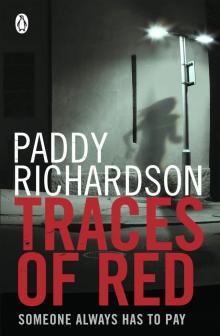
Traces of Red, page 16


Cheryl came over quite a bit after that. I had to sleep in the so-called sunroom at the back of the house whenever she stayed. It was too cold out there at night, I told Angela, and she said we could put the mattress on the floor in the room where she slept with Cheryl. But the old man said I was old enough and ugly enough to look out for myself, she couldn’t babysit me for the rest of my life. He said Cheryl was a nice girl.
I was surprised at his sudden interest in our domestic arrangements, surprised, too, when the old man started spending rather more time in the house. He’d sit at the table in the kitchen, drinking his beers while the girls were getting tea ready and fill up glasses for Cheryl and Angela. Cheryl’d start laughing and say she felt all wobbly and plop herself down on the stool beside the table. I was getting on for twelve when Cheryl started coming round, old enough to start noticing things such as how Cheryl’s face turned pink when she saw the old man’s eyes on her legs. I’d occasionally sneak a look over at Angela. I understood she noticed as well.
Then the old man went away for a week and when Angela went to the jar in the kitchen for the money to get our groceries the three twenty-dollar bills were gone. She started crying. I said it’d be all right, we could eat the baked beans that were in the cupboard but she kept on crying and saying it wasn’t fair. It wasn’t bloody fair.
All of that happened in my last year at primary. Towards the end of the final term Mr Mitchem came into the library and asked me if I wanted to enter a scholarship for a place at Palmerston North Boys’ High. He said he thought I had quite a good chance of winning one. He appeared excited and, although I understood he was more concerned with the kudos it might earn for Sunshine Beach Primary rather than any benefits to me, I said yes. I’d already made up my mind I wasn’t going to Manawatu College.
What I won was a full boarding scholarship. I got a letter. I couldn’t leave Angela so I wrote back, pretending to be my parent, and said boarding wasn’t an option. Finally, it was agreed the scholarship would pay for me to go by bus. Everything – fees, uniform, stationery, field trips and any extra equipment – was part of the deal. It wasn’t going to cost the old man anything. I wouldn’t have told him, he’d never taken the slightest interest before in what I was doing, but it was reported in the local newspaper, someone said something, and he came home shouting. What was good enough for him was bloody good enough for me. I wasn’t going and that was an end to it.
Why was he so against it? Because I may have got the idea I was better than him? Because I’d get notions of looking beyond the life he’d imagined for me? I’m not sure but I’d say it was because he simply couldn’t stomach the idea of me doing something I wanted. I would have ignored the yelling and abuse and just got on with it as I always did but he told me if I went I was on my own. He’d boot me out on my arse. ‘And don’t think I won’t bloody do it.’
I could have taken up the boarding option at the school but the idea terrified me. I’d never stayed away from the house, never been separated from Angela for so much as a night. I couldn’t leave her but we had nowhere else to go.
I’d learned how to deal with bullies through being pulverised by Robbie King. You couldn’t dodge them forever. If you tried it made things worse, they’d only get more riled up and find you in the end. Sucking up to them didn’t work either. I knew I had to confront the old man and I had to come at him hard. At the same time, I knew he could beat me to a pulp.
I’m not particularly proud of what I did but even now I believe I had no choice. I told him I knew what’d been going on with Cheryl, I’d seen them together and I knew he’d given her money. I said I thought her mother might like to know.
I said Angela knew as well and if he kicked me out she’d stick up for me; she’d tell Cheryl’s mother what I was saying was the truth. There’d be big trouble, I said. Didn’t he know Cheryl was younger than Angela? Didn’t he know Cheryl wasn’t sixteen yet?
It was a bluff, of course. In fact, I had no idea what had happened to the sixty dollars and I’d seen nothing other than his eyes on her legs. But Cheryl was still coming around and I saw how she perked up and stuck her chest out whenever we heard the ute come into the yard.
He got up out of his chair; his hands were in fists as he stood over me, his face puffed up and scarlet and the vein in his forehead prominent and pulsing. He was a big man, solid, and the muscles stood out in his arm as he raised and drew it back. I stared back at him, looked him straight in the eye and in the end he dropped it. ‘You bastard,’ he said, ‘you little bastard.’ He left then, smashing the door shut behind him and gunning up the ute’s engine so that the gravel flew up raining against the windows.
I held the letter in my hand.
Okay. Okay, this was clear evidence that Connor was manipulative, that he was capable of lying, using blackmail even, to get what he wanted.
But, in those circumstances, wasn’t what he did justified? He deserved this chance, he had to fight for it.
And he was honest about it. He told me when he could have kept it back.
But why had he told me? Bligh is obviously an unusually complex character. And very, very clever. You’ve got to look beyond the surface.
What should I believe?
EVEN THOUGH IT was less than an hour away, I’d never been to Palmerston North. I tried to appear entirely blasé that first day as the bus door hissed open and I climbed up the steps. I got used to the trip, of course, but that morning with the sun low in the sky, leaving behind the dark grip of pines and seeing the country slowly open into acres and acres of rolling, sprawling green on green, I was more excited than I’d ever been. The bus stopped along the way to pick up the girls who were going to Girls’ High and other boys. I glanced down at them as they stood waiting at the stop. I looked like them. Thank Christ, I looked like them. I was small, I was skinny but I’d had a decent haircut and the scholarship had given me my brand-new stiff grey shorts, grey shirt, the long socks with the stripe around the top, the black shoes with the round toes and soft rubber soles.
Palmerston North. The houses, gardens, the trees around the square, the clock tower, then the school. My heart was drumming up into my chest as I got off the bus and walked with the others through the iron gates. I have no wish to appear maudlin or self-pitying and so I have difficulty in describing my state of mind that first morning as I walked past the war memorial, Pro patria, and gazed about at the array of weatherboard buildings with small-paned windows and saw with amazement that the sports fields were green and lush. All I can say is I felt that while I hadn’t yet escaped the roughness and torpor of an environment to which I was clearly unsuited, I had grasped the way of my escape.
I may have appeared oddly silent and weedy – at the primary they’d pushed me forward, so I’d only recently turned twelve – but there were other boys equally undersized and shy and so, within the 1600 or so boys there, we merged well enough. This was a school which valued the principles of scholarship, tradition – Nihil boni sine labore – and masculinity, the third of which I may have found difficult to attain if I hadn’t, quite miraculously, grown five inches and three shoe sizes during the first six months I was there. I became as tall as the tallest boy in my class and my scrawny arms and legs gained a padding of muscle. Those factors, in addition to being able to wear the same quality of clothing as any other boy at the school, boosted my confidence. I didn’t want to secrete myself away in a library. Here, I wanted, as far as I could, to fit in.
For a time I remained silent and observant. I learned that other boys did not talk about their homes, parents or siblings. I was relieved I could therefore keep where I lived and who I lived with to myself. Other boys liked to joke and so I borrowed a number of books from the public library and set about learning jokes. It was all right for boys to succeed at school so long as that was never mentioned and the success wasn’t excessive. If I was to get on I had to stay underneath the radar and so I kept my grades within the lower part of the top quarter of the classes.
The school work was often tedious but being in that marvellous place made up for it. French and Japanese were part of the curriculum and I discovered I enjoyed learning languages and began to teach myself Spanish and Russian as well. Science classes were what I most looked forward to and I understood from the first time I went inside the school lab that this was my place: the white walls, stainless steel benches and banks of equipment beneath the clean, bright lights.
Towards the end of my first year I achieved a modicum of popularity. I discovered to my utmost surprise that I could actually play a mean game of volleyball – I was never any good at sports at primary so this was remarkable to me – and I was soon promoted into the top team.
We played boys’ teams from other schools. I told the jokes I had memorised and practised with Angela on the bus going to and from the games. I made everyone laugh and I learned to hold my beer. As well as that, the school offered tuition in a number of musical instruments and I decided, since the scholarship would cover it, to take up guitar. I was good at it. In fact I found I could do pretty much anything I liked on it. I was invited to join the school band and I played at school functions and dances dressed up in black pants, a white shirt and a striped black-and-white waistcoat. Angela told me I was really quite handsome.
That was a good time. Now that Cheryl didn’t come around we hardly saw the old man any more and so, increasingly, it was just Angela and me. Looking back, it seems to me that at that time I moved in and out of three separate worlds. There was the social world I’d been so astoundingly allowed into and, entirely remote from that, the world I kept private where I learned and read and made my own discoveries. But at the heart of everything was the Angela and Connor world, and while she was separated by age, gender, circumstance and – I suppose I must say this – intellect from those other two worlds, Angela continued as always to be my truest and most intimate friend.
Who else? Who else could have done it?
‘You can’t think of anyone at all who disliked Angela or Rowan? Or anything unusual that happened? Even if it was a long time ago, Connor. Even if it didn’t seem that important at the time.’
‘There’s nothing.’
‘Rowan didn’t have any enemies? Would he have had affairs?’
‘Christ, Rebecca, Rowan was Mr Nice Guy personified.’
‘There could have been something, though. What about some kid from school?’
‘He was popular with the kids.’
‘It would only take one with a massive chip on his shoulder.’
‘He was a woodwork teacher. If a kid didn’t like him he might tag his letterbox or cut his tyres. He wouldn’t kill him.’
‘Katy? Sam?’
He shook his head.
28.
OF COURSE, ANGELA’S life was changing as well. She’d begun to work behind the counter in Bailey’s chemist shop in Foxton. She’d never much taken to school – Angela was more practical than academic. She’d had enough of teachers, she told me. Mr Bailey was good to her, she said. He told her all the time how he liked the way she was so friendly to people coming into the shop and the way she kept busy tidying up shelves and dusting them when nobody was there. She was good about getting the prescriptions to him right away when the doctors phoned in, and when she did a special Mother’s Day display in the shop window showing off the gift packs he liked that as well.
What you would have said about Angela when she first went to work at Bailey’s was she was a healthy, natural-looking girl. She had quite large breasts from when she was twelve or so and pads of fat around her hips and strong, thick thighs. When we went biking the local boys hanging around the pie shop would look hazily towards us, then stare with interest at Angela. I’d read about the sexual act and I knew what those boys were thinking. This big-breasted, big-bottomed girl was riding past and they wanted to fuck her. I could tell, too, by the way her face got red and how, once we were a few yards up the road, she’d turn her head and stare behind her, she could be up for it. I knew those local boys weren’t any good for her.
I didn’t know how I would protect her.
After she started work at Bailey’s chemist shop, Angela began to buy magazines and I would see her spread out on the sofa avidly studying articles – 10 Hot Makeover Tips, He Says You’re Cool But Has He Cooled Down? – and photographs of women displaying clothing and cosmetics. These magazines seemed to frustrate rather than to entertain Angela and I wondered why, quite frankly, she continued to spend her money on them. Her cheeks were too red, her teeth were crooked and her hair made her face look fat. She didn’t know what to do about it. Her legs were awful and her stomach stuck out and she had a big bum.
I pointed out that the girls in the magazines would have been selected for this particular work because they had blonde hair, thin bodies and long legs just as Angela, herself, had been chosen for Bailey’s chemist shop because she was practical, efficient and had a friendly personality. I said that those girls, in fact, may have been unable to competently work in a shop such as Bailey’s.
But what I said had no effect. Angela merely raised her eyes skywards and demanded that I be honest, I had to tell her the truth: was she fat? Since she had insisted on honesty I answered yes and she ran out of the room shouting everyone thought she was ugly.
I was suspicious of the word ‘everyone’ and the tone of her voice as she said it. I was afraid that ‘everyone’ in fact referred to Mr Bailey’s son, Ian, who was a seventh-former at school. If Ian was, in fact, ‘everyone’, I knew that Angela was setting herself up for torment and disappointment.
Angela was never beautiful but she was a woman who grew into herself. Sadly, when she died she was more striking than she’d ever been. But in her determination to resemble the models in the magazines she embarked on a radical slimming programme, eating little other than lettuce and eggs. Each Saturday she’d strip down to her bra and pants and step onto the scales. That became a ritual, her anxiously teetering on the scales she’d bought wholesale at Bailey’s and me recording the figures. At the beginning of her regime Angela weighed in at 74 kilos. After three months she weighed 55.
She discovered through a whispered consultation with Mrs Bailey when the shop was empty that a green-tinged face cream used under foundation lotion would result in a less florid look to her cheeks. She had her hair straightened and ‘blonde-tipped’ which gave her an oddly piebald appearance. While she couldn’t change her teeth, I saw her practise smiling into the mirror with her lips closed.
Ian Bailey was employed in the chemist shop to deliver prescriptions. You’d see him around town riding his racy and expensive-looking motorbike, stopping outside a house then starting up again with a roaring rev of the engine. In the weekends Ian and his friends headed to Foxton Beach with their motorbikes. I’d see them up in the sand-hills, their bikes perilously tilted to the side, ploughing up great shivers of sand. Ian was the leader, always out front. You could tell it was him by the longish, dark hair flying out behind. You’d hear the throb and rev of engines late into the evenings.
Ian was a hooker in the first fifteen and the school’s top tennis player. He was considered good-looking and I had no doubt his ‘looks’ were of the type that would impress Angela. He wasn’t particularly tall but he was solidly built and his face was not unlike Elvis Presley’s before he became gross – sultry eyes, a pouting bottom lip, a slurry smile. His dark, thick hair was always glossy and he must have been the only boy in the school to wear cologne. There was a heavy, extravagant stench hanging around him, which could have got him some shit but he could get away with it. When he wasn’t at rugby or tennis practice he and his friends spent much of their break time near the fence watching for girls.
Angela’s infatuation with the entire Bailey family was obvious. She talked incessantly about them – how clever Mr Bailey was, what a nice house they had, what a nice car, how Mrs Bailey who was responsible for selecting and ordering cosmetics and held consultations in the shop twice a week was so pretty – didn’t I think Ian Bailey looked a bit like her?
Mrs Bailey had asked Angela to call her Eve. Eve said the sun in the Manawatu is particularly destructive and women must arm themselves against it with screens, cleansers and day and night creams. Eve herself had wonderful skin and was solely responsible for protecting the skin of the women of the Manawatu by refusing anything but first-rate products: ‘If they want rubbish they know where the supermarket is.’
Eve said. Eve did.
Up until that time I’d never been particularly aware of the clothes Angela wore but I noticed when the colours she’d formerly gone for, which had been cheerful primary colours, changed to a murky dullness – beige, beige, beige and brown, over which she wore an oily, poisonous green coat. Even I could see that these clothes did not in any way suit her and that she’d began to dress as a parody of Eve Bailey. Checked shirts with the collars turned upwards, stiff skirts which reached her ankles. Eve Bailey always wore a scarf tucked about her neck. Angela bought scarves.
I could clearly see what Angela was doing and I pitied her for it. Ingratiating herself with Eve Bailey, becoming Eve Bailey wouldn’t make a jot of difference as far as Ian was concerned. I’d seen the girls Ian Bailey and his friends looked at. They were the magazine girls; the wide-smiled, long-legged girls. They were the Palmerston North Girls’ High girls, the girls who were going-on-to-varsity girls. They were the girls Eve Bailey would want – eventually – for her Ian.
While the Bailey girls’ small eyes and long, pale faces resembled their father’s, Ian’s good looks clearly originated from his mother. Eve Bailey, the story went, was happy enough for the girls to go away to boarding school but baulked when it came to Ian, whom she couldn’t possibly part with. Ian was her baby, the wild child she adored and indulged. Oh, possibly he would follow his father into pharmacy but probably he was destined for medicine or, at the very least, law. But first he’d do other things. He was a top athlete so maybe he’d become a professional tennis player or perhaps ski for a year or two. Perhaps he’d become an All Black. His coach had told Eve Bailey he certainly had the potential. But whatever he did he was destined for far greater places than Foxton.