

North Bay Road, page 1


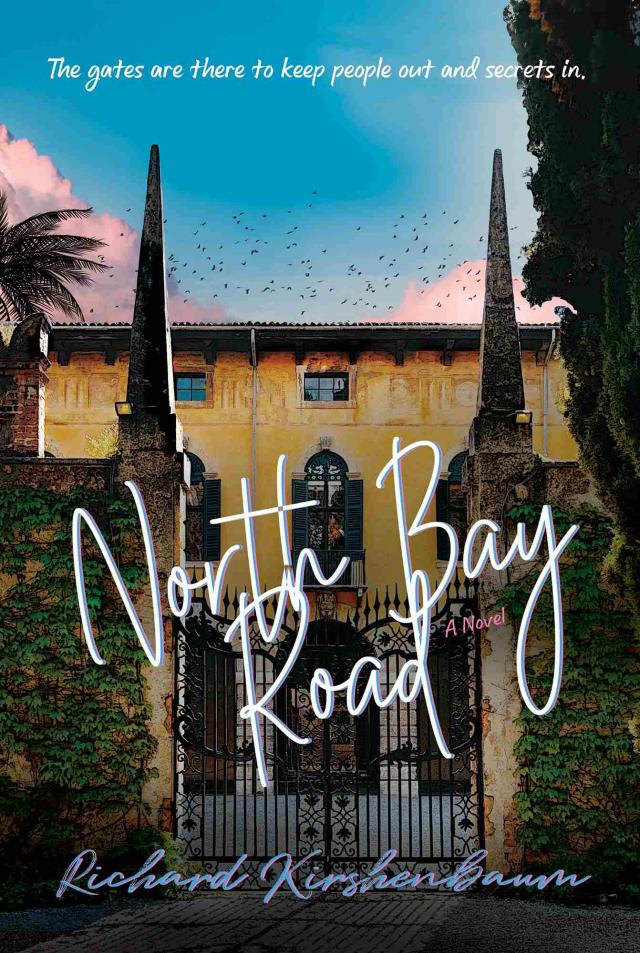
Advance Praise for North Bay Road
“In my one hundred years, I’ve read my fair share of books and I can tell you Richard Kirshenbaum’s North Bay Road was among the most enjoyable of reads.”
—Norman Lear
“If you loved The White Lotus you are sure to love North Bay Road. Once you start you won’t be able to put it down. Did anyone say TV series?”
—Bill Gerber,
Academy Award-nominated Producer, A Star Is Born
“North Bay Road is not only the ultimate beach read, but the ultimate Miami Beach Read.”
—Ernest Lupinacci,
Co-Producer, The Offer and Author of The Godfather Gang
“A lush, descriptive, evocative look at inheritances of all kinds, even the most unexpected, with Richard Kirshenbaum’s keen insider eye at work yet again. An immersive triumph!”
—Zibby Owens,
Author of Bookends: A Memoir of Love, Loss, and Literature, Host of
Moms Don’t Have Time to Read Books
“Richard Kirshenbaum is a magnificent storyteller. Liz Galin’s life is not turning out as she had hoped. When she is bequeathed a palazzo in Miami in need of repair, she sets out to fix her own life as she solves the mystery of her inheritance. North Bay Road will find its way on to every beach chair in America and will have readers turning pages long after the sun has gone down. Houses hold secrets, but in Richard Kirshenbaum’s hands, not for long.”
—Adriana Trigiani,
Author of The Good Left Undone
A POST HILL PRESS BOOK
ISBN: 978-1-63758-862-8
ISBN (eBook): 978-1-63758-863-5
North Bay Road
© 2023 by Richard Kirshenbaum
All Rights Reserved
Cover design by Tiffani Shea
This book is a work of fiction. People, places, events, and situations are the product of the author's imagination. Any resemblance to actual persons, living or dead, or historical events, is purely coincidental.
No part of this book may be reproduced, stored in a retrieval system, or transmitted by any means without the written permission of the author and publisher.
Post Hill Press
New York • Nashville
posthillpress.com
Published in the United States of America
Contents
Prologue
Chapter 1
Chapter 2
Chapter 3
Chapter 4
Chapter 5
Chapter 6
Chapter 7
Chapter 8
Chapter 9
Chapter 10
Chapter 11
Chapter 12
Chapter 13
Chapter 14
Chapter 15
Chapter 16
Chapter 17
Chapter 18
Chapter 19
Chapter 20
Chapter 21
Chapter 22
Chapter 23
Chapter 24
Chapter 25
Chapter 26
Chapter 27
Chapter 28
Chapter 29
Chapter 30
Chapter 31
Chapter 32
Chapter 33
Chapter 34
Chapter 35
Chapter 36
Chapter 37
Chapter 38
Chapter 39
Chapter 40
Chapter 41
Chapter 42
Chapter 43
Epilogue
Acknowledgments
To my muse Dana,
I always love you…just a little bit more!
XO Richard
“Amantes, ut apes vita (m) melitta (m) exigent. Velle”
“Lovers like bees pass a sweet life like honey. I wish it were so”
Latin inscription, behind entrance
House of Lovers, Pompeii
Prologue
Miami, 2020
The vast estate seemed invisible, despite its grandeur, due to the overgrowth of dark jade palms, gnarled bougainvillea, and centenarian crape myrtle. The growth was so dense that despite the Miami sun, the villa lay in cool repose, immune to the resting, prickly heat. The overgrown confederate jasmine seemed to overwhelm the villa in its tense grip; the edifice succumbed as the vines wrestled the chipping stucco to the ground. Unlike its newer, shiny, celebrity neighbors, the villa’s imposing gates were swirled and rusted. The ornate ironwork lent an air of bygone glory and obscurity, as did the few disintegrating slabs of pink-tinged coral stone on the exterior columns. If one took the time to stop and notice, the villa could have been taken for a faded, regal estate in Capri on the Via Tragara or in the colini Fiorentini, the hills of Florence. The vast estate was a symbol of another era entirely with its formal sentry gate, the center fountain that had long stopped bubbling, and the circular rotunda pitched against the aquamarine skyline, which seemed impervious to the stray overhead planes ferrying vacationers to the southern tip. Occasionally, Argentine black and white tegus roamed the shoreline, oblivious to any other unlikely tenants.
Built in 1927 in the Mediterranean revival style, the estate had wowed its neighbors and was the envy of its lesser rivals, boasting a large folly, a greenhouse, a bayside pool, and an enclosed tennis pavilion. Even neighbor Carl Fisher, the acknowledged founder, and unofficial king, of Miami Beach who had built his palace at 5020 North Bay, had been suitably impressed. Eighteenth-century Neapolitan tiles and lusty veined marble statutes had been stripped from impoverished estates in Amalfi and Tuscany and hastily installed in the new world’s Riviera. During one particularly frothy day in the heady ’20s market, the owner had approved an ancient mosaic floor to be ripped from a villa unearthed in Pompeii and reassembled in the entry gallery. The arrival of the famous black market mosaic caused havoc in Port Miami; there was even a small mention in The Herald, which officially dubbed the new mansion “Villa Pompeii.” The name stuck, and the architect eventually implanted a discreet, ceramic tile in the pink, columned archway he had commissioned in Vietri. No one had even considered that christening the villa with such an ominous name might portend impending disaster. When one stepped into the foyer, the ancient, black-and-white mosaic floor, which featured an octopus engulfing and defeating a spiny lobster, added an eerie feel to the great house.
Throughout the decades, the grand mansion had not only seen the booms and busts of the Florida peninsula, but also the waves of differing nationals all adjusting and peeling under the ribald sun. It had also been exposed to larger themes; love and loss, obsession, and, despite the sunshine, dark passion.
It was said that a hint of a woman occasionally appeared on the dock in silk scarves and dark glasses facing a balustrade, leaning on a cane, or sitting in a wicker wheelchair. She was known to take in Biscayne Bay at dusk, the shimmering diamonds of downtown Miami flickered to life as the orange globe bowed to the new skyline. Perhaps the distant, gleaming sprawl unsettled her, if she was actually there. Few people entered and exited the property. Real estate brokers could never find a way to contact the owner and eventually gave up trying despite the heat of the market.
“Madame is not at home or is indisposed,” was all the remaining leery staff were able to utter. In her later years, her nurse and housekeeper didn’t even speak English, only Polish. Shrouded in secrecy, Villa Pompeii eventually became an oversight. The parties, tennis lessons, and tea dances had ended so many years earlier that even the ghosts didn’t remember them. The gardeners had been dismissed decades ago, encouraging the overgrown tropical jungle to flourish and strangle the estate’s remaining, dimming lifeblood.
Zosia, the Polish housekeeper, would arrive in her rusted Honda before the neighbors awoke and exited the drive at dusk after locking the iron gate. A familiar sight to early morning runners, she appeared thick, pallid, and of no consequence. It was as if the house had taken on the air of a locked government building closed to the public.
Despite its reticence and dereliction, North Bay Road preened and bustled and was dubbed the “Fifth Avenue of Miami.” Celebrities found the wide bay, glittering sunset views of the downtown skyline, and easy proximity to the beach a boon, and, best of all, one could get a larger yacht onto North Bay Road unlike neighboring Pine Tree Drive or Indian Creek with their thinner canals. In recent years, North Bay Road had become a haven for celebrities. They waxed and waned like the Florida hurricanes, arriving in a great storm and departing in the jet stream when they were low after a drug high or an expensive divorce wiped out a new fortune.
The great lady didn’t know or care about her neighbors; they came and went like tropical gusts which was fine with her. Therefore, it wasn’t given much thought when a new neighbor’s security team, in an operation that was as choreographed as the Russian ballet, arrived one overheated summer morning to take possession of the house. The team disembarked from sinister-looking, blacked-out Mercedes-Benz buses and began surveying the property, setting the bayside protocol, and activating the new codes on the front gatehouse. They were mostly lean, muscled, humorless men with walkie-talkies wearing discreet noir polo shirts, navy trousers, and opaque wire Ray-Bans. As they surveyed the perimeter of the property, everything appeared as it should; the massive glass box was clean, fresh, and spanking new after the Venezuelan designer’s custom gray chalk paint and 30 percent fees. As security walked the property, they found the neighbor to the left, an aging Cuban American liquor magnate with highly secure, but too bright, lemon stucco walls, benign enough. As they approached the hidden property to the right, they were somewhat dumbstruck by the looming verdant jungle, what nearly a century of unpruned growth did to a place.
Bemused, puffed up security walked up and down and poked through the tangled web of mammoth ancient palms and overgrown Japanese boxwoods to see if there was a security risk, as she knew they would. A crumbling concrete wall divided the two properties and what they saw from the crisp, clean, striking, modern mansion seemed like another world entirely. The minions poked, prodded, and viewed the formidable estate and shoreline from their speedboats before finally deeming it of no consequence. She was sure of this as well.
The new owner’s Wheels Up Gulfstream was expected to land at Miami-Opa Locka Executive Airport that Thursday evening. Playing stadiums of thousands looked glamorous but proved exhausting, and with the Covid shutdown, he had retreated to his farm, trying his hand at writing new songs for his next album, riding horses, milking cows, and swimming in the lake. Now, he was ready for a bit of civilization again. At 8:30 p.m. on a particularly humid evening, the head of security, a chiseled Israeli named Eliad Shiraz, received a call from the Miami police that a paparazzo was seen trying to enter the property by climbing over the gate of the neighboring, crumbling mansion. Within the hour, the intruder was cuffed and booked for trespassing. That evening, security gathered their information, held meetings, and spoke with the authorities. The lower part of the neighbor’s gate posed a security threat, but it was not theirs to reinforce. One consideration was buying adjacent or additional properties, as many of the celebrities on North Bay Road had done, for a larger guardhouse, extra parking or building higher, unsightly walls.
“Create an estate like Barry Gibb,” the local security team advised in such matters, by adding an additional lot; many millions more for true peace of mind! However, the next few days proved vexing to the tireless Mr. Shiraz; there was no way to contact the owner. Ringing the gate, sending letters, and poking around at city hall had only revealed the neighboring estate, once called Villa Pompeii, belonged to an ancient and dusty socialite who was never seen, had no family to speak of, and no forwarding address, just the elegant name of Elsa Sloan Barrett. The housekeeper spoke no English and wouldn't respond to her native tongue when they found someone to speak it. She appeared to be the only resident of the property, living over the garage on the weekends, and seemed either mute or not mentally engaged. There was no way around it. They would have to talk the security issues over with the new owner when he finally arrived.
G Alvarez hadn’t become a household name until he’d been asked to perform at the Super Bowl halftime show and strutted his stuff. Reggaeton wasn’t rock ‘n’ roll, but when he took the stage, he wowed the audience, endorsed by the talents, sex appeal, and enduring popularity of J.Lo. He often joked he was the most famous non-famous person in America with forty-five million Instagram followers. As a singer, producer, and composer, he had racked up multiple Latin Grammy awards, and his reggaeton version of “Baby I Love Your Way,” the classic Peter Frampton hit mixed with Dominican bachata star Juan Luis Guerra’s “Estrellitas y Duendes,” won Latin song and then album of the year. It didn’t hurt that he had asked Frampton to play the guitar and Juan Luis to sing a duet on the remix. Like Shakira, he was already a huge star in Latin America, and while he could walk down Michigan Avenue in Chicago without attention, he needed top security in Buenos Aires or Brasilia. His concerts were packed with adoring fans, and he made millions in stadiums from his native Colombia to Argentina. Fame meant bodyguards and bling, and huge purses meant expensive toys.
The gleaming, modern mansion on North Bay Road had been hastily disposed of by a film star during a tumultuous divorce where the wife walked in on her husband having a drug-fueled ménage à trois. Upset that she was not even asked to join in, she immediately filed for divorce, and the property was soon put on the market as a whisper listing. Hailed as a modern architectural masterpiece, it was well-known to real estate doyenne Esther Percal, who had sold it twice before. She herself had been born in Cuba and was often referred to as the Queen of Miami real estate. She was tight-lipped and discreet, which the rich and famous appreciated and why her celebrity clientele was extensive. The moment she heard there was trouble in paradise, she went into overdrive, subtly of course. The modern mansion was exactly what her client, G Alvarez, was looking for. It was reduced to $25 million and, under Esther’s tutelage and artful bargaining, G stole it for $18.5 million. It had a grandfathered dock for his yacht, 150 feet of pure, unadulterated Miami waterfront, and, as she mentioned to G on the phone in Colombia, it was only twenty minutes to Joe’s Stone Crab!
Before arriving at his new manse, G dismissed most of his staff and posse, giving them time off for a long weekend. He wanted to recuperate and experience his new home alone. Before his final concert had been canceled due to Covid, the five-country-ten-city tour had physically and emotionally drained him, and he felt he was scraping the bottom of the barrel—not to mention a nasty case of laryngitis. He longed for sleep and solitude. The farm had provided that, but it didn’t provide much fun or alfresco restaurants with beautiful people. That was what Miami was for, and hopefully inspiration for new songs as well—fresh hits currently eluding him.
The stark white architecture blinded him at first as his Mercedes-Benz sedan entered the front gate: skyscraper sheets of glass with lustrous mahogany details. He had only seen photos and a well-produced video of the estate, but he was a child of poverty and such excess seemed otherworldly even now. The first night he crashed, but the following morning, he awoke early and spent hours roaming the rooms, touching the gleaming surfaces, and spent the afternoon tanning at the infinity pool. He called his assistant Karolina in Atlanta and asked her to order in Mexican since he did not know how to do it himself. Once the food arrived, it was promptly given to the security guard at the gatehouse, who gave it to the bodyguard, who silently placed it in the kitchen. Maria, his housekeeper and chef, knew to plate his lunch as usual, since she assumed G would not know where anything was. The day flew as he soaked up the bountiful sun on his $2,500 lounge chair. His skin turned a golden brown, and with his Afro-Latino genes, he only needed one day for a tanning reset.
August had turned to September. The sun burned late seeping into a Bloody Mary sky which contrasted the bay turning dark blue. G smiled when he finally saw the hint of dolphins. With less boating activity during the Covid lockdown, the bay had seen an influx of natural wonders. He rode the newly installed, high-speed, burl-wood-and-chrome elevator to the tower balcony to take in the vista and the apparent sea life before the sun went under. He walked the length of the terrace and saw languorous dolphins jumping and a manatee gliding near the surface. Then he turned to the dense property and tower next door. The old estate was seemingly deserted, so he was shocked to see a nurse with an ancient, ailing woman on the bayfront, concrete dock. From afar, he could see the sobering image of an intravenous bag affixed to the wheelchair, set against the more whimsical candy cane striped, decaying poles implanted in the bay, like he had seen when he was on tour in Italy. In Venice, they were called pali da casada, and his tour guide revealed that they distinguished each Palazzo and “beckoned guests and their gondolas.” He had been told the neighboring property was vacant, yet here they were, two inhabitants venturing out to see the late Miami sunset.
So, there is someone living next door after all! G thought to himself.
He remembered an elderly woman in Bogota with a lone stray hair sprouting from her chin who made him rice and peas when he was an orphan. Older women and the Sisters in the orphanage had always loved G and cooked for him when he was young. He knew, even as a child, his slightly crooked, smile melted hearts. Did the old woman still cook? Perhaps she was too ill. He saw the unlikely pair silently looking out towards the arts district to the right and downtown to the left. Suddenly, a plane overhead took their gaze towards G standing outside on his balcony. The nurse shielded her eyes with her hands, and the woman in the wheelchair adjusted her dark sunglasses as she looked up at the plane and then directly at him. It was G’s natural instinct to wave, and as he did, she immediately looked away.


