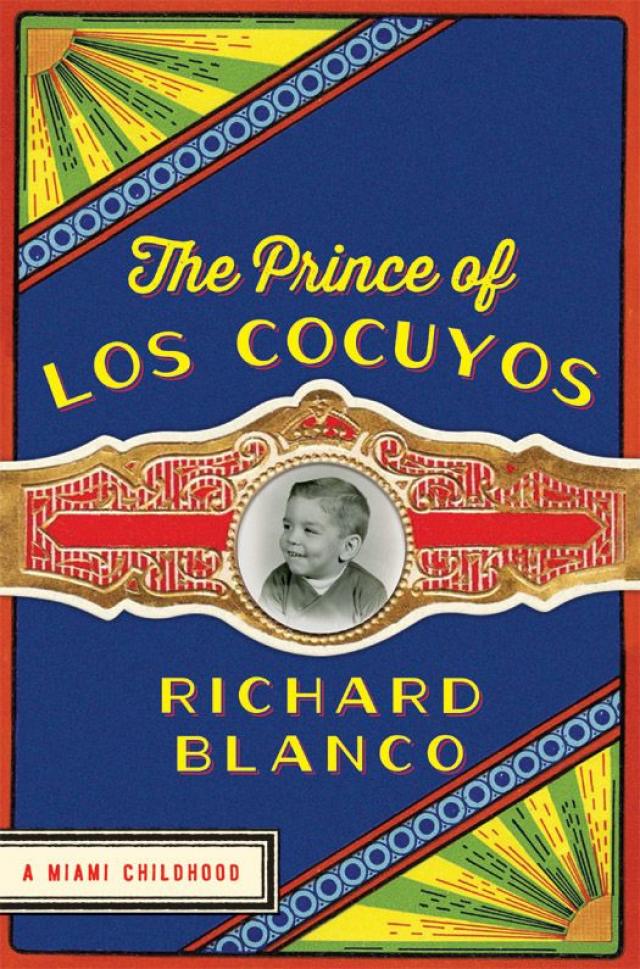
The Prince of los Cocuyos: A Miami Childhood, page 1


DEDICATION
For Carlos “Caco” Blanco, El Guayo:
my confidant, babysitter, cohort,
superhero, ally, friend, and brother,
who has been and will be with me always
EPIGRAPH
You need a village, if only for the pleasure of leaving it. Your own village means that you’re not alone, that you know there’s something of you in the people and the plants and the soil, that even when you are not there it waits to welcome you.
—CESARE PAVESE
CONTENTS
Dedication
Epigraph
Acknowledgments
Author’s Note
1
THE FIRST REAL SAN GIVING DAY
2
LOSING THE FARM
3
EL RATONCITO MIGUEL
4
QUEEN OF THE COPA
5
IT TAKES UN PUEBLO
6
LISTENING TO MERMAIDS
7
EL FARITO
About the Author
Also by Richard Blanco
Credits
Copyright
About the Publisher
ACKNOWLEDGMENTS
The act of becoming is one of two fundamental human acts, the other being loving. And we can’t love without becoming, or become without loving. I have loved and I have become thanks to mi familia. My mother, Geysa, the woman with the prettiest name and one of the saddest and most beautiful stories in the world. My father, Carlos, who died before I could love him as much as I wanted to love him or thank him for naming me after Richard Nixon. My only brother, Carlos, a fixed star in my life who means more to me than I can express in these pages. My abuelo, Carlos (yes, all three of them were named Carlos!), who suffered through every one of my strikeouts at bat and yet kept cheering me on. And my abuela, Otmara: these pages have let me hate her, understand her, forgive her, and thank her for her failed attempts at “making me un hombre,” which indirectly made me a writer. Te quiero, Abuela.
Beyond them, all my tíos and tías, especially Miriam, Toti, Emiliano, Magdalena, Olga, Armando, Pedro, and Elsa. Without them—their stories, their longing, and their memories—this book of my memories would not exist. My thanks also to all my primos and primas, especially Helen, Brenda, Mirita, Normi, Gilbert, and Bernie. I am who I am because you are who you are. And beyond them, my neighbors, bodegueros, teachers (especially Miss De Vos), buddies (Angel and Alex), girlfriends (especially Anabelle), and boyfriends (Darden, Michael, and Carlos). In other words: my entire village, mi pueblo entero.
Fast-forward to the days when I first desired to translate my experiences from poetry into prose and discover what my life would read like without line breaks. My thanks to Stuart Bernstein and Ruth Behar, who ushered me into the genre of memoir, and to Bill Clegg, who helped me think about these pages differently. I am indebted to Frank Cimler, who found a perfect home for this book at Ecco. And so, my thanks to Dan Halpern for believing in this story and agreeing to publish it.
Fast, fast-forward to the days of shaping my raw words into this book with my editor Libby Edelson at Ecco. We began to finish each other’s sentences; she understood this book better than me, and at times, she understood me better than I understood myself. It was a literary love affair, still going strong. And later, Hilary Redmon, also at Ecco, who shed more light on these pages. In the final round, Leonard Nash, who scrutinized this book with an incredibly keen eye and tied up many loose ends that made a huge difference.
And there were others, as always, who helped me write and believe, believe and write. Among these, Alison Granucci, my literary fairy godmother, who continues to be a guiding light; Felicitas Thorne, who gave me much-needed time and space to finish part of this book; and, of course, my husband, Mark, who inspires me every day—not just to write, but to live and love.
AUTHOR’S NOTE
My childhood continues to amaze me as a constant reference point for who I’ve been, who I am, and who I will be. It feels concrete and accessible but, on some level, also elusive and fractured. As such, these pages are emotionally true, though not necessarily or entirely factual. Certainly, I’ve compressed events; changed the names of people, places, and things; and imagined dialogue. At times I have collaged two (or three) people into one, embroidered memories, or borrowed them. I’ve bent time and space in the way that the art of memory demands. My poet’s soul believes that the emotional truth of these pages trumps everything. Read as you would read my poems, trusting that what is here is real, beyond what is real—that truer truth which we come to call a life.
ONE
THE FIRST REAL SAN GIVING DAY
According to my abuela, once the revolution took hold in the midsixties, “No había nada. Castro rationed everything. Two eggs a week, una libra of rice every month, and two cups of frijoles negros, if there were any. There wasn’t even any azúcar. Imagine Cuba without sugar!” she’d complain in her crackly voice. “Gracias a Dios, your abuelo worked at the sugar mill in Hormiguero.” Every week, Abuela made sure he took home double or triple his sugar quota. With the extra pounds, she cooked up vats of dulce de leche and guava marmalade. She also traded with the town baker—a few cups of sugar for a few stale loaves she’d use to bake her homemade pudín de pan. She sold her confections on the black market, and in two years made enough money to buy visas and plane tickets to get the whole family out of Cuba.
A few months after we arrived in New York City, Abuela started her own business, sort of. Once a week she took the bus downtown to the discount stores and bought girdles, scented soaps, cigarette lighters, chocolate-covered cherries, alarm clocks, gold-plated earrings—anything of “quality” that she could mark up and resell door-to-door to the puertoriqueñas in our apartment building. “Those muchachas buy any mierda you bring to their door. They’re too lazy to find the good prices,” she would say. Abuela also worked at a purse factory, sewing the linings of the bags. Far shy of five feet tall and stocky, she wasn’t exactly a bombshell, but that didn’t stop her from using her broken English to sweet-talk her americano foreman into letting her buy the scuffed-up purses wholesale. She would then cover up the scratches with her eyebrow pencil and sell them at full price, good as new.
When we moved to Miami, Abuela became a bookie for La bolita, an illegal numbers racket run by Cuban mafiosos. She took bets all day long, recording them on a yellow legal pad and calling them in every night to Joaquín, the big boss. She also sold Puerto Rican lotto tickets, which she marked up twenty cents. Every month Graciela, her contact in San Juan, would send a stack of tickets; in exchange, Abuela split the profits with her: 25 percent for Graciela, 75 percent for herself. On Saturday nights, I’d help Abuela with her bookkeeping for the week. We’d set up at the kitchen table, her disproportionately large bust jutting out and over the tabletop and her short legs that didn’t reach the floor swinging back and forth underneath the chair. “Make sure all the pesos are facing up—and all the same way,” she instructed every time we’d begin sorting the various denominations into neat stacks.
As we handled the bills I tried teaching her about the father of our country, the Gettysburg Address, the Civil War, and the other bits of American history I was learning in school. Who’s this? What did he do? I’d quiz her, pointing at the portrait of Jackson, his wavy hairdo and bushy eyebrows, on a twenty; or at Lincoln’s narrow nose and deep-set eyes on a five. But it was useless: “Ay, mi’jo, they’re all americanos feos. I don’t care who they are, only what they can buy,” she’d quip, thumbing through the bills, her fingernails always self-manicured but never painted. Without losing count, she’d quiz me on la charada—a traditional system of numbers paired with symbols used for divination and placing bets. She’d call out a number at random, and I’d answer with the corresponding symbol she had me memorize: número 36—bodega; número 8—tigre; número 46—chino (which I always forgot); número 17—luna (my favorite one); número 93—revolución, the reason why I was born in número 44—España instead of in número 92—Cuba. Everything in the world seemed to have a number, even me: número 13—niño.
In a composition book with penciled-in rows and columns, she’d tally her profits, down to the nickels and dimes I helped her wrap into paper rolls. Sometimes—if I begged long enough—she let me keep the leftover coins that weren’t enough to complete a new roll. It seemed like a fortune to me at age nine, enough to buy all the Bazooka bubble gum I wanted from the ice cream man once a week; even enough to buy TV time from my older brother, Caco, so I could watch old TV shows like The Brady Bunch instead of football. But every now and then I’d go broke paying him not to squeal on me, like the time he caught me coloring my fingernails with crayons. Eventually I’d earn the money back by making him sandwiches, cleaning up his side of our room, or getting paid off for not telling on him, like the time I found cuss words scribbled all over his history textbook—in ink! Still, it wasn’t much money for him; he constantly bragged that he made more on a Saturday mowing lawns than I did in a whole month “playing around” with Abuela. He didn’t need any of her “stupid” money, he claimed.
Once Abuela and I were done with our accounting, I followed her through the house as she stashed the money in her guaquitas, her code name for the hiding places she shared with only me. Ones, fives, and tens went into a manila envelope taped behind the toilet tank; twenties and fifties underneath a corner of the wall-to-wall carpeting in her bedroom. The coin rolls we hid in the pantry, buried in empty canisters of sugar and coffee. “In Cuba I had to hide my pesos from la milicia—those hijos de puta! That’s when I started making guaquitas. I even had to hide my underwear from them,” she’d claim. The pennies she tossed into an empty margarine tub she kept at the foot of her blessed San Lázaro statuette in her bedroom. Every Sunday morning she emptied the tub into a paper bag, and dropped the pennies into the poor box at St. Brendan’s before mass. “You have to give a little to get a little, that’s how it works, mi’jo,” she’d profess, making the sign of the cross.
But somehow Abuela always seemed to get a whole lot more than she gave. She was just dichosa—lucky, she alleged, though she helped her luck along most of the time. When my parents had wanted to move from New York City down to Miami, she “gave” them ten thousand dollars for a down payment on a new house with a terracotta roof and a lush lawn. The same house where we now lived, located in a Miami suburb named Westchester, pronounced Güecheste by the working-class exiles like us who had begun to settle there once they got on their feet. Abuela had also agreed she’d take care of my brother and me while my father and mother worked full-time at my tío Pipo’s bodega, named El Cocuyito—The Little Firefly. All Abuela wanted in exchange was for her and my abuelo to live with us rent-free—for life! My parents had agreed to the deal, and Abuela was sure to remind her daughter-in-law every time they got into a squabble over money matters: “Gracias to me and San Lázaro we have this casita and we don’t live frozen in that horrible Nueva York anymore.”
AFTER HAVING LIVED WITH ABUELA’S JABS FOR SEVERAL years, Mamá grew tired of them and demanded that Abuela do most of the cooking and pay for all the groceries every week. Abuela refused, pointing out all she had done—and was doing—for the family already. Papá eventually had to intervene and negotiate between his mother and his wife, until Abuela compromised, agreeing to help pay for some of the groceries. After that, she became more frugal than ever, complaining that her only income was her cut as a bookie and Abuelo’s measly retirement check from the few years he had worked in New York City.
Every day, after she and Abuelo picked me up from school, she’d chase after specials on name brands and daily staples at one of three Cuban bodegas she frequented. Abuelo would pull his lawn chair from the trunk and camp under a palm tree in the bodega parking lot, smoking a cigar and reading a Spanish translation of a dime-store Western in the shade while he waited. Abuela would tuck her beaded coin purse in her brassiere—a tip she had picked up from the New York puertoriqueñas who had taught her how to guard her cash against would-be muggers. She’d march into the store du jour, bouncing in her crepe-soled orthopedic shoes, with me in tow.
Some days we went to La Sorpresita—The Little Surprise—the smallest of the three bodegas, with only one cash register and four narrow aisles. The linoleum tiles were dingy, the metal shelves were streaked with rusty scratches, and the store reeked of grease from the chicharrones frying in the back room. But that didn’t keep Abuela away from the specials on Café Bustelo and El Cochinito–brand lard that La Sorpresita ran every week. She was also friends with Juanito the butcher, whose ghostly white face glowed pink under the fluorescent lights. He was a cousin of Abuela’s former neighbor Carmela, who was still in Cuba and with whom Abuela continued to correspond. Abuela would update Juanito on Carmela’s latest news about the terrible “situación” in Cuba, speaking in whispers as if she were still back on the island being watched by the neighborhood defense committees. The conversation always ended with Juanito asking, “Hasta cuándo—until when?” and Abuela asking Juanito for a few cents off her palomilla steak or pork pernil. “See how we cubanos help each other—that’s our way,” she would say to me, following it with a variation on her motto: “We give a little, we get a little.”
Some days we went to El Gallo de Oro—The Golden Cock—where the Cuban bread was ten cents cheaper than anyplace else, because it was made right in the store. The scent of loaves baking in the back-room ovens permeated the shop, mixing with the aroma of the Cuban coffee they brewed in their in-house cafetería. While chatting over shots of café (which she often “forgot” to pay for), Abuela became friendly with the owner’s wife, Xiomara. They talked about the usual things: children, the terrible humidity, their hairdos, and how much longer la Revolución would last. Xiomara mostly listened and nodded her head while Abuela blabbered. “Qué boba—what a dummy she is,” Abuela told me the day Xiomara agreed to let her buy day-old pastelito pastries for twenty cents. “Ahora I sell these for forty cents.” Abuela started taking more and more advantage of her “friendship” with Xiomara—riffling through the shelves for dented canned goods, then asking for a discount, which Xiomara always gave her; same with the crushed boxes of laundry detergent, and eggs near their expiration date. But when Abuela showed up at the register asking for twenty-five cents off a bruised avocado, Xiomara had had enough. She squeezed the overripe avocado in her fist until it burst open and then threw it in the bag. “There’s your discount, tacaña—you cheapskate,” she said sternly, wiping her hand as she rang up the rest of Abuela’s groceries. “Anything else?”
After the incident with Xiomara, we went mostly to La Caridad, named after the patroness of Cuba, Our Lady of Charity. The neon virgin with a flashing halo above the canopy was so lifelike that Abuela would insist I make the sign of the cross with her before going inside. It was the biggest of the three bodegas; they had shopping carts (not just baskets) and brand-new cash registers. At the end of each of the seven aisles there was always a pyramid of something or other tagged with ESPECIAL placards neatly written out in red Magic Marker. La Caridad was Abuela’s favorite store, even though she believed all the cashiers were crooked. She’d check her change and receipt every time before leaving the register. The only cashier Abuela trusted was Consuelo, who had been consistently honest. But one day Consuelo charged Abuela $9.90 instead of $0.99 for a bag of plantain chips. Abuela caught the mistake; she made Consuelo void the entire purchase, start all over again, and call out the price on each item as she rang it up. “A crook—like the rest of them, una sinvergüenza,” Abuela told me, within earshot of Consuelo, as we grabbed our bags and headed toward the door.
Every once in a while we went to El Cocuyito, but mostly just to visit. Abuela always complained that tío Pipo, her own son, never gave her a big enough discount. But somehow she always managed to come away with a free handful of bruised mangos or a few loaves of day-old Cuban bread. I didn’t care which bodega we shopped at; they all stocked the same Cuban food I ate every day: guava marmalade, chorizos, canned black beans, frozen tamales. They didn’t carry many of the American foods like Pop-Tarts, Ritz Crackers, and Cool Whip, which I got to eat with Jimmy Dawson—one of only a handful of gringos in my class—whenever I went over to his house. You could only get those treats at the gigantic Winn-Dixie on Coral Way, right in the center of Güecheste, where a still plentiful but shrinking number of americanos shopped.
Every week I’d beg Abuela to go to the Winn-Dixie instead, but she refused to set foot in the place. “There’s none of our food at el Winn Deezee. Only los americanos shop there,” Abuela sneered. “It’s too expensive anyway,” she’d complain, dismissing my pleas, until the day she spotted a Winn-Dixie circular in the mail advertising a special too tempting for Abuela to ignore: a whole roasted chicken, its drumsticks crowned with fancy paper hats, and a banner beneath trumpeting its not-so-fancy price: Whole Fryers 29¢ per lb.
“What does Whole Fryer mean?” Abuela asked me. “Pollo entero,” I translated. “¿De verdad?” she said incredulously, “At La Caridad I pay thirty-four centavos—on especial.” I played on her piqued curiosity, “Sí, sí, Abuela. It’s a great price for chicken. ¡Increíble! You could sure save a lot of money.” She agreed, “Yes, good precio,” and left the circular on the kitchen counter instead of tossing it out with the rest of the junk mail that came in English.
Few things intimidated Abuela; among these were black magic Santería and americanos. As for Santería, she once discovered tía Irma kept an Eleguá deity with snail shells for eyes behind her bathroom door. We never set foot in her house again. “She’s not your real tía, anyway,” she said. As for americanos, Abuela wouldn’t go anywhere she perceived to be wholly American, at least not alone. This included the Social Security office downtown, any restaurant with English-only menus (even Kim’s Chinese Palace on Ninety-seventh Avenue), fancy department stores like Burdines, and most definitely Winn-Dixie. But she also couldn’t resist a bargain. “Mira how cheap los pollos,” she told Mamá when she came home from work that day. “Why don’t we go to el Winn Deezee?” she asked, fishing for a partner. Mamá responded unenthusiastically: “Bueno, you go si tú quieres. You’re doing all the groceries.” What did Mamá care where our food came from or how much it cost, as long as there was enough to eat?