

If the Tide Turns, page 1


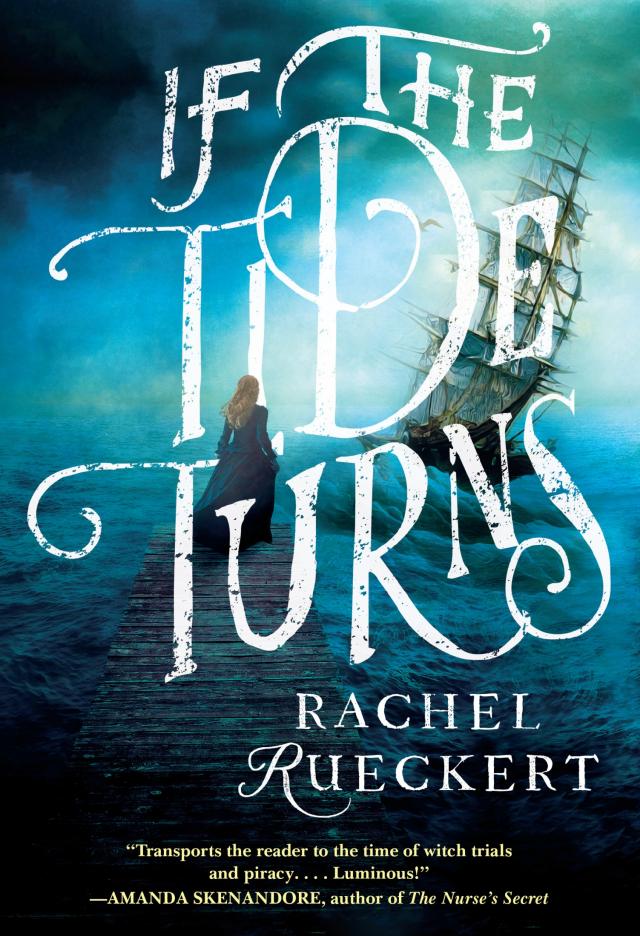
IF THE TIDE TURNS
RACHEL RUECKERT
www.kensingtonbooks.com
Table of Contents
Title Page
Copyright Page
Dedication
CAST OF CHARACTERS
PROLOGUE
PART 1 - SUMMER 1715
CHAPTER 1
CHAPTER 2
CHAPTER 3
CHAPTER 4
CHAPTER 5
CHAPTER 6
CHAPTER 7
CHAPTER 8
CHAPTER 9
CHAPTER 10
CHAPTER 11
CHAPTER 12
CHAPTER 13
CHAPTER 14
CHAPTER 15
PART 2 - FALL 1715
CHAPTER 16
CHAPTER 17
CHAPTER 18
CHAPTER 19
CHAPTER 20
CHAPTER 21
CHAPTER 22
CHAPTER 23
PART 3 - 1716
CHAPTER 24
CHAPTER 25
CHAPTER 26
CHAPTER 27
CHAPTER 28
CHAPTER 29
CHAPTER 30
CHAPTER 31
CHAPTER 32
CHAPTER 33
CHAPTER 34
CHAPTER 35
CHAPTER 36
CHAPTER 37
CHAPTER 38
CHAPTER 39
PART 4 - 1717
CHAPTER 40
CHAPTER 41
CHAPTER 42
CHAPTER 43
CHAPTER 44
CHAPTER 45
CHAPTER 46
CHAPTER 47
CHAPTER 48
CHAPTER 49
CHAPTER 50
CHAPTER 51
CHAPTER 52
EPILOGUE
AUTHOR’S NOTE
SOURCES
ACKNOWLEDGMENTS
DISCUSSION QUESTIONS
KENSINGTON BOOKS are published by
Kensington Publishing Corp.
119 West 40th Street
New York, NY 10018
Copyright © 2024 by Rachel Rueckert
All rights reserved. No part of this book may be reproduced in any form or by any means without the prior written consent of the Publisher, excepting brief quotes used in reviews.
This book is a work of fiction. Names, characters, businesses, organizations, places, events, and incidents either are the product of the author’s imagination or are used fictitiously. Any resemblance to actual persons, living or dead, events, or locales is entirely coincidental.
To the extent that the image or images on the cover of this book depict a person or persons, such person or persons are merely models, and are not intended to portray any character or characters featured in the book.
The K with book logo Reg US Pat. & TM Off.
ISBN: 978-1-4967-4754-9 (ebook)
ISBN: 978-1-4967-4753-2
Because of you,
Brittney, Megan, Mikaela, and Ryan
CAST OF CHARACTERS
*Indicates a character using the name of a real historical figure
**Indicates a character using the name and known depictions of a real historical figure
Brown Family
George Brown*
m. Mehitable*
Constance
Mehitable (Maria/Goody) Brown**
Elizabeth*
Mercy*
Aunt Ruth*
Bellamy Family
Stephen Bellamy*
m. Elizabeth*
Five older unnamed siblings*
Samuel (Sam) Bellamy**
Aunt Lamb
Massachusetts Inhabitants
Indigenous
Weetumuw**
Ninigret**
Abiah Sampson, based on Delilah Sampson Gibbs,** a renowned healer
Ousamequin**
Colonists
Captain Thomas Hunt**
Cotton Mather**
Sarah White Norman and Mary Vincent Hammon (“Plymouth women prosecuted for ‘lewd behavior’ ”)*
Lydia
John Hallett**
“The poor Reynolds boy”
Dorothy Bradford (“Governor Bradford’s wife”)**
Israel Cole**
Reverend Samuel Treat**
John Miller (“schoolmaster Miller”)*
Pastor Josiah Oakes**
Margaret Hough**
Justice Joseph Doane**
The Abbotts
The Atwoods
The Youngs
Mrs. Walker
Mrs. Smith
Sailors
Lieutenant Evans
Paulsgrave Williams**
John Julian**
Three unnamed divers (“Spain nobles had hired local natives to do the risky diving for them”)**
Caleb Dixon
Isaiah Abell
Timothy Webb
Petere (Peter) Cornelius Hoof**
John Brown**
Hendrick Quintor**
John (Little) King**
Thomas Davis**
Dr. [James?] Ferguson**
Alexander*
Privateers and Pirates
Francis Drake**
Henry Avery**
Henry Jennings**
Benjamin (Ben) Hornigold**
Edward Teach,** who later became Blackbeard
Captain William Kidd**
Olivier Levasseur (La Buse/The Buzzard)**
Captains
Captain Young*
Captain L’Escoubett*
John Hamann**
Captain Prince**
Captain Beer**
Robert Ingols**
Montgomery**
Captain Cyprian Southack**
Individuals named in the Whydah’s roster who are not depicted specifically in this book
John Fletcher—quartermaster
Richard Noland—quartermaster
William Main—sailing master
John Lambert—sailing master
Richard Caverley—sailing master
Jeremy Burke—boatswain
Jeremiah Higgins—boatswain
Jean Taffier—gunner
William Osbourne—gunner’s mate
Thomas South—carpenter
Joseph Rivers
William Lee
Thomas Bernard
John Baker
Robert Danzy
Edward Moon
David Turner
[Edward?] Wood
John Shaun
Simon van Vorst
PROLOGUE
I know this place, how the spindly grass bends against the rolling dunes.
The bite of salt air, the brine of pink Atlantic mornings along the docks.
I know the hideouts for lovers, the townsfolk and the church with its hard pews and shadows.
A barn with a boot print. A whipping post. A cell, real and imagined.
I know every spine of this shore, and the woman whose voice cries and curses whenever storms hammer the bone-white sand where lie the remains of the Whydah and her treasure, her crew.
I know something of ghosts, including some who had the audacity to survive.
PART 1
SUMMER 1715
CHAPTER 1
Maria broke for air as a wave crested. She let out an unrestrained laugh as the ocean tumbled into her shoulders, pushing her through the surf until her knees pressed into the soft shore.
“How did I do this time?” Maria shouted above the roar to her younger sister, Elizabeth, who sat reading on the empty beach.
Elizabeth’s eyes flicked up, then back to her novel. “As well as usual.”
Which wasn’t great, Maria knew. She never waded in deeper than her ribs. But not knowing how to swim hadn’t halted her attempts to improve.
Maria scrambled to her feet, shaking out a shiver and scraping away sand. She wrung water from her linen shift, then her braid. Her throat burned with traces of sea. Despite the goose bumps, she glowed with delight. She buried the wet shift inside her basket, then quickly changed into a clean dress.
“I’m missing something in the arm movement,” Maria said after drying off. She held out her arms, trying to mimic what she’d seen the fishermen at the docks do when they dove to cut a snagged line. Why were they allowed this joy while she was not? She finished dressing and then stared at the bonnet in her hands. She hated the dreadful thing, but over her seventeen years of existence, she’d learned resistance was futile. She sighed, then tied the bonnet on, tucking the damp coil of cornsilk hair away from view.
“There has to be a way to keep water out of my nose.”
“Mmm,” Elizabeth said.
“Are you even listening to me?”
Elizabeth turned a page. “Imagine what Mama would say if she found out you were at this again.”
Maria didn’t have to imagine. She knew exactly what Mama would say, having been caught before. A few months back, Maria and Elizabeth had both lost privileges of going out, meaning Elizabeth hadn’t been able to see her friend, Lydia, for a week.
Maria felt a pang of regret, softened only by knowing that Elizabeth craved these moments away as much as Maria did, a chance to sit with her questionable reading material without prying eyes.
“It would be a shame to spend a life by the sea and never properly venture into it,” Maria said. She had always felt so. Such wild vastness, possibility and danger. Adventure and misadventure. Everything she shouldn’t feel drawn to as a girl.
“You’ll be an eligible lady soon,” Elizabeth said without looking up, but Maria heard the sorrow in that familiar reproach. Elizabeth herself might not recognize the base note of sadness, that subtle dissonance, but Maria did. She felt a small, invisible stirring—nothing more. Maria could never explain how she knew these unspoken, unseeable things. She’d tried before, as a child, borrowing language from church. “Whisperings of the spirit,” she’d called them, until Mama had warned that God would never send Maria visions. Instead, Maria was instructed to stay clear of Satan’s grip, of even the appearance of evil.
Whatever the feeling’s name, it was the same tiny pang Maria got whenever she could sense an oncoming storm by the look of a lone cloud or a breeze from the north. Or what she felt after a dream about one of the cows falling ill, only to discover later that the stable lad found traces of red during the daily milking.
Or that unspoken tension Maria noticed between Elizabeth and Lydia whenever Reverend Treat spoke of “unchaste behavior” on Sundays. Maria did not have to look long at her sister to observe her flushed, freckled cheeks when the famous Cotton Mather visited Cape Cod last summer—that cleft-chinned man who’d written about the Salem witch trials two decades ago. The celebrity preacher had delivered a fiery sermon about two Plymouth women prosecuted for “lewd behavior with each other upon a bed.”
But perhaps it was all in Maria’s overactive imagination. Elizabeth, though a year younger, was better behaved than Maria. More God-fearing and upright.
“We should return,” Maria said, retrieving her gathering basket. “I told Mercy we’d meet her by the huckleberries.”
Elizabeth glanced at the sun.
“Ready?” Maria said, offering her hand.
Elizabeth sighed, reluctant to part with her story, whatever worlds she escaped into whenever the two of them stole time away from chores—the never-ending mending, washing, animal-tending, cooking, and cleaning. Preparing, always, around the harvest.
Elizabeth snapped her book closed, and Maria hoisted her up.
“There you are!” came a high voice behind the pitch pines.
Maria and Elizabeth swung around in unison, Elizabeth hiding the novel behind her.
“Mercy,” Maria said with feigned calm. “I told you to wait for us in the meadow.”
Mercy grinned, purple staining the corners of her mouth. “I finished picking early. Did you get the rosemary for the cod?”
Maria and Elizabeth nodded, then stole a glance as little Mercy trotted off, blazing a path for them to follow.
“That was close.”
“Too close,” Elizabeth whispered. She surveyed Maria, making sure her wet hair was properly covered.
Maria gave her a gentle push. “Race you.” Then the two of them picked up their skirts and baskets to sprint after their little sister.
Sea grass whipped at their ankles as Maria walloped with delight, kicking up earth with her boots. A blue heron flew off when they neared, receding into the flawless sky. For a moment, Maria was transported. She could remember Constance chasing her like this, teasing her with taunts as Maria cawed like a bird, always out of reach like the Nauset wind.
One minute Constance was there, carefree, scampering through the golden marsh meadows. The next, severe, grown, then gone. As respectable and cross as Mama. How many years had passed since she’d seen her older sister? Marriage changed people in the worst ways.
I’ll never be like that, Maria thought as she ran, then pushed the words away.
When they neared the cedar-shingled house, the three girls came to a stop and caught their breath.
“Who’s that with Papa?” Mercy asked with a wrinkled nose.
Papa stood in the doorway, shaking hands with an older gentleman in a velvet waistcoat and a tight cravat.
“Girls,” called Papa with a grin when he saw them. “Come. There’s someone joining us for supper whom I’d like you to meet.”
* * *
“More pudding, Mr. Hallett?” Mama offered, passing a pewter bowl. Hallett sat across from Papa, who was seated at the head of the table. Papa hunched over his plate and would not look up from his heap of potatoes until he was through, his normal habit, no matter who was at supper. Tonight might have resembled any other evening, but Maria knew better. They all did. Mama’s heightened pitch only confirmed it.
“No, Mrs. Brown, I thank you,” Hallett said, holding up a hand. He patted his graying beard with a large cotton napkin. His powdered wig, twice as thick as Papa’s, covered his shoulders. “My compliments on the meal.”
“My daughters,” Mama said, gesturing toward Maria, Elizabeth, and Mercy while Maria pretended not to notice. She had no intention of saying anything. If she opened her mouth, she feared she’d say something wrong—something truthful. Despite her seventeen years, Mama still resorted to the rod.
Was anyone going to mention that, before today, Mr. Hallett was Papa’s biggest farming rival?
No. Only she would dare to mention the year Hallett refused to share corn seed, sabotaging Papa’s crop season. Or that the two had refused to speak to each other since. Everyone else seemed content to sit here and pretend, as if lying wasn’t a sin.
Mama then singled out Maria. “She picked the freshest cod of the catch, a real eye for it by now,” Mama added. “An excellent cook.”
A stretch. Adequate was how Mama usually described her cooking.
“Delicious indeed,” said Hallett without inflection as he picked a bone from his teeth. “Tell me, Mr. Brown,” he said, turning to Papa as if the rest of them were not there. “Do you add fish to your fertilizer?”
Just be a body, here in this chair, Maria told herself, already tasting the salt of the sea. Your mind can go anywhere. She went over her swim technique from the morning, puzzling out what she might do differently next time.
A swift kick under the table made Maria wince, yanking her back. Elizabeth coughed and shot her a stern look. Maria must have been making the wrong face.
“As I was saying,” Mr. Hallett continued, “these funds I donated should secure a much larger meetinghouse. Reverend Treat was most grateful, most eager, when I shared my plan.”
“How fortunate for the community,” Papa said.
“May I have more?” Mercy asked, legs swinging under her chair.
“Wait to be offered or addressed before speaking, child,” Mama said.
“Perhaps the vigor of youth is no great evil,” droned Hallett. “I could use a bit more energy these days myself.”
Papa grunted in acknowledgment. His gaze caught Maria’s disgust, and she detected a sympathetic smile. A mischievous kitten, he’d always called her—“always with the look of a cat stalking a bird.”
Then Papa returned to his meal, changing the subject. “It’s always a pleasure to host a guest and give thanks for our blessings. As we read in Isaiah, ‘If ye consent and obey, ye shall eat the good things of the land.’ ”
Maria did not join the muttering of agreements, nor in the praise when Hallett mentioned the other great “improvements” he aspired to make to Eastham.
Papa’s bay-blue eyes crinkled as he placed his hands on the round of his stomach. The buttons strained along his brown waistcoat. “Is the pie ready, my dear? I’m eager to discuss the grain crop with Mr. Hallett before the night is over. Thievery, this raise in seed price, is it not? With topsoil turning to sand before our eyes?” His gaze narrowed. “And once we dismiss the women, I’d like your opinion on a political matter—property rights and these proposed town ‘divisions,’ if you understand my meaning.”
Hell had to be real, Maria considered as she stabbed at a carrot.
Fallen angels.
Ghastly demons.
Horrid imps disguised as dogs.
All of them, every devil from the Invisible World, sent here to punish her at the kitchen table, forcing her to endure this charade.
CHAPTER 2
Sam clenched his fists as his captain finished reading the list of names.
“Jones. Johnson. Smith. Taylor. Watson.”


