

Between This World and the Next, page 1


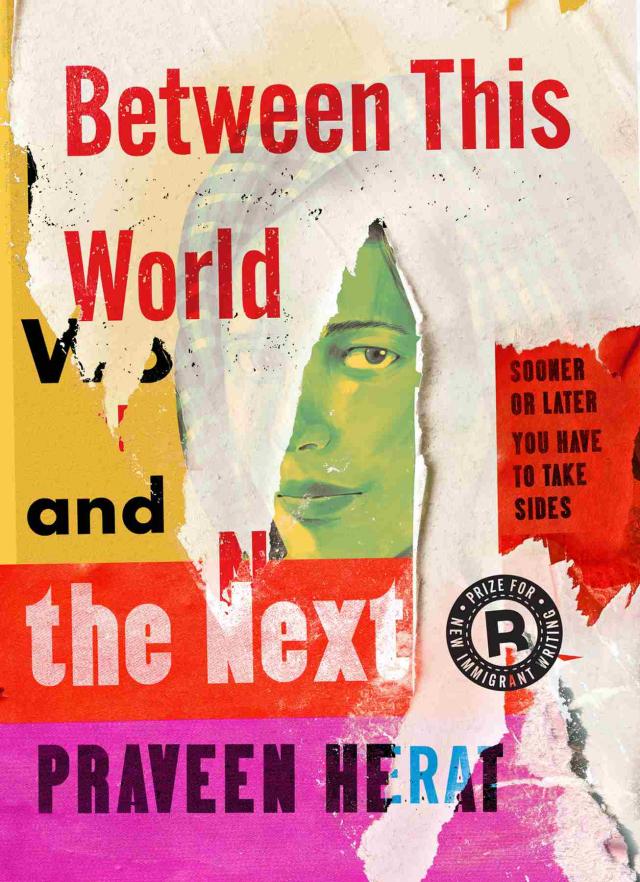
JUDGES’ CITATION
FOR THE 2022 RESTLESS BOOKS PRIZE FOR NEW IMMIGRANT WRITING
An intricate international thriller, Between This World and the Next tells the story of Fearless, a burned-out British war photographer, and Song, a Cambodian woman who has been physically and psychologically marked by the violence in her country. When Song disappears, leaving only a mysterious videotape behind, Fearless must navigate a dangerous network of power brokers, transnational kingpins, sex traffickers, and arms dealers, uncovering a sprawling network of criminality and corruption in a newly post-Soviet world. Praveen Herat challenges our own complicity as passive observers when exposed to a constant stream of media depicting suffering across the world and asks what we truly know about anyone, even those we hold dearest. And yet, riven by dark acts, the book is uplifted by love—love between sisters, love of the bereaved, and a remarkable platonic love between Fearless and Song.
This propulsive, page-turning novel is a passionate exploration of power, poverty, and greed. With its sharp new perspective, Between This World and the Next pushes the boundaries of what a literary thriller can achieve.
PRIZE JUDGES TIPHANIE YANIQUE, DEEPAK UNNIKRISHNAN, AND ILAN STAVANS
Praise forBETWEEN THIS WORLD AND THE NEXT
“Captivating, immersive, and arrestingly beautiful, Between This World and the Next holds you in its grip as it effortlessly navigates the complexities of our modern world.”
—SAIEEM HADDAD, author of Guapa
“A hauntingly beautiful story of loss and war and the lives we build around them. Herat’s rendering of Cambodia is vivid, dark, and heartbreaking, as three-dimensional as any character. With echoes of Lawrence Osborne and Graham Greene, Between This World and the Next brutally and wrenchingly captures the consequences of modern amorality and the sacrifices we make for redemption. A tale that’s determined not to let you go.”
—I. S. BERRY, author of The Peacock and the Sparrow
“After a chance encounter, Song and Fearless, each burdened with trauma, each with grief, set off on an extraordinary journey. First through the Cambodian underworld to uncover the mastermind behind a brutal criminal ring, then across Asia, Africa, and Europe to find and save each other, and finally through a mazy wilderness of arms dealers, spies, ordinary citizens, and corrupt, powerful bureaucrats to see if even in this fallen world, they might retain their fundamental humanity and, just possibly, also find the one true reason to live: love. Thrilling, terrifying, and complex, endowed with unforgettable characters and imbued with great beauty, Between This World and the Next is a terrific, gorgeous novel.”
—PAUL GRINER, author of The Book of Otto and Liam
“Set in Cambodia, Between This World and the Next is a tender yet clear-eyed thriller, enlivened by a large cast of succinctly drawn characters led by haunted war photographer, Fearless, and Song—a local young woman who has just about mastered how to keep her nightmares at bay. Elevated by a subtle hum of near-poetic prose, Between This World and the Next is a compelling debut by a novelist who clearly enjoys his storytelling, but also cares about enduring human questions of love and rage, witness and action, and what it means to be good.”
—NII AYIKWEI PARKES, author of Tail of the Blue Bird and Azúcar
BETWEEN
THIS
WORLD
AND THE
NEXT
PRAVEEN HERAT
RESTLESS BOOKS
NEW YORK • AMHERST
This is a work of fiction. Names, characters, places, and incidents herein are either the products of the author’s imagination or are used fictitiously. Any resemblance to actual events or persons, living or dead, is entirely coincidental.
Copyright © 2024 Praveen Herat
All rights reserved.
No part of this book may be reproduced or transmitted without the prior written permission of the publisher.
Restless Books and the R colophon are registered trademarks of Restless Books, Inc.
First Restless Books hardcover edition June 2024
Hardcover ISBN: 9781632063670
Library of Congress Control Number: 2023945865
This book is supported in part by an award from the National Endowment for the Arts.
Cover illustration by Sukutangan
Cover design by Keenan
Text designed and set in Monotype Dante by Tetragon, London
Printed in the United States of America
1 3 5 7 9 10 8 6 4 2
RESTLESS BOOKS
NEW YORK • AMHERST
www.restlessbooks.org
For my mother
—and in memory of my father
Open your eyes. Empty your mind. What’s happening in the present will pass. This is what Song tells herself.
It’s dark and hot and the middle of the night. Through the light that comes from the open door, she sees a bead of sweat on the tip of his nose.
He’s kind to have given her fruit juice. How long since she’s tasted juice like that. Fresh from Pursat oranges, so sharp, so sweet, the little flakes of pulp floating on her tongue.
But no one has touched her in a very long time. So many hands for so many years and then weeks and months of not being touched at all.
He holds her head down, twists it to her good side.
Images circle in her mind. Her old home. The starlight on the floor. Her golden bear under the crook of her arm.
Don’t follow those thoughts, Song tells herself. You’re eighteen, not twelve. Her body goes limp. The bead of sweat finally falls—a drop on her cheek that runs away like a tear.
When they want to imagine someone else, they close their eyes. But his eyes are open, roving her face with a kind of hunger she isn’t familiar with. He gasps, tenses, stays completely still.
When she looks again, he is standing in the corner of the room. His back is turned and his shoulders are hunched.
“Orkun charan,” he says to the back of the door. Thank you very much. As if she’d had a choice.
She listens to his feet slap down the stairs, then gets up and crosses the courtyard via the walkway.
In the guest apartment she hurries to the wet room. She will wash it away and it will flow to the river. Dissolve into the endless tides of the sea.
After she is clean, she wraps herself in her sampot and winds her krama around her head so the burned side is covered. Down in the building’s entrance hall she lights the incense sticks in the spirit house. She checks the small blue and white saucer of lychee and smells the jasmine.
“Respect the spirits but don’t think they give a damn about your sister,” Mr. Thom makes a point of telling her. “Just accept the truth. She’s as good as dead.”
But Sovanna will find her. And then anything and everything will be possible.
An army truck thunders along the street. Song blows out the match and ducks into the shadows, crouching between the scooters that are parked inside the hall. Through the metal concertina gate she sees soldiers in the truck bed. People are unhappy with the results of the elections and the men will make sure they keep their objections to themselves.
Up above, she hears Thom slamming the door of the Naga Bar; the drunken muttering of the last barang as they lurch into the street and hail their motodops. The power goes out suddenly: no more karaoke, no streetlight. After the sound of the engines have faded, there is only a barking dog and the noodle boy tapping his woodblock. Toc-Toc. Toc. Toc-Toc. Toc.
Back in her room, she looks down at the trio of men on the street corner, bathed in the light of the almost full moon: the tire repairer, asleep within a fort of inner tubes; the cyclo driver curled in his passenger seat like a house cat; the motodop lying flat on his back, his feet crossed casually on the handlebars of his Daelim. She knows each man well, his temperament, his mien, their grumbles and quarrels and laughs. She knows the people who dwell in the dark apartments above—their thoughtfulness at sunset, when they emerge onto their balconies to gaze east to the river in the rose-colored light. But none of them know her. Three rainy seasons have passed since Song has stepped outside. This building—this labyrinth of dank stairwells and partitioned boxes where bong thoms and drunken sexpats get their kicks—is her prison.
Once Sovanna has found her, they will go back to Battambang—to the days of playing tag under the stilts of the family home, the chickens squawking and scattering at their feet. In the heat of the midday sun, they will gather under the shade tree, listening to the sounds of the vast, silent country, sensing the year’s turning through the harvests of fruits and vegetables.
At the end of their working nights in Phnom Penh, they would lie together and list those harvests as a way of remembering:
“Rice,” she would say, resting her head in Sovanna’s lap.
“Mango,” Sovanna would reply.
“Coconut.”
“Cassava.”
“Potato.”
“Papaya.”
“The flooded fields of lotus and lilies.”
Song imagines she is helping Ma, chopping the greens for the evening meal: grilled buffalo, a special treat that proves their parents do their best, even in times of hardship, even in the midst of war. Ma tells her to call Sovanna and Pa. And when she shouts bong—big sister—Sovanna answers oun—little one—just as she has always done, even though she is only ten minutes older. Then she walks steadily across the field and Song sees her beautiful face in the twilight—a face to which Song’s had on
When she remembers that face, and feels the radiance that comes from it, Song forgets what she has suffered, alone in Phnom Penh these years.
Empty your mind, she tells herself again as she waits for sleep. It’s okay. Even what just happened. You can put it in a space outside the story. She will not remember. He never came. For what circumstances would bring it back, what conjunction of the stars?
PART 1
“Only part of us is sane: only part of us loves pleasure and the longer day of happiness, wants to live to our nineties and die in peace, in a house that we built, that shall shelter those who come after us. The other half of us is nearly mad … and wants to die in a catastrophe that will set back life to its beginnings and leave nothing of our house save its blackened foundations. Our bright natures fight in us with this yeasty darkness, and neither part is commonly quite victorious, for we are divided against ourselves and will not let either part be destroyed.”
REBECCA WEST
from Black Lamb and Grey Falcon
“If only it were all so simple! If only there were evil people somewhere insidiously committing evil deeds, and it were necessary only to separate them from the rest of us and destroy them. But the line dividing good and evil cuts through the heart of every human being … it is after all only because of the way things worked out that they were the executioners and we weren’t.”
ALEXANDER SOLZHENITSYN
from The Gulag Archipelago
1
“Nairobi. Kenya. Dar es Salaam. Tanzania.” Song practiced the names as she cleaned the Naga Bar, clearing its tabletops of glasses and ashtrays, sweeping up tissue balls and cigarette butts and chicken bones, wiping down the sticky leatherette of the armchairs, bagging up the cans of Angkor and Anchor, gathering the towels that were wet with sweat and come and blood. Every day, this was what she loved to do in secret: listen to the World Service while she got through her chores, trying to learn of the world beyond these walls. She enjoyed the shapes the foreign names made on her tongue. How jealous she and Sovanna had been of Chamroeun in the village when he was allowed to go to the wat to read and write! When they escaped, that’s what they’d do. Go home and learn for the sake of learning.
There had been bombs, the announcer said, two weeks ago, on August seventh. American embassies attacked. Two hundred dead. Four thousand injured. She placed the newly clean glasses on the shelves of the bar and polished the beng wood of the seven-headed Naga sculpture. In the VIP room, she stopped mopping and stood still for a moment; there was a discussion between several men with words she didn’t understand. She was trying to decipher it when Thom burst in, growling.
“What the hell, bitch! I told you only yesterday! Get the apartment cleaned. The guest will arrive in an hour.”
He was bare-chested, his sampot hitched above his knees, the corners of his eyes and lips tightly clenched.
Before she could say a word, he swatted her with his newspaper. As she cowered, he kicked at her legs, then flurried her with slaps and punches, half of them landing, half grazing the wall. Her krama came loose and fell when he yanked at it.
“No, please!” she cried. There was no point in saying that he had never mentioned cleaning the apartment.
“What? You don’t like it? Come then! Let’s go.”
Gripping her by the upper arm, Thom pulled her down the stairs, hustling her across the foyer and up to the street gate.
“Here! You go, then. Let’s see what you do.”
He hauled open the concertina.
“Come on. No one’s keeping you.”
It was true. No one shackled Song or bolted her door at nightfall. The only thing that imprisoned her in the Naga was her shame. Not the shame of how her face looked but the shame of what it said to people. For only someone bad in some fundamental way—deeper than even their thoughts or feelings—could deserve to be punished in such a horrible manner.
“Beam kador khnom,” Thom muttered as he tramped up the stairs. “And don’t forget to bring in the deliveries.”
No matter how hard Song toiled, Thom would find fault. But it didn’t bother her now. She was beyond hating him: his stale milk smell and his prahok breath and the big mole on his cheek whose hairs he loved to preen. She had learned something from him. To not be like him. To never be unjust, to never feel so weak that only someone else’s misery might make you stronger. Everything else he did, she could wipe from her memory, along with the other men that had loomed over her life: men like the hundreds of johns from their days in The Sunflower, the “five-star” bar she and Sovanna once worked in; men with wide-eyed stares and silent cries during the years when she had come to despise her own beauty. Oh to be ugly, to be undesirable. The irony of that wish now.
Once Thom had entered his room and slammed the door, Song hurried back to reclaim her krama. As she bent over to tuck it into a knot around her head, something caught her eye: a fragment of plaster, crumbled from the wall—no doubt a casualty of one of Thom’s stray kicks. It revealed a cable, thinner than normal electrical cord, that she had never noticed during all her mopping and sweeping. She reached down and prodded it as if it were a small, still animal.
But there was no time to investigate. She swept and mopped the guest apartment, made both beds, and opened the door to the balcony for air. Just as she did, the drinks truck arrived and she hurried up and down the stairs, hauling beer crates and jangling boxes of vodka.
As she stepped outside with bottles of water to stock the guest apartment, the heavens suddenly opened, unleashing the monsoon. Something unbidden rose in her stomach. She rushed to the toilet and threw up violently, the sound of splashing overwhelming all her senses: her puke in the bowl, flushing water, thundering rain.
She didn’t hear the street gate opening or footsteps hurrying into the building’s foyer. Only until they turned the last flight of steps did she register that two men were on their way up. As she sprinted to the door she heard one asking in English:
“And what time will my friend Mr. Federenko get here?”
2
“Mr. Federenko come soon,” the driver said, lugging Fearless’s duffel up the stairs.
Above, on the landing, he saw a blur of pattering feet and a cowled figure disappearing through a door. The rain was disorienting, hammering on the skylight like a million masonry nails tossed from above. Fearless’s work as a war photographer had taken him nearly everywhere except Asia, so the sheer speed and volume of the monsoon surprised him. When the driver led him through the open door of a whitewashed apartment, he was stunned to look out from its balcony and see the water reaching pedestrians’ knees, the thoroughfares now canals traversed by cars and tuk-tuks that left parabolas of foam rippling in their wake. Clothes stuck to people’s skin. Ropes of water twisted from awnings.
Cambodia at last. How long his life had been this way, disappearing in one location and resurfacing in another, consistent only in its utter inconsistency.
Quae mundi plaga?
That was his perennial question on waking: which country, which place, which time zone, which bed? Often, the light from the crack in the curtains would show fruit slices under cling film or rectangles of Lipton tea, a whirring ceiling fan that signified hotel. If he were luckier, he’d see Laure’s hair tumbling across the pillow, the constellation of moles on the nape of her neck, the cornflower blue sheets of their bed in the cottage.
“But Cambodia. Really!” Conrad had muttered when he’d revealed that Alyosha had offered him the trip.
“I go now,” the driver said, putting Fearless’s duffel down by the sofa.
“Remind me of your name.” He liked the man’s gentle smile and thick wedge of hair.
“My nem Bun Thim.” The bun rhymed with the un in wunderbar; the h in Thim was barely detectable.
“Thank you, Bun Thim.” When Fearless reached to shake the man’s hands he noticed that they were ridged with horrible burns, the skin behind the knuckles pulled tight, knotted and warped.


