The Far Himalaya, page 1


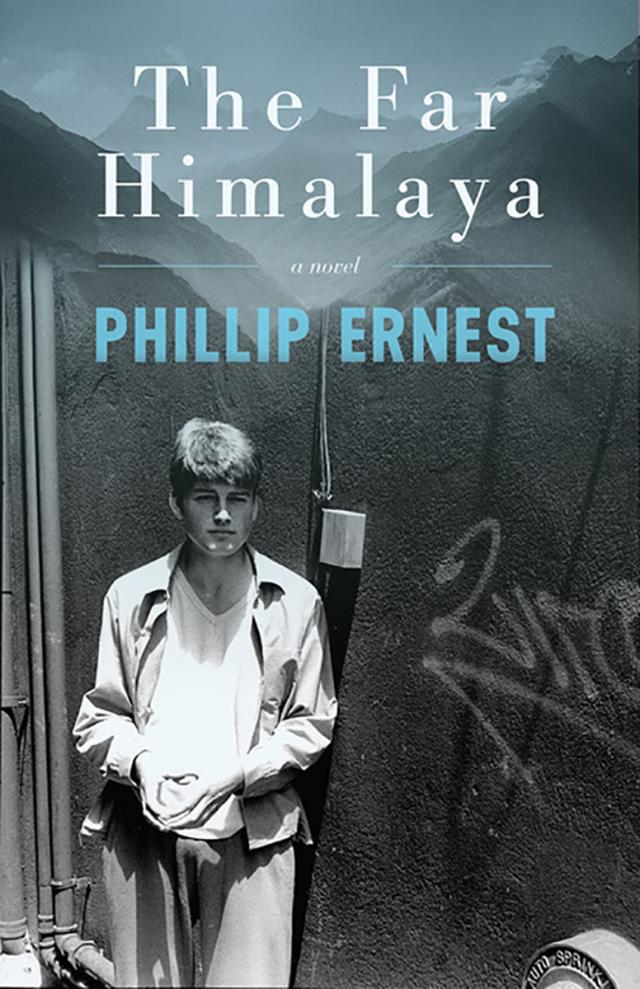
THE FAR HIMĀLAYA
.ll.
THE FAR HIMĀLAYA
a novel
PHILLIP ERNEST
.ll.
Copyright © 2019, Phillip Ernest
All rights reserved. No part of this book may be reproduced, for any reason or by any means, without permission in writing from the publisher.
The following is a work of fiction. Many of the locations are real, although not necessarily as portrayed, but all characters and events are fictional and any resemblance to actual events or people, living or dead, is purely coincidental.
Prepared for the press by Carmelita McGrath
Cover photographs: David Ernest
Cover design: Debbie Geltner
Layout: Tika eBooks
Printed and bound in Canada
Library and Archives Canada Cataloguing in Publication
Title: The far Himalaya : a novel / Phillip Ernest.
Names: Ernest, Phillip, author.
Identifiers: Canadiana (print) 20190066717 | Canadiana (ebook) 20190066741 |
ISBN 9781988130972 (softcover) | ISBN 9781988130989 (EPUB) |
ISBN 9781988130996 (Kindle) | ISBN 9781773900001 (PDF)
Classification: LCC PS8609.R54 F37 2019 | DDC C813/.6—dc23
The publisher gratefully acknowledges the support of the Government of Canada through the Canada Council for the Arts, the Canada Book Fund, and Livres Canada Books.
.ll.
Linda Leith Éditions
Montréal
www.lindaleith.com
for A
Questo d’ignoto amante inno ricevi.
1
It may have been around 4 o’clock when the rain started. Ben didn’t have a watch, so he couldn’t be sure. Thunder had been brewing for some time, and in his half-sleep he had felt the air change as a current of coolness flowed in and pushed aside the muggy July heat that had possessed the city for some days. He had returned to sleep, and slept better for the coolness, turning onto his back on the bench (one of the comfortable ones, with spacious flat boards), until a huge raindrop shattered on his face, wresting him into consciousness. The rhythm of the drops accelerated quickly: splat splat, on him, the bench beside his, the pavement of the Innis College plaza around him, the leaves of the plants in the wooden planter that separated the plaza from the sidewalk of St. George Street.
He rose, lifted his book-crammed knapsack from under the bench by the shoulder-band that was already looped over his left arm, and stumbled round the planter onto the sidewalk. By now, the heavens had opened, and the deluge was pounding the street. Every few seconds, there were flashes of day-making lightning and simultaneous shattering cracks of thunder. His longish hair clung to his head and face. Streams ran under his collar, and he could feel that his clothes were already almost completely soaked through. He was worried about his books, thick and strong though his knapsack was. None of the narrow spaces that the college or the library afforded would give real refuge from rain like this. The nearest adequate shelter would be the back porch of the Religious Studies Department, an old house, like many of the departments and centres on St. George Street.
He walked briskly up the sidewalk, stepped into the ankle-deep current flowing down the street, crossed to the driveway between the department and the adjacent building, and climbed the porch stairs. Then he lay down in a corner of the unlit porch, against the brown brick wall, beneath a window, with his head against his knapsack. One minute under the rain had soaked him through, but he was still exhausted and not fully awake. The fresh air that had brought the rain was sweet relief after several restless heatwave nights, and he was soon deeply asleep again.
A sharp blow to his lower legs propelled him back into consciousness. He opened his eyes to a form silhouetted against the dull morning light of a rainy day. Another blow. He cried out in pain. Someone was kicking him. And there was singing. The person who was kicking him was singing.
I wanna dance,
I wanna dance with someone
in the summer rain …
Ben scrambled to a sitting position against the wall, hugging his legs, which were burning with pain. His assailant was a campus cop, one he had never seen before: a tall, large, middle-aged brown man with metal-framed television-screen glasses. He was grinning.
“What the...” said Ben, frightened and appalled. In his more than two years of living on campus, he had come to know the university cops well. They were ugly souls, but never in the often ironic theatre of cat-and-mouse antics that he shared with them had he encountered violence.
The cop kicked him again, this time in the left hip, drawing his leg back and swinging it as he held his arms out for balance, a serious strong kick. Ben cried out, stumbled to his feet, stood at bay behind his massive knapsack in the corner of the wall.
“Get out of here, you piece of shit,” said the cop.
The colloquial profanity was weirdly incongruous with the precise and incorrect enunciation of his heavy Hindi accent. His grin had faded, but remained as a trace that coloured the expression of disgust and hate that now dominated his face. He kicked Ben’s knapsack, which barely budged. Ben stooped, grabbed it by one of its shoulder-straps, hoisted it heavily onto his back, all the while looking up at the cop. With his back first to the wall, then to the railing, he moved cautiously round the edge of the porch towards the wooden steps, warily circling the cop, watching him as he stood watching. When Ben turned his face from him to descend the steps into the now milder but steady rain, the cop kicked him in the ass, sending him stumbling down the last two steps and sprawling onto the wet pavement of the driveway under his knapsack. Ben groaned, scrambled with difficulty to his knees and then to his feet as the cop slowly descended the stairs.
“I never want to see you again,” said the cop.
Ben moved towards the street. Behind him, the cheerful singing resumed.
… in the summer rain,
with someone who loves me.
Ben was quaking with rage and humiliation. Across the street, a beautiful girl in a T-shirt and track pants, with blonde hair dishevelled from sex and sleep, was standing in front of the opened door in a fraternity house’s sheltered doorway at the top of several stone steps, watching blankly. She smiled, and Ben realized the smile was not for him. He felt the cop behind him.
“Good morning,” the cop called cheerfully. The girl smiled again.
At the sidewalk, where the campus police car was parked, Ben turned. The cop was a couple of paces behind, grinning again. He raised his right arm to point towards Bloor Street. “Get off the campus and don’t come back.”
Looking him grimly in the eye, Ben held up a pointing, minatory hand, and spoke:
tathā smārayitā te’haṃ kṛntanmarmāṇi saṃyuge
The cop’s grin collapsed into an expression of confusion and rage. Ben turned and walked towards Bloor in the pouring rain.
2
“Do you think he had any idea what you were saying?” Moksha Das asked. He and Ben were sitting side by side on plastic chairs in the Scott Mission chapel’s fecal stench.
It was about 10:30, half an hour before the second sitting, and because it was still early in the month, and people hadn’t yet blown their welfare checks, the crowd was sparse and consisted mainly of the wretchedest of the wretched—the people who survived on begging and charity alone.
Moksha was a tiny man, and this smallness combined with his cropped hair, pointed beard, and one-eighth native complexion to give him a striking resemblance to his declared guru, the south Indian sage Ramana Maharshi. This in spite of Moksha’s huge tortoiseshell glasses, rumpled suit, thick aura of body odour, tobacco, and booze—and lack of upper front teeth.
“A meathead cop?” said Ben, smiling with disgust. “Obviously not, but I could see that he sensed it was probably Sanskrit.”
“What was it again?” said Moksha.
“tathā smārayitā te’haṃ kṛntanmarmāṇi saṃyuge. Can you make that out?”
“What a memory!” said Moksha grinning, with an exaggeratedly histrionic tone of admiration that indicated that his inebriation had already reached cruising altitude. “Wait: tathā ...”
“tathā ... smārayitā ... te ... ’ham ... kṛntan ... marmāṇi ... saṃyuge,” Ben repeated slowly.
Moksha listened attentively, thought a moment, then shook his head violently, grinning his toothless grin, laughing with the sniffling, nasal laughter of his drunkenness. “OK, I give up!” he said. “Translate it!”
“I will remind you of this when I cut open your guts in battle,” said Ben. “It’s from the Mahabharata. Bhima says it to Duhshasana after he’s dragged Draupadi around the assembly hall.”
“Oh, well, the Mahabharata,” said Moksha with theatrical scorn. “No wonder I didn’t know.” He took an orange juice bottle from a jacket pocket, twisted off the cap, and took a swig of the amber liquid. “Can I offer you some? I know it’s a bit early ... ”
“Yes, it’s too early for me,” said Ben. “You’re on holiday today, I take it?”
“Yes, I made a killing at work yesterday,” said Moksha. “I got a twenty and a ten, plus the usual take. So I celebrated: Spanish Amontillado and Bushmills Irish whiskey. Half of the Bushmills is still left.” He took a swig.
Ben was looking at the bottle, frowning. “Let me smell it.”
r /> Moksha handed him the bottle. Ben raised it to his nose and sniffed, lowered it, sat looking at it for a moment, troubled. Finally, he said, “No, I can’t. Not today. Bushmills is amṛta, nectar of the gods. But not today.” He handed it back.
“Well, I can understand,” said Moksha, taking another swig. “But we can always buy Bushmills whenever you join me on the street again. We’re always a hit when we play together. You still have your recorder?”
Ben nodded.
“Don’t get out of practice,” said Moksha. His gaze lingered caressingly on Ben for a moment too long.
They were sitting in the fourth row of the chapel: prime seats, later in the month, and even now prime enough that they began to fill up as 11 o’clock approached. The early morning’s rain had ended at around 9, the clouds had dispersed, and the heat had again begun to rise.
An Anishnabe man, probably not more than five years older than Ben, but as decrepit and hobbling as if he were sixty, came and sat on the chair to Ben’s right, bearing along with him the familiar miasma of piss, shit, sweat, and Chinese cooking wine. Despite the heat, which was barely mitigated by two large humming fans, he wore the long winter coat of brown-stained tweed that must have kept him alive through the winter, and whose protection would soon be welcome again in the post-heatwave nights of August and beyond.
Though he was several days unshaven, his full head of straight black hair was combed into a fairly neat Beatles-style mop. His full-lipped, moist mouth was slackly open. His eyes were those of a suffering child already resigned to a life of incomprehensible despair: not one of the dangerous ones, thought Ben, recognizing him.
An Anishnabe woman, whose wrecked youthful beauty made it similarly difficult to estimate her age, turned into their row and sat next to the man. They began to talk in the soft tones of their language, like cautious footsteps in the forest undergrowth, probably the Ojibwe of the majority of the natives on Toronto’s skid row.
“Did you see the books?” asked Moksha. “There’s a new bumper crop at the front. Someone interesting must have died. Look at what I found.”
He bent down to reach the shoulder-bag on the floor between his feet—his worn, dirty Indian akṣamālā, or bead rosary, hanging forward from his neck—and with a clunk of what must have been the bottle of Bushmills, took out four books and began showing them to Ben.
“This one is a history of mathematics that was a bestseller a few years ago, which I’ve been meaning to steal from Coles for some time. And here’s an excellent historical novel about Mary Queen of Scots that I read when it was new, some thirty years ago. It’s about time I reread it. Here’s a beautiful find: a first edition of Robert Graves’s The Hebrew Myths! Do you know it?”
Ben shook his head.
Moksha continued: “If I were still in the used book business, I could get at least twenty bucks for this at Atticus. I guess I’ll take it there when I’m finished rereading it, but you should read it first. And this is a bilingual edition of Rimbaud.”
He reached down into the bag again and took out an ancient little brown hardbound volume, carefully opened the brittle, tea-coloured pages, and held it up to Ben. “I also found this,” he said, “in case you’re interested. Is this ancient or modern Greek?”
Ben took the book from Moksha’s hands, looked at the spidery archaic font, and turned a few pages. “It’s modern Greek, actually, which I can’t really read, but it’s evidently a commentary on an ancient Greek text ... poetry ... which is quoted throughout. It’s in dialect ... probably Pindar .... ” (He turned to the title page) “… yes, Pindar. Thanks for thinking of me. I’ll take it, even though I won’t have time to do more than browse it, and then I’ll leave it on Atticus’s doorstep. You know, I’m finished with Greek. But who else here could get anything out of it?” He closed it and put it into his jacket pocket. “I’ll check out the books after lunch, but there’s no urgency: I’ve got more than enough to read now for a few hundred rebirths.”
It was to the book bin that Ben and Moksha owed their meeting a couple of weeks after Ben had begun coming to the Mission. That was more than two years ago, when Ben was fifteen and still illegally homeless. On that day, Ben, lacking a watch, barely made it to the second sitting at 11 o’clock. He shuffled into the dining room with the last stragglers, holding Gore Vidal’s Kalki, which he had found in the bin the day before. The dwarfish stranger who happened to be behind him in line ostentatiously mimed interest in the book, tipping his head to look at the cover.
“Kalki,” said Ben. “The last incarnation of the Hindu god Vishnu.”
“Yes,” Moksha said with a condescending smile and a look sharpened by what might have been fascination, or desire. “I know who Kalki is.”
Now the organist, a squat, round-bellied, white-haired old man wearing the white apron of the kitchen staff, emerged from the chapel. He sat down at the electric organ and began to play the drunkenly lurching music that accompanied the diners’ entry. He had a repertoire of about four hymns, and this morning it was Were You There When They Crucified My Lord?
Someone—an amorphous, faceless heap of homeless humanity dressed in the standard all-season costume of the street—was still lying asleep across three seats in front of Ben and Moksha. All the other seats in the row were taken. A hulking Anishnabe youth turned in from the centre aisle, pushed past the knees of the first three people, and smacked the sleeper’s head.
“Get up,” the hulk said. He had cold eyes and imbecilic features framed by long dishevelled hair.
The form stirred, looked up—revealing itself to be a white man of about fifty—and, recognizing his peril, scrambled into a sitting position on the last of the three seats he had been occupying. As the hulk was about to sit down, he noticed Ben.
“Hey, pretty white boy!” said the hulk, looming over him, his tiny round mouth spreading in a sneer of rotten, jumbled fangs. “Come sit next to me! Be my pillow.”
Ben looked up at him with suppressed fear.
“You know this guy?” murmured Moksha.
“As well as I need to,” Ben replied softly.
The hulk laughed, a low, malevolent ho ho ho. The Anishnabe man to Ben’s right looked up at Ben’s antagonist with furtive, fearful eyes.
“Hey, leave him alone,” came a voice from the left. It was Big Frank, the Mission’s bouncer, who was an enormously brawny-fat man with a tiny head, slicked-back hair, and chubby face that gave him the look of some obscene, gigantic infant. He was sitting off to the side of the rows with the wispily-bearded troglodytic youth who was probably his current Ganymede. (On the day Ben first appeared at the Mission, Big Frank had casually asked him “So, you like girls?”, and was visibly disappointed with his affirmative reply.)
The hulk sneered at Big Frank and sat down. No one came to occupy the seat to the right of him.
This morning’s MC was a bespectacled, cheerful young chap from the office whom Ben knew by sight alone. He was probably studying for the ministry, like many of the upper echelon of the Mission, which had been founded by a Jewish convert to evangelical Christianity. He emerged from behind the sitters, hurried up the left side of the chapel, and stepped up to the podium as the organist brutally truncated the hymn with a swelling cadence.
“Good morning, gentlemen,” the MC said loudly, smiling diffidently. “I see it’s the beginning of the month. Not too many people here this morning. Announcements ... ? This morning we received a large donation of books.” He looked to his right, where they lay in and around a large cardboard box beside the stage. “I see that you’ve taken many of them already. I know a lot of you guys like books. Other than that ... bag lunches at the side door at two o’clock ... razors and soap in the office ... That’s about it. So let’s say grace, and we’ll go in. Heavenly father, we thank you for all your blessings upon us, and we give thanks to you for the food we are about to receive. Ay-men! Bon appeteet, gentlemen!”
The first row stood up with a rumble of chairs. One of the kitchen workers pushed back the accordion-curtain, and the organ sprang into the invariable incidental music for this moment, a sprightly rendition of The Saints Go Marching In.