Call of Empire, page 8
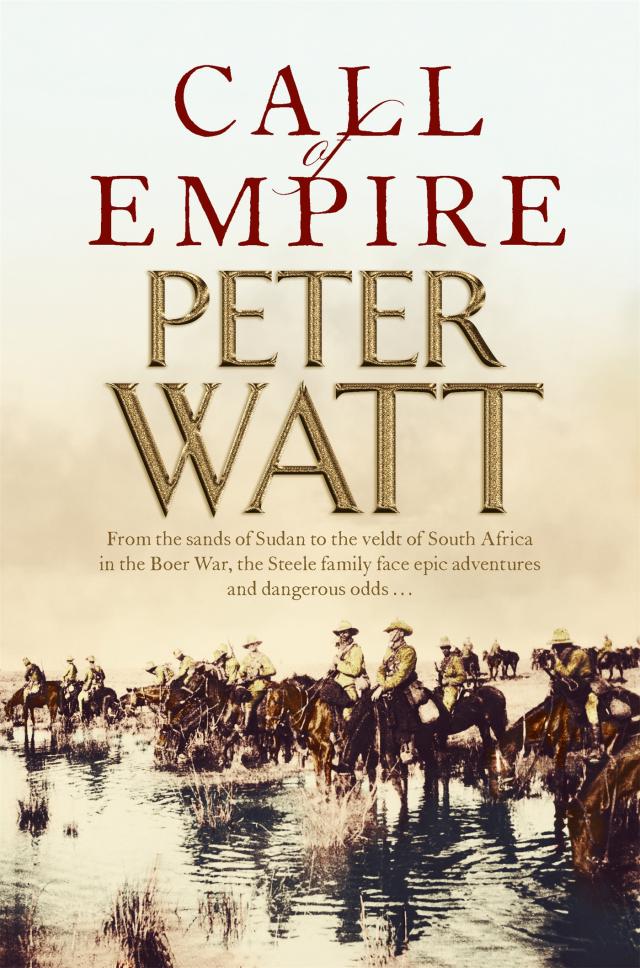


When they reached the camp, they were lined up on the parade ground and the English commander inspected and addressed them.
‘Those who are engaged in the present campaign are proud to bear with you the name of Englishman,’ their new commander-in-chief, Sir Gerald Graham, said. ‘But in welcoming these citizen warriors from a colonial democracy, you are soldiers as well as Englishmen and will cheerfully submit to the privations and severe discipline necessary for the safety of an army in the field. The eyes of all English-speaking races, and indeed those of the whole civilised world, are upon you, and I am certain that you will uphold the honour of the Empire.’
When dismissed, they marched to their quarters to the sound of a Guardsmen regimental band and found themselves shoulder to shoulder with twelve thousand British and Indian troops. Josiah learned that they would be attached to a brigade of Scots, Grenadier and Coldstream Guards under the command of Major General Fremantle. The Scots regiment they were quartered with were from Josiah’s old regiment and he would have an opportunity to catch up with former comrades.
Josiah was visited by Archie when the two officers had settled into their tents. ‘By Jove, that was a rousing welcoming speech,’ Archie said.
‘The only trouble is that we were not identified as Australians,’ Josiah growled, brushing away sand from his small desk.
‘But we are Englishmen,’ Archie defended.
Josiah did not answer the statement as there was no sense arguing with a lawyer. As far as Josiah was concerned, he was an Australian who lived in the colony of New South Wales.
Ten
It had been a grand feeling to enter Sydney Harbour under full sail, the Ella showing off her prowess as she slid past smaller vessels and one or two British warships.
Docked at the Steele enterprise facilities, leave was granted to a small number of the crew, but Ebenezer remained aboard to supervise any tasks required to outfit the schooner for another venture in the South Pacific.
Lee organised transport to take him to his family’s small plot of land in the western reaches of Sydney, where his father and mother grew fresh vegetables for the city’s burgeoning population. He and Sam shook hands at the wharf, and Sam knew his first stop would be at the family offices near Circular Quay, where his father would most probably be.
He entered the building and walked up a couple of storeys to his office. Opening the door to the foyer, Sam was met by the man he knew was his father’s secretary.
‘Welcome home, Samuel,’ Tom Porter said, extending his hand. ‘I am sure Colonel Steele does not require you to have an appointment.’
Within a minute, Sam stood in his father’s office, a tall, broad-shouldered, handsome young man tanned by the tropical sun. Ian immediately went to his son and took his hand in a fierce grip. Sam was sure that he could see a small tear in the corner of his father’s eye.
‘Sam, there has not been a day go by that I was not worried about your welfare. Welcome home. We will have a truly wonderful meal for you tonight, as it happens to be your favourite, roast lamb. Becky will be delirious with happiness to see her big brother, and I know that all the staff missed you.’
Ian guided his son to a leather couch and pulled over a chair to face the young man.
‘I swear you have the look of a man rather than a callow youth,’ Ian said, gazing into his son’s face. ‘Tell me all that has happened since you sailed from Sydney.’
Ian listened in what appeared to be shocked silence as Sam gave an honest report of the events of the last few months: surviving a cyclone only to lose their cargo of bêche-de-mer, taking a Tong leader’s payment for a cargo of rifles, then losing them to Malay pirates.
‘How badly were you injured?’ Ian asked.
‘Lee saved my life by getting me to a doctor in Singapore,’ Sam answered. ‘He did so at great risk to his own life.’
‘Lee is a man I would stake my life on,’ Ian said. ‘He has done much for our business enterprises on the Palmer and since. But we will talk more when you are at home tonight.’
Sam was informed that his brother had taken a reduction in rank to join the contingent that had steamed for the Sudan, and that a letter had arrived posted from Kangaroo Island days earlier. The newspapers now reported that the Australian contingent had arrived at Suakin and that the New South Welshmen would be sent into the fighting. Sam expressed his annoyance to his father that he had missed the opportunity to join his brother in the campaign, but Ian reassured him he was glad he had missed the action, as it was bad enough for a father to be concerned about one son at war.
And so Sam was joyously welcomed to his family home on the harbour. Dinner was a treat after the rations they had lived on while he was aboard the schooner, and over the meal, Becky prattled on about all the gossip she could think of, even mentioning that many young ladies she knew would give anything to step out with her brother. Sam grinned at his sister’s mention of the young ladies’ interest in him. It was hard to meet any of them when he had chosen to go to sea, but it was nice to know all the same.
As he lay in his bed that night, he stared up at the ceiling, wondering what was to come next in his life. He had feared his father might force him ashore after the story he had related of the Ella’s journey, but his father was a man not like others and seemed to understand that all of life was a risk.
*
Detective Andrew Paull had searched in vain amongst the mountains of police documents for any mention of a Conan Curry. Years earlier he had remembered hearing the name passed between a couple of the older police but had not taken any notice. Both police had since retired, and one had passed away. There was just something that nagged him about Conan Curry’s name. He was beginning to think it would forever remain a mystery, but luck was on his side.
One evening, he repaired to a pub not far from CIB headquarters where off-duty (and many times on-duty) police escaped for a cold beer. The bar was crowded, and Andrew noticed that old Herb, a retired police sergeant, was sitting alone in the corner and leaning on his walking stick. All police patrons in the bar knew Herb was dying a slow death from the terrible cancer in his lungs, and when Andrew glanced across at him, he felt pity for a man who had once been awarded a medal for chasing the bushranger scourge of the colony.
Andrew decided to buy him his pot of beer and whisky chaser, which he took over to the table.
‘Young Andrew,’ Herb said. ‘Good to see that you are in good health.’ Then Herb began to cough, covering his mouth with the back of his shirt sleeve. When he had finished, he picked up the whisky tumbler and swallowed it down in one gulp. Andrew pulled over a chair and sat down opposite the old policeman.
‘How is retirement treating you?’ Andrew asked.
‘Bloody police pension hardly buys a loaf of bread,’ Herb grumbled. ‘But all I need is this medicine right here,’ he added, lifting his glass of beer with two trembling hands.
‘I am sorry to see you in this state,’ Andrew said, sipping from his own beer.
‘We have seen enough death in our time on the job to know it comes to all men. Dust to dust, ashes to ashes. We just wonder near the end about all the things we never got to do,’ Herb said, his eyes running. ‘I’ve got no missus and the kids are down in Victoria, so I will get to think about my regrets when the angel of death comes for me.’
‘What is your main regret, Herb?’ Andrew asked.
‘Not catching the bastards who slew dear Mrs Steele,’ Herb said immediately.
At the name of Steele, Andrew became alert. ‘What happened?’
‘I think it was around ’53 or ’54. I was called to the scene of a murder of a saintly woman, Mrs Steele, in a little village west of Parramatta. We found her stuffed under a woodpile and after a short time identified two brothers as the main suspects. I’ve never forgotten the son’s look of absolute shock and grief when we informed him of his mother’s murder. But those brothers just disappeared, and we never caught up with them.’
‘Do you recall the name of those brothers, by any chance?’ Andrew asked.
‘Yes indeed. Their surname was Curry.’
Andrew leaned forward eagerly. ‘Did one of the Curry brothers go by the name of Conan?’
‘How did you know?’ Herb asked with a puzzled expression.
‘Just a copper’s guess,’ Andrew replied, attempting to keep his excitement under control. ‘What was the name of the murdered woman’s son?’
‘It was a long time ago.’ Herb frowned. ‘Bill . . . Charlie . . . No! Ian,’ he remembered. ‘I read about him in the papers a few years back, about his service to the Queen in the army. I was pleased to see that he had made something of himself after that tragedy.’
Andrew could hardly believe what he was hearing. There was no such thing as coincidence in his world of police investigation. Ian Steele and Conan Curry connected by an event over thirty years earlier. And yet, from what he had read, the two men had served together, and Andrew knew that was a bond as strong as any family connection. What were the odds of Conan Curry being the same man still wanted for murder, which had no statute of limitation?
But how could it be possible Steele would be friends with a man who, surely, he must know was linked to his mother’s death? It just did not make sense.
Andrew purchased another round of drinks for the deathly ill former policeman before he excused himself.
Andrew knew he would not be going straight home to his wife and children, but would return to the CIB headquarters to undertake another records search. If he could gather the evidence against Conan Curry VC, then Curry would be hanged at Darlinghurst gaol for murder.
*
Lee walked along the dusty dirt track that led to his family shanty. As he approached, he could see an elderly couple with weather-beaten skin bending over between the rows of vegetables, plucking weeds from the earth.
When he was about twenty paces away, the old woman lifted her head, shielding her eyes, and cried out. The old man looked up to see the well-dressed man now striding towards them, carrying a small suitcase.
‘Ling Lee! My beloved son!’
Lee felt his mother’s feeble but loving embrace and realised he had been away for years. His father stood gazing at his son until Lee walked over to him, bowed and said, ‘Hello, honourable father. It has been a long time.’
‘You are welcome home, my son,’ the older man said formally. ‘You have changed. When I saw you approaching, I thought I saw one of those barbarian white people.’ Lee could see just the hint of a smile on his father’s wrinkled face. He could still see the strength in his father’s body had not changed – he was just a little slower in his movements, and his thick hair and beard were now pure white. ‘Your mother will prepare us a meal, and you will tell us of your life since you left us so many years past.’
That evening, Lee sat with his parents in their tiny hut, drinking soup and eating a meal of noodles and chicken. His mother never took her eyes off the boy she had watched leave for adventure and who now had returned as a man. Lee hardly spoke during the meal, listening to his mother relate all that she felt was relevant, from the weather and crop failures to people in their tight-knit Chinese community who had been born, married and died in this land so far from China.
Then Lee spoke of his life on the goldfields and how he had been gifted a share in a gold-mining enterprise that had made him a lot of money. Of how he now worked for a large company as a trusted employee, accruing even more wealth, and it was then that Lee opened the small suitcase to reveal the coins and paper money.
‘This I have travelled far and worked hard to bring home to you,’ he said as his mother and father stared at the small fortune under the dim light of a kerosene lantern. ‘I hope that I have been an honourable son and made you proud.’
‘My son, you are all that we wished to see before we join the ancestors,’ his father said. ‘We have been able to save and buy the plot we garden on. Our only wish was that one day you would return to us. I can see that you have lived in the world of the Europeans, but still speak our sacred language well. It is not the money you bring us that causes pride, but that you are able to be a man of the world, mixing with your own people as well as the Europeans. Few who have arrived on these shores have been able to swim in the sea of many different fishes. We do not need the money, which I would hope you use to find a Chinese wife worthy of you, and give us grandchildren.’
Lee’s father leaned forward and closed the lid to the small suitcase. ‘Please take it with you when I know you will leave us again. I sense that you have not informed us of all that you have done. I sense that death has been a part of your life.’
Lee was startled by his father’s perceptiveness. Was it that he could see his soul through his eyes? He hung his head. ‘I have used the skills you taught me to save my own life on many occasions,’ Lee replied. ‘I have not dishonoured the code you taught me.’ It was not the full truth, but Lee greatly valued his father’s opinion of him.
In the morning, Lee bade farewell to his elderly parents and as he walked back along the dirt track, he realised that the tears welling in his eyes were running down his face. Lee knew that his parents would never see their grandchildren, nor would he ever see them again in this life.
Eleven
Josiah made his way into the regimental area of the brigade quarters and was immediately recognised by soldiers who he had served with in Afghanistan and Africa. Beaming smiles, salutes and calls of ‘Good to see you, sir,’ echoed as he passed. Josiah experienced a warm feeling of being remembered by those he had once led, and stopped to congratulate men who had once been private soldiers and now were wearing the chevrons of corporals and sergeants. One soldier Josiah had recommended for promotion was now a sergeant.
‘Sergeant Wilberforce. I see that the regiment had the wisdom to promote you. A finer soldier I have never known.’
Sergeant Wilberforce stood at attention, beaming his gratitude to a man he would have followed into hell. ‘Yes, sah. We even have another colonial officer in the regiment whom the men respect, but we don’t call him the Colonial as we did you, sah.’
‘Who is the man?’ Josiah asked, his curiosity piqued.
‘Captain Patrick Duffy. I heard he was from New South Wales,’ Sergeant Wilberforce replied. ‘I last saw him at his tent a few minutes ago. You might catch him. I can see that you are with the Tommy Cornstalks.’ Sergeant Wilberforce used the term for the newcomers, as it was noted that they were generally head and shoulders taller than the Tommy Atkins British soldiers, who had been recruited from the slums and impoverished rural regions of Great Britain. Poor diet and starvation had stunted their growth, where the volunteer army had grown with an abundance of meat and vegetables in the colonies.
‘Well, here we are, shoulder to shoulder in this campaign, Sergeant. You keep your head down in any future fighting. I expect to see you wearing warrant rank when next we meet.’
Sergeant Wilberforce grinned and snapped off his best salute.
Josiah went in search of this mysterious colonial in his old regiment. He had little trouble finding the officer’s tent, and noticed a tall, broad-shouldered young man lounging in a cane chair outside of the tent flap. He was in his shirtsleeves with his feet up on an empty ammunition crate, and was reading a novel.
‘Captain Duffy?’ Josiah asked.
The captain barely glanced up. ‘Who might you be?’
‘Lieutenant Josiah Steele, formerly of this regiment, sir,’ Josiah replied.
Immediately, the captain dropped his feet to the ground. Pushing away from the chair, he came to standing before Josiah, his demeanour transformed in an instant. ‘I have heard tales about you from my brother officers ever since I was commissioned into the regiment of mad Scots. It is a pleasure to shake the hand of the colonial who blazed the trail for me. I think that calls for a quiet drink, if you will?’
Josiah followed Patrick into the tent, which was furnished with a simple camp stretcher and table constructed from ammunition crates, with a folding canvas field chair. Patrick produced a silver flask of brandy and a couple of battered enamel mugs, gesturing to Josiah to take the folding chair while he sat on the empty ammunition cases.
‘I am surprised to see that you have come here to serve as a mere lieutenant,’ Patrick said, raising his mug in a toast. ‘With your experience, I would have expected you to be a brevet captain at the least.’
‘I had to take a reduction in rank as officer field positions were hard to come by, and there was no shortage of experienced British field officers. But I have my platoon and am enjoying being back in this world, which I find much more comfortable than that of our family business.’
‘You would not perchance be a member of the Steele family from Sydney, whose patriarch is former Captain Ian Steele?’ Patrick asked.
‘Now Colonel Steele, with his own militia regiment,’ Josiah replied. ‘He is my father.’
‘Damn in hell!’ Patrick exclaimed. ‘My adoptive family, the Macintoshes, do a lot of business with your father. I am surprised that you and I have not crossed paths earlier. In these modern times, the world is getting smaller every day.’
An hour went like a minute as the two stumbled across mutual interests and friends back in Sydney until a soldier appeared at the entrance to the tent.
‘The commanding officer wishes for his officers to assemble at his tent in ten minutes, sir,’ the soldier said to Patrick, who immediately reached for his khaki field jacket.
‘Well, old chap, you and I will have to meet up again in the officers’ mess. I am sure that there will be one or two familiar faces who would love to catch up with an old comrade.’