Sundance 17, page 11
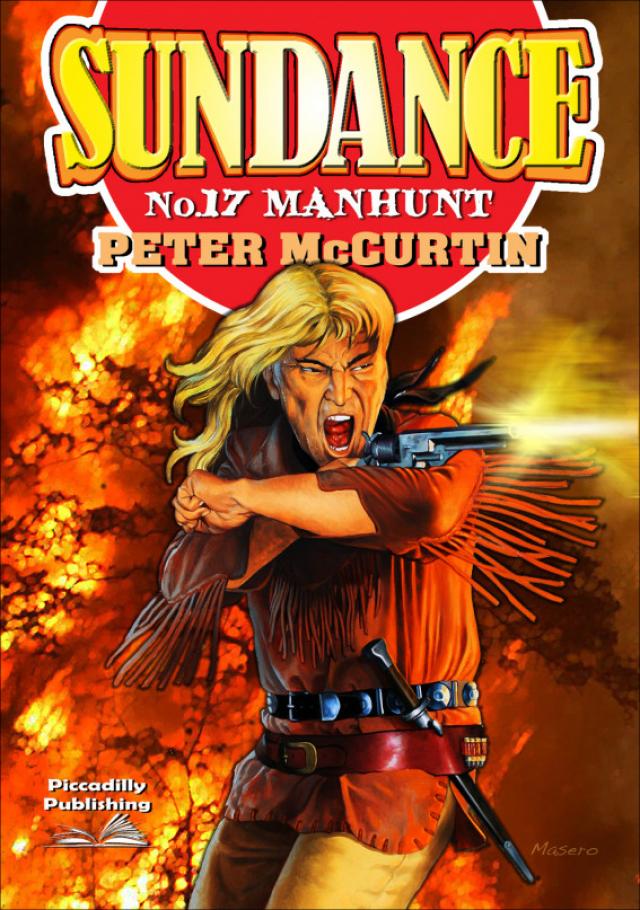


He took advantage of the confusion to cover a lot of distance. Miles from the cabin, he halted, got his bearings. Ahead was a deep, snow-filled ravine, cleaving the side of the valley wall. Sundance worked down into it, rattling the thickets that clogged it. Presently a big snowshoe hare, dead white, took flight. He dropped it with an arrow, skinned it. In the ravine, he built a nearly smokeless fire of dried wood broken from standing trees. He ate the rabbit, climbed out of the ravine, moved on another mile. He found a covert under a fallen spruce, unwrapped the dog skin he’d had in his parka. Quickly, he made a bed of spruce bows on the snow, out of the wind, a pile of them with the warm dog skin over it as a place to lay his head. He slept for two hours, a risk he had to take, but an acceptable one, and awakened much refreshed.
They knew he had survived, now. And they would come hunting for him.
He smiled grimly. That was what he wanted.
He had counted on buying time with the traps and he was right. It must have taken them the whole morning to satisfy themselves that there were no more around the cabin—a lot of cautious poking in the snow with sticks. Even so, now, they would be thinking hard with every step they took, and they would stay off trails and beaten paths.
It was a big valley. And he was a man alone, no longer hampered by a woman, and they would have hell’s own time surrounding him again. He rolled up the dog skin, put it in his parka. Tonight he would put it to the real use he intended for it. He worked higher up the hill and back along the way he’d come. By now they would have struck his trail in the snow, be following it. They were northern men, could read sign, too: likely trappers all, but trappers gone rogue.
He found a windfall where he could command the trail he’d made from a hundred yards higher up, with a clear field of fire. Hiding in the fallen timber, he nocked an arrow to his bow and waited.
An hour passed, he grew cold, and from time to time he moved silently, to keep his circulation going. But then he saw them, up the valley, four black dots, on his tracks. His nostrils flared. Four men after him, a couple to guard the girl, two out of action. He had no idea how many more there might be. Anyhow the rest, if they had any sense, would be sweeping out more swiftly in the direction his trail led, trying to intercept him, cut him off if he turned. Eventually, they would double back. He had some time, but not a lot of it.
Anyhow, those four had to be put out of action. Besides, he needed a good rifle. He waited, crouched in the windfall.
They came on with excruciating slowness, total caution. They knew their enemy now, and they respected him. They were spread out in a line of skirmishers, following his tracks. Sundance waited. In due time, they moved into the opening, into his field of fire.
Now, Sundance thought. He loosed the bowstring.
One of the four had fallen behind the others. Suddenly he straightened up, half-turned. He made a clutching gesture at his chest, a strange sound which Sundance heard. Then he fell forward on his face, the shaft of the arrow which had pierced his heart breaking under him. Already, Sundance had another arrow on the string.
Hearing that dying gurgle, the man nearest the fallen one halted uncertainly. He frowned, then turned. Sundance’s aim was off a little. He’d meant to drive an arrow through that one’s heart as well. Instead, it caught him in the face, drove on into his skull. He made a strange, choked sound, fell backwards, threshing. Both men in the lead whirled around, staring.
They had no way of telling where the arrow protruding from the dying man’s head had come from. For one frozen second they looked at each other. Then Sundance sent death flying through the air again.
The third man clutched at his belly, howled, dropping his rifle. The fourth, almost paralyzed, suddenly broke and ran. That earned him a short reprieve, as Sundance’s arrow brushed past his back. But Sundance led him with the next one, and it went in beneath his arm, burying itself to the feather. He ran five steps more, seemed unable to keep up with himself, then tripped and fell and then was still.
Sundance broke from the windfall, skidded down the slope. Wasting no time, he scooped up the first rifle that he came to, shook it free of snow, checked its caliber. The cartridges in his pocket would fit it. There was no time, either, to retrieve those precious arrows, instead, he mushed directly back the way he’d come, toward the cabin, keeping in the tracks of the others to confuse pursuers that much more.
Somewhere across the valley men shouted to one another, voices carrying clearly in the still, cold air. Others answered from this side, but they were far away: far enough, anyhow, Sundance thought, with any luck, as he neared the cabin.
Behind the hummock where he’d lain last night, he went to cover.
Smoke curled up from the cabin chimney. The dogs were gone, the pursuers were using their sleds now. That was a break. Sundance shook his head incredulously. And there were no guards out.
But again, why should there be? The men were in the cabin, and the shutters were closed and the door locked, presumably, and what had they to fear from him? They knew he had lugged those traps there, but they didn’t know about his bow and arrows. Neither did they know about the dog skin rolled up in his parka.
Well, now or never, he thought. Rifle ready, he worked around behind the stable, dodged inside. It was empty. Naturally, being unheated. Good, that meant they were all inside the cabin. So, he presumed, was Laughing Woman. She had to be.
The blond half-breed’s lips thinned. Now came the ticklish part. He took off his snow-shoes. He slung both bow and rifle. The back wall of the cabin was completely blind, without a window. Sundance ran from the stable, snowshoes beneath one arm. He tossed them into the snow at the corner of the cabin.
It had been built, as was usual, of notched logs, interlocking, each log protruding six inches behind the corner, more or less. That lacework of protruding log ends made a fine ladder, even though it was slippery with ice. Sundance went up it with no more sound than a pine marten would have made. The roof was only slightly pitched, blanketed with snow. Sundance eased over the outjut of the eave, and now it was hard finding purchase.
His outflung hand caught the edge of the roofs end, where it jutted. He used that leverage to pull himself up a little. The short hair on the back of his neck prickled. He was a prime target suspended there like that, like a porcupine climbing a tree. Anybody within five hundred yards of him could drop him. Then he had made it, somehow, was belly flat on the roof. And now slowly, very slowly, so as hot to give any sign of his presence up here to anyone in the cabin, not to make the shingles creak or the joists bend, he crawled toward the stovepipe.
He reached it. He could still hear shouting down the valley, but it was growing fainter.
Reaching in his. parka, Sundance took out the dog skin. It was not a full-sized hide, only a square of fur. Carefully he wadded it, stuffed it in the stovepipe. Then he unslung his bow, nocked an arrow, lay flat on the roof where he could watch the door, and waited.
Three minutes passed, five. Then the front door opened. Cursing, a man stepped out, walked around the cabin, peering at the roof. Sundance let the arrow go. This time he meant to hit the man between the eyes, and he did, and his target dropped without a sound.
Smoke billowed from the open door. Inside the cabin someone coughed. “Dammit, Jake. Jake, where are you? Ain’t you fixed that thing yet?” Carrying a rifle, another man emerged.
Sundance drove the arrow in behind his shoulders.
He pitched limply forward in the snow.
“Hey, what the hell!” a voice cried out. Evidently there was at least one more man in there. Suddenly the door slammed. “Hey, Jake, Wally,” the voice yelled. “Hey—” Then it broke off in a fit of coughing. Somebody else said, choking, “Get that damned fire out:”
But now smoke was puffing from the windows, too. Whoever was inside could not possibly stay longer. Sundance was ready. Another five minutes crawled away, and he knew the inhabitants of the cabin must be reaching the limits of their endurance. Even dousing the fire would only make it worse.
He had, after all, in his time, smoked many a wolf out of a den.
And now this one broke from cover. The door swung open, and, coughing and gagging, a figure emerged. Just in time, Sundance held the bowstring instead of letting it slip. In the blur of smoke, he recognized Laughing Woman. And a man came behind her with her arm in a hammerlock, using her for a shield. He had a pistol in his other hand.
Sundance waited until he made sure the gun wasn’t pointed at her back. One more arrow, and it went in under the left shoulder blade with measured force. He did not want it to go on through into the girl.
The man who held her turned, dropping his revolver, feeling toward his back. His red bearded face was twisted in an expression of astonishment. Laughing Woman ran, away from the smoke, away from the cabin, dashing for the woods and safety.
Sundance whistled softly. She did not hear, vanished into the jack pines. Sundance swung off the roof, landing easily in deep snow. Inside the cabin men were cursing. “Dammit, what’s goin’ on? Somebody git us out! We can’t move!” That would be the two he’d trapped this morning.
He had neither time nor stomach for more killing; he had to get to Laughing Woman, and fast. She was without a parka; she would need that and a pair of webs. Sundance slammed the door. An open padlock hung in a hasp. He closed the hasp and closed the padlock. The men were sealed inside the cabin now with the smoke. They would be harmless for a long time—if they lived.
He ran around the side of the cabin, yanked the parka off of the man he’d shot through the head. He retrieved his own snow-shoes and scooped up an extra rifle. Another pair of webs hung on the front wall of the cabin. He jerked them down. Then, laden with all that, he dashed after Laughing Woman into the woods.
Her trail was easy to follow. He heard her crashing through the spruce ahead, in desperation. And suddenly he halted, gave the cry of a hunting owl.
Suddenly the lashing of the foliage up ahead ceased. Sundance grinned. His call had been a perfect imitation. But, of course, since owls hunted only at night, it might be false. An Indian girl would know that and know that only another Indian could mimic it so exactly.
Then, from up ahead, he had an answer.
He answered that, slipped on his snowshoes, and ran on. Parkaless, shivering in the cold, she emerged from a thicket, ran to meet him. Her eyes were red from smoke. Maybe it had caused the tears, too, that streamed down her cheeks. “Jim! Oh, Jim, I thought until this morning you were dead! And—”
He held her for a moment. “All right. All right. No time for talk or cryin’ now. Put on this parka, get on these webs. The rest of this bunch is down at the other end of the valley lookin’ for me. We’ve got to get out of here, and in a hurry.”
“Right.” She recovered instantly. Once in the parka with the snowshoes on her feet, she said, “I’m ready. Which way?”
“A way they don’t expect. Out the way MacDougal and I came in the time before. Not toward Storm River, but toward Ninety Mile!”
She did not answer, only took his rifle that he handed her, and led the way. Even as they started through the trees, the wind was rising, the sky was clouding, and a few flakes of snow began to fall.
~*~
It was in a blinding storm that they worked out of Murchison’s valley, leaving their furs, even Laughing Woman’s silver fox, behind, hanging drying in the stable. That did not matter now. What mattered was that the storm would erase their tracks, make pursuit impossible. And yet, even as they shoved on, keeping the timber’s shelter as much as possible, regret gnawed at Sundance. He had hurt the Carcajou’s men, hurt them hard. But in the long run they had won, driving him out of the valley. And he was no closer now to knowing who the Carcajou was or how to get to him than he had been when he had first seen Storm River.
That night, in deep woods, he built a lean-to, made a roaring fire in front of it, after scraping away the snow. The storm still blew, and they would need the big fire’s warmth, reflected off the rock face of a cliff that broke the wind. They lay on a bed of spruce boughs, close together, both exhausted, stomachs clamoring for food, but there had been no time to hunt. Laughing Woman’s head was pillowed on Sundance’s arm.
“Anyhow,” she said, “they didn’t hurt me. I guess I could be thankful for that. The man named Jake said that Galt would kill them all if they harmed me.”
Sundance stiffened. “Galt wasn’t with ’em, then?”
“No. I think Galt’s the real name of the Carcajou. These men were from up in Alaska, really—Americans. Wanted by the authorities there, and they crossed the border into Canada. Galt made contact with ’em, promised them a fortune—by their lights—for a season’s trapping and some strong-arm stuff. They were all good at both. Anyhow, they came down from the Yukon here to B.C., months ago. They’d been hanging around not far from Storm River, in a kind of settlement they threw together back in some unexplored country east of here. Then Galt got in touch with them, sent them here with orders to wipe you out.”
“But not to hurt you,” Sundance said.
“Yes.” Her voice was drowsy. “It doesn’t make sense. I never met a man named Galt.”
Sundance didn’t answer. He was thinking, Maybe. Just maybe. Then he too was asleep.
~*~
Six days later, after hard traveling, living off of game Sundance shot, they made the settlement of Ninety Mile. Either pursuit had been thrown off or not attempted, and Sundance thought it was the latter. He doubted that the Carcajou’s men had any appetite for walking into the silent death of his arrows. By now they must be thinking that Sundance was himself some sort of devil.
At Ninety Mile, they bought a dog team and sled, charging it to Hudson’s Bay at Storm River, and supplies. Then they struck north again, but this time they circled wide around Murchison’s valley. Keeping to timber, they made it in ten days, the detour costing them a struggle with rough terrain. Eventually, though, their team topped a rise and they saw below them the long building of the post and the scatter of cabins around it. The day was clear and fine, the snow deep, and they went down the hill hell for leather, the dogs yapping and barking. The sound of their oncoming team attracted attention: the door of the post building swung open and a big form on crutches appeared in it. As the team neared with Laughing Woman riding on the sled, MacDougal recognized them and let out a whoop like the shriek of an agonized loon. “Sundance! Sundance, by God!” Then he saw Laughing Woman. “And she’s all right, too! Hell and St. Andrew! I was afraid you both were dead!”
He yelled instructions to an Indian lounging near the door to see to their dogs. “Come on in. Right now! Tell me what the hell’s been goin’ on up in Murchison’s valley! All kinds of weird rumors floatin’ in by moccasin telegraph!”
It felt good to be in the warmth of the trading post. Galloway came forward, dour face almost lighting up, put out his hand. “Mr. Sundance. Good to have you back. Did you catch the Carcajou?”
Sundance’s eyes went hard. “I’m afraid not.” He watched Galloway’s face. Then he said, “Give us some tea and I’ll tell you all about it.”
Galloway brought it. Sundance shrugged off the parka, loosened his Colt in its holster. The tea was hot, strong, sweet and good. They sipped it, while Sundance told the story of the fight at Murchison’s trapline. MacDougal whistled in awe. “My God, you took care of half that crowd single-handed.”
“But the Carcajou wasn’t among ’em.”
“No. But Galt?” MacDougal frowned. “There was a man at this post when I first came here as a green assistant. That was thirty years ago, and … Yeah, his name was Galt. And the Company fired him. Kicked him out for embezzling. Holding out on the furs brought in—especially silver fox. Last I heard, he went down to the States, Seattle or Portland or somewhere. I haven’t paid him any mind since. Except ...” He shook his head. “But Galt would be an old man, now. Ten years older than I am. But, yeah. He’d have a grudge against the Company. And against me, too. I’m the one that caught him at his sticky fingered game and turned him in. But to bear a grudge that long ...” He drew in breath. “Well, I’ll write Montreal and have them check. And when Cameron comes back, we’ll make a full report to him and he can check through the Mounties, with the United States authorities.” His face darkened. “This Galt, whoever he is, has got a lot of blood on his soul, a lot to pay for.”
“Cameron,” Sundance said. “Where is he?”
“I tried to stop him, but he went to Murchison Valley as soon as these moccasin telegraph rumors came drifting in. Damn fool went alone, but that’s the way the Mounties are. Think those red coats make ’em bullet proof. Still, they damn near do. Only a fool would kill a Pony Soldier, because the whole force would come down on you then, and hell itself wouldn’t be hot enough to hold you, much less Canada.”
“I see,” Sundance said. “Galloway, what about some more tea?”
“Coming right up.” The man came to him with a cup in either hand.
Sundance’s draw was so swift no one saw his hand move. Suddenly the cocked Colt was rammed hard against the clerk’s stomach. “All right, Galloway,” Sundance said. “Now, you’re gonna talk. Or else I’ll blow a hole straight through you.”
Galloway stared, his hands opened, and both cups dropped to the floor. MacDougal made a weird sound. “Sundance, you gone crazy?”
“No. Pieces are falling together now. An old man named Galt with a grudge against you and the Company. And, I’d guess, a younger one, wandering around British Columbia hiring gunslingers from Alaska. And two gun-hands trailing me around Seattle because they knew you were meeting me. And even there, on Skid Road, an unlikely spot for a man like you. You wrote me the letter, Sam, but it couldn’t have been you who arranged that set-up. So it was somebody else through whose hands the letter passed. Who else would that be but Galloway, who handles all your business?”
“But he never saw that ...”
“He dispatched the mail, didn’t he?”
“Yeah, but—” MacDougal turned, stared at him. “Steamed it open, did you?”