

Kaboom, page 17
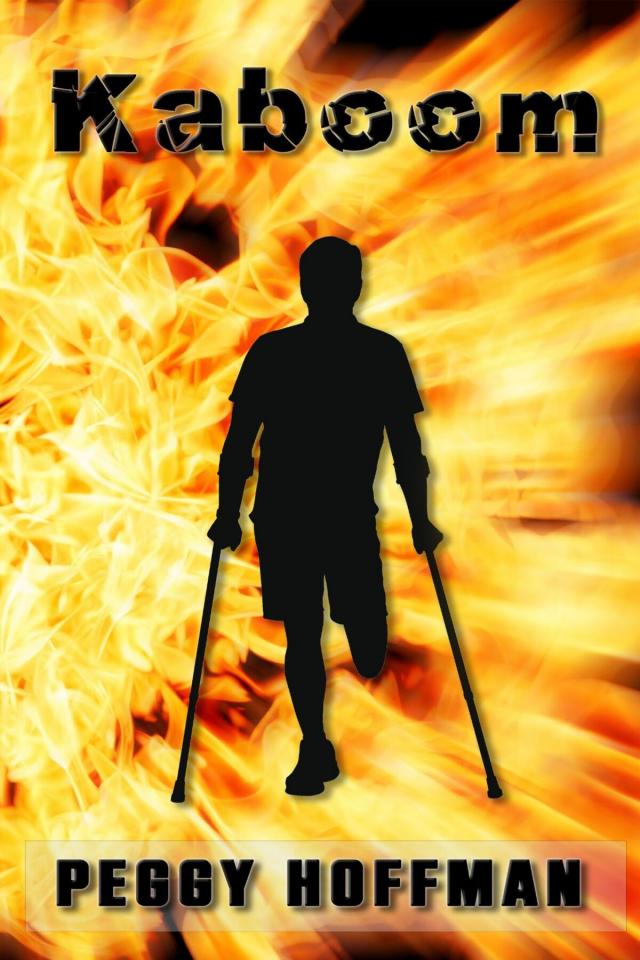


Thirteen
“My little sister told me she’s considering enlisting in the Army,” Clay told Jacoby the next time they met. It was becoming a regular thing for them, he realized, meeting twice a week to drink premature pumpkin spice lattes and to talk about things, mostly Clay’s problems. It was starting to feel almost – normal.
“What do your parents think of that idea?”
“She hasn’t told them. God. They will shit kittens.”
In the way of Murphy’s Law, a sweet grandmotherly woman walked by right next to their table at that precise moment, and paused to give Clay a scolding glance.
“A nice-looking young man like you shouldn’t be using language like that in public,” she said, then proceeded to a nearby table where a teenage girl sat. Clay heard the girl say, “Guess what, Grandma! Starbucks has a secret menu and they can make you butterbeer if you ask!”
Jacoby laughed outright. “I think she likes you.” He nodded at the grandmother. “Are you into cougars, Clay?”
At Clay’s shocked look, he amended, “Oh, yeah, you already have a girlfriend.”
“No, I don’t,” Clay snapped.
“Are you sure?”
“We broke up.”
“Really? When did that happen?”
“Right after this happened.” He swept a hand subtly towards his left leg.
“Did you both break up, or did you just break up with her? Because I spoke directly to the lovely young Julie, and she clearly referred to you as her boyfriend. Not ex-boyfriend, not former boyfriend. She just said her boyfriend was having trouble adjusting to civilian life as an amputee.”
“What the fuck difference does it make?” It killed him a little to have to think about Julie and their non-relationship.
“Watch it, Clay,” Jacoby warned. “Your cougar might come over here and slap your face.”
“Hmmph!” was the only response Clay could manage.
Jacoby leaned towards Clay and asked, in a lower voice, “How about sex?”
Despite his utter shock, Clay somehow managed to dredge up enough of a sense of humor to choke out, “No offense, Staff Sergeant, but I’m straight.”
Jacoby laughed loud enough that all the other customers, including Clay’s cougar and her granddaughter, looked at them with smiles, and Jacoby slapped him on the shoulder.
“So am I,” he said. “I wasn’t offering. I was asking about you and your girlfriend. I know it can be a little awkward at first, but you’ll get the logistics of it figured out pretty quick. As for me, I’m married to the most beautiful woman in the world.”
That couldn’t be true, because Jacoby wasn’t married to Julie. But he let the guy have his opinion.
“We have three gorgeous children. The third one was born after.”
“After what?”
Jacoby looked at him with disbelief and repeated, “After.” He reached down and lifted the left leg of his slacks a few inches to reveal a titanium ankle just like Clay’s protruding from his shoe.
A thunderbolt of inconceivability slapped at Clay’s brain. No. It was impossible. He had seen the man walk, stride, drive. No cane, no limp, no hesitation. No gritting of teeth, no grimace of pain, no appearance of having to plan every movement like the opening ceremony of the Olympics. The man projected an image of happiness, of normalcy. How could that be? He stared with complete and utter shock at the familiar sight of titanium that Jacoby casually revealed.
“Oh my God.” He could barely speak. “I had no idea. You?” He couldn’t enunciate any more words.
Jacoby let his pants leg slip back into place, exhibiting absolutely no embarrassment at revealing his prosthesis in public. Clay could never do such a thing.
“I guess I should have told you when we first met. I just assumed you knew I had an AKA also. I’d still be in the Army otherwise. That’s why I wanted to mentor you. We have a lot in common. No one can tell you what it feels like to be blown up except someone who has been blown up.”
“But you don’t even use a cane. How do you do that?”
“Practice. Physical therapy. Thoughts of being there for the people you love. More training. To quote Churchill, blood sweat and tears. I do still have a cane, just in case, and a pair of crutches too. I use them around the house when the prosthesis bothers me and I just want to take it off.”
Clay’s head was ringing with shock and his mind completely boggled. Never in a million years would he have guessed that Staff Sergeant Jacoby was an amputee also. He seemed so normal, not only physically, but emotionally as well. Why wasn’t he an emotional wreck like Clay? How could he be so calm, so purposeful, with a career and a family and all that normal stuff? Was it really possible?
Kaboom!
The world exploded and Clay found himself thrown from his seat to the Humvee’s floor and his head bounced off something and his leg hit something, and damn that hurt.
Someone was screaming and someone was crying, but there was too much dust permeating the air to see who it was. It seemed like half of the earth in Afghanistan was flying around them, dispersed by the IED.
Lopez – damn, Lopez was bleeding from the neck and gurgling helplessly as the blood spurted out like a fountain around a piece of shrapnel embedded in his throat.
But no. Wait. Back up a step.
He hadn’t heard the screams or seen Lopez bleed out. He’d been knocked unconscious immediately, the most convenient concussion ever. He hadn’t seen the spurting blood nor had he heard Lopez’s last words, which had been desperate pleas to anyone within earshot to tell his wife that he loved her. He hadn’t seen the life fading from Lopez’s eyes nor had he felt the guys from bravo squad in the truck behind them pulling him out and screaming for a medic, for an evac chopper. There was no memory of the trauma in a tent known as the field hospital at their base. He’d been unconscious for two more days and had even missed the oh so lovely ten-hour medical transport flight to Ramstein Air Base in Germany, courtesy of the United States Air Force, and the three-mile ride via AmBus to Landstuhl Regional Medical Center.
He hadn’t been able to attend Lopez’s funeral because he’d been in surgery that day. He’d only been told about those things afterward.
The chaplain was there now, sitting next to him, putting an arm around his shoulders, trying to help him sit up, calling through the post-Kaboom ringing in his ears.
“Clay! You OK, man? Did you hit your head?”
He gasped, and it wasn’t Army Chaplain Father Saniti there with him, but rather Staff Sergeant Nathan Jacoby trying to get his sorry ass up off the floor.
Where was he? How had Jacoby gotten to Germany? He hadn't even met the guy until he'd returned stateside. Think, Clay! Stateside. He wasn't in Germany anymore nor was he in Afghanistan. He was on the floor of a Starbucks shop in Wheeling, Illinois, cowering under a table like a dog afraid of thunder.
It took a moment for Jacoby’s features to come into focus. “I thought you were a priest,” Clay said stupidly.
“A Catholic priest?” Jacoby laughed. “Don’t tell my rabbi that. He’ll have a conniption.”
Clay’s right leg was wet. Was he going to lose that too, or had he pissed himself? He could feel liquid warmth seeping through his slacks but didn’t dare look. “I think I’m bleeding.”
“That’s coffee.” A definite fragrance of pumpkin spice was wafting from the wet fabric of his slacks.
He needed a minute to get his eyes back into focus and to try to breathe his heart rate down to a level that reduced his risk of an immediate, fatal stroke. This was worse than the starter gun at the track field.
The grandmother and her granddaughter were staring at him in horror. She definitely wouldn’t want to be his cougar now. But it was the granddaughter gaping at him as if he were a wild animal escaped from the zoo that cut his heart into a million pieces and made him want to run away and hide. But he couldn’t run anywhere anymore. A damn unfair situation for a former track star.
This was why he should have stayed home.
“What happened?” he asked, as, with help from Sergeant Jacoby, he finally got back up into the chair. Jacoby handed him some napkins and Clay dabbed futilely at the spilled coffee.
“One of the employees dropped a metal coffee carafe on the floor. I think he’s being scolded by his boss now because it’ll have to be washed again.”
Just when he thought he’d progressed to a feeling of safety, of something almost resembling normalcy, a supposedly harmless incident like a dropped coffee pot sent him off the deep end again. This whole getting out into the world again thing had been a really bad idea.
“Is this how it’s always going to be, going into panic mode every time I hear a loud noise?” He tried to ask the question clinically but it was impossible to keep the despair out of his voice.
Stupid question. How could Jacoby possibly know something like that?
“Uncertain,” the man answered. “It’s different for everyone.”
That was an acceptably vague answer. But the guy had done his research.
“It’s possible you may have continual issues with unexpected loud noises. For the most part, the shock and panic tend to diminish with time. But then, some veterans can’t ever watch a fireworks display again, or stay calm during a thunderstorm, for the rest of their lives. Only time will tell for you.”
Oh, God, thunderstorms. He glanced with fear out the window. The sun was shining and there were only a few puffy white clouds dotting the sky. But this was summer in Illinois. That could change in an hour. Thunderstorms were inevitable. Would he be able to withstand a thunderstorm without falling to pieces? Hearing the sound of a metal coffee carafe falling on the floor had nearly killed him. What was he supposed to do on the Fourth of July? Instead of attending the fireworks display at Heritage Park with his family, he was going to have to endure the evening with earbuds in his ears, the volume of his music cranked up, and a pillow over his head.
“Don’t you dare say to me that time heals all wounds,” Clay insisted. “A million years of wishful thinking isn’t going to make my leg, or yours, grow back. If you try to feed me that cliché, I’ll -”
“You’ll what? Smack me? Get up and walk away?”
Clay looked at him sharply. He knew Jacoby had said that because he knew that getting up and walking away would be difficult.
“I’m not talking about the physical wounds, Clay. Other than to assure you that you will learn to live with it more easily as time passes. But the emotional wounds -”
Clay interrupted, “A million years isn’t going to heal that either.”
Before Jacoby could answer, Clay insisted, “I need to go home.”
“Not yet,” Jacoby insisted. “You need to learn to deal with these unexpected sounds and loud noises. Running home every time something startles you is not going to help.”
An employee approached their table with a mop. “Sorry, man,” the kid said. “Didn’t mean to scare you.” He mopped up the spilled coffee on the floor, picked up the cup and lid that Clay had knocked over, and offered, “Would you like a fresh one? On me.”
“No, thanks,” Clay muttered, too embarrassed to look the kid in the eye.
“OK,” the kid agreed amiably, as if having customers fall on the floor in a psychotic fit was an everyday occurrence here.
Jacoby continued, “For most, the effect diminishes over time. I think it will be like that for you too. I’d be willing to bet that next year at this time, they could drop a whole case of coffee pots right next to your ear and you’ll barely flinch.”
“I hope so.” Clay hoped he never again had to see a kid like that young girl staring at him like he was some sort of alien. And not a cute friendly alien like E.T. More like the alien that bursts out of a poor bastard’s chest while everyone else screams and pukes.
“How do you manage it?” he asked Jacoby. “Especially being a teacher? You’re so, I dunno, so well-adjusted.”
“I wasn’t always. I spent a lot of time, those first weeks after it happened, lying in that hospital bed, asking God, why me? Why do I have to live like this? Why couldn’t I have been the hero under a plaque at Arlington? They said I was lucky I survived at all. Some luck. You’re not the only one to have those thoughts, those wishes. Survivor’s guilt can be a terrible, powerful thing.
“But if not you, if not me, it would have been someone else suffering, some other family grieving. It came to me, after a period of selfishness, that despite what had happened to me, I still had a lot to live for, people who loved me and would prefer that I remain alive no matter how. My wife, my kids, my mother. If I’d died my mother would have dug me up just to yell at me for it. You have no idea of the guilt trip a Jewish mother can lay on a guy. I didn’t want to have to go through that by wishing I’d died. I’d gotten it once already when Renee and I got engaged. You can’t imagine the heap of guilt a Jewish mother lays on her only son when he marries a shiksa.”
“A what?” Clay was confused. “What country is your wife from?”
“She’s from Minnesota. She moved to Chicago to escape the brutal northern winters, ha ha. A shiksa is a woman who’s not Jewish, the nightmare of every Jewish mother.”
“Your mother didn’t like your wife?” Clay was pretty sure his mother loved Julie, sometimes, he thought, as much or more than she loved him.
“Oh, my mother likes Renee a lot. Her only objection was that she isn’t Jewish. Or at least she wasn’t. She converted so we could get married under a huppah.”
“A what?” Clay asked again.
“So we could have a Jewish wedding. Both our families were definitely not happy about it. That first Christmas and first Hanukkah were pretty awkward. But the moment our first child was born, everything was forgiven. Both sides forgot about any objections. It’s amazing, the healing power of a grandchild.
“As for being a teacher, every school year, a few days after the semester starts, I show up at school wearing cargo shorts so everyone can see my leg. It comes as a shock a lot of times, I have to say. I explain how it happened, answer any questions. I take the prosthesis off and let the kids touch it if they want, and I tell them that I was incredibly honored to have served and even if I’d known this was going to happen, I’d do it all again in a heartbeat.”
Clay shuddered. He couldn’t bear for anyone to see his prosthesis, to know that one of his legs was manufactured rather than organic. He hadn’t allowed anyone to see it, not his family, not Julie. Especially not Julie. And to take the thing off, detach it from his stump in front of witnesses? Clay had thought he was a brave man, before Kaboom, but he doubted he would ever possess the courage to remove his titanium monstrosity where anybody could see it.
“Do they ask about the Purple Heart?”
“Yes. I bring it with me and show it to them if they ask to see it. I’ve even had female students say they think my prosthetic leg is sexy.”
Sexy? Clay couldn’t think of anything less sexy than his prosthesis.
Around them, the coffee shop relapsed back into its normal rhythm, as if he hadn’t had a panic attack here just a few minutes earlier. The grandmother and her granddaughter had stopped staring at Clay, finished their drinks and left. Now that he was back in his chair, didn’t appear to require medical intervention, and was carrying on a coherent conversation, the world around him seemed to return to normal.
“My goal, Clay,” Jacoby went on, “is to offer you hope, and to try to convince you that it’s real. I don’t have to give you back your dignity and pride. You never lost them. They’re just in the background, waiting for you to acknowledge them.”
“My dignity is so far in the background it may never come out again.” He glanced towards the floor he had recently been sitting on, having his second PTSD episode this week.
“I thought the same thing once,” Jacoby admitted. “But my wife convinced me that it would get better, and she was right.”
Clay could have had that. With the clarity and insight that comes to a Monday morning quarterback, he realized, he could have had that with Julie. What if, instead of pushing her away with that cruel unexplained email, he had called her and said, I’ve been wounded, I need you? She would have been at his side as soon as a plane could get her there. She probably could have talked the Air Force into flying her directly to Ramstein Air Base, only three miles from Landstuhl Regional Medical Center. It would have had her at his side much sooner than traveling the eighty miles from Frankfurt, the nearest commercial airport. How would he have felt, both physically and emotionally, with her there, caring and loving him and telling him it was going to be all right? And he could have believed her. She would have made cakes, from scratch, for the entire staff at the hospital. She would have become best buddies with his LNCO. She would have pushed his sorry ass into the psychiatrist’s office and would have made him talk, and would have made him listen.
“Renee came to Landstuhl right away,” Jacoby said. “She told me every ten minutes that she loved me and that we would be fine, and I had to believe her.”
“I wouldn’t let anyone come see me in the hospital.”
“Why not?” Jacoby asked. “You know there are lots of people who donate their airline miles so that family members can fly out there.”
“I was afraid I’d cry. And I broke up with Julie in an email.”
“If you think I didn’t cry, you’re wrong,” Jacoby assured him. “The moment my wife walked into my hospital room, I became a total snotty waterfall. It was ugly. But she didn’t mind.”
Julie hadn’t seemed to mind either, that day he’d allowed himself to cry in her presence, in her arms. In fact, she seemed to be glad to be able to offer him comfort, and he realized now, he’d been glad to finally be able to let it out. He was beginning to think he’d made the wrong decisions regarding his time at Landstuhl. Would his parents, his sister, his Julie, have been a comfort to him if he’d allowed them to visit? Would they continue to feel the same way about him if they were aware of all the gory details of his condition? Somehow he couldn’t quite believe so. But for the first time, he allowed Jacoby to drive him home rather than insisting on using Uber. The guy drove a blue minivan, complete with back seats filled with all the typical suburban family gear of sports equipment, assorted jackets and shoes, even what appeared to be computer parts.


