Hiwa, page 25


With his story complete Rua Kēnana sits back down with his followers. The kaumātua in turn thank him for his kōrero and say he has left us all with much to ponder. The hui closes with a karakia.
We all file out of the meeting house. Pania wakes as we were leaving and is taken off to the bushes by Māmā to mimi, while Ahu and I go with Pāpā and Nanny Kaa to the kitchen. The aunties are serving pork bone and puha soup with slices of freshly baked bread smeared with hinu. There are cups of tea, strong and sweet. Māmā and Pania join us, and we get food and sit outside to eat. The soup and bread are good. The aunties can coax flavour from the barest of bones. Once we are finished, I gather our spoons and plates, wiped clean with bread, and very carefully carry them into the kitchen for washing. I don’t notice the greasy spot on the floorboards where a blob of hinu has dropped unnoticed, smeared across the floor in the exact spot that my heel lands. I hit the floor in a clatter of breaking crockery before I even have time to think about saving myself. The person who bends down to help me up is Rua Kēnana. He smiles. His eyes are gentle. He lays a hand on the top of my head, smiles again and whispers a blessing.
Later I ask my father how Rua Kēnana got here.
‘He walked,’ Pāpā says. ‘Why?’
‘I thought he would ride here on a white horse like in the prophesy.’
‘His horse was lame,’ Pāpā explains, because even potential prophets have earthly inconveniences. ‘He left it at Waikaremoana to heal. He is most worried about it. An infection they think, in the hoof.’
‘But is it white?’
Pāpā smiles. ‘I believe it is.’
Because it’s late Māmā and us kids, and Karitane and our cousins, head for our whare. The moon has just popped her face up over the eastern ridge and lights our way home. Pāpā, Nanny Kaa and useless old Piri will stay on and help clean up and get all our visitors settled in for the night. Tomorrow, we are told, Rua Kēnana will be healing the sick and infirm. Us older kids walk quietly behind Māmā and Karitane, listening for any titbits that our respective mothers might let slip in conversation between them.
‘What did you make of that?’ Karitane asks.
‘I don’t know,’ Māmā says. ‘I will need to talk it over with Hemi.’
‘Would you go? Follow this man Rua Kēnana up the mountain to build a Ngāi Tūhoe kingdom on earth?’
‘It might be the only way, like he says, for us to remain true to our Ngāi Tūhoe ways. To keep our land and to survive.’
‘What if too much has changed?’ frets Karitane.
This is a familiar refrain in our lives. Nanny Kaa, our Koro, the kaumātua, they all talk about this, how our world has changed since the Pākehā arrived, that our land, our people, our te ao Māori is on the brink of vanishing in just this one lifetime. The pain and weight of this knowledge is upon us from the moment we emerge into the world of light and take our first gasping breath. Our struggle is our destiny.
‘Could it be any worse than what we have now?’ counters Māmā.
‘It can always be worse.’ Like us, Karitane has grown up on Koro’s stories about the clawing hunger of the famine and the continual presence of death that came with the Land Wars.
Once home we wash our hands and feet before crawling into bed. Hōhepa with Ahu, and Anihera and Maata in with me. Pania is taken by Māmā to her and Pāpā’s bed. I won’t miss her kicking me tonight if she has a bad dream.
When I wake in the night, my first thought is of Rua Kēnana’s soft eyes and the weight of his hand on the top of my head as he blessed me. My second thought is that I need to mimi. I crawl out of the nest of blankets and warm cousins, and go outside. The moon has crossed over the arc of the night sky and hangs above the hills to the west illuminating the mist draped paddocks. The grass is wet beneath my feet, and holds the chill promise those hard frosts we get here in the valleys before the sun comes up. Down by the creek the night birds kōrero and the crickets hum their waiata.
As I pull down my pants and crouch to mimi, Hine the cat joins me from out of the shadows, miaowing her story of where she’s been tonight and snaking around me. The hot, bright smell of my urine rises to my nostrils. That’s when I hear it, a high-pitched unearthly whine. Some tamariki outside in the dead of night in this land of ghosts and broken hearts, would think this was the kēhua or an ogress like Ruruhi-Kerepō who eats children, but I’m not that kind of girl. I know that Nanny Kaa’s forgotten to let poor old Whero out of the woodshed.
‘Alright, alright, I’m coming,’ I say though there’s no one to hear me except Whero and Hine. As I near the woodshed, Whero, sensing freedom, starts scratching at the door. I flick the latch and Whero, half-crazed from his imprisonment slams against the door with all his weight, smashing it into me, knocking me over. I land on poor Hine who yowls and vanishes under the shed. By the time I stand up Whero is streaking across the paddock, a dark wraith, heading towards the creek and Nanny Kaa’s whare.
Bloody Dog.
A white horse emerges from the shadow of the trees. It trots slowly across the paddock towards me, neck arched and coat gleaming in the silvery light. Because its lower legs are shrouded in mist, it doesn’t even seem to touch the ground. As it comes closer the horse begins to melt away, so I start to run towards it, hoping to slow the vanishing. To grab it with both hands before it’s gone. But if it even could be caught, I’m not fast enough. When I stretch out my hands for its head, I encounter only mist and magic. Faithful and True has disappeared, leaving just the sound of hooves and breath. A few heartbeats later that too is no more.
Paula Morris
NGĀTI WAI, NGĀTI MANUHIRI, NGĀTI WHĀTUA
Paula Morris MNZM (Ngāti Wai, Ngāti Manuhiri, Ngāti Whātua) is a novelist, short story writer and essayist from Auckland. She spent almost three decades studying and working overseas: after a D.Phil at the University of York she had a career in the music business, including BBC Radio and record companies in London and New York. Her fiction frequently explores issues of race, diaspora and displacement, and depicts cities as places of transformation and transgression.
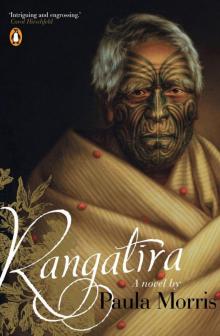
Morris studied creative writing with Bill Manhire at the International Institute of Modern Letters, where the manuscript for her first novel, Queen of Beauty (2002), won the 2001 Adam Foundation Prize. The book went on to win the Hubert Church Prize for Fiction at the 2003 Montana New Zealand Book Awards. Her novel Rangatira (2011) was the fiction winner at the 2012 New Zealand Post Book Awards and the Ngā Kupu Ora Māori Book Awards.
She was the first Glenn Schaeffer Fellow to graduate with an MFA from the Iowa Writers’ Workshop, where her supervisor was Marilynne Robinson. She has taught at universities in the USA and the UK, and is now an Associate Professor at the University of Auckland, where she directs the Master of Creative Writing programme. The 2019 Katherine Mansfield Menton Fellow, Morris was awarded an Arts Foundation Laureateship in 2022.
Her short fiction has been broadcast on radio in both New Zealand and the US, and published in the collections Forbidden Cities (2008) and False River (2017). The title story of False River was a 2015 finalist for the Sunday Times EFG Short Story Award in the UK. Morris’s stories have appeared in numerous magazines, journals and anthologies, including Huia Short Stories 4 (2001); Get on the Waka: Best Recent Māori Fiction (2007); The AUP Anthology of New Zealand Literature (2012); Black Marks on the White Page (2017); and Pūrākau: Māori Myths Retold by Māori Writers (2019).
This story, ‘Isn’t It’, was commissioned in 2016 for the book Katherine Mansfield and Psychology and is a response to Mansfield’s ‘The Garden Party’. It explores what her character Laura calls ‘these absurd class differences’ in a darkly comedic story set in an approximation of contemporary Mt Roskill in Auckland.
‘Isn’t It’ – from the original story’s final sentence – includes a number of Mansfield’s plot points. The song that Mansfield’s character Jose plays on the piano, ‘This Life is Weary’, becomes the Samoan hymn ‘Pe a Faigata Le Ala, Taumafai! (If the Way be Full of Trial, Weary Not)’. Here the ‘poky little holes’ of ‘The Garden Party’ are the older, smaller homes of subdivided sections in a gentrifying Auckland neighbourhood – now the poor relations to the bigger, newer houses built in their back gardens. Laura, the main character in Mansfield’s story, descends from ‘the House Behind’ to give party food to the bereaved family but her part here is walk-on. The main characters are the hapless Lorenzo, his mischievous cousin May, and their assembled aunties, ‘bristling like furious sparrows’.
Isn’t It
(after ‘The Garden Party’ by Katherine Mansfield)
At first people thought Uncle Jack had been killed in a hit-and-run, mowed down crossing the road near the May Road dairy. That was what Lorenzo heard in the first delirious phone calls from his mother: Uncle Jack had been mown down, and it was a brutal, heartless and sadistic act, no doubt perpetrated by someone twenty-one and Chinese in a brand new car with a learner’s licence and no insurance.
In fact, Uncle Jack had just collapsed while crossing the street and died from a heart attack. This was explained in the second wave of phone calls. Cigarettes killed him, and cream on his porridge, and old age. He was eighty-six, and on his way to buy a Lotto ticket.
‘Thinking of us,’ said Lorenzo’s mother, ‘right to the end.’
‘What do you mean?’ asked Lorenzo. He imagined murmured last words, overheard by Good Samaritans kneeling at the side of his great-uncle’s frail, crumpled body.
‘Well, he didn’t need the money, did he?’ said Lorenzo’s mother. ‘What would he have done with it, if he’d won?’
Gone to Bali, Lorenzo suspected. Last year one of Uncle Jack’s RSA friends had gone to Bali for the first time, aged seventy-eight, and returned with news of a much younger girlfriend. He’d sent her and her family almost ten-thousand dollars before his grown-up children got wind of it, and changed his mobile phone number so the girlfriend in Bali had no way of tracking him down.
‘Uncle Jack was always thinking of us,’ said Lorenzo’s mother. She was ringing Lorenzo from the big New World because they would be needing food, huge amounts of it, when the undertakers brought Uncle Jack back to the house. He would lie there in his coffin for three days, and people would need to be fed.
‘Why was he walking all the way to the May Road dairy?’ asked Lorenzo, because part of him still wanted to believe there was something suspicious about all this, something needing investigation and possibly a visit from TV3 News.
‘We’ll never know,’ said his mother. ‘This trolley squeaks. Why do I always get the bad trolleys? They spend all this money on a big new supermarket, and the trolleys are already useless.’
She seemed to be crying, or else holding the phone to the trolley so he could hear it squeaking. Lorenzo did what he always did when his mother – or anyone, really – started to cry during telephone conversations. He’d tell her that her voice was breaking up, or that he was walking or driving through a tunnel. Then, mid-sentence, he’d disconnect the call. That way it would seem as though they’d been cut off. His mother never rang back, as though she knew the truth, that he’d hung up on her. Hung up on himself, really. Lorenzo often hung up on himself.
He’d never hung up on Uncle Jack, or hung up on himself while talking to Uncle Jack, and this was a relief right now. He wouldn’t have to go through life tormented with guilt because he had betrayed Uncle Jack with phone-call deceit. This was mainly because Uncle Jack was too deaf for phone calls. Even if he’d won Lotto and gone to Bali and found himself a much younger girlfriend, she’d never have been able to ring him in New Zealand to arrange a ten-thousand-dollar money transfer.
Lorenzo reported his mother’s side of the conversation to his cousin, May, who was driving him home from the airport. He’d been down in Wellington for two days of meetings and he could have paid for a taxi home on expenses, but May had insisted on picking him up.
‘Your mum’s in an emotional state,’ May told him. ‘It’s a very emotional time.’
‘What does that even mean?’ Lorenzo asked. All times were emotional for his mother.
‘You know she always gets anxious when lots of people are coming over. Death is much worse than a marriage, say, or even a new baby. Everyone turns up pretending to pay their respects, wanting a massive feed. And there’s no garden anymore, so everyone’ll be squeezed into the house, getting on her nerves.’
This was true. Lorenzo’s mother had rented the small brick-and-tile house in Mt Roskill for five years, ever since his father had moved to the Gold Coast with a woman named Vicky. Relatives over sixty referred to Vicky as Lorenzo’s father’s Fancy Piece, but she was, in fact, his Life Coach and now – as Lorenzo’s father insisted on calling her – his Life Partner.
Two years ago, the owner of the Mt Roskill house subdivided the garden so another, bigger house could be built at the back. This new house was ‘Tuscan,’ according to Lorenzo’s mother and her landlord, maybe because it was painted the colour of an apricot or an orange or a peach – naming colours wasn’t Lorenzo’s strong suit – and because its roof was flat, as though the weather in Mt Roskill was sunny and dry like the weather in Tuscany. It was a stupid and stupidly expensive house, in Lorenzo’s opinion, with a big garage and high walls. The looming presence of the House Behind, as they called it, meant that Lorenzo’s mother only got sun after three in the afternoon, and her back garden was barely deep enough for a washing line.
‘Speaking of babies,’ said May, though nobody had been speaking at all for several minutes. ‘I went to see the doctor again about why we’re not having them. You know, me and Tony.’
‘You don’t have to tell me anything personal,’ said Lorenzo. This was not the kind of anecdote he wanted to hear from anyone – not a cousin or sister, not a girlfriend. No woman at all needed to confide such a thing in him, at any point. He knew he should have caught a taxi home.
‘Because there’s nothing wrong with me and there’s nothing wrong with Tony,’ May continued, changing lanes in her usual erratic way. ‘According to the specialists.’
‘It’s a very emotional time,’ Lorenzo said, and hoped that would be the end of it. Agreeing with people, he found, sometimes shut them up.
‘Well, this has been going on for two years,’ said May. ‘So I went back to see my doctor, and you know what he said? That I may have a womb that repels sperm.’
Lorenzo said nothing. He’d remembered, too late, that agreeing with women just encouraged them to divulge more.
‘I kind of like that,’ May said. ‘A sperm-repelling womb! I’ve had a superpower all these years and never realised it.’
Lorenzo still said nothing. You couldn’t hang up on yourself when you were sitting next to the other person in the car. For the first time in his life, he wished he was in a meeting in Wellington.
‘A sperm-repelling womb,’ May said again, lingering over every word, and he realised she was saying all this to wind him up.
‘I guess I’m still really preoccupied with Uncle Jack,’ he said, looking straight ahead. ‘I’m just really … sad.’
‘Liar,’ said May. ‘Uncle Jack had a good run. It was amazing he lasted as long as he did, with all that smoking and drinking. Not to mention the dairy products.’
She swerved into Lorenzo’s street, and he gripped the handles of his bag, ready to leap out.
‘He looked pretty good, really, all things considered,’ May was saying. ‘According to Mum, it’s because he never had children. Children age you, apparently. Not that we’ll ever know, eh? Me and you. Though it’s not too late for you. Biologically, men can go on until – ’
‘Thanks for the lift!’ Lorenzo said, opening the door even though the car was still in motion. ‘See you tomorrow.’
‘I’ll be dressed as Wonder Woman,’ May called after him. Her voice was clear and loud, so she must have buzzed the windows down. That was always the thing with May: she didn’t care who heard things. If Uncle Jack were still alive, she’d be shouting away at him tomorrow about her sperm-repelling womb, determined that he heard every word, not content until she made him choke on his tea.
///
Uncle Jack was lying in his coffin on the spare bed, looking small and spindly. He didn’t smell of smoke anymore, and he didn’t look anything much like the framed old pictures of him arranged around the spare room. He’d looked so wily and nimble, once upon a time, Lorenzo thought. He’d looked like a man of the world. In three of the old photographs, he had slicked-back hair and was wearing tennis whites, in the manner of some European playboy. Lorenzo tried to imagine the photos they’d pick if Lorenzo himself were laid out on the spare bed. He’d be dressed in a rumpled suit in most of them, pictured with long-forgotten colleagues while attending a product launch or strategic away-day. His shoes would be unpolished. He’d be wearing a lanyard or name badge. He’d probably have red-eye.
May was talking to someone in the hallway, offering up her car as coffin transportation on Monday. A hearse was unnecessary. A rip-off, she announced, and Lorenzo agreed. It was bad enough that the undertaker appeared to be holding the coffin lid to ransom. Lorenzo wasn’t sure why. Couldn’t their family be trusted with the lid? Hadn’t they paid a large sum of money for it?
‘He’ll bring it round on Monday,’ said Lorenzo’s mother. He’d sought her out in the kitchen, where she was rearranging the freezer to accommodate a tinfoil pan of lasagne from Mrs Devich across the road. ‘We don’t need it until then. You always worry about the wrong things.’
What he should be worried about, according to his mother and the huddle of hairsprayed aunties monopolising the kettle, was the party going on that day at the House Behind.
‘They’ve got a sign up on the driveway! With balloons!’ This was Auntie Joan, May’s mother. She was morally opposed to the subdivision of sections, and had written various letters to the Herald advocating a high-speed commuter train to Whangārei and/or Hamilton, effective immediately, to relieve the housing crisis in Auckland.