

Dark Horse, page 13
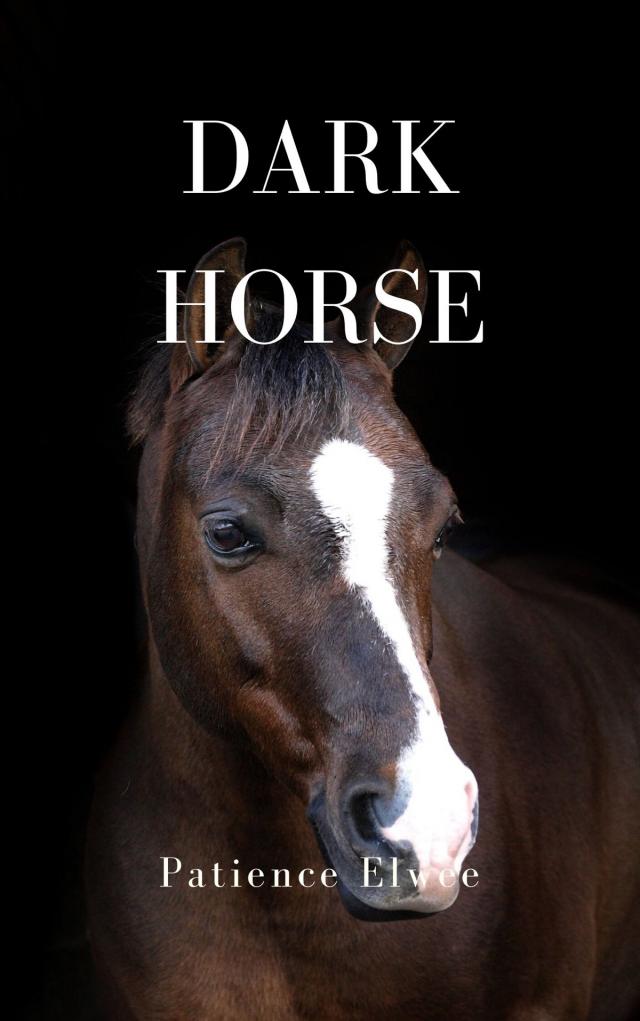


For James and Arabella themselves the expedition, so looked forward to, had turned into a torment. They could not get out of their memories the feel of the pony’s coat under their fingers, rough yet silky, the touch of the velvety, questing muzzle, the look in the big liquid eyes. They did not know that the pony belonged to a privately owned herd. They thought it was a stray, like the homeless cats they sometimes saw in London, which they longed to take in and establish with a saucer of milk in a basket by the artificial log fire in their square, pale coloured drawing-room, which was kept as tidy, by Miss Baxter, as if it might be thrown on the screen at any moment, featuring the Merrys at afternoon tea.
All the way home they discussed in whispers in the back of the car how the little brown mare might be conveyed back to London, how she could then be kept, perhaps in one of the old stables now converted into garages. They were given ample pocket money, because every time their father saw them looking bored he felt, poor man, that the only thing he could do was to plunge his hand deep into his pocket, and they thought they could afford enough hay and oats to feed so small a pony, with something left over for books to teach them something about riding and stable management. They were both very silent when they got home, from worrying about whether the pony was starving where she was, and how it was going to be possible to make the necessary arrangements for her rescue. Miss Baxter thought it was car-sickness, and said they must not go so far afield again.
The grown-up Merrys were out that night, at a party given by theatrical friends, so they did not know that Arabella had shed tears in bed, and that James, who was two years younger, only ten, did not know how to comfort her, beyond revealing the fact that he had seventeen and tenpence in his money box.
At school next day they put the problem to a girl called Elaine Markham, whom they did not know very well but had always envied, because her parents had a week-end cottage in the country where she was able to keep a pony of her own. It turned out, when they had plucked up the courage to speak to her, that she, in her turn, envied them, thinking they led the sort of life she most desired for herself, and she told them, without snubbing them too royally, that the ponies in the New Forest all belonged to someone and were properly looked after, grazing at will all the summer and fed in the winter when there was snow on the ground. She added that they were eventually sold.
“Why don’t you ask your parents to buy you one?” she suggested. “You could keep a pony in London, and ride it in the Row—if you happen to be all that rich,” she added, perfectly certain that the Merrys must be very rich indeed, with so much desirable publicity. And it did not occur to her that if you have one thing to make life exciting you nearly always had to do without something else.
But really it was impossible to ask their parents for anything in particular, because Miss Baxter was always telling them so firmly that their father and mother could not appear to viewers as the Merry Parents, always gay and amusing and helpful, if they were in the least bit worried about what went on at home. The children had to realise, she frequently said, that the whole family was a team, all fighting together to keep a position hardly won, in the teeth of great competition, and equally hard to maintain. A request for a pony would upset them, since, of course, they would have to say no, and it would be like the time Arabella had made a fuss because she had seen a puppy in a pet shop, the last of a litter, shivering miserably in not enough straw and clearly left alone in the shop all through the long, dark, cold nights.
The answer would undoubtedly have to be no, because Miss Baxter would marshal all the arguments: expense, and lack of time, and the fact that neither of the children knew how to ride nor the first thing about looking after any creature more exacting than a goldfish. Miss Baxter would see they were taken to a puppet show or a children’s concert, so that she could assure their parents they had had their minds taken off the subject, and after that it would be ungrateful to bring the matter up ever again. It might provoke a reminder of the effect Arabella’s behaviour over the puppy had had, when her mother had cried, making her eyes red before the evening’s performance, saying it was dreadful to spend your life telling other parents how to make their children contented when you couldn’t give happiness to your own. That must never happen again.
And in any case, Arabella felt, if a pony from the New Forest were bought for them after the appearance of the photograph it would not really be their pony at all, but just another Merry Story. Its name would very soon be given to the public, and all sorts of silly and untrue anecdotes would be told about it, so that very soon it would become a Pony with a Personality, almost human, and then, of course, it would cease to be what they wanted, which was something wild and secret and entirely their own. Now they could be assured that that particular pony was not lost and starving they could do without it, but to have given up the idea of that one did not mean they did not deeply desire one, sometime, of their very own, their very own and not the Public’s.
“I tell you what,” Elaine said. She went rather pink, remembering that though the Merrys were younger than she was and wore what she and her friends called soppy clothes they were also very famous, their very birthday and Christmas presents of interest in thousands of homes. “I’ll ask Mummy if you can come and stay for a weekend. Then you could see my pony. He’s New Forest. Chestnut. 13.2. He’s quite quiet. You could ride him in the paddock if you like. As a matter of fact I only got him because Mummy saw your parents on the tele, saying children should be allowed to follow their own bents and have lots of interests. You ought to go on at them, too, like I did, if you want a pony all that badly. I mean, if they say in public children ought to have what they want … ”
Neither James nor Arabella ever boasted that they were part of a team, as Miss Baxter called it, that was nationfamous, but Arabella was moved to say now, rather stiffly, that anything that made difficulties, or worries, for their parents was out of the question, because of the show. “And we do get a lot—as much as Mummy and Daddy can give us,” she said loyally, remembering with a pang she had been selfish enough to make her mother cry and perhaps had not been grateful enough the next day to her father, when he had presented her with an almost lifelike toy puppy, complete in a miniature basket.
She suddenly felt she didn’t like Elaine Markham very much, after all, but she was excited by the invitation all the same. It would be wonderful to go and stay at a real country cottage, with a pony in the paddock and probably other animals as well. It might mean a struggle with Miss Baxter, who seemed to look upon them both just as what she called a commercial asset, and who had probably seen to it that all the week-ends stretching from the present, June, until the days began to shorten in September were booked up for visits to places where there were going to be lots of people all eager to watch a human story going on under their very eyes. But to want to go and stay with a school friend, if they could now call Elaine Markham that, could neither hurt their parents’ feelings nor be difficult to organise.
“I’ll ask Mummy to write,” Elaine said hurriedly, as the bell range for the end of the break. “Only—” She looked meaningly at their beautifully laundered and starched clothes, embroidered by peasants in faraway countries that none of them would ever see, because to go any distance away from civilisation meant, or so Miss Baxter said, Dropping Out— “Well, you see, if you want to ride and all that … I mean, I wear jodhs all day in the country and a proper shirt. Of course I know your clothes are wizard—Mummy’s going to get me a Merrythought blouse for parties—but in the country … ” She could not help tossing her workmanlike brown plaits, which for months past had been making Arabella feel inferior every time she combed her own quaintly cut hair. She did not need to say anything else to complete the ruin of their self-confidence, and they went back to their class-rooms with a lot of the pleasure in the projected visit overlaid.
Some of the older children at their school, made unkind by envy, would whisper that the Merry kids were too beautiful to live, not realising they would willingly wear glasses or have bars across their teeth if by doing so they could lead a more ordinary life, out of the public eye. If they hadn’t been, some years before, uncommonly beautiful children, their parents might not have been encouraged to earn their living in that particular way.
James, of course, was now suffering more than Arabella, because to start with he felt ashamed of being, at his age, at a school where there were more girls than boys, and because he might never admit to anyone, except his own sister, that he really disliked being photographed with his mother’s arm round him, or hand in hand with Arabella. He knew, too, from Miss Baxter, who made all arrangements, from what they were to have for breakfast onwards, that ultimately he would be sent to a public school, and he dreaded the thought of arriving among four hundred or so boys who had been normally educated from the age of about eight: who could play games and use their hands for something more useful than painting, playing the piano, and modelling in plasticine, occupations which seemed to take up the greater part of the day at the school chosen for them by Miss Baxter. He was afraid it would be considered bad publicity for his famous parents if he became just like everyone else, with neatly cropped hair and a grey flannel suit. He quite often had nightmares about actually arriving at some great school, still, as it were, handcuffed to Arabella by being labelled part of the perfect family group, with his hair cut in a bang, and wearing embroidered braces over what was more nearly a blouse than a shirt. The three years that must elapse before he went to a real school would pass all too quickly, and so far he had never held a cricket bat, or kicked a football, nor had he been on a pony or looked down the barrel of a gun or tied on bait or fly. The trouble was that Miss Baxter, and all the people who themselves got something out of the Merry Parents’ continued success, could not bring themselves to admit that the Merry Children were growing up.
But this visit, if it came off, to a perfectly ordinary house in the country, might be the beginning of being rather more like other children. Mr. Markham might be kind enough to show James at least the implements of manly sports, show him how to handle gun or rod or bat, and there would be the pony, and they could forget all about being famous.
Also available from Jane Badger Books
www.janebadgerbooks.co.uk
Pony books by
Caroline Akrill
Joanna Cannan
Victoria Eveleigh
Patricia Leitch
Patience McElwee
Marjorie Mary Oliver & Eva Ducat
Hazel M Peel
Diana Pullein-Thompson
Josephine Pullein-Thompson
Published by Jane Badger Books 2019
First published by Hodder & Stoughton, 1958
© The estate of Patience McElwee
The moral right of Patience McElwee to be identified as the author of this book has been asserted by her estate in accordance with the Copyright, Designs and Patents Act 1988.
All rights reserved.
Cover illustration © Canva
Without limiting the rights under copyright reserved above, no part of this publication may be reproduced, stored in or introduced into a retrieval system, or transmitted, in any form or by any means (electronic, mechanical, photocopying, recording or otherwise), without the prior written permission of the above copyright owners and the above publisher of this book.
Neither the author nor contributor has any responsibility for the continuing accuracy of URLs for external or third-party websites referred to in this book, nor do they guarantee that any content on such websites is, or will remain, accurate or appropriate.
www.janebadgerbooks.co.uk
Patience McElwee, Dark Horse





