

CODE TO MURDER, page 4


Manson shuffled in his seat, starting to look agitated.
“Well, Mr Manson?” pressed Ben.
Manson leaned forward and put his head in his hands.
“Okay, Mr Manson, for the recording, would you like to confirm you were in room 202?”said Ben.
Silence.
“Mr Manson?”
Manson looked up and spoke quietly. “Okay, I admit I was in the room, but I didn’t kill anyone. The guy was already on the floor when I went inside.”
“So tell me exactly what happened,” said Ben.
“I listened at the door, and it was quiet. I knocked and said ‘room service’ and got no answer. So, I assumed the room was empty. I opened the door with the card and went in. I saw the guy lying on the floor and turned and scarpered, ran down the stairs and headed for the exit.”
“So, what did you do with the things you took from the room?” asked Julie.
“I didn’t take anything. I just turned and ran,” said Manson.
“At the start of this interview, you said you hadn’t taken anything from any of the rooms – that was a lie,” said Ben. “You said you weren’t anywhere near room 202 – that was a lie. You said you didn’t go into 202 – that was another lie.” Ben slammed his hand on the table, “So why should we believe you now? Where are the items you took from the room?”
“I went into the room, but I didn’t take anything. I swear it,” replied Manson.
“Isn’t the truth of it that you went into the room and the guest was there, or you were in there when the guest came in, you panicked, tried to get out, there was a scuffle and the guest fell? Isn’t that what happened?” asked Ben.
Manson said nothing.
“Maybe you didn’t do it deliberately, maybe it was an accident. If so, it would go better for you if you admitted that,” continued Ben.
“I am not admitting anything. There was no scuffle. The guy was lying there when I went in. I got a real shock when I saw him and got out as fast as I could.”
“Did you close the door when you left the room?” asked Julie.
“No, I just slipped through it.”
“We are going to leave you for now, Mr Manson. I think you need to have a chat with your solicitor about how much easier it will go for you if you admit the truth now rather than continue to deny you had anything to do with it,” said Ben.
At that, the interview was suspended and Ben and Julie left the room.
“I don’t know about you Julie, but I am inclined to think he might now be telling the truth,” said Ben.
“I agree,” she answered, “It would be touch and go whether he would have had enough time. I also think he would have closed the door rather than left it open, which suggests he ran off in panic mode.”
“For me, the missing laptop and phone are key. Finding out what happened to them is crucial,” said Ben, “and finding out what happened to Amy. There’s also the email Anderson received. What was it he was supposed to have done? The email suggests someone else is involved here, and it may not have been a heat of the moment attack . . .”
CHAPTER 9
Ben and Julie left the police station and headed to the Goosecroft roundabout on the way out of Stirling. Julie noticed Ben slowing down even though the road ahead was clear, and then he hesitated.
Julie looked over at Ben, at which point he pulled out, but by this time traffic was on the roundabout and he had to brake quickly, to the sound of a blaring horn and angry gesticulations from the driver in the car Ben had nearly crashed into.
Ben leaned back and took a deep breath.
“You okay, sir?” Julie asked.
Ben didn’t answer.
“Sir?” she said again.
“Sorry, Julie. That was careless,” said Ben as he set off and passed through the roundabout on their way again.
“Are you sure you’re okay, Ben?” Julie had a rule to always to keep things formal when on duty and rarely called him Ben, however right now she was concerned.
“I’m okay, Julie, thanks. Nothing to worry about. I’ve been a bit tired lately and there are so many things going through my mind . . . I promise to focus on the driving from now on. You won’t need to apply for a danger allowance when I’m driving.”
She gave a half smile and decided to let it lie.
They soon arrived at the home of Mrs Anderson. She let them in and they moved through to the living room.
“How have you and your daughter been doing, Mrs Anderson?” asked Ben.
“I’m not coping, to be honest, it’s a nightmare,” she answered. “I’m trying to hold myself together for the sake of Kayleigh, but I am really struggling.”
“It must be so difficult for you both,” sympathised Ben, knowing that what he was about to say next would add to her grief.
“I said when we last met that our investigation into what happened to your husband was continuing . . . I hate to have to tell you this, but we now believe James’s death was not an accident.”
“What do you mean?” Mrs Anderson asked.
“We believe your husband was murdered and left on the floor, made to look like he had fallen.”
“No, that can’t be true, why would anyone want to kill James? In his hotel room? Who would . . .” she said, before breaking down.
“We don’t have all the answers yet, but we will find out, I promise you. I’m sorry I have to do this just now, but I do have a few questions for you. Do you feel able to carry on?” asked Ben.
She nodded.
“How long have you and James been married, Mrs Anderson?”
“Twelve years just passed.”
“Can I ask, do you have any idea who would have any reason to kill James?”
“No, none at all.”
“Has he had any recent problems with anyone at work or in his private life, even small things that maybe seemed insignificant?” asked Julie.
“I can’t think of anything. James was fairly easy going,” she replied. “Though we did have an issue a few weeks ago with a builder. He had made a bit of a mess of some work he was doing for us and was downright rude when James questioned him about it, so James phoned his boss, John Wilson, and someone else was sent round to fix it. A week later, James came across Hendry – that’s the builder who messed up the work – in the village when he and Kayleigh were out for a walk. Hendry had a large and very fierce dog, which was barking and growling, and he was threatening to let the dog loose on James and Kayleigh. James told him he would phone the police, which he did when he returned home. We’ve heard nothing from Hendry since, but Kayleigh was extremely upset. I’ll get the the builder’s business card for you.”
Mrs Anderson stood up and went to get the card from a drawer in the oak cabinet and handed it to Julie.
It read ‘Wilson Building and Property Maintenance Services’.
“That must have been very upsetting, we’ll speak to Hendry,” said Julie.
“Has James shown signs of anything else worrying him recently?” Ben enquired.
“He has been working really hard – long hours – and has seemed a bit stressed. He’s working on a new product add-on for the software and I get the feeling things are intense with tight deadlines looming. I don’t think he was keen to be going on the offsite. He felt it was taking him away from getting the software development finished.”
“Is he under a lot of pressure to get this development done?” asked Ben
“I don’t know exactly, you’d need to ask Richard Pettigrew.”
“Did he seem to be under any more pressure than normal?”
Diane thought about it for a few seconds. “I suppose he did, now I come to think about it. James always worked hard and put in long hours when needed, usually as each new release of the software was due. However, he coped with pressure well and didn’t tend to get stressed. If it was software, he always knew it was under his control and he would always get things done.”
“So what seemed different this time?”
“He seemed to be a bit more on edge. As though things weren’t under his control. He was a bit tetchy at home of late as well, which wasn’t like him.”
That struck a chord with Ben.
“Did you ask him what was wrong?”
“I did. James didn’t talk an awful lot about his work when at home. He always said it should be left at the door when he came in, but I think it was to do with the artificial intelligence software he was working on.
“I do know it seemed very important. They started it over a year ago and at first James was excited about it. He was a bit of a geek when it came to technology, and he loved going on the courses about AI and envisaging what it could do for his customers. He was extremely enthusiastic about it. However, as the development went on, his enthusiasm waned, and he seemed to be under more and more pressure. Not only recently, but over the last few months.”
“And did he say why?”
“I did ask, but he was never forthcoming. All he would say was that AI is very powerful, but it has its own dangers too. I got the impression he was feeling pressured to do something he didn’t want to do.”
“Really – did he say what?” asked Ben.
“No. He just said it was nothing for me to worry about.”
Ben looked at Diane Anderson, a bit perplexed by what she had said.
What could James Anderson have meant, he wondered.
“Do you think the pressure James was under would have been coming from Richard?”
“I can only assume so – nobody else in the business would have any authority over James,” she answered.
“How did James and Richard get on in general?”
“Okay in the main. In a social setting, Richard can be super nice. He is charming and thoughtful. It has always surprised me that Richard never got married or settled down with anyone. He came over earlier to see how we were doing. I think he feels James’s loss almost as much as we do. James and he have been close friends for a long time.”
Diane paused before continuing. “He was great with Kayleigh, too. He took her out to the garden, just the two of them, and managed to get her talking. She has said little since I told her about James. He told her how lovely her daddy was and that he was very clever. He told her she was like her daddy and he is in heaven now and she is to be a brave little girl and make her daddy proud. He was great with her.”
“That’s good,” said Ben, before asking, “What about in a business setting?”
“From what I have gathered over the years he is, can I say, ‘a hard-nosed businessman’, and likes to be in charge and to get things done. James was passionate about the software but less so about some aspects of the business side. I suppose that’s why they’ve been successful: they complement each other. Why are you asking about this? Does it have something to do with why James was killed? I can assure you it won’t be anything to do with Richard,” said Mrs Anderson, adamantly, raising her voice and clearly perturbed.
“I’m sorry, Mrs Anderson, I don’t mean to upset you. We always need to get a picture of what is happening in someone’s life when they have died in unexplained circumstances. If I may continue, how long has James been working at Trade-IT?” asked Ben.
“James, Richard and another friend, Colin, set the business up about ten years ago. They met at university and got together again a few years later to form the company.”
“Does Colin still work in the business?” asked Julie.
“No, Colin died in a hiking accident a couple of years after they started Trade-IT. A real tragedy. He and James were close and James took it badly. It took a while for him to get over it.”
“One more thing, Mrs Anderson: we found a print of an email in James’s pocket that said, ‘I know what you did and I am going to make you pay’. Did James mention it to you?” asked Ben.
“No, no he didn’t,” said Mrs Anderson, looking surprised. “I suppose it could have been from Hendry after James phoned the police?”
“You could be right, Mrs Anderson, we’ll check. That’s enough for now. If you think of anything else that might help us, no matter how insignificant it might seem, please give me a call,” said Ben. “I will also have to ask you to formally identify James’s body. Natalie will organise that with you and I will be there too. Is that is okay?” said Ben.
Mrs Anderson nodded and showed them out.
As Ben and Julie walked to the car, Julie said, “She was very defensive of Richard Pettigrew, raising her voice like that and getting quite upset.”
“She was, wasn’t she? Hmm . . .” replied Ben.
Mrs Anderson went back inside, sat down and cried, struggling to comprehend the reality of what she had been told.
Who could have sent that email to James and why hadn’t he mentioned it to her? Who could have murdered James and why?
The big plans they’d had for this year, that nobody else knew about, had been cruelly snatched away forever.
CHAPTER 10
Ben and Julie got back in the car and headed over to Stirling. It was a bright, sunny day and they drove along the Hillfoots, a series of villages in Clackmannanshire which lay at the southern scarp face of the Ochil Hills. On route to Stirling, they passed through the former mill towns of Tillicoultry, Alva and Menstrie. The woollen and textile mills grew up in the shadow of the Ochils to tap into the water power. Most of the mills were now long gone, but some of them had been turned into museums and were part of the mill trail, which runs through Clackmannanshire.
“We do live in a lovely part of the world,” said Ben. “I love wandering along the different trails in the Ochils, whether it is up Alva Glen or Dollar Glen or one of the many others. It’s one of the few things that helps me switch off, or sometimes just collect my thoughts and get a different perspective on things.”
“Couldn’t agree more,” said Julie, “albeit I prefer my walking routes along the flatter paths at the bottom of the hills.”
Ben laughed.
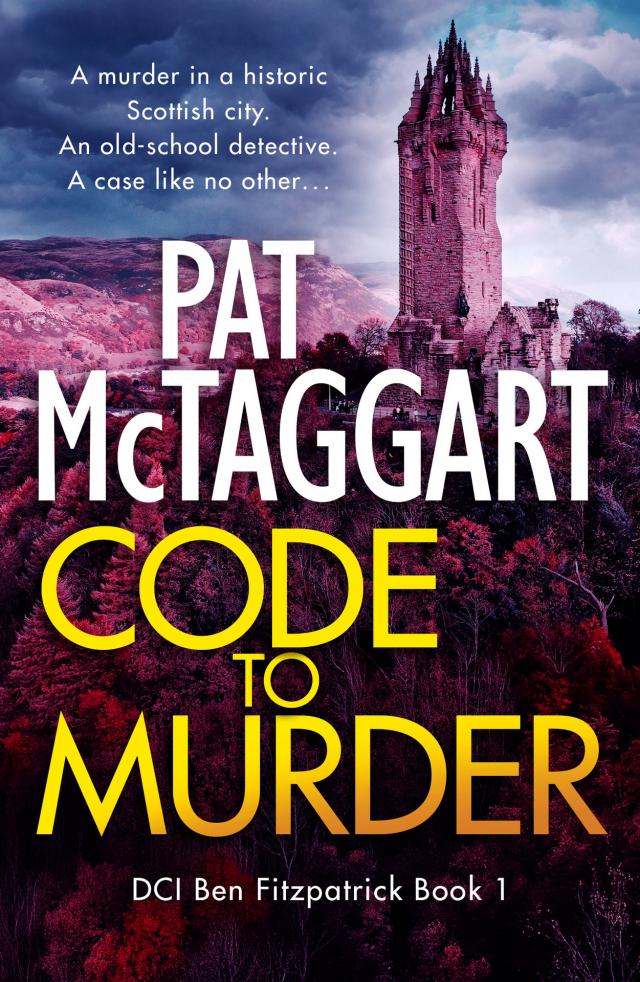
Soon they arrived at the business park where Trade-IT was based. It was close to the University of Stirling and sat in the towering shadow of The Wallace Monument. They parked up and went in. A brand new, top of the range, blue Jaguar sports car sat in a space designated as that of the CEO.
“Someone likes their cars,” said Julie. “Business must be good.”
They went into the offices and were greeted by a friendly but clearly upset receptionist who phoned through to Richard Pettigrew. Ten minutes later he came to meet them.
“Good morning, Chief Inspector, sorry to keep you waiting, I had to finish off a meeting. Let’s go through to my office. Would you like some tea or coffee?” asked Pettigrew.
Ben and Julie both declined.
It was a large office, and the walls were adorned with prints of modern art and Pettigrew sat behind a large, expensive-looking solid wooden desk. Along the wall sat a plush leather sofa. On the wall to the side of his desk was a ‘Technology Business of the Year’ plaque from Stirling Chamber of Commerce, and on his very tidy desk sat a framed photo of himself receiving the award.
Once they were seated, Ben said, “The first thing I should tell you, Mr Pettigrew, is that we now believe James Anderson’s death was not accidental.”
“You’re kidding?” replied Pettigrew shocked. “Why? How?” he continued.
“We were hoping you might be able to help us with that – at least the ‘why’ part,” answered Ben. “Can you think of any reason at all why anyone would want to harm Mr Anderson?”
“Absolutely not!” Pettigrew responded immediately. “James was a good guy, popular, extremely hardworking and a dear friend.”
“When we found Mr Anderson, he had a print of an email in his pocket that said, ‘I know what you did and will make you pay!’,” said Ben, showing the print to Pettigrew. “Have you seen this before?”
“Wow, that’s quite disturbing. No, I haven’t, Chief Inspector.”
“And Mr Anderson never mentioned this to you?”
Pettigrew shook his head.
“Do you know what they could have been suggesting Mr Anderson did?”
“No idea whatsoever,” said Pettigrew, looking very concerned and quite taken aback by the threat.
“Have you or anyone else in the business received any similar threats as far as you are aware?”
“None that I am aware of, and I can’t understand why James wouldn’t have mentioned the email to me.”
“Okay, Mr Pettigrew, if any threats to anyone are received please let us know immediately,” said Ben.
Pettigrew paused for a second.
“Thinking about it, there was one incident about a month ago involving James and me. We were at Kings Cross station in London and about to go out and get a taxi to head over to the exhibition we were attending. Someone ran up from the back of us and made a grab at James’s laptop bag. Fair play to James, he had a tight grip on it and held on to it. The guy effectively pulled James over grabbing the bag, but with James still holding on he gave up and ran out of the station.”
“Did you report it at the time?” asked Ben.
“We were going to, but the train had been late and we were running behind. The guy had a hoodie on and a scarf covering his face, so we figured there was no point anyway, so we left it.”
“Okay, Mr Pettigrew, if you get us the exact date and time we’ll look into it. However, what we want to do today is get some background on the business and Mr Anderson’s role in it. Any sources of friction, even something in his personal life that he might have mentioned.”
“Sure, I’ll help as much as I can. I did hear someone was apprehended at the hotel when stealing items from guest rooms – is that not the obvious place to look?” quizzed Pettigrew.
“You are correct, Mr Pettigrew, we did arrest someone in connection with thefts from guest bedrooms and he is still helping us with our enquiries,” replied Julie. “But as you will appreciate, we do need to cover all bases.”
“Okay, so what do you want to know from me?” asked Pettigrew.
“Perhaps you could start by telling us a bit about the business: what it does, when it was formed and how it’s doing?” Ben replied.
“Well, Mr Manson?” pressed Ben.
Manson leaned forward and put his head in his hands.
“Okay, Mr Manson, for the recording, would you like to confirm you were in room 202?”said Ben.
Silence.
“Mr Manson?”
Manson looked up and spoke quietly. “Okay, I admit I was in the room, but I didn’t kill anyone. The guy was already on the floor when I went inside.”
“So tell me exactly what happened,” said Ben.
“I listened at the door, and it was quiet. I knocked and said ‘room service’ and got no answer. So, I assumed the room was empty. I opened the door with the card and went in. I saw the guy lying on the floor and turned and scarpered, ran down the stairs and headed for the exit.”
“So, what did you do with the things you took from the room?” asked Julie.
“I didn’t take anything. I just turned and ran,” said Manson.
“At the start of this interview, you said you hadn’t taken anything from any of the rooms – that was a lie,” said Ben. “You said you weren’t anywhere near room 202 – that was a lie. You said you didn’t go into 202 – that was another lie.” Ben slammed his hand on the table, “So why should we believe you now? Where are the items you took from the room?”
“I went into the room, but I didn’t take anything. I swear it,” replied Manson.
“Isn’t the truth of it that you went into the room and the guest was there, or you were in there when the guest came in, you panicked, tried to get out, there was a scuffle and the guest fell? Isn’t that what happened?” asked Ben.
Manson said nothing.
“Maybe you didn’t do it deliberately, maybe it was an accident. If so, it would go better for you if you admitted that,” continued Ben.
“I am not admitting anything. There was no scuffle. The guy was lying there when I went in. I got a real shock when I saw him and got out as fast as I could.”
“Did you close the door when you left the room?” asked Julie.
“No, I just slipped through it.”
“We are going to leave you for now, Mr Manson. I think you need to have a chat with your solicitor about how much easier it will go for you if you admit the truth now rather than continue to deny you had anything to do with it,” said Ben.
At that, the interview was suspended and Ben and Julie left the room.
“I don’t know about you Julie, but I am inclined to think he might now be telling the truth,” said Ben.
“I agree,” she answered, “It would be touch and go whether he would have had enough time. I also think he would have closed the door rather than left it open, which suggests he ran off in panic mode.”
“For me, the missing laptop and phone are key. Finding out what happened to them is crucial,” said Ben, “and finding out what happened to Amy. There’s also the email Anderson received. What was it he was supposed to have done? The email suggests someone else is involved here, and it may not have been a heat of the moment attack . . .”
CHAPTER 9
Ben and Julie left the police station and headed to the Goosecroft roundabout on the way out of Stirling. Julie noticed Ben slowing down even though the road ahead was clear, and then he hesitated.
Julie looked over at Ben, at which point he pulled out, but by this time traffic was on the roundabout and he had to brake quickly, to the sound of a blaring horn and angry gesticulations from the driver in the car Ben had nearly crashed into.
Ben leaned back and took a deep breath.
“You okay, sir?” Julie asked.
Ben didn’t answer.
“Sir?” she said again.
“Sorry, Julie. That was careless,” said Ben as he set off and passed through the roundabout on their way again.
“Are you sure you’re okay, Ben?” Julie had a rule to always to keep things formal when on duty and rarely called him Ben, however right now she was concerned.
“I’m okay, Julie, thanks. Nothing to worry about. I’ve been a bit tired lately and there are so many things going through my mind . . . I promise to focus on the driving from now on. You won’t need to apply for a danger allowance when I’m driving.”
She gave a half smile and decided to let it lie.
They soon arrived at the home of Mrs Anderson. She let them in and they moved through to the living room.
“How have you and your daughter been doing, Mrs Anderson?” asked Ben.
“I’m not coping, to be honest, it’s a nightmare,” she answered. “I’m trying to hold myself together for the sake of Kayleigh, but I am really struggling.”
“It must be so difficult for you both,” sympathised Ben, knowing that what he was about to say next would add to her grief.
“I said when we last met that our investigation into what happened to your husband was continuing . . . I hate to have to tell you this, but we now believe James’s death was not an accident.”
“What do you mean?” Mrs Anderson asked.
“We believe your husband was murdered and left on the floor, made to look like he had fallen.”
“No, that can’t be true, why would anyone want to kill James? In his hotel room? Who would . . .” she said, before breaking down.
“We don’t have all the answers yet, but we will find out, I promise you. I’m sorry I have to do this just now, but I do have a few questions for you. Do you feel able to carry on?” asked Ben.
She nodded.
“How long have you and James been married, Mrs Anderson?”
“Twelve years just passed.”
“Can I ask, do you have any idea who would have any reason to kill James?”
“No, none at all.”
“Has he had any recent problems with anyone at work or in his private life, even small things that maybe seemed insignificant?” asked Julie.
“I can’t think of anything. James was fairly easy going,” she replied. “Though we did have an issue a few weeks ago with a builder. He had made a bit of a mess of some work he was doing for us and was downright rude when James questioned him about it, so James phoned his boss, John Wilson, and someone else was sent round to fix it. A week later, James came across Hendry – that’s the builder who messed up the work – in the village when he and Kayleigh were out for a walk. Hendry had a large and very fierce dog, which was barking and growling, and he was threatening to let the dog loose on James and Kayleigh. James told him he would phone the police, which he did when he returned home. We’ve heard nothing from Hendry since, but Kayleigh was extremely upset. I’ll get the the builder’s business card for you.”
Mrs Anderson stood up and went to get the card from a drawer in the oak cabinet and handed it to Julie.
It read ‘Wilson Building and Property Maintenance Services’.
“That must have been very upsetting, we’ll speak to Hendry,” said Julie.
“Has James shown signs of anything else worrying him recently?” Ben enquired.
“He has been working really hard – long hours – and has seemed a bit stressed. He’s working on a new product add-on for the software and I get the feeling things are intense with tight deadlines looming. I don’t think he was keen to be going on the offsite. He felt it was taking him away from getting the software development finished.”
“Is he under a lot of pressure to get this development done?” asked Ben
“I don’t know exactly, you’d need to ask Richard Pettigrew.”
“Did he seem to be under any more pressure than normal?”
Diane thought about it for a few seconds. “I suppose he did, now I come to think about it. James always worked hard and put in long hours when needed, usually as each new release of the software was due. However, he coped with pressure well and didn’t tend to get stressed. If it was software, he always knew it was under his control and he would always get things done.”
“So what seemed different this time?”
“He seemed to be a bit more on edge. As though things weren’t under his control. He was a bit tetchy at home of late as well, which wasn’t like him.”
That struck a chord with Ben.
“Did you ask him what was wrong?”
“I did. James didn’t talk an awful lot about his work when at home. He always said it should be left at the door when he came in, but I think it was to do with the artificial intelligence software he was working on.
“I do know it seemed very important. They started it over a year ago and at first James was excited about it. He was a bit of a geek when it came to technology, and he loved going on the courses about AI and envisaging what it could do for his customers. He was extremely enthusiastic about it. However, as the development went on, his enthusiasm waned, and he seemed to be under more and more pressure. Not only recently, but over the last few months.”
“And did he say why?”
“I did ask, but he was never forthcoming. All he would say was that AI is very powerful, but it has its own dangers too. I got the impression he was feeling pressured to do something he didn’t want to do.”
“Really – did he say what?” asked Ben.
“No. He just said it was nothing for me to worry about.”
Ben looked at Diane Anderson, a bit perplexed by what she had said.
What could James Anderson have meant, he wondered.
“Do you think the pressure James was under would have been coming from Richard?”
“I can only assume so – nobody else in the business would have any authority over James,” she answered.
“How did James and Richard get on in general?”
“Okay in the main. In a social setting, Richard can be super nice. He is charming and thoughtful. It has always surprised me that Richard never got married or settled down with anyone. He came over earlier to see how we were doing. I think he feels James’s loss almost as much as we do. James and he have been close friends for a long time.”
Diane paused before continuing. “He was great with Kayleigh, too. He took her out to the garden, just the two of them, and managed to get her talking. She has said little since I told her about James. He told her how lovely her daddy was and that he was very clever. He told her she was like her daddy and he is in heaven now and she is to be a brave little girl and make her daddy proud. He was great with her.”
“That’s good,” said Ben, before asking, “What about in a business setting?”
“From what I have gathered over the years he is, can I say, ‘a hard-nosed businessman’, and likes to be in charge and to get things done. James was passionate about the software but less so about some aspects of the business side. I suppose that’s why they’ve been successful: they complement each other. Why are you asking about this? Does it have something to do with why James was killed? I can assure you it won’t be anything to do with Richard,” said Mrs Anderson, adamantly, raising her voice and clearly perturbed.
“I’m sorry, Mrs Anderson, I don’t mean to upset you. We always need to get a picture of what is happening in someone’s life when they have died in unexplained circumstances. If I may continue, how long has James been working at Trade-IT?” asked Ben.
“James, Richard and another friend, Colin, set the business up about ten years ago. They met at university and got together again a few years later to form the company.”
“Does Colin still work in the business?” asked Julie.
“No, Colin died in a hiking accident a couple of years after they started Trade-IT. A real tragedy. He and James were close and James took it badly. It took a while for him to get over it.”
“One more thing, Mrs Anderson: we found a print of an email in James’s pocket that said, ‘I know what you did and I am going to make you pay’. Did James mention it to you?” asked Ben.
“No, no he didn’t,” said Mrs Anderson, looking surprised. “I suppose it could have been from Hendry after James phoned the police?”
“You could be right, Mrs Anderson, we’ll check. That’s enough for now. If you think of anything else that might help us, no matter how insignificant it might seem, please give me a call,” said Ben. “I will also have to ask you to formally identify James’s body. Natalie will organise that with you and I will be there too. Is that is okay?” said Ben.
Mrs Anderson nodded and showed them out.
As Ben and Julie walked to the car, Julie said, “She was very defensive of Richard Pettigrew, raising her voice like that and getting quite upset.”
“She was, wasn’t she? Hmm . . .” replied Ben.
Mrs Anderson went back inside, sat down and cried, struggling to comprehend the reality of what she had been told.
Who could have sent that email to James and why hadn’t he mentioned it to her? Who could have murdered James and why?
The big plans they’d had for this year, that nobody else knew about, had been cruelly snatched away forever.
CHAPTER 10
Ben and Julie got back in the car and headed over to Stirling. It was a bright, sunny day and they drove along the Hillfoots, a series of villages in Clackmannanshire which lay at the southern scarp face of the Ochil Hills. On route to Stirling, they passed through the former mill towns of Tillicoultry, Alva and Menstrie. The woollen and textile mills grew up in the shadow of the Ochils to tap into the water power. Most of the mills were now long gone, but some of them had been turned into museums and were part of the mill trail, which runs through Clackmannanshire.
“We do live in a lovely part of the world,” said Ben. “I love wandering along the different trails in the Ochils, whether it is up Alva Glen or Dollar Glen or one of the many others. It’s one of the few things that helps me switch off, or sometimes just collect my thoughts and get a different perspective on things.”
“Couldn’t agree more,” said Julie, “albeit I prefer my walking routes along the flatter paths at the bottom of the hills.”
Ben laughed.
Soon they arrived at the business park where Trade-IT was based. It was close to the University of Stirling and sat in the towering shadow of The Wallace Monument. They parked up and went in. A brand new, top of the range, blue Jaguar sports car sat in a space designated as that of the CEO.
“Someone likes their cars,” said Julie. “Business must be good.”
They went into the offices and were greeted by a friendly but clearly upset receptionist who phoned through to Richard Pettigrew. Ten minutes later he came to meet them.
“Good morning, Chief Inspector, sorry to keep you waiting, I had to finish off a meeting. Let’s go through to my office. Would you like some tea or coffee?” asked Pettigrew.
Ben and Julie both declined.
It was a large office, and the walls were adorned with prints of modern art and Pettigrew sat behind a large, expensive-looking solid wooden desk. Along the wall sat a plush leather sofa. On the wall to the side of his desk was a ‘Technology Business of the Year’ plaque from Stirling Chamber of Commerce, and on his very tidy desk sat a framed photo of himself receiving the award.
Once they were seated, Ben said, “The first thing I should tell you, Mr Pettigrew, is that we now believe James Anderson’s death was not accidental.”
“You’re kidding?” replied Pettigrew shocked. “Why? How?” he continued.
“We were hoping you might be able to help us with that – at least the ‘why’ part,” answered Ben. “Can you think of any reason at all why anyone would want to harm Mr Anderson?”
“Absolutely not!” Pettigrew responded immediately. “James was a good guy, popular, extremely hardworking and a dear friend.”
“When we found Mr Anderson, he had a print of an email in his pocket that said, ‘I know what you did and will make you pay!’,” said Ben, showing the print to Pettigrew. “Have you seen this before?”
“Wow, that’s quite disturbing. No, I haven’t, Chief Inspector.”
“And Mr Anderson never mentioned this to you?”
Pettigrew shook his head.
“Do you know what they could have been suggesting Mr Anderson did?”
“No idea whatsoever,” said Pettigrew, looking very concerned and quite taken aback by the threat.
“Have you or anyone else in the business received any similar threats as far as you are aware?”
“None that I am aware of, and I can’t understand why James wouldn’t have mentioned the email to me.”
“Okay, Mr Pettigrew, if any threats to anyone are received please let us know immediately,” said Ben.
Pettigrew paused for a second.
“Thinking about it, there was one incident about a month ago involving James and me. We were at Kings Cross station in London and about to go out and get a taxi to head over to the exhibition we were attending. Someone ran up from the back of us and made a grab at James’s laptop bag. Fair play to James, he had a tight grip on it and held on to it. The guy effectively pulled James over grabbing the bag, but with James still holding on he gave up and ran out of the station.”
“Did you report it at the time?” asked Ben.
“We were going to, but the train had been late and we were running behind. The guy had a hoodie on and a scarf covering his face, so we figured there was no point anyway, so we left it.”
“Okay, Mr Pettigrew, if you get us the exact date and time we’ll look into it. However, what we want to do today is get some background on the business and Mr Anderson’s role in it. Any sources of friction, even something in his personal life that he might have mentioned.”
“Sure, I’ll help as much as I can. I did hear someone was apprehended at the hotel when stealing items from guest rooms – is that not the obvious place to look?” quizzed Pettigrew.
“You are correct, Mr Pettigrew, we did arrest someone in connection with thefts from guest bedrooms and he is still helping us with our enquiries,” replied Julie. “But as you will appreciate, we do need to cover all bases.”
“Okay, so what do you want to know from me?” asked Pettigrew.
“Perhaps you could start by telling us a bit about the business: what it does, when it was formed and how it’s doing?” Ben replied.


