

Tom Townsend, page 1


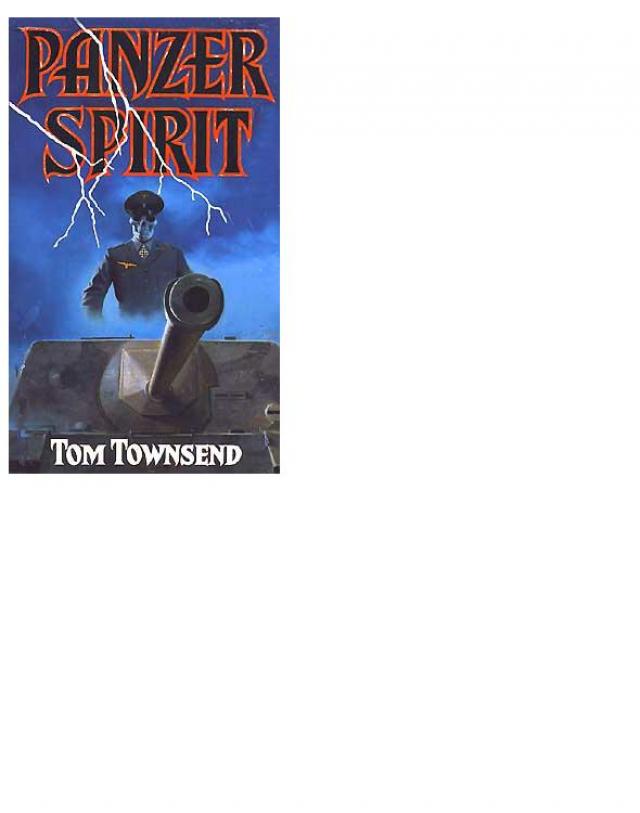
Tom Townsend
PAGEANT BOOKS
Prologue
The last cow was still somewhere downrange when the old German decided that it was too dark to keep looking. Cold twilight hung over the valley like a damp sponge, and although the first snow had yet to fall, it could not be far away. Karl Leiter walked tiredly up the path toward home. He would miss this little valley where his cows had grazed since the last war. It was as if history had turned a full circle in the forty years since he had come home from the internment camps and begun to regather the remnants of his life.
The panzers had fought in this forest at the war’s end; a horrible battle of which he knew little. He remembered the valley when it was littered with rusting, burned-out hulks; when broken, splintered trees had just begun to sprout new leaves, and the spring rains tried to erase the ruts of steel treads.
The stale stench of death had faded then to a subtle, sickening sweet odor; an invisible fog in spring and summer.
Four decades of changing seasons had reduced all but the deepest craters to shallow depressions. The tank tracks were gone and the odor of death was only an eternal memory. Once again, the pines had grown tall and strong. One by one, the wrecked panzers had been dragged away to be cut up for scrap or used as targets on the American Army’s firing ranges at nearby Grafenwohr.
All except one.
Now the U.S. Army had leased Karl Leiter’s land to extend their training area. Once again the forest would be shot to pieces, the fields bombarded and plowed with the tracks of armored vehicles. Again, it would look as it had when he came home from the war. He was glad that he would not be here to see it. But the price had been right and Karl was getting old, too old to chase wandering cows about the forest at twilight. He smiled. Some things are eternal. The panzers had fought here. Nature healed her wounds, and now new panzers would come. What, he wondered, would become of that last old tank?
Around a bend in the trail, he paused and looked into the darkening woods for a long minute. Then he nodded and stepped into the trees.
He would say good-bye.
Reverently, he picked his way through the trees as if he were approaching the temple of some sleeping god of old. The forest had grown up around the tank, laying it to rest beneath a burial mound of dead limbs and pine needles. In the twilight, beneath the mantle of brush, it was a gray, vague shadow of what it had once been. Perhaps that was why the Americans had never found it.
Karl thought this tank had been called a Jagdpanther, a tank built especially to hunt other tanks; sleek and turretless, heavily armored and fast. Like their namesake, the panthers had killed from ambush and faded into the forests to kill again and again.
Its gun barrel drooped beneath the funeral shroud. Karl brushed away a few pine needles and patted one steel fender. Mustard-yellow battle paint had faded to a color of dirt. The hatches had always been closed and Karl had never tried to open them. He had seen enough death during the war. Whatever was inside, he did not want to explore. There could be few ways to die any worse than inside a tank. Searing flames would instantly consume the oxygen. Hydraulic oil would ignite. Then the ammunition, always stored with the warheads pointed menacingly at the crew, would explode. To see inside held no interest for him. Perhaps it was the grave of German soldiers; perhaps it had simply been abandoned. It mattered not.
Karl stood in silence before the old hulk; then suddenly, he wanted to see the crest one last time. With nervous fingers, he pushed away some dirt from the sloping bow. His pulse quickened as the painted face on the red shield smiled wickedly up at him. He had never been sure whether it was a dwarf or an elf, or some other ancient forest spirit. The ears were pointed and its smile leered with sharp teeth and curling lips. The eyes were red and wolflike behind heavy brows, and below the face were the twin lightning bolts of the SS. It was odd that the paint had never faded.
"W'ell, Old Panzer. Once again the Americans are coming,” Karl whispered. "I would guess you gave them hell the last time, but I think now there is not much fight left in you.” The painted face smiled back at him and for one millisecond seemed to sneer, "Wrong, old man, wrong.”
He reburied the crest, patted the dented fender one last time, and turned aw'ay. "AufWiedersehen,” he said, and started for home. When he reached the trail, he looked back once. The darkness was complete now. In the trees he fancied there was a dim glow, bluish and barely discernible. He blinked once and it remained. "Witch lights,” he whispered to reassure himself; only the phosphorus glow of decaying wood and plants, nothing more. He turned away and started up the path for home. "Farewell,” he whispered and began to hum the drumming notes of “Panzer Lied,” a stirring old march of the German armored divisions that had not crossed his lips in forty years.
Chapter One
"Driver, halt,” Sergeant Hank Murphy yelled into his tank’s intercom. Beneath him, 106,000 pounds of M-60A3 main battle tank rocked on its hydraulic suspension and came to a sudden stop.
"Where the hell are we, Sarge?” Private Jackson, the driver, called back sarcastically over the earphones.
"What do you think I’m tryin’ to figure out? This damned map was made in 1945,” Murphy answered as he banged open the cupola hatch. Snowflakes drifted onto his face and melted in little wet spots on the acetate cover of his old map. Ahead of him was a trail junction which did not show on the map. The right fork continued along the low ridge west of Tank Table Six on the Grafenwohr Range. The left fork dropped into a little wooded valley.
"Lieutenant’s gonna be pissed as hell if we don’t catch up with the platoon pretty soon,” the driver said.
"Fuck the chickenshit lieutenant and fuck you, too. If you’d checked the goddamned end connectors, we wouldn’t have spent half the morning freezing our asses off putting a tread back on this beast.”
The loader’s hatch came open beside him and Private Sanchez appeared without his helmet on. "I think we go to the right, Sergeant.”
"How would you know, greaseball?”
Sanchez shrugged. "I don’t know. I jus’ think it’s right.”
Murphy glared at the loader. It seemed like there was everything but real Americans in the U.S. Army now. If they weren't black, they were Mexican or Puerto Rican, and half of them couldn’t even speak English. They didn’t know shit, they didn’t want to know shit, and if you tried to pound some sense into them, they went running to the judge advocate screaming "racial discrimination,” which were the only English words that they all could pronounce without an accent. Fuck the army.
"Move it out, Jackson, left turn,” he said.
"It’s the other way, Sarge,” the driver argued in his ear.
"Shut up and move out.” The tank lurched forward, dug in the left tread, and headed down into the valley.
The forest was a black silhouette against a sky of slate gray. Snow covered a trail which showed no sign of use in many years. Secretly, Murphy had almost believed that the other trail was the correct way to go. But he chose the left by applying his own proven rule of military logic: "Anything a private says has to be wrong.”
Towering pines rose higher above him and the trail narrowed. The sky dwindled to only a narrow strip of snowflake-dotted gray above the jagged, toothlike treetops. The M-60 ground slowly through the falling snow, leaving a pair of dark, ugly tracks in its wake.
Sergeant Murphy had been in the army for seven years. Too late for Vietnam, he had never seen combat and sometimes it bothered him. Life was one training exercise after another, interrupted by the dull, endless routine of tank maintenance. He supposed he should be thankful that he was not getting shot at. Duty in West Germany might be dull and the pay terrible, but it was relatively safe.
"Sarge?” the driver again. “Wouldn’t it have been the shits to hunt Kraut armor down a road like this back in World War II? Man, this is an ambush valley if I ever saw it.”
"I imagine some GIs did just that. And in a goddamned old Sherman with beer-can armor and a BB gun.” The driver locked one tread and eased the M-60 around a narrow turn, plowing up a half-dozen small trees in the process. Murphy was bitching at him for scratching the paint when a glow in the woods caught his eye. "Hey, stop the tank,” he ordered.
Within the black curtain of forest, there was a bluish glow, pulsating softly in the winter gloom. Murphy squinted his eyes and decided he was seeing things. There was something there, a mound, maybe a bunker, but whatever it was, it had to be old to be so overgrown. "Jackson, you see that?"
"See what, Sarge?”
“In the woods. Looks like a bunker or maybe an old tank.”
"Great,” Jackson answered sarcastically. "If it’s an old tank, it’s probably a target and that means we’ve wandered off downrange and may be fixin’ to get our asses blown off.”
"Naw, this ain’t no impact area. Shut it down. I want to have a look.” Murphy was already on the ground when the big diesel went silent. Jackson's head was out of the driver’s hatch. "You want to come?” Murphy asked.
“Not me, Sarge, just wake me up when you get through,” Jackson replied, and his head disappeared into the tank’s hull.
Murphy walked toward the trees. New snow had filtered down through the pines to cover the forest floor. His spit-polished boots crunched ominously, disturbing the heavy silence. Ahead was a strange mound, unnatural and speckled with white in the eternal twilight of the forest. A feeling of foreboding swept over him and suddenly he wanted to turn back. Unseen eyes seemed to watch his every step, coaxing him onward, closer and closer,
until there was no longer any doubt that the dim outline beneath the forest debris was a tank.
He began pulling at the larger limbs. They broke away in his hands. Dead pine boughs disintegrated to the touch as he exposed first the muzzle brake and then the gun tube. In another few seconds he had cleared the sloping, frontal armor. He backed away in awe.
"Holy shit,” he whispered. "A goddamned Kraut tank. The son of a bitch must’ve been sittin’ here ever since ’45.”
Visions of war souvenirs danced in his head. Lu-ger pistols worth an easy five hundred bucks, medals and uniform parts, Zeiss binoculars, and who knows what other goodies might be inside, just waiting to be picked up and sold to dumb-ass GIs who liked that shit. With new interest he pulled away more brush looking for hatches. The goodies would of course be inside, if there were any. If it had already been stripped, then the hatches would probably be open and there would be nothing left but scrap metal.
There was no driver's hatch, so he began climbing the frontal armor. He put one hand onto the gun tube to help himself up and, for a second, he thought he could feel it move, just as if someone had touched the traverse crank inside. Instinctively, he jerked his hand away and almost fell. “Shit,” he muttered. “Must have been my weight moved the gears.” On top of the old tank Murphy at last saw a hatch. He climbed to it and was elated to find it still closed. Brushing away some pine needles, he hooked his fingers under the edge and pulled with all his might. Nothing happened. He applied more pressure, straining until he realized that a cold sweat was dripping on his forehead.
“A crowbar—I’ll get the one off the tank.” He grunted and slid back down the sloping bow.
It was then that he saw the glow. No longer far away or indistinct but all around him. The old tank was bathed in a cold, blue light, growing stronger and pulsating almost in rhythm with his pounding heart. He took a few staggering steps backward, still not believing his eyes. Then, he saw it move.
The ancient gun tube rose slightly, shaking off the last of its woodland crypt, and swung a few degrees to the left. "Oh, no!” Murphy whispered suddenly. As impossible as it was, he knew what was going to happen. He turned to see the M-60 with crystal, unreal clarity, parked on the trail no more than thirty yards away. Sanchez was sitting on the turret, smoking a cigarette. The hatches were all open. Inside, Jackson would be napping in his driver’s seat and Moore, the gunner, would be reading one of those dirty magazines he kept in the binocular rack. Murphy tried to yell a warning. His mouth opened, but he could will no sound to leave his lips. He felt detached, not truly part of it all, as if he were viewing the whole, horrible scene on a small TV. From inside the Panther came a chilling, dull clunk of metal against metal. The breech was closing.
"It’s going to happen, it’s going to happen and I can’t stop it!” Murphy screamed, and then the muzzle blast knocked him down. White light blotted out the M-60. Searing pain shot through his head— dulling his senses to all but the pain itself. The world spun in uneven circles. When it slowed for a second, he could see the M-60 burning. The turret had been blown completely off and was lying upside down by the trail. Tongues of orange flame boiled from the naked turret ring and engine bay. Already the snow around it was melting. Inky black smoke rose in the still air. Someone was screaming. It sounded like Sanchez. Jackson was a charred, blackened skeleton, with hollow holes where his eyes had been and bony arms upraised, frozen in death halfway out of the driver’s hatch. His helmet was still on, and Murphy watched the 1st Armored Division crest melt away in the flame. The world spun faster and his vision faded into a small circle of light which passed quickly away down a long black corridor.
Chapter Two
Colonel Michael O’Leary laid the fat file on his desk and shook his graying head. He was a tall man, thin and raw-boned, pushing forty, but still with a twinkle in his Irish blue eyes. Retrieving a half cup of cold coffee, he took one sip, cursed quietly, and set it down on a thick book titled German Armor: 1939 to 1945. His watch read eleven a.m. as he rose and walked toward the window. General Walker would be expecting his decision within the hour.
O’Leary’s office at the U.S. Army Tank Museum in Ansbach looked down over a wide avenue bordered with preserved examples of armored fighting vehicles through the ages. With winter sunlight on the snow, they sat like squatty gargoyles passively guarding the approach. There was the massive, dinosaurlike Mark VII, which had reached the unprecedented speed of 6.5 miles per hour in 1916 and struck terror into the hearts of Imperial German troops at the battle of Somme. Beside it was an early Stuart, which spearheaded the 1st Armored Division drive into Tunisia in 1942. An M-3 Grant looked like something out of an old Disney cartoon, with turrets stacked on top of turrets and guns of various sizes pointing everywhere. Actually, high silhouette and all, it had been the first decent tank the British Eighth Army had had to face Rommel with. It had done well.
Of course there was a Sherman, that marvel of mass production that had spelled the demise of Hitler’s Panzer divisions, not because of superior design, construction, or armament, but simply because U.S. industry pumped 52,000 of them into the European theater.
He shot a guilty glance at the file.
The Jagdpanther was a rare find. The museum did not have one and he knew of only two others left in the whole world. There was one at Aberdeen Proving Grounds and another at the Royal Tank Museum at Bovington, England. Even with all the •related problems, he could not turn down division’s offer to give the museum one. The restoration would be long, difficult, and expensive. Funds would have to be diverted from some other project. If, as the army suspected, there were still bodies inside, then there would be the damned political niceties to the Bundesrepublik government—military funerals and all that. Also, there could be more booby traps.
The phone rang and he jumped. He pushed the intercom button, and a secretary told him that General Walker was on the line. He took a deep breath, sat down in his padded chair, and picked up the phone. “Good morning, sir,” he began.
“Mike.” The general’s voice was gruff. “It’s nearly noon. Are you going to get that booby-trapped relic off my training area and preserve it for posterity, or do I blow it up?”
“The museum graciously accepts your offer, and we will remove the old relic for restoration.” “Good. How soon?”
Colonel O’Leary coughed and almost stuttered. "Very soon, General, very soon. I plan to bring in a vehicle expert for this one—”
The general cut him off: "I thought you were the tank expert around here. That’s why I appointed you to that plush curator’s job.”
O’Leary laughed nervously, moved the coffee c up, and wiped away the brown ring it had left on (lie cover of German Armor. "Yes, General, that’s true, but the Jagdpanther is such a rarity that I want lo bring in the world’s leading authority.” He smiled at the empty office. "The man who wrote the book, so to speak.”
"Who the hell is that?”
“His name is Fafner, James Fafner. An old colleague of mine, used to be with Fourth Army. He’s Civil Service now, a GS-Twelve I think; lectures at the Knox Combat Simulation Center. I used him once before on the Sherman we pulled out at Juno Beach.”
"Fafner ...” Walker’s voice sounded suspicious. "Isn’t he the screwball that the Pentagon’s been investigating? They think he’s been fighting for the Israelis, commanded a company of old super-Sher-mans on the Golan Heights or something?” O’Leary winced and then said without the slightest trace of falsehood, “Totally unfounded rumor, sir. Nothing was ever proven.”
The general grunted doubtfully.
"Of course, sir,” O’Leary probed cautiously, "the Israelis are on our side, and if one of our people had been there, we might have gained some valuable insight into the capabilities of the Russian armor being doled out to Third World nations.”
There was an unnaturally long silence while O’Leary sweated. “All right," General Walker growled at last. “Get his ass over here and get that damned bucket of Nazi bolts off my tank range.” O’Leary said good-bye, put down the phone, and let out a long-held breath. Now, if he could just find Jim and if Jim wasn’t in some sort of trouble and if he could get him over here, then maybe the two of them could make some sense out of all this.


