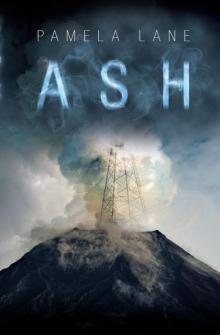
Ash, page 2


Several large rocks landed where they had just been working, shattering into pieces and sending a cloud of snow into the air.
Zoe pulled her phone out of her bag and tapped on the screen urgently. She stared at the volcano app, which now showed amber warnings from around Katla.
“Get the stuff!” said Zoe. Oliver quickly retrieved their samples and tools. Zoe rammed them into their bags. They stood back and scanned the rift face for any more signs of a rock fall. Zoe got her walkie-talkie from her pocket. “Alpha – we’re getting bombarded here – how are things in your sector?”
A voice crackled back. “Hello Zebra. Pretty bad here too. We’re pulling out.”
“We are, too. I’ll tell Tango. Meet you back at base.” Zoe looked at Oliver. “It might be better tomorrow.”
They picked up their equipment and started the long walk back to the camp.
“I hope so,” said Oliver. “I’m sick of these interruptions. We could have been finished by now.”
Zoe pulled her hat down over her shoulder-length fair hair then wrapped her hood over the top. She’d been out all day in the ravine and she was chilled to the bone. Both she and her husband were geologists at Isaac Newton College (INC) working in the field of abrupt climate change. Greenland had been their home for the last few weeks. Now it was becoming impossible to work.
They got back to the huts. Once inside they began the laborious process of peeling off their outer layers. Zoe slumped down on the nearest bench, one foot in the air. Without having to be asked, Oliver pulled off her boot, slung it onto the rack then reached for the other one.
“Shall I do yours?” said Zoe.
“I’m okay,” said Oliver. “Get us a hot drink while I finish off here, will you darling? I could murder a cup of coffee.”
Zoe padded off, her face still stinging from the cold. She looked at her phone again for the latest updates on the volcano.
“Zoe! That you!” shouted a voice from one of the other rooms. It was Dieter Bergmann, a geologist from the university in Munich.
“Yes, we’re back!” returned Zoe, grabbing the coffee pot perched on the stove. There were two clean mugs on the shelf. Miracles do happen. Deiter hurried in, his eyes bright with the news he had to tell.
“Katla’s blowing!” he said. “I just know it. We’ve been picking up signals all afternoon. There are constant disturbances coming from the region. Look at this!”
He showed Zoe a printout of the seismology graph. The mountain-range of spikes on the graph was getting bigger and more frequent by the hour.
“Have you got any data on previous activity?” said Zoe. She had one eye on her phone which was now showing red alerts.
Deiter nodded. “I’ll show you.” Zoe followed him through to his work station. Oliver had heard the exchange and joined them.
They all poured over the data. Every few years there had been activity recorded around Katla leading to speculation that an eruption was imminent.
“There’s nothing in past records anything like on this scale,” said Oliver.
“Not even when it last blew?” asked Zoe.
“Exactly!” said Deiter. “This is what I am telling you. This is going to be a big event, no doubt about it. There is already a major ash ejection reported. All the signs are there.”
“It got a bit hairy in the rift today,” said Oliver.
“You should wind up what you’re doing and get back home,” said Deiter.
“But we’ve nearly finished!” said Zoe.
“So call it a day and work on what you’ve got. You’re seeing this,” Deiter rattled his papers testily, “but you’re not listening. Like everyone else I speak to.” He left them to think about what he’d said. Zoe and Oliver exchanged glances.
“He could be right,” said Zoe.
“He could be. But we still don’t know what’s going to happen. This time next week it could all go quiet again,” said Oliver.
“Are we going into the rift again tomorrow then?” Zoe looked at Oliver.
“We’ll see,” he replied.
Zoe grabbed some food. Oliver said he’d eat later and went to his desk to do a couple of hours work. Zoe looked at the volcano app with a shiver of excitement. Tweets were coming in from all over the region saying that tremors were being felt. Her hand gripped the table expectantly, but there was no movement at all. Nothing.
She decided to call her friend and colleague, Amy Hewitt, back in London.
“Ames! You should be here with us – it’s all happening – have you seen the data? We think Katla’s going to blow!”
“In that case, shouldn’t it be the other way round? You should be here with us! And, yes, I have seen the data. It’s looking a bit lively out there.”
“Why don’t you and Lawrence fly out here? You really don’t want to miss this, Amy. And Lawrence could get some amazing shots.”
“Would love to Zoe, but I’ve got teaching commitments here and anyway, Lawrence is away on a project for a couple of days. He’s up in the Midlands at the moment, at one of the big power stations.”
“You’ll kick yourself!”
“Maybe,” said Amy, brightly. Zoe suspected that her friend was trying not to sound as jealous as she felt.
“Call if you get anything,” said Zoe.
“Will do. Take care now.” Amy hung up.
Zoe found it hard to sleep that night. Whether it was fear or excitement she didn’t know, but a feeling had lodged itself in the pit of her stomach. The night was utterly silent as though the air was filled with a terrible waiting. She trembled slightly as the taut earth-energy stretched to breaking point. The tension of anticipation was unbearable. Zoe breathed shallow, short breaths as though she were afraid of breaking the stillness. She moved closer to her husband whose large frame slept peacefully alongside her. As she dozed she felt the earth float beneath her body. She couldn’t tell if the ground was moving or if she was dropping into a vivid dream. She woke with an involuntary kick that set her heart racing.
“Oliver!”
“It’s okay,” he said, unperturbed.
“Was it a tremor? Did it wake you, too?”
“No, darling, you did.”
“It’s like the Earth’s holding its breath. The suspense is awful. Don’t you feel it too?”
“Not really, I have to be honest.”
“This could be another Krakatoa.”
“For God’s sake go back to sleep,” said Oliver turning over.
Zoe tugged at the duvet and stuffed it under her chin. Exhausted, she fell into a deep sleep. When she next opened her eyes Oliver was standing at the side of the bed holding a mug of tea out towards her.
“You’d better come and see the news, Zo – Katla’s just emitted a giant ash cloud. It looks like the eruption has started!”
3
Millcott B Power Station
“I thought he said he would be here to meet us,” said Emma, irritable after the long drive from London to start filming the Enlecco short.
Emma pulled up in the car park of Millcott B power station in the East Midlands and looked at her passenger for an explanation.
Lawrence Hewitt was slightly built with a thin, dark beard, flecked with grey. Emma found it hard to guess his age as his face had the weathered look of a traveller. He had hardly said a word during the journey which had left Emma feeling tense and awkward.
“He’ll be along shortly,” said Hewitt.
Emma had arranged to meet the senior engineer who could show her around the site and provide any support she might need during filming, but everywhere looked deserted and she wondered if they were in the right place. On the reccy, the car parks had been full. There had been noise and bustle everywhere. She wondered what was going on.
The power station site was vast, like a one-industry town, all self-contained with its own roads, railway station, goods depots – even its own social club. To the east, the site was dominated by the terrifying row of cooling towers, hovering over the ground, each one under its meringue-cloud of water vapour, massive yet light at the same time. Sporadic gusts picked up dust and debris from the surrounding scrub and blew it around the empty car park. This place had once been a hive of industry. Now it had an air of an industrial wasteland. She noticed a coat of thick white dust everywhere and wondered if that was normal around here.
Emma foraged in her handbag then pulled out her phone. She scrolled through her contacts list until she got to the name Derek Stringer. There was no answer.
“Now what?” she said.
Hewitt shrugged. “Give it five minutes. If no-one shows we’ll go and find him.”
Emma sighed with frustration. She always put a lot of effort into planning a shoot. She expected everyone else to do the same. This project would look good on her portfolio and she wanted to get it right.
Five years ago she had borrowed heavily to buy new camera, sound and editing equipment. She had needed it to grow her business. It had seemed so easy – and necessary to get the latest kit. But fifty thousand pounds for a state-of the-art camera was a big investment. All had seemed worthwhile until last year when the banks began calling in their debts. Emma had struggled to keep the wolf from the door for as long as she could, but after Bill died it just got harder. She needed a big injection of cash to keep her afloat or she would be finished by the end of the year. She looked at the state of Millcott B and saw her predicament writ large.
“Look!” said Hewitt, craning forward to see more clearly. “Over there. That looks like our man.”
A middle-aged man walked briskly towards their car. Emma let the window down as he approached.
“I’ll see you over there!” he said, pointing to the social club.
He set off, his jacket inflating in the wind. He jangled some keys in his hand as he walked. Emma and Hewitt hurriedly got their stuff together and followed him. He unlocked the door of the social club and went straight inside, leaving it open for them to follow. Emma strode up the plywood ramp and into a depressing room full of torn posters and mismatched furniture.
“Welcome to Millcott B – what’s left of it. I’m Derek Stringer. I think it was Ron who saw you before. He’s no longer here so I’ll be looking after you. Pleased to meet you, by the way.” He shook hands warmly with them both and sat down at a table. “Sorry it’s so cold in here. It’s never used much nowadays so there’s no heating on to save on the bills.”
“I’d change your supplier,” said Hewitt drily looking out onto the brutalist main block of the turbine building.
Derek smiled. He looked like a man who hadn’t had much to smile about lately. Emma noted the exchange with approval. Maybe Hewitt just needed time to warm up. She turned to Derek.
“This will do fine,” said Emma. “So, Derek, you’re the Chief Engineer.” He nodded. “How long have you worked here?” she went on. “Some time, I expect.”
“Well, all my adult life – like many men of my generation. I was taken on as an apprentice at fifteen and worked my way up through the ranks to a comfortably-paid position in the company; Chief Engineer. Or was, until last month.”
“What do you mean?” said Emma.
“At one of our regular Monday morning meetings an executive came down from head office and told us that Millcott B would be closed. Simple as that. It seems to be the way business is done nowadays. We were to be offered, either redundancy, or a relocation package to God-knows-where.”
“What did you to do?” said Emma. She felt indignant on his behalf. She could tell it had been a blow to Derek’s pride.
“I took the money,” he said, head down.
Hewitt looked around. “So is this place now closed?”
“Not quite. It’s winding down. We’ve a skeleton staff and some generation is carrying on till the wreakers get here. It’s heart-breaking to see.”
“But what about our video?” said Emma.
“If you need anything, let me know. Your filming shouldn’t be affected. You can use the social club as your base and there’s a kitchen, of sorts. You might want to let the rest of the crew know this is where to meet – when will they get here?”
“Tonight. We are all booked into a nearby hotel. Then we start early tomorrow.”
“Okay. I’ll be here to open up, and to let you into the turbine rooms and control centre when you get to that stage. I’ll need to be with you while you are in authorized zones. You can talk to me on this.”
Derek handed her a walkie-talkie. He turned to address Hewitt.
“Feel free to take pictures anywhere on site. I know this place like the back of my hand so I might be able to help with locations if you’ve anything particular that you looking for.”
“Thanks. I’ll remember that,” said Hewitt.
“Right,” said Emma. “Let’s get started, shall we? Derek, can you call HR and tell them I’m here. I need to speak to...” she looked at her diary, stuffed full of papers. “Steve Mills. Head of HR, as I’m doing an in-house video. I’ll need to see any employees that I’m interviewing and run through the script with them. And check out the locations. It should all be okay but it all seems so different to when we were last at Millcott. I’ve scripted in people to talk about being part of this company, showing them in their place of work, as I was asked to do. They are still actually here aren’t they?”
“Oh yes,” said Derek wearily. “Steve has made sure of that. I’ll call him now.”
* * *
Next day, the filming was going to plan. The intro shots of the cooling towers had worked well in the early morning light. Enlecco had also wanted footage of coal trains and the industrial landscape which would be edited in black and white. Emma was walking with Hewitt towards the main control room.
Hewitt, new on the scene, was trying to get up to speed.
“So what’s the narrative of this video meant to be?” he said. “I need to know how the stills will be used.”
“It’s the industry moving on, if you like. From heavy industry to modern technology.”
“And who will it be shown to?”
“Graduates mainly and new recruits. It’ll be for open days on site and for outreach visits to universities, that kind of thing. They want your stills to form large posters at presentations or to make display stands. They can be of coal trains and cooling towers and will be in black and white to emphasize that that side of the industry is in the past. They also want shots of employees in orange hard-hats, either at work or smiling to camera. They will be for the leaflets they want to print and hand out. And make sure you get the Enlecco name and logo in as much as possible, for obvious reasons.”
Hewitt looked as though he got the idea.
“So if you follow me while I get the B-roll footage and take whatever you think works as a still.”
“B-roll?” said Hewitt.
“I’ll be getting background shots and close-ups. Detail shots like hands-on-switches, reaction shots and so on to edit into the main take which consists of the interviews and straight-to -camera footage. It’s a standard film-making technique which is particularly useful with single camera work like mine. You’ve heard of cutaways?”
Hewitt nodded. Emma continued,
“Well, that’s it really. In an interview, for example, you keep the audio track going but cutaway to a detail. It hides zooms, and can be used to edit out stumbles. It creates a professional, more visually interesting result. Together with some aerial footage and images of shiny new power plants – which I can get from their in-house library pictures – it should come together very nicely. It all goes to make the production values appear high.”
Hewitt took it all in, genuinely interested.
Once at the door to the control centre they hurried inside. It was a relief to be out of the wind.
They couldn’t believe it was so cold.
Emma got started straightaway.
They wound up about seven o’clock. The interviews had gone particularly well against the backdrop of the turbine room. The people used in the film had been excellent choices. Emma was pleased. Hewitt waited impatiently in the social club, while Emma packed up her kit and said goodbye to her cameraman and soundman. It had been a long day and Hewitt had said that he was eager to get on the road.
Emma approached her car. Straightaway she saw something odd about it. The silver-grey finish had turned to a soft, dull matt. She then ran her finger over the paintwork and stared at the result. Noticing Hewitt looking out of the social club window, she beckoned him over. He went out to help her load up.
“Look at it!” she said.
“What’s the matter?” he replied.
“The car’s filthy. Look at this,” she said showing him her finger caked in grey powder. “What the hell is it? It’s everywhere.” It was then she noticed that she had left footprints in the car park, as though they’d had a dusting of snow.
“Looks like ash,” said Hewitt. “Shouldn’t worry. There must be deposits everywhere around here. The winds must have stirred it up.”
“Yes, I guess you’re right,” said Emma. “But look at it. It must be nearly a centimetre thick in places. I hope none of it has got onto my lenses.”
Five minutes later the car was loaded. They were set to go. Emma began to rummage in her bag.
“Look, I’m really sorry Lawrence, but I can’t find my glasses. I have to go back to the main building. I know I had them there.”
His eyes flashed his impatience. “Okay,” he said. “I’ll come with you. What do they look like?”
“They’re in a silver case – why?”
“I think I remember seeing one of those on top of a cupboard.”
They headed straight back to the power plant, their feet scrunching on the ash as they hurried along. Once inside Emma darted around the reception area, anxiously scouring every surface for her glasses. She knew she couldn’t leave without them.
“Are these them?” said Hewitt suddenly, spotting them on top of a filing cabinet.
“Oh, thank God for that!” said Emma, opening the case to check that they were inside. She stared at Hewitt. “That’s a bit weird – you knowing they were there,” she said.