

Motus, page 1


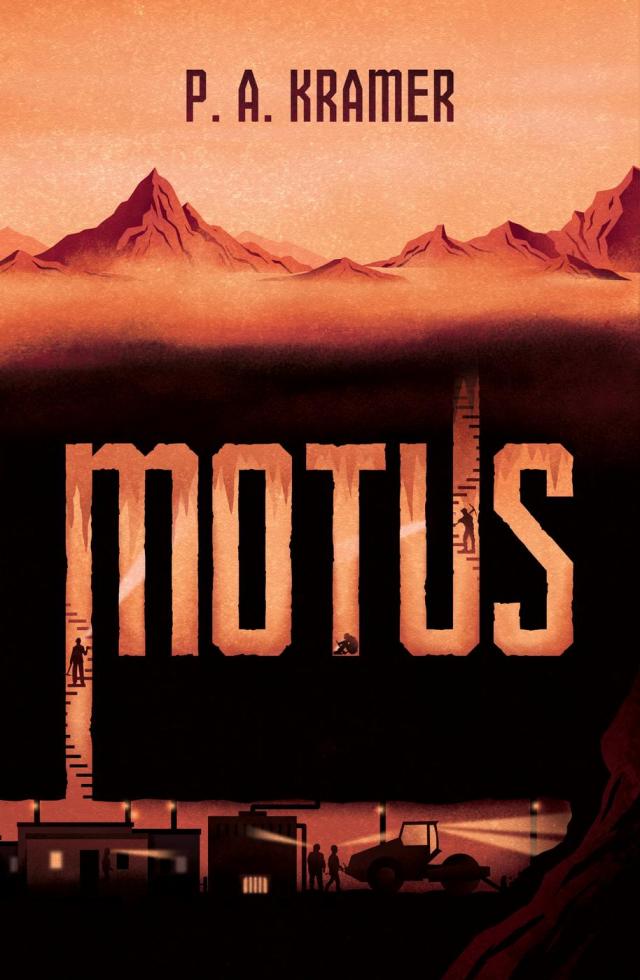
P. A. KRAMER
Motus
Copyright © 2025 by P. A. Kramer
First edition
All rights reserved. No part of this publication may be reproduced, stored or transmitted in any form or by any means, electronic, mechanical, photocopying, recording, scanning, or otherwise without written permission from the publisher. It is illegal to copy this book, post it to a website, or distribute it by any other means without permission.
This novel is entirely a work of fiction. The names, characters and incidents portrayed in it are the work of the author’s imagination. Any resemblance to actual persons, living or dead, events or localities is entirely coincidental.
Edited by Dylan Garity
Cover art by Slobodan Vukovic (WolfBell)
Table of Contents
Title Page
Copyright Page
CHAPTER ONE
CHAPTER TWO
CHAPTER THREE
CHAPTER FOUR
CHAPTER FIVE
CHAPTER SIX
CHAPTER SEVEN
CHAPTER EIGHT
CHAPTER NINE
CHAPTER TEN
CHAPTER ELEVEN
CHAPTER TWELVE
CHAPTER THIRTEEN
CHAPTER FOURTEEN
CHAPTER FIFTEEN
CHAPTER SIXTEEN
CHAPTER SEVENTEEN
CHAPTER EIGHTEEN
CHAPTER NINETEEN
CHAPTER TWENTY
CHAPTER TWENTY-ONE
CHAPTER TWENTY-TWO
CHAPTER TWENTY-THREE
CHAPTER TWENTY-FOUR
CHAPTER TWENTY-FIVE
CHAPTER TWENTY-SIX
CHAPTER TWENTY-SEVEN
CHAPTER TWENTY-EIGHT
CHAPTER TWENTY-NINE
CHAPTER THIRTY
CHAPTER THIRTY-ONE
CHAPTER THIRTY-TWO
CHAPTER THIRTY-THREE
CHAPTER THIRTY-FOUR
CHAPTER THIRTY-FIVE
CHAPTER THIRTY-SIX
CHAPTER ONE
It was an odd-looking rock. Pitted and black, it drew in the light of Corun’s headlamp even as flecks of silver-gray metal reflected it back at him.
Kneeling in the narrow tunnel, Corun prodded the strange ore with the tip of his pickaxe. It crumbled easily under the well-honed carbon steel, and several fragments fell into his waiting hand.
As he thumbed his latest discovery in his palm, he marveled at its utter unfamiliarity. A few minutes earlier, he would have claimed to know every rock, mineral, and ore by sight if not by name. This, with its alternating rough and glassy texture, was entirely new to him.
Casting a tentative look over his shoulder, Corun slid the rock fragments into his pocket.
Malac, an ancient man by miner standards, worked the tunnel beside his at the pace of someone half his age. Sparks flew and rocks fell with every determined swing. Bari, a young and stout miner, worked with all the energy of a man sleeping on the job. He lay with his back against the stone wall of his own lagging tunnel, his snoring drowning out the staccato of dozens of pickaxes striking stone nearby. Neither man had noticed the pause in Corun’s digging.
It was hard to imagine either of them claim-hopping, but when riches were involved, it paid to be cautious.
Corun scooped up a handful of rock dust and dribbled in a bit of water from his canteen. After working the mixture into a thick paste, he spread the makeshift clay over the exposed ore. A brisk heating under the flame of his carbide lamp soon concealed all traces of it.
He spent the next few minutes sitting on the small mound of rocks that had accumulated in his tunnel, feigning a pained shoulder. He gave up the pretense when neither Malac nor any of the passing miners spared him a glance.
The same couldn’t be said for Canary, the resident quail of the mines. The small, feathered creature came into the sphere of light cast by Corun’s headlamp and began scratching and pecking at the loose pebbles on the tunnel floor. Corun smiled and untied a small pouch at his belt. Pulling out a fried mealworm, he tossed it to the quail, who eagerly ran forward to gobble it down. A moment later, it cocked its head and let out a low chirrup.
“Don’t be greedy,” Corun said. He shook a handful of fried mealworms into his hands, lowered his dust mask, and tossed them into his mouth. Canary let out another indignant sound, and Corun soon relented, offering him another worm. It was the least he could do for the service the quail provided. Pockets of unbreathable gas were rare but had claimed the lives of many miners in the past. The death of Canary, or the latest recipient of the traditional name, was their only warning.
Between the two of them, the mealworms were gone by the time one of the many distant lights headed in their direction.
A young man a few centimeters taller than Corun pushed an empty wheelbarrow into his tunnel, causing the quail to flap its wings and vacate the suddenly cramped space. Sweat streaked the hauler’s dusty face, and his breaths huffed out of him in time with his heavy steps.
“Any left?” Rhyo asked as he pulled up to the mound of rock. He eyed the small pouch in his hands.
Corun shook the empty cloth pouch, and Rhyo’s face fell.
“I have something else you might like,” Corun said, reaching into his pocket.
The look of hunger that never seemed to leave his friend’s eyes these days intensified. He squeezed his large frame between the wheelbarrow and tunnel wall to approach.
Corun stood, put a finger to his lips, and placed the rock fragment in his friend’s palm.
Rhyo lifted it to his face but refrained from eating it. Instead, he peered at it for several long seconds and nudged it with a finger. The beams from their headlamps made the strange ore shimmer, entrancing them both for several long seconds.
“What do you think it is?” Corun asked in a whisper.
“I’m no appraiser,” Rhyo said just as quietly.
“You spend half the day with them. Surely, you’ve picked up a few things.”
“They only tell me what our haul is worth, never what it is. Besides, I thought that was your thing.”
“I’ve never seen anything like it,” Corun admitted.
“Could it be uraninite?” Rhyo asked, his eyes never wavering from the rock in his hand.
Corun began to object but couldn’t find the words. He had never seen the uranium mineral before, and while the element did come in many colors and compositions, at least one of them was a black and metallic ore.
“Pitchblende,” he said in a whisper. The possibility made his throat feel as dry as rock dust.
The job of every miner was twofold: to dig a path through the rock for the city of Motus to follow, and to recover from it any vital resources the city lacked. Sometimes that included water and oxygen locked within ice and metal hydroxides and oxides. More often than not, a wealthy shareholder wanted to get their hands on a particular gem or precious metal. But uranium was always in short supply, so much so that the lack of it had threatened to grind the gears of society to a halt more than once in recent history. The Reactor was the only thing keeping the cold of the all-encompassing stone at bay and powering their lights and industry. The day they ran out of uranium would also be their last. The reward for any miner who found a substantial deposit was a life of leisure and luxury in the Foredistrict of the city. It was what kept miners delving into the unknown one pickaxe strike at a time, hoping it would all be worth the effort one day. Who would have guessed that miner might be him?
Corun plucked the rock fragment from his friend’s hand and returned it to his pocket.
“Don’t get your hopes up like last time,” he said, more to himself than Rhyo.
“How was I supposed to know it was salt?”
“Diamonds don’t dissolve in your mouth, Rhyo. It was literally the first thing the appraiser tried.”
“You’re the one who said we’d be rich in no time at all. It’s been four years,” Rhyo said with a huff. That didn’t stop him from taking his shovel from the wheelbarrow and loading rocks from the pile.
Corun winced. Back then, he had regaled Rhyo with half-remembered stories from his father, stories of fist-sized gems, rare ores and minerals, and spacious caverns. Four years later, he was beginning to think those stories had been exaggerated, a dying man’s last attempt to impress his son.
Despite their occasional bickering, he and Rhyo were the best miner and hauler team in the city. They always kept pace with one another, such that Corun freed a wheelbarrow’s worth of rock as soon as Rhyo returned to load it. It was no surprise that they were always a half dozen meters ahead of the other miners, and never had that paid off more than today. It could be days before the nearest miner caught up to Corun and chanced upon the ore deposit.
Even now, they worked in companionable silence, their callused hands and labor-hardened muscles making short work of the pile. Once the rock was loaded, Corun performed a task exclusive to him. He took a small barley straw broom from his belt and began sweeping up the rock dust. Rhyo, usually patient with Corun and all his eccentricities, was soon shifting from foot to foot with impatience. When a sizable pile of fine dust had formed, Corun scooped it into the pouch that had previously contained his lunch and cinched it closed.
They headed back to the city with a bit more spring in their step than usual. In the distance, Motus appeared as a thin band of illumination where the tunnel ceiling and floor converged. The sight was broken by the hundreds of metal roof supports between them and their destination, roof supports that looked wholly insufficient for the task of holding up the rock just a meter above their heads. As they traversed the distance, Rhyo shined his headlamp along their path while Corun idly scanned the newly excavated tunnel.
It never failed to amaze him how quickly they moved through the rock. With a hundred miners digging side by side, they advanced the hundred-meter-wide main tunnel a few meters each day. Two days from now, Moveday, all the wheeled buildings of Motus would roll forward another twenty meters to make room for the slag the Smeltery left in the city’s wake. In a way, Motus wasn’t much different than a mealworm, eating a path through the substrate and leaving nothing but waste behind them.
Packing all that red-hot slag into the tunnel behind them was the only way to conserve what little space they had. Whenever Corun felt disenchanted with his chosen profession, he merely had to catch a glimpse of a poor and soot-covered compactor to feel better about his lot in life.
The rough-hewn appearance of the tunnel soon changed as they neared a line of pavers crouched along the floor. The men and women, clothed in thick jackets and gloves, diligently smoothed the floor with small picks and chisels and placed paving stones along the path as they went. One of their number looked up to see them coming and shook her head reproachfully.
“The tunnel’s moving at a distinct upward slope, Corun. Are you growing so tall your hard head’s started chipping away at the ceiling?”
“Slag, Cinna. He’s not the only miner up there,” Rhyo cursed, leaping to Corun’s defense. If anyone had a right to be self-conscious about their height, it was Rhyo. Corun’s last growth spurt was years behind him, yet it had made him one of the tallest people in the city. Still, Rhyo stood a few centimeters taller and seemed to grow a bit more each day.
“We all know he leads that pack of brutes,” she said, lifting her helmet to wipe the sweat from her brow. The action sent thick, dark red curls springing free of their containment. “Just be sure to even out before the compliance officers pay us a visit.”
“Their measurements always tell us to move down and to the right, but it’s not their height that’s the problem, it’s their—” Rhyo began before ducking a swing from Cinna’s level. “Their politics. What? I was going to say politics.”
“They’re all Lateralists if I’ve ever seen one,” Cinna called after them as Rhyo hurried through the pavers’ ranks and out of her reach.
Corun couldn’t help but agree. A shareholder’s political leanings were most evident by the jobs they worked. Ascensionists, who would have the city move at an upward grade, were quick to recruit miners, haulers, and compactors, who found gravity a helpful assistant in their labors. Descensionists were just the opposite and appealed to those in the Foredistrict who liked the idea of saving shares on haulers by rolling their impractically heavy houses and businesses at a downward grade. The disagreements that raged between the two parties of extremes held little sway with Lateralists, who made up the majority of Motus’s shareholders. They favored the status quo, moving the city at a net zero grade. Nowadays, Lateralists were further divided on direction and would spend all day at board meetings debating whether they should veer left or right. Having no concrete evidence for either direction just made them even more adamant in their claims of vital resources within easy reach.
Immediately behind the pavers worked the electricians and plumbers, installing the city’s critical electric, sewer, and heating infrastructure underneath the paving stones. During the next Moveday, the area would become the new Foredistrict, a place reserved for the wealthiest and most influential shareholders of Motus.
With smooth paving stones beneath their feet and the lights of Motus close enough to see by, Corun and Rhyo silently extinguished their headlamps and picked up their pace.
Houses and businesses, all polished to a metallic gleam or painted in a vibrant hue, sat in rows along two of the city’s three thoroughfares. Sturdy metal roofs protected the inhabitants from cave-ins, while semiprecious stones decorated the frames of windows and doors. Rows of metal wheels lined the base of each building, designed to roll the structure along the tunnel. The last and smallest street was sandwiched between the rightmost row of buildings and the tunnel wall. It looked far more well-trodden than the other thoroughfares, with cracked paving stones, occasional fallen rocks, and piles of litter.
Corun and Rhyo made their way to Third Street, hoping to pass through the Foredistrict unnoticed, as was expected of common laborers.
Before they reached the street, a group of richly dressed people emerged from the headquarters building and donned equally ostentatious helmets. Their clothes were spun of the finest microfibrillated cellulose wool, dyed in brilliant oranges and reds, and gems glittered on every hem and golden ring. The closest of them was a young man with shoulder-length brown hair spilling out from beneath a silver helmet with gold inlays. From the black tie and red suit jacket and pants, it could only be a member of the board of directors. His belt held a sheathed knife with a pommel made from a single large opal. The board member wrinkled his nose at the sight of Corun and Rhyo and immediately lifted his tie to his face. Whatever he said to his administrative assistants had them lifting their own ties to their noses and mouths, which did little to mute their laughter. As one, they set off in the opposite direction, their steps hurried as if to outrun a foul stench.
Corun looked away, ashamed by the loathing he felt for these people and himself. If the odd-looking rock he’d found turned out to be uraninite, he would buy his own place in the Foredistrict, leaving the Reardistrict behind him once and for all. He would show these people that wealth earned by hard labor and perseverance was worth far more than being born to it.
CHAPTER TWO
Litter sat in heaps against the backs of businesses and residences of Third Street, leaving a narrow thoroughfare along the rock wall by which Corun and Rhyo traversed the city. If any laborer were caught discarding their trash in the same manner, they would be fined a week’s shares by the nearest compliance officer. Here in the Foredistrict, however, the residents cared little about the trash, given it would become the Reardistrict’s problem every Moveday.
They hadn’t walked more than twenty meters before Rhyo set his wheelbarrow down, ostensibly to rest. Instead of standing idle, he used the time to kick through the litter for anything of use. Corun hesitated only a moment before joining him. He hated to perpetuate the stereotype of filthy scavengers and thieves, but what these people considered trash was a treasure to most laborers. This far into the Foredistrict, it might not be picked over yet. The patchy illumination along the street, the result of the occasional stolen or broken streetlight, reassured him that there was little risk of getting caught in the act.
As they searched, the back door of a restaurant opened nearby, and a cook emptied a bin of grease-stained clothes and a few broken glasses to the paving stones. As soon as the door closed behind the man, Rhyo leapt forward to claim a shirt, a bright blue splotchy thing, and waved it over his head in triumph. A few minutes later, Corun came away with nothing while Rhyo pocketed a couple crusts of stale barley bread.
“I, for one, am happy not to suffer from your high standards,” Rhyo said at Corun’s tragic shake of the head. They returned to the wheelbarrow to resume their day-end march.
On their second break, a few minutes later, Corun glimpsed a familiar white paper beside his friend’s boot.
“Another exposé?” Rhyo asked in a bombastic voice as Corun knelt beside him to retrieve it. “Who’s involved in shady dealings today? The chief financial officer?”
Corun skimmed the wrinkled and torn pamphlet and frowned.
Whoever was behind the anonymous pamphlets had been causing quite a stir in the Foredistrict, at least according to what little gossip made it to his side of the city. They had started appearing a few years ago, but never in the Reardistrict itself. Fortunately for Corun, they were quickly thrown out with the garbage for him to find. They detailed everything from past scandals and corrupt dealings to the occasional political commentary. This most recent pamphlet fell into the latter category.
“Care to read for yourself?” Corun asked, offering it up to Rhyo.
Rhyo wrinkled his nose. Reading was not among his many talents or vices.


