

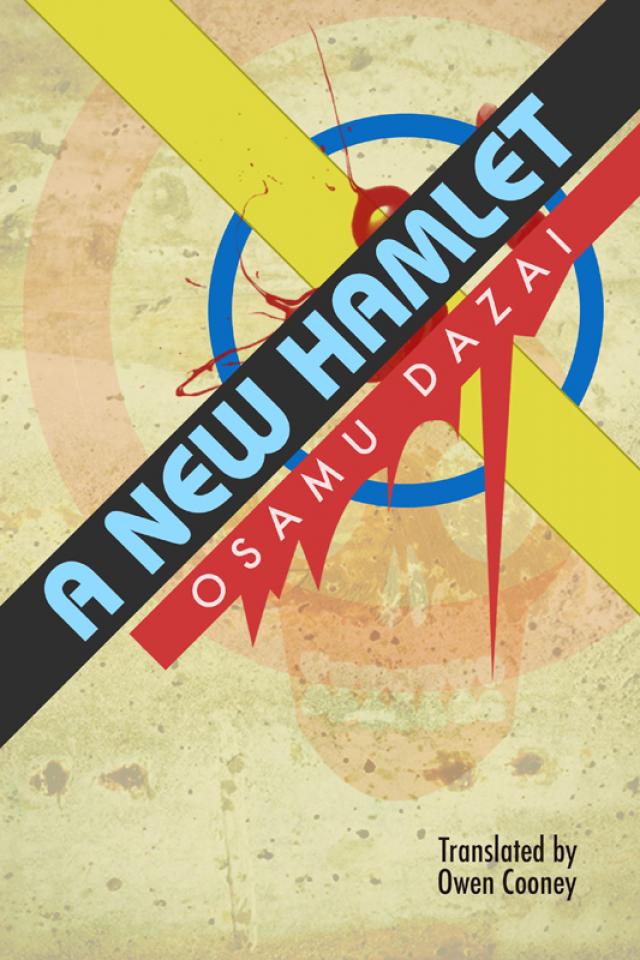
A New Hamlet, page 1


AUTHOR BIO
Osamu Dazai is one of Japan’s most well-known writers. He is the author of two significant postwar novels—No Longer Human (Ningen Shikkaku) and The Setting Sun (Shayo). Dazai had a very turbulent and short life, wherein he tried to commit suicide multiple times and finally succeeded (in 1948, he and his mistress drowned themselves in a canal near his home in Tokyo). Dazai’s stories are full of insight and pathos, and although they often have sad endings, they are also lined with bittersweet humor.
TRANSLATOR BIO
Owen Cooney was born in Tokyo in 1978. He graduated with an M.A. in East Asia Regional Studies from Columbia University in 2012. He has been a translator of Japanese for more than twenty years. He has published a number of Dazai’s stories, including “Crickets” (literary magazine Cha), “Lantern,” (International Publications Media Group) and “Chiyojo” (Smith College’s magazine of translated literature, Metamorphoses). He is based in Seattle.
Note on the text:
Dazai did not intend this story to be performed as a play. As he writes in his introduction, it is meant to be a lesedrama, or “closet play” which is read as if it were a novel. By using this format, he hoped to create a new kind of novel that used aspects of parody and irony. As a note of interest, Dazai did not reference the original English text, but instead used Japanese translations of Hamlet. (In particular, he referenced the translations of Shakespeare by Shoyo Tsuboichi, the well-known literary critic.)
*This work is in the public domain.
All rights reserved. No part of this publication may be reproduced, distributed, or transmitted in any form or by any means, including photocopying, recording, or other electronic or mechanical methods, without the prior written permission of the publisher, except in the case of brief quotations embodied in critical reviews and certain other noncommercial uses permitted by copyright law.
eISBN-978-1-4835877-7-6
Contents
A New Hamlet
Special thanks to my father Michael for editing the text and my brother Kenneth for designing the book cover. In addition, thanks to my wife Marie for suggesting I read this book in the Japanese in the first place.
November 20, 2016
DRAMATIS PERSONAE
Claudius King of Denmark
Hamlet Son of late king and nephew of present king
Polonius Chief Councilor
Laertes Son of Polonius
Horatio Hamlet’s school friend
Gertrude Queen of Denmark, Hamlet’s mother
Ophelia Daughter of Polonius
and others
Location: Elsinore, capital of Denmark
ACT ONE
SCENE ONE: Elsinore Castle, Great Hall
KING CLAUDIUS, QUEEN GERTRUDE, HAMLET, Chief Councilor POLONIUS, his son LAERTES, and various other ATTENDANTS.
KING
I want to thank you all for your help during these trying times—surely, you must be exhausted. Due to the sudden nature of the King’s death, I’ve been forced to take the throne and hold the ceremony of marriage with Gertrude before our tears have even dried. This has been just as difficult for myself as it has been for all of you, but know that it was done for Denmark. These are decisions I made with plenty of discussion with everyone. I truly believe that my brother—our former king who now lies beneath the ground—will forgive our actions out of consideration for the people’s sense of unwavering patriotism. Denmark has lately been at odds with Norway, and war could break out at any moment. How could we leave the throne empty of a king, even for a day? As Prince Hamlet is too young, I acquiesced to the unanimous urging of all of you that I take power.
But truly I do not have the qualities of the late king, nor his moral command. As you can see, I am a simple man, just an unworthy younger brother, and some may even doubt that I sprung from the same womb as he. I thought that perhaps I wouldn’t be able to take on such important responsibilities and worried that foreign kingdoms would now take Denmark lightly. But the virtuous and honorable Gertrude has decided to stand by me for life and give me her strength—for the kingdom’s sake. Now the foundations of this castle are sturdy and the peace of Denmark is secure. Thank you to everyone for your help. It has already been two months since the King died, and it all seems a strange dream to me. But because of the wise words of those around me, there have been no disasters and we have accomplished what we set out to do. Since I’m such an inexperienced king, I would appreciate it if you would all continue to show your loyalty to me in the future and comfort my poor soul. Oh, yes, I almost forgot. Laertes, you wanted to ask me something, did you not? What is it?
LAERTES
Yes, I would like your blessing to go and study in France one more time. May I?
KING
Certainly, I don’t mind. You have worked quite hard for us these past two months. It seems things have quieted down now, so go ahead and enjoy your studies there.
LAERTES
Thank you, my lord.
KING
I’m sure you discussed the matter with your father as well? Polonius, you’ve heard about this?
POLONIUS
Yes, my lord, he has been bothering me about it incessantly, so last night I finally gave in and told him to ask the King. Ha! I suppose it’s difficult for the young to forget the taste of France!
KING
It’s understandable. Laertes, know that for children, the father’s consent is more important than the king’s approval. Harmony within the family equates to loyalty to the king. If your father approves, then I approve. Go and enjoy yourself to the greatest extent—at least to the extent that you don’t do damage to yourself. I’m jealous of how the young compete in even their amusements! It seems, Hamlet, that you are quite unhappy these days. Would you like to go to France as well?
HAMLET
Me? Are you kidding? I’m going to Hell.
KING
What are you so angry about? Ah, but I know what it is. You were telling me you wanted to study at the university in Wittenberg again. But you must not go—I plead with you not to go. You are the one who must soon inherit the throne of Denmark. This is a troubled time for the kingdom so I took the throne temporarily, but once the danger has passed and the people’s hearts have settled, I will pass the throne on to you and rest. Therefore, you must stand by my side and try to learn the ways of governance little by little. No, in truth, I need you to help me! Please give up on going to university. As your father, this is my wish for you. If you leave, I’m sure the Queen will be lonesome as well. I can’t help but notice too, Hamlet, that you have been quite sickly of late.
HAMLET
Laertes…
LAERTES
Yes?
HAMLET
You certainly are fortunate to have such a nice father.
QUEEN
Hamlet, how can you talk like that? To me, it just looks like you’re sulking. Don’t put on this sarcastic, affected manner. If you’re dissatisfied about something then why don’t you just speak up clearly like a man? I abhor it when you talk like that.
HAMLET
Do you want me to be clear?
KING
I understand what’s going on here. Hamlet, I’d like to take this opportunity to talk, just the two of us. Queen Gertrude, you mustn’t be so angry with him. Even the young have some justification for their complaints, in their own way. I’m sure that even I have many things about my person that I must reflect upon. Hamlet, are those tears?
QUEEN
Bah! The boy has always been good at pretending to cry, ever since he was a child! Don’t hold back too much—go ahead and lay into him with everything you have!
KING
My Queen, don’t speak like that. Hamlet is not your child alone. He is the prince of Denmark!
QUEEN
That’s why I’m so hard on him. He is already twenty-three. How long are we going to baby him? As his true mother, I’m ashamed to have him as my own child. Look at him! Today was the King’s first ceremonial audience, and yet this child alone deigns to wear dreadful clothes of mourning. I suppose he feels that he’s in a tragic position, but he doesn’t even think of how much his actions pain us! Leave it to me to figure out what this boy is thinking. I always know what he’s plotting. These clothes of mourning are merely a harassment directed towards us! I suppose he wants to insinuate that we’ve already forgotten about the late king’s death. Nobody has forgotten! Everyone here, in their heart of hearts, is deeply grieving the King’s death, but they can’t allow themselves to wallow in that grief. We must think of Denmark. We must think of the people of Denmark. We’re not even free to grieve as we like. We don’t hold command over ourselves. Hamlet doesn’t understand these things.
KING
Your words are too harsh. You mustn’t drive him into a corner like that. It’ll only hurt him to no end. As his birth mother, dear Queen, I suppose you feel secure in your relationship, and trusting your loving bond, are free to say such things to him. But to young people, open affection is more important than unrevealed love. I remember my own youth well. One feels that, all because of some words someone said, one’s entire fate was decided. My Queen, I sense that perhaps you are not yourself today. I believe it’s entirely permissible for Hamlet to wear clothes of mourning. A boy’s sentimentality is a pure thing. It’d be sinful to try and force his emotions to fit our worldview. We must be delicate with him. It may be that we, especially, must learn from this boy’s sense of purity. We believe that we understand life, but there may be times when we have unknowingly lost something very important. In any case, I think that I would like to have a nice long talk with Hamlet alone. Please, everyone, leave us for a while.
QUEEN
Very well, if you’d like to do so. I may have said too much. But I think you feel some kind of reservation toward him for no reason, and you are being far too kind to him. If you continue like this, the boy will never be respectable. If the late king came to visit us now, he would probably be furious about Hamlet’s behavior today, and he would have struck him.
HAMLET
Go ahead and hit me.
QUEEN
There you go again! Try and be more obedient!
KING
Hamlet…
The others exit, leaving the King and Hamlet alone.
KING
Hamlet, come sit here. If you don’t want to, you may remain where you are. Then I, too, will stand and speak. Hamlet, you’ve really grown! Why look, you’re about the same height as me! I’m sure you’ll continue to grow, in many ways, to become a man. But perhaps you should put on a little bit more weight. You’re quite thin. And your face looks somewhat pale recently. Take care of yourself! Think of the great responsibility that awaits you in the future. Let’s now take some time today to talk today, just you and I. In truth, I’d been waiting for an opportunity to be alone with you. I’ll tell you what I think frankly, and in return I’d like you to tell me whatever you want to say. Don’t hold back. It’s been known to happen that, no matter how much two people love each other, they’ll never know of that love unless they express it with words. I think I understand the opinion of the philosopher who said that men are creatures of words. So let us converse deeply with each other today. I’ve been quite busy these past two months, and I have not had the chance to talk to you. I’ve not had a minute to rest. Please forgive me for that. I think that you, too, were taking great pains to avoid seeing me—is it not true? When I would come to your room, you would just turn around and leave. Do you know how sad that made me, every single time it happened? Hamlet! Raise your chin. And answer this question clearly and seriously. I have something to ask you. Do you hate me? I’m now your father. Do you despise such a father as myself? Do you detest me? Answer me! In a word is fine. Tell me what you think.
HAMLET
“A little more than kin, and less than kind.”
KING
What? I couldn’t hear you. Don’t jest with me. I am asking you a serious question. Please don’t give me some silly pun as an answer. Life is not some kind of play!
HAMLET
I’m telling you what I think, Uncle! You were a nice uncle to me, but…
KING
I make a bad father?
HAMLET
Well, I can’t lie about the way I feel.
KING
No, no, thank you. That was very good of you. You must always speak to me with this kind of clarity. I will never be angered by truthful words. In fact, I also have a similar sentiment toward you. Now, there’s no need for you to turn red and narrow your eyes at me like that. You really are quite dramatic with your facial expressions, aren’t you? Always so severe with the words you direct towards others, but once somebody says a single word about you, you leap up and start making a fuss. Of course, all young men are like that, but have you ever thought about how others feel when you speak so bluntly to them?
HAMLET
But, I never…that’s stupid. I only say such things when I’m at my wit’s end and I’m driven into a corner. I’ve never attacked anyone verbally like that.
KING
What I’m saying is that you’re not the only one who can feel like that. All of us say such things when we’re at our wit’s end! We’re all doing our best to survive. Perhaps to you it seems as if we have an abundance of energy and are glowing with confidence, but we feel the same as you! It’s mostly the same as you feel. We thank God each day that we live without meeting disaster. After all, I was also born a man who inherited the blood of the Hamlet family. As you know, the Hamlet royal family has qualities of indecisiveness and weakness in its blood. Both the late king and I were crybabies from when we were young. When envoys from other kingdoms saw us playing in the yard, they mistook us for little girls. The two of us were sickly. I hear the court physician was doubtful that we would be able to grow up to be normal men. But through self-improvement, the late king was able to become a virtuous ruler. I still believe that one can transform one’s destiny through force of will. The late king is a good example of this.
I’m still trying my hardest. I would somehow like to become a strong pillar for the state of Denmark and I’m doing everything in my power to achieve this. But you know, Hamlet, what pains me the most at this time is—I’m sure you can guess—it’s you. Just a minute ago you said something like ‘one can’t fake what one truly feels,’ and in truth I feel in a similar way that I can’t convince myself that you are my son. Let me say it more clearly. You were a dear nephew to me. I truly loved you from my heart as a bright and clever boy. You were, while the late king was alive, quite friendly to this goat-faced uncle of yours. It was you, my dear nephew, who first pointed out that my face looks like that of a goat. As your uncle, I played along and became the “Old Goat.” Ah, how I long for those days. Now, you and I are Father and Son. But our hearts are thousands, no, millions of miles apart. The love between us of olden days has changed itself into black hatred. Unhappiness has come to us because we became Father and Son. But we can’t leave things as they are, Hamlet. I have one wish of you—just pretend. At least when the retainers are near us, just hide your true feelings for me. Pretend that we get along. You probably don’t like the idea. It may be painful for you. But there is no other way for us. Disharmony within the royal family will betray the trust of our retainers and darken the hearts of our people. In the end, we will be taken lightly by foreign kingdoms.
Just as the Queen said some moments ago: we do not have command over ourselves. Everything must be for Denmark—for the ground where our ancestors lie—and we must abandon our emotions. All the lands of Denmark, its seas and its people will pass into your hands one day. We must work together now. I will not say that you must love me. As I have revealed to you, I too do not own enough love in my heart to embrace you and call you my own son—so I would not ask you alone to force yourself to show love. Only when there are people around us. It will be for both of us our painful duty. I think it is the will of Heaven. We must obey. God will be happier for us and reward us if we submit to duty rather than seek honest love. Also, though we may only show the mere gesture of love through our greetings, it may be that in time true love may seep into our relationship and flourish.
HAMLET
I understand. Even I can agree to that. It’s just a pain for me. But I want you to give me a little more time. Uncle, I have one wish. Allow me to go once more to school in Wittenberg.
KING
I don’t mind if you call me Uncle when it’s just us two here, but you must promise that when we are with the Queen or the retainers, you will always call me Father. It’s rather painful and embarrassing for me to find fault with such a trivial thing, but even such little formalities will decide the fate of the kingdom of Denmark. Haven’t I been asking you to pay attention to such things?
HAMLET
I see…Fine.
KING
I wonder why you’re like this. When I say something even slightly critical, you puff up your cheeks and give me a flippant answer to evade me.
HAMLET
Uncle—no, King—you also evade my wishes. I want to go to Wittenberg. That’s all I want.
KING
Really? I think that’s a lie. That’s why I pretended not to hear you. It’s not your true desire to go back to university. That’s just an excuse. You’re merely saying that to try and rebel against me. I know how it feels. Arrogant wings of youth—they seek to flutter with no purpose at all. One struggles excessively, to no end. I think it’s some kind of animal instinct. One howls and groans as various ideals and logic of justice become tied up with this animal instinct. I can say it without a doubt. If the late king were alive, you’d probably be rebelling against him. You’d likely feel contempt for him, hate him, complain that he’s unreasonable, and constantly trouble him. You’re just at that age. Your rebellion is a physical thing, not mental. Even if you go to Wittenberg now, I know exactly what will happen. You’ll be welcomed as a hero by your classmates. Hailed as the friend of honesty—the pure and just prince who rebelled against his old-fashioned family and fought with his obstinate and heartless stepfather so that he could come back to university and be free; you will be showered with kisses and toasts. But what can one call such unusual excitement? I’d like to call it a physiological sentimentality. It’s like a dog that rubs its body against some weeds in a half-frenzy. Perhaps that’s putting it crudely—I don’t wish to criticize all such youthful excitement. In short, it’s a time of one’s life that has been granted to us by God. It’s a sea of fire that all of us must pass through.


