

Pargeters, page 1


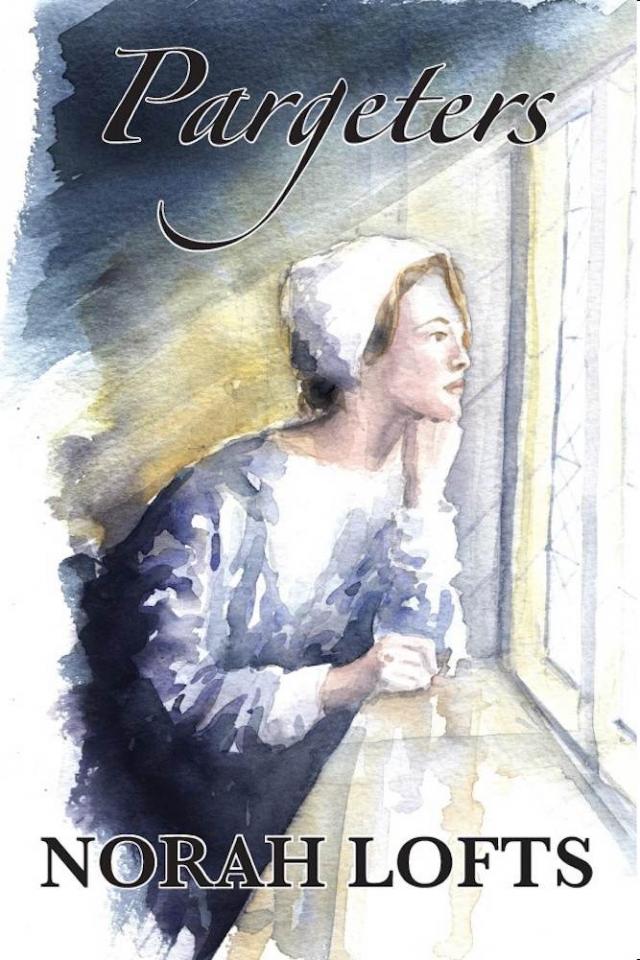
Pargeters
A Tree of Life Book
Published by arrangement with the author’s Estate.
Copyright © Clive Lofts 2022
First published in Great Britain by Hodder & Stoughton, 1984. Published in the USA by Doubleday, 1986.
Cover illustration: Kate Garrett
Typed for Tree of Life Publishing by Caroline Barr
The moral right of the late Norah Lofts to be identified as the author of this book has been asserted in accordance with the Copyright, Designs and Patents Act 1988.
All rights reserved.
No part of this publication may be reproduced, stored in a retrieval system or transmitted, in any form or by any means, without the prior permission in writing of the publisher, nor be circulated in any form of binding or cover other than that in which it is published and without a similar condition including this condition being imposed on the subsequent purchaser.
A CIP catalogue record for this book is available from the British Library.
ISBN: 978-1-905806-98-0
Tree of Life Publishing
United Kingdom
Pargeters
Norah Lofts
Also by Norah Lofts from Tree of Life Publishing:
Esther
How Far to Bethlehem?
Jassy
Bless This House
The Devil in Clevely
Scent of Cloves
The Lute Player
The Town House
The House at Old Vine
The House at Sunset
The Lost Queen
Eleanor The Queen: A Novel of Eleanor of Aquitaine
Hester Roon
Michael And All Angels
Knight’s Acre
The Homecoming
The Lonely Furrow
Charlotte
Gad’s Hall/The Haunting of Gad’s Hall (as one volume)
The Old Priory
Part One
Narrated by Adam Woodley
Pargeting is hard work, very different from just slapping on plaster, and my own, self-chosen method made it harder still. However, though I might sweat even on a coolish day and cursed more often than I whistled, I loved my work and wouldn’t have changed jobs with any man in the world.
On this day of Michaelmas in the year 1624 I was about to begin a special task for which I had been preparing for some time.
It was already warm when I reared my ladder over the front door of John Mercer’s new house. It was an ordinary ladder except that it had hooks protruding from its sides near the top. In an outhouse I had a barrel of plaster, well mixed and well ripened. It was the very best plaster—made by me. There was the basic ground limestone and for colouring I had not relied upon a vegetable dye which might fade. The pinkness of my plaster came from finely pounded bricks. For stiffening I had used the very best ox-hair. There are substitutes: many plasterers use horsehair but it does not weather so well. John Mercer had not grudged expense and I had spared no labour.
When I began my work on this house the barrel had been full; now it was seven-eighths empty and I had to lean low to scoop out what I needed. I carried that bucket and one of water from the well and taking them up, one at a time, hooked them into place on the ladder. I then went down and opened my tool bag which contained the mould which I intended to use that morning. I knew it so well, having made it myself, putting into it an infinite amount of care and all the skill I possessed, yet I stood there in the early light and stared with as much enchantment as though I were seeing it for the first time. It was beautiful and I had made it. At such moments I always thought I understood how God felt when He looked upon what He had created and saw that it was good.
Such a thought may smack of blasphemy but there is so much about the Bible which is mysterious and contradictory that to find something so easily understood is a pleasure.
I took out the flask of oil and a tiny brush and applied a light coating of oil to the whole inner surface, missing not the most minute crevice. I then replaced the mould in my basket and, with it, mounted the ladder again.
The space of wall left to cover this morning was not extensive, just a square immediately above the door. The walls of the new house had been plastered some time ago in the ordinary way and, before I could begin applying my layer, I had to use my knife to score the surface to give a better hold. I brushed the area with water. Then I took a handful of the pink, stodgy stuff and applied it roughly, before working it well on with the small, flattish trowel. This process had to be repeated again and again because I took care always to make my layers overlap, for even a hair-line weakness can render a whole section vulnerable to frost and rain.
When the whole surface was covered, smooth as satin to the eye, I took out my mould and pressed it home.
The ancient man to whom I had been apprenticed had once told me that in the old days—by which he meant in the reign of Queen Mary—it was the custom to hold a mould in place while one said five Paternosters without haste. He had said, rather regretfully, ‘Now all is done by numbers,’ adding hastily, ‘Better so.’ It would never do to be suspected of hankering back to Tudor times or of harbouring Catholic sympathies. Someone had worked out that a Paternoster said without haste was the equivalent of a count of thirty, so now I held the square of oak in place and counted a hundred and fifty. Then I prised it off.
It would be wrong to say that I had rendered Anne Borley immortal but well-made plaster, properly applied, is pretty durable stuff and, as long as John Mercer’s house stood, there she would be, lovely and young. She and I would both age, and one day die; we should be forgotten. Or at least… well, I did entertain the thought that, perhaps, when my son was old enough to understand, I’d bring him here and say: Look, that is your mother as she was when I first knew her. And perhaps he would tell his son.
I was rather old for such sweetheart thoughts, old indeed for first love, being a full thirty. I’d always felt a rather contemptuous pity for fellows who fell in love, saved their pennies, got married and ended up with a woman too fat or too thin and a houseful of hungry children.
I’d thoroughly enjoyed my bachelor life. Because I was so sound a craftsman and had acquired a reputation, I earned good money. While my mother lived, I’d kept her in comfort. Since her death I’d been a lodger, sometimes in private houses, sometimes in inns. I could afford good clothes. I was singularly free to move about, for the Poor Law rules which nail men, especially married men with children, down to a certain parish did not apply to a man alone with a well-paying craft in his hand.
Then I’d come to Minsham, seen Anne Borley and lost both my heart and my head. Maybe love, like measles, hits harder at the not-so-young.
I slid the mould back into my tool basket. That was too large to allow both handles to be grasped, so it sagged. I was descending the ladder when John Mercer rode up on his fine grey horse.
He was not a Suffolk man—he didn’t even look like one. He was a Londoner who’d made his money dealing in woollen cloth and silk. He was already an Alderman and bade fair to be Lord Mayor but one of his daughters had married a Fennel of Ockley and he had come to visit her and fallen in love with the whole countryside. Since no suitable house was for sale at the time, he decided to build.
‘Morning, Adam,’ he called. ‘How’s the work?’
‘I’ve just finished, sir.’
I slithered down the last rungs and moved the ladder to give him a clear view.
‘It’s different,’ he said at last. ‘But I like it. In fact it’s beautiful. Has it any significance?’
Even to his kindly eye I did not intend to expose my partiality. I had set Anne’s head in an oval wreath of flowers and leaves.
‘More mythical,’ I said. ‘You could call it the Spirit of Spring. But after all, sir, you did ask for the signs of the Zodiac.’
‘Ah. Virgo.’ He gave me a sharp look. ‘Well-disguised, I’m thankful to say. I’m glad you didn’t give her a halo.’
‘Difficult to carve, sir. In relief, and in the one colour, a halo would look just like a hoop.’
‘You look warm, my boy. Come in and take a mug of ale.’
He dismounted, nimble despite his bulk, and opened the front door. I had been in the house before, and had drunk ale with him on previous occasions, but I had never before seen the interior of the front of the house. I liked it—spacious without being overwhelming, grand enough but with an eye to comfort. The square hall was well lighted, a window on each side of the door, a solid staircase rising on the opposite side, turning at a half landing and rising again. In the time that I was working on the real signs of the Zodiac I’d seen wagons arrive, laden with boxes and bundles and furniture muffled in sacking. Now I could see, through an open door to the left, things standing in disorder on the dark rich carpet.
‘My other daughter and the servants will be here next week. Women prefer to do their own arranging.’
He led the way to a corridor beyond the stairs, past other doors and into the kitchen with which I was familiar, for it was here, using a carpenter’s bench as table, that I had made the preliminary sketches to his dictation after he had rejected all the moulds I had in stock, saying that he wanted something completely original.
He now bounced into the buttery and came back with two brimming mugs. He handed one to me and sat on a settle to one side of the hearth. I stood. He was invariably informal to the point of friendliness but I was careful never to put a foot over the line.
‘Sit man. I shall get a crick in my neck trying to talk to you. How tall are you?’
‘Exactly six foot, sir.’ I took the opposite settle.
‘How enviable! Clothes, especially robes, look so much better on a tall man. Well, have you another job in mind?’
‘Two, sir. One I start tomorrow.’
‘Mark this,’ he said, with a change of manner. ‘You’re not to use my moulds on another house. I wanted something unique and that is how I wish it to be. In fact, I want those moulds destroyed.’
I privately decided that nothing, nothing would make me destroy that of Anne.
I said, ‘You are well within your rights. You paid for the oak and for my time. But, sir, suppose some other employer hit upon the same notion and asked for the Zodiac signs.’
‘Then you say they are outside your range.’ To that I did not reply, except to raise my eyebrows. ‘Well then, give them what they ask for but do it differently. I want my house… And that reminds me. You’re local aren’t you?’
‘I was born in Clevely, went to school in Baildon, served my apprenticeship in Nettleton. I’ve worked further afield, of course. But yes, sir, I think I am local.’
‘Then would you know anything about this land I’ve bought? Something, a story, a legend. Something I could use as a name for a house. I don’t want Hall. Or Manor. Or Grange—too many of them around here. There again, I want something different.’
I could think of nothing. The land he had acquired, roughly three hundred acres, lying half in Minsham St. Mary and half in Muchanger, was not very profitable; it had frequently changed owners or tenants and had been farmed off. Once it had been a sheep-run. I had a feeling that Sheep Run House or Sheep House wouldn’t please him much. I couldn’t see why he couldn’t call it Hall; Minsham, unlike most villages, didn’t have one. I wished I could suggest something apt and pleasing for I liked him; he’d been easy to work for, appreciative and the fact that he sat there opposite me, drinking, proved that he himself was different. Most employers—except the known mean ones—would give a man a drink at the end of a job but no other I had ever encountered would sit in a kitchen and drink with him.
At last I said, ‘All I can think of, sir, is that your land embraces bits of two parishes and boundaries used to be marked by a stone. Boundary House? Stone House?’
‘Stone would be misleading. Boundary I don’t much like. Too impersonal.’
I had finished my beer. I had interests elsewhere. I must be on the move. I said rashly, ‘Zodiac House would be quite unusual. And very personal.’
‘Zodiac. Yes, I like that. Zodiac House.’ He tasted it and brooded and then said, ‘No! Difficult to spell! But you had the right idea. Parget House. Better still, Pargeters—like Mortiboys. That’s it. Couldn’t be better. Pargeters. How does that sound to you?’
‘Very well indeed, sir.’ Inside myself I felt flattered. And I could imagine myself telling Anne that her portrait in plaster had so impressed Mr. Mercer that he’d named his house Pargeters. How she would laugh. For if ever a woman held the gift of beauty lightly, it was Anne Borley.
I’d lodged with the Borleys at Crowswood Farm ever since I started working on John Mercer’s house. I’d thought myself very lucky, for the food on farms where it is produced is generally good, or at least better than in places where it has to be bought. And the meal-times fitted working hours.
That morning Arthur and Mary Borley, their son Will, Anne and I had sat down to a sustaining meal of eggs and bacon and ale, with Mrs. Borley’s incomparable bread, and the supper dish, steak and kidney pudding, was already simmering in the black pot hooked over the fire.
Now, coming back soon after midday, I expected to see Arthur and Will at work in the field known as Twelveacre, one ploughing, one broadcasting the seed of winter wheat and kicking the ridges down.
There was no sign of such activity. Work had, I saw, stopped in mid-furrow; the horse had simply dragged the plough over the surface until he could reach the grass at the verge and stood there, placidly munching.
I thought: Arthur Borley has had his often-predicted fit. He was a choleric man. He did not get along with his son. He was fond of saying that this or that would give him a fit. Also he was a man of habit, donning his thick flannel shirt on the first of September, however hot, and taking to his linen one on the first of June, however cold. This was a very warm day. I thought I could see it all, father chiding son, son giving a saucy answer and—the fit.
Nonetheless I began to run.
The house was very quiet. Nobody in the kitchen and the fire dead. Unprecedented. So was the table, the breakfast things still uncleared.
I wanted to shout but something restrained me. I even found myself moving more quietly than usual as I went through the parlour and up the stairs. At the top I was separated from Anne’s door only by the width of the small landing and the door stood open. I could see the foot of the bed and Mr. Borley standing there with tears on his furrowed brown face.
Two strides took me into the room. Anne lay on the bed, her face whiter than the pillow, for that was dark with spilled water. Her eyes were closed and she looked dead. Mrs. Borley perched on the side of the bed, grey-faced but calm. In one hand she held a wet cloth, in the other a flask of grated hartshorn; a bucket of well-water stood beside her and on the floor lay a bunch of half-burnt feathers.
Something had a stranglehold on my throat; it took a great effort to croak, ‘What happened?’ Mrs. Borley didn’t even look in my direction. Anne’s father said, ‘The cow. The bloody, bloody cow.’
‘Is she—dead?’
This time Mrs. Borley answered. ‘Still breathing. And Will’s gone for the doctor.’ She then put her face close to Anne’s and said, ‘Dearie. Wake up. Answer me. Answer me!’ There was no response and after a bit she looked at me and said, ‘You try.’
I went down on my knees, took one limp hand and spoke with urgency, calling her name, saying Sweetheart, saying Darling, saying my own name. Nothing, not even the flutter of an eyelid, answered me.
Mr. Borley said suddenly, quite loudly, ‘I did warn her. More’n once. I said a cow with a new calf could be bad as a bull.’ He leaned against the bedpost and shed some more silent tears.
‘And not a mark on her,’ Mrs. Borley said. ‘Just knocked flat.’
‘Her head?’ I asked, thinking of the thickness of the bright hair.
‘Not even the smallest bump.’
I remembered, against my will, a mason who had fallen from a roof. Of him it might have been said that he had no visible injury, but he was soon dead of some inward hurt.
‘When did it happen?’
‘You’d only just gone,’ Mr. Borley said. ‘Will and me’d done one furrow. Then, as we turned at the headland, I see it happen. I bellowed. Will jumped the fence and drove the beast off afore it could do more damage… And later we didn’t waste time neither. When she didn’t come to in the kitchen I knew ’twarn’t jest a faint. I sent Will off… And Jamie’s a good horse. He went through Layer. He should be back.’
Almost immediately there came the clatter of hooves in the cobbled yard, then feet on the stairs. Will Borley, flushed and sweaty with hard riding, came up the stairs alone. Before he could speak his father said, with a ghost of the animosity he often showed towards his son, ‘And where’s the doctor? I towd you to bring…’
‘He’s dead. They’ve got the plague in Baildon.’
‘The midwife’d hev been better than nothing.’
‘I thought of that! She’d got a case. Baby half born.’
‘Then one of us,’ Mr. Borley said; and even before he took out his knife I knew what he meant and felt sick. Failing the doctor and the midwife who knew about such things, one of us must try what a little blood-letting would do.


