

Frankly, page 1


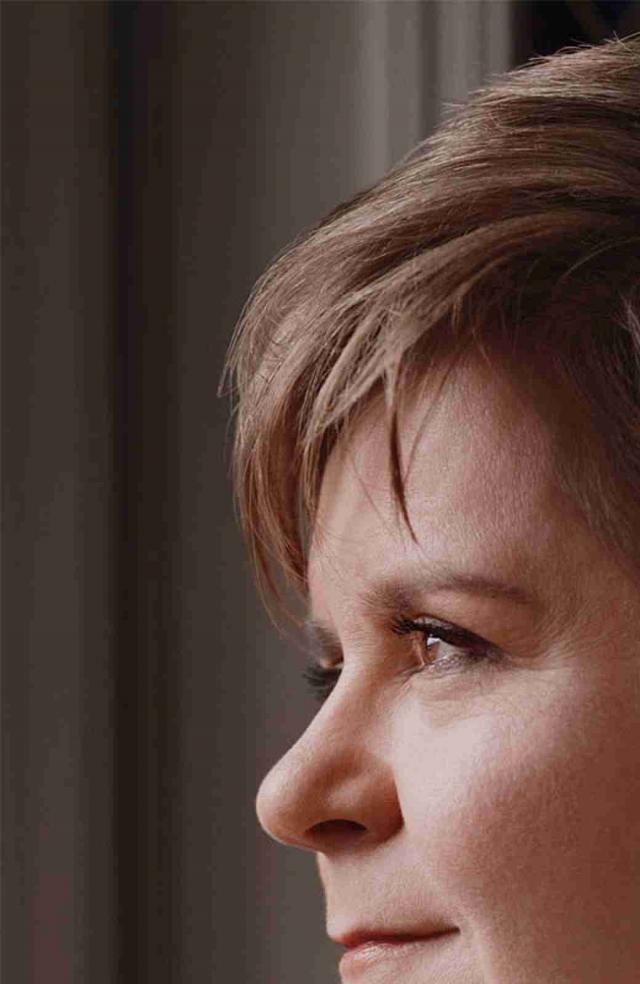
Nicola Sturgeon
FRANKLY
To the late Iain Ferguson – uncle, journalist, inspiration.
And to my parents, Joan and Robin,
who have loved and supported me every step of the way.
Do what you feel in your heart to be right – for you’ll be criticized anyway.
Eleanor Roosevelt
Contents
Preface
Chapter One: In the Beginning
Chapter Two: Politics in My Blood
Chapter Three: The Youngest
Chapter Four: Govan
Chapter Five: Nicola Sturgeon, MSP
Chapter Six: Climbing the Mountain
Chapter Seven: The Invincibles
Chapter Eight: The Wheels Fall Off
Chapter Nine: Majority Rules
Chapter Ten: Yes Minister
Chapter Eleven: The Final Straight
Chapter Twelve: First Lady
Chapter Thirteen: A Mandate of My Own
Chapter Fourteen: Europe No More
Chapter Fifteen: To Win or Lose It All
Chapter Sixteen: Alex Salmond
Chapter Seventeen: Back on Track
Chapter Eighteen: Covid
Chapter Nineteen: The Final Phase
Chapter Twenty: The End
Epilogue: Learning to Dance in the Rain
Acknowledgements
Photo Credits
Index
Plate Section
Preface
I’ve always wanted to write a book, but I haven’t always been sure I should write this book.
Before putting pen to paper, I had to convince myself that I was motivated by more than the vanity and self-justification that so often characterizes political memoirs. I don’t claim that these traits will be completely absent, but I do hope I reach beyond them.
I have tried to reveal the person behind the politician. The seemingly confident, combative woman who dominated Scottish politics for more than a decade, unnerved the Westminster establishment, helped lead Scotland to the brink of independence and steered it through a global pandemic is, underneath it all, painfully shy, an introvert, someone who has always struggled to believe in herself. On many days, even at the height of my political powers, the toughest battle I would fight was with the voice in my head telling me I wasn’t good enough.
Like all women, since the dawn of time, I have faced misogyny and sexism so endemic that I didn’t always recognize it as such. I have also encountered the snobbery and condescension that conditions many working-class people to believe that power and influence are not for us.
An understanding of the politician I became requires an appreciation of all of that. It also demands glimpses of the child, teenager and young adult I was. In the pages that follow, I will retrace my journey, from hiding under the table with a book at my fifth birthday party to standing on the steps of Bute House and leading my country for the best part of a decade.
I will describe the hurdles I overcame and the sacrifices I made. I will open up about my private life, including the heartbreak and guilt of losing a baby. I will reflect on my achievements and regrets, as well as the many lessons I learned along the way.
My story, though, is more than just a personal one. My career on the frontline of politics coincided with the most momentous period in modern Scottish history. As either front-row observer or active participant, I was ‘in the room’ through all of it.
I don’t think anyone has written, in a single volume, the political story of Scotland over these years; certainly no one has done it from my perspective.
I grew up and became politically active in the Thatcher years and stood for Parliament in Tony Blair’s landslide election. I campaigned in the referendum that led to the re-establishment of the Scottish Parliament and became one of its inaugural members.
I was the Deputy First Minister and Health Secretary in the first ever SNP government and helped secure our landslide re-election four years later. I negotiated the Edinburgh Agreement which paved the way for the independence referendum, co-authored the White Paper independence prospectus, and was one of the key figures in a campaign that brought Scotland to the brink of becoming an independent country.
I became the first woman to enter Bute House as First Minister, the first female Keeper of the Great Seal of Scotland in more than six hundred years. In 2015, the party I led redrew the political map of Scotland. I won all eight of the elections I contested as SNP leader. I was also a leading advocate for Remain in the ill-fated Brexit referendum.
As First Minister, I interacted with five UK Prime Ministers, from David Cameron to Rishi Sunak, with Theresa May, Boris Johnson and, albeit for the briefest of moments, Liz Truss along the way. I represented Scotland across the globe, at the British–Irish Council and at five UN climate-change summits, including COP26 in my home city of Glasgow.
I led Scotland through the Covid pandemic, the most traumatic and disruptive experience of our generation. I spent hours of private time with the late Queen. I tried, and failed, to secure the second independence referendum that I still fervently believe will happen, and be won, in my lifetime. By the time I stood down as First Minister in March 2023, I was the longest-serving incumbent of the office.
These thirty extraordinary years of Scottish political history demand to be chronicled. This book does so from my unique vantage point.
It always takes a while for the dust to settle when a leader leaves office. Early verdicts – especially in the modern media age – can be brutal.
If that is true in general, it has been more so for me.
Events that unfolded after I stood down as First Minister – the stepping up of a long-running police investigation into SNP finances – shook perceptions of me. How could it have been otherwise? However, as much as the opinions of others matter to me, it was my sense of self that took the biggest knock. Over the two years since leaving Bute House, I have endured some of the darkest days of my life. For me, the cloud of suspicion has now been lifted, but the experience has left its mark.
I have always been resilient, and in recent times I have found reserves of strength I didn’t know I had. I have also been sustained by the love of my family and the support of a tight group of close friends. However, it is the writing of this book which has offered most solace. It has been a lifeline, a form of therapy in action, grounding me, at times calming me, amidst a constant cacophony of voices claiming to know me better than I do myself.
In these pages, I hope to remind you of who I am and what I stand for.
The fact is I am neither the hero that my most ardent supporters revere, nor the villain that my fiercest critics revile. I have made my fair share of mistakes, but I have always done my best. I have dedicated my life to public service and tried to make Scotland a better place. Along the way I have enjoyed huge privileges and, at times, paid a heavy price for them. I have achieved more than I could ever have imagined and believe I have made an impact to be proud of.
If your opinion of me is already formed, there is no shortage of caricatures out there to reinforce your views. However, if you want to know something about the real me, warts and all, and about how my life has interacted with the recent history of the remarkable country I was so lucky to be born in, then this story is for you.
Nicola Sturgeon
April 2025
CHAPTER ONE
In the Beginning
I am a few months shy of my seventeenth birthday and find myself standing on the doorstep of a large detached bungalow on the curve of a quiet cul-de-sac in Dreghorn, the former mining village in Ayrshire that my parents and I moved to when I was two. My finger is hovering uncertainly over the doorbell.
The walk from my own house to that doorstep took less than ten minutes, but the psychological distance I travelled to get there was huge. The cul-de-sac forms one of the ‘posh’ private estates in Dreghorn, a busy main road and a whole world away from the social housing scheme I grew up in. The house belongs to Kay Ullrich, the SNP candidate for the constituency I live in. I am awkward, bookish and painfully shy. And yet here I am, about to ring the doorbell of a woman I know only by reputation and offer to help in her bid to become a Member of Parliament. I don’t yet realize it but in this moment the course of my life will be set. Everything that has gone before has been leading me here.
I was born on 19 July 1970 at sixteen minutes past three in the afternoon at Ayrshire Central Hospital in Irvine. My mum, Joan Kerr Ferguson, was a dental nurse, though she had given up work to have me. My dad, Robert (Robin) Sturgeon, was an electrician.
They named me Nicola, having changed their minds at the last minute from Stephanie. With no offence to the Stephanies of this world, that was a lucky escape. The alliteration would have been a mouthful. I was given Ferguson, my mum’s maiden name, as my middle name.
I was born into a world in transition, at the dawn of a new decade. Paul McCartney was leaving the Beatles. The Swinging Sixties were giving way to glam rock. The British Commonwealth Games were happening in Edinburgh. Across the pond, Richard Nixon was in the White House, not yet embroiled in the Watergate scandal, but with anti-Vietnam war protests raging around him. In the UK, a General Election just a month earlier had seen the Tories oust Labour and Ted Heath replace Harold Wilson as Prime Minister.
Economic conditions then were similar to those in the final year of my time as First Minister. High oil prices were driving up inflation. Cost-of-living pressures, stagnant wages and the looming spectre of deindustrialization had sparked signif
My arrival in the world, though unnoticed by anyone outside my family, wasn’t drama-free. My mum, not quite eighteen when I was born, was in labour for more than twenty-four hours and became seriously ill as I was delivered. Two bouts of rheumatic fever in her childhood had left her with a damaged heart valve, so there was panic and alarm when her blood pressure suddenly dropped and she went into cardiac arrest. She recovered, thankfully, but didn’t get to see or hold me until I was more than a day old.
Home in those days, when we eventually made it there, was modest: the attic of a cottage in Prestwick belonging to my mum’s aunt Jean. We stayed there for the best part of two years while waiting to secure a home of our own. That turned out to be our flat in Dreghorn.
Dreghorn is a former mining village, a couple of miles east of Irvine, one of Ayrshire’s biggest towns, situated on the coast of the Firth of Clyde, about twenty-six miles south of Glasgow. Both Dreghorn and Irvine are steeped in history. Irvine was one of the earliest Scottish capitals. It was designated a Royal Burgh in the late fourteenth century by King Robert II, the grandson of Robert the Bruce, who had led the Scottish troops to victory at the Battle of Bannockburn during the First War of Scottish Independence.
Dreghorn is even more historic. The site of a significant neolithic settlement, possibly dating as far back as 3500 BC, it is thought to be Britain’s oldest continuously inhabited village. It was the birthplace of John Boyd Dunlop, the inventor of the pneumatic tyre. The Dunlop Hall in the village was the venue for a few of my childhood activities, including a short-lived and not very successful spell of ballroom dancing.
By the time I was born, Dreghorn was part of Irvine New Town. Irvine was the last of Scotland’s five new towns to be established and the only one situated on the coast. Many of my friends at school were from families who had migrated from the tenements of Glasgow. In the early part of the 1970s, the town underwent substantial regeneration, most notably with a new shopping mall and leisure centre. The Magnum Leisure Centre, since demolished, was the first of its kind in Scotland. People came from far and wide to visit it. It would later be the epicentre of my cultural universe.
The world I inhabited as a child was small and tight-knit.
At its heart was Broomlands Road. A blend of pebble-dashed flats and terraced houses, it was built by the Scottish Special Housing Association in the 1960s. Our flat at number 56 was on the upper floor of a two-storey block. Along the landing lived Auntie Bunty and Uncle Dave (no relation). It was from Uncle Dave that I first learned about death. He was thrown from a horse and killed during the annual Laminar Day celebrations in his hometown of Lanark. I was around six and still remember being utterly dumbfounded by the fact that I would never see him again.
Downstairs was Aunt Pat (also no relation) and her daughters Karen, around a year older than me, and Debbie, a year younger. Karen and Debbie were my best friends growing up. When we weren’t playing in each other’s bedrooms, we would be ‘out the back’, running around a paved yard where our mums hung up the washing and sat outside for coffee on those rare Ayrshire sunny days, or on the oblong patch of grass in front of the flats.
We lived there until I was eight, when we moved up the road to a terraced house with front and back door and a garden. A quirk of the door numbering meant that, although we moved half a street away, the change in our address was slight: 56 to 55 Broomlands Road. By the time of the move we were a family of four, with my wee sister, Gillian, arriving on the scene just before I turned five.
My upbringing was loving, and quite traditional for the time. I could not have wished for a better mum and dad. For most of my childhood, my mum was a stay-at-home parent. Later, when I was a teenager, she worked as a cashier in a petrol station and then as an NHS laboratory assistant. Much later still, she would be elected as a local councillor and serve as the Provost of North Ayrshire. My dad worked for a burglar-alarm company, which involved him being ‘on call’ every two or three weeks. He would regularly have to drag himself out of bed in the middle of the night to reset an alarm that had gone off.
I would frequently wake up when the phone rang and lie with my heart in my mouth, waiting to hear him tell my mum where he had been called out to. If it was somewhere close by, like Irvine or Kilwinning, I could go back to sleep. My childish logic dictated that nothing bad could happen to him on short distances. But when he was headed to one of the further-flung parts of his beat, places like Dumfries, Newton Stewart or Port Glasgow, I would convince myself that disaster was about to strike. Then, I would stay awake until I heard his car pull up again hours later.
An upside of my dad’s job was that we always had a car. I loved our regular family excursions, especially shopping trips to Ayr, which in those days was the retail metropolis of Ayrshire. One of my earliest memories is from one of these trips. Aged about four, I was obsessed with the entertainer Cilla Black. I loved her. The Liverpudlian accent, her singing, the bright red hair. I used to plead to stay up to watch Cilla, her Saturday night TV show. In Ayr with my mum and dad one Saturday, I had a tantrum in the department store because I spotted a picture of Cilla, on the cover of her latest album. I wanted my parents to buy it for me but they said no. When we met up with my paternal grandparents later, my grandad, wrapped firmly around my finger, took me straight back to the shop to buy the record. I still have it.
My maternal grandparents, Marjory (née McWilliam) and Kerr Ferguson, lived in Prestwick, where my mum was born. They were ‘Mum’ (I’ll keep her in quote marks to distinguish her from Mum) and BoBo to me. The former came from me mimicking my own mum and the latter must have been some childish pronunciation of grandad or papa that just stuck. I was also close to my great-grandfather – my Papa – who also lived in Prestwick. My great-grandmother – Nana – whom my mum adored, died when I was little more than a baby. I have no real memory of her.
Golf was BoBo’s passion. He was captain of the junior players at St Cuthbert Golf Club in Prestwick. I enjoyed walking across the golf course with him on the rare occasions I was allowed to. For BoBo, a golf course was hallowed ground. He came alive when he was watching or talking about golf, but otherwise I remember him as quiet and calm. He always seemed to live in the shadow of ‘Mum’ and her larger-than-life personality. In the final years of his life he became virtually housebound, which cruelly kept him away from the golf club and drained him of any zest for life. His death came suddenly, and shockingly, from a heart attack, when I was at the start of my second year at university. He was only in his early sixties.
In contrast to Bobo, ‘Mum’ was glamorous and vivacious. She had been a hairdresser in her younger days, with her own salon in Prestwick. She later worked in Hourstons, the department store in Ayr. At her best, she was exceptionally good fun to be around, and Friday nights at ‘Mum’ and BoBo’s were often a highlight of my week.
With ‘Mum’, though, drama was never far away. She was volatile and had unpredictable mood swings. My mum’s relationship with her was complex. Whereas ‘Mum’ idolized her two sons, my uncles Iain and Scott, she was often hypercritical of my mum and, at times, very harsh towards her. In retrospect, it is obvious that she suffered from poor mental health, but in those days that wasn’t easily acknowledged. Though I loved her, my fierce protectiveness towards my mum resulted in my own relationship with ‘Mum’ being difficult, particularly as I entered my teens. Nevertheless, I was devastated when she also died young. A couple of years after BoBo’s death she suffered a stroke and it was discovered then that she had bowel cancer. She died in October 1991, aged sixty-two, just a few hours after I had been formally selected as the youngest candidate in the UK for the 1992 General Election. ‘Mum’ didn’t live to witness my political career, but I like to think she lived long enough to know the path I was on.
The bond with my paternal grandparents was even closer. Margaret (née Mill) and Rob, Gran and Grandad to me, lived in Dunure, a small fishing village about five miles south of Ayr. Like his father before him, Grandad was the gardener at the local estate house, and he and Gran lived in tied accommodation, the Croft.


