

Asdahlia, page 6
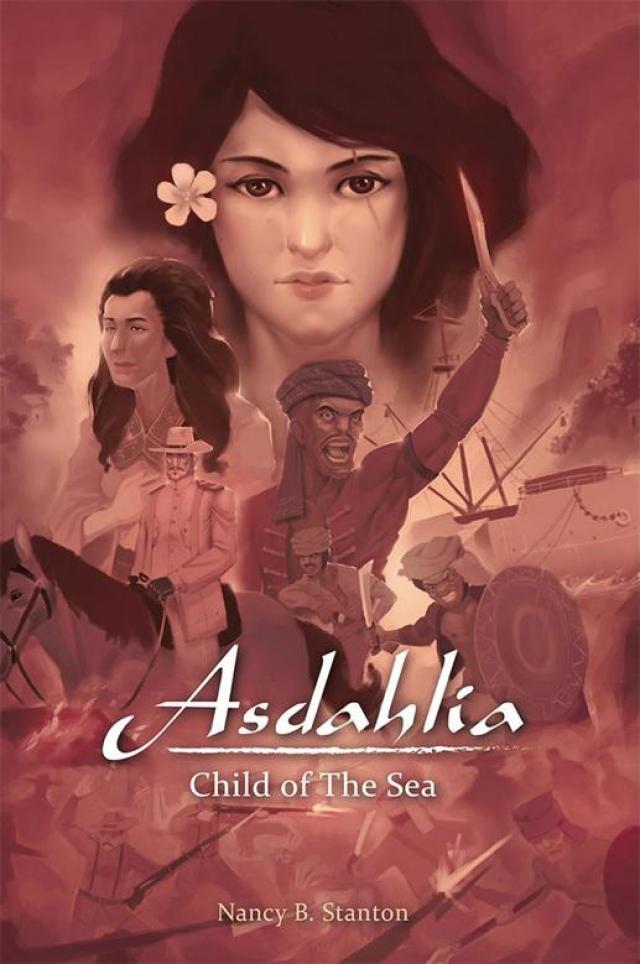


All the officers in attendance hardly moved while the commander was speaking. A lone bee is the only creature buzzing around to break the tension of the occasion.
“Other matters of concern.”
He turns over the floor to the Adjutant who comes forward to read the reports while he sits on his desk in full view of the meeting attendees. The adjutant has a booming voice similar to his superior. He proceeds to read from the clipboard he is holding.
Heavy fighting in Marawi and Magindanao erupted. . .
The number of casualties. . .
Health department report: number of those who died of malaria, tuberculosis, cholera, chicken pox
“Last item; the progress of the efforts to build schools and health centers. . . .
The commander is listening vaguely while leafing through a stack of papers in his hands. Seeing that the adjutant is at the end of his report, he stands up and paces the floor twice before making his final remarks.
“At the risk of being redundant, I would like to end by saying, let us continue to support the health and school programs started by Governor Taff.”
He looked squarely at everyone in the room as though waiting for any question before he declared,
“Adjourned”
CHAPTER 6
The New Post
The boat is fast approaching Jolo. Charlie could see the island appear on the southern horizon, literally growing before his eyes. As they came nearer he is awed by this vision of paradise, a completely different world than the one he left behind. The emerald blue sea surrounds about 345 square miles of land area covered with lush green vegetation that rises slightly to the ranges of volcanoes that dotted the island. It almost looks like a picture from a storybook.
As they approach the pier, he can’t help it but be mesmerized by the color of boats mingling with the colors of the sails waving in the wind. It is a medley of vibrant ethnic hues of greens and browns, striped with yellows and reds, floating alongside the boathouses that danced with the rhythm of the waves. The glimmering white sand beaches make a beautiful contrast in the background.
The boathouses are attached to a long and narrow boardwalk made of bamboo poles connecting it to the small pier anchored at the shore. On the boardwalk children chase one another while the women hang clothes out to dry. There are a few men busy working on the fishing nets at the other end of the boardwalk and still others fixing the sails.
They reach the dock and quickly disembark. A few minutes later Charlie walks behind his escorts along a sandy alley. The temperature is hovering in the highs of 80’s but the cold wind from the sea gives relief from the scorching sun. Trees abound to provide the much needed shade making the temperature less uncomfortable. The soldiers who came along with him on the trip escort him to his own cottage, carry some of his boxes of supplies and finally help him to settle that same day. They set up camp around the cottage for the night, which makes him contemplate for hours and hours what kind of life awaits him in this remote island where suicide killings by rebel fanatics is as frequent as three to four times a week, he was told. The sound of waves lapping keeps him awaken most of the night.
Charlie arrives in Jolo with uneasy feeling about the greater role and responsibility that he is taking. As the new Justice of Peace, he has become part of the system to which the people in this area are largely opposed.
The next morning he awakens to the sound of the muezzin followed by chants echoing from a mosque somewhere nearby. This lasted until the sun peeked through the horizon. Charlie lays there and listens to the monotone until it dies down leaving only the sounds of birds and animals in his own surrounding.
Finally, he gets up and goes to the window to look outside. The weather is nice and the colorful sailboats begin sailing away into the open sea to some unknown destination. Coffee has been brought in by one to the soldiers camped outside. His breakfast, consisting of fried eggs and chorizo over fried garlic rice, is already on the small table. He finishes with bananas which to him are sweetest in the world. After tidying up he heads for the shops that lined the narrow and sandy streets. It is time to get to know the place. He begins to negotiate the streets where exposed white coral stones jotted out here and there. Children play along his way and stop to look at him with curiosity.
Men in the shops nod in response to his greetings. They wear turbans on their heads. The women avoid him with downcast eyes. They cover their heads and hide half of their face behind the sheer satin exposing only their eyes. They wear colorful long cloths that they wrap around their bodies and the ends are tied on the shoulders. This is worn over a long sleeved blouse that hugged their bodice. Charlie endeavors to listen, but their language is strange, and it only serves to intensify his fears. He feels their eyes following him everywhere, but he tries to appear unperturbed by their attention.
The small shops offer everything from rolls of satin cloth to sandals, and knives. There are rows of large glass jars; rounded and square shaped bottles, each containing nearly five liters of wine. Laid on the table are combs made of polished seashells. He picks up the sweet smelling fan made of carved sandalwood sticks with intricate designs, and admires the bangles and necklaces made of glass, shells, bones and stones of different colors. Still he wonders why the women avoid looking directly eye-to-eye with him. He keeps his distance from the women who stayed mostly in the background with eyes downcast even as he speaks with the men in the shops. The storeowner becomes persuasive and insistent for a sale. As soon as he sees sign of interest shown on any of the items on the table, he considers it sold.
Charlie is determined to survive in this new environment and he has decided to act in accordance with the customs and beliefs of the people here. The soldiers are coming while he looks around and he decides not to venture any further for now.
It is almost midday and he is perspiring after walking under the hot sun. He walks back to his cottage carrying the things he wanted and those he was obliged to buy. His cottage is a gazebo-like structure big enough to house all his things. It was made of round timber and bamboo. The roof is of woven palm leaves, and the interlaced bamboo slats form the walls. The slatted bamboo floor is elevated about three to four feet above the ground with a detachable ladder leaning on to the door. The ladder is made to be put away at night. Charlie admires the uniformity in the way the cottages were built and while it adds beauty to the whole scenery, it also makes him feel a sense of belonging. There are just a few cottages since most of the people preferred to live in boathouses and some of them live in colorful tents.
To a newcomer, peace seems to prevail, however, Charlie feels that his position is considered a challenge to Islam, and being part of the American establishment, he can be considered an enemy. For this reason he would not want to live far away from the barracks where the commander assured his safety.
Days turn into months. Charlie goes about the regular functions of his office except presiding over disputes among the Moslem residents, who still prefer to settle through the sharia. Apart from signing and approving contracts, deeds and titles of ownership; or presiding over civil marriages between Chinese and Christians or some other official chores, there is plenty of time left for other pursuits. After becoming accustomed to this new life, and anticipating a longer stay in the area, he tries to initiate cordial relations with the local people and businesses despite the knowledge of the underlying animosity between the population sympathetic to the rebels and the occupying Americans. Charlie greets those whom he encounters every day during the course of his work, and those he meets on the street.
This morning he is visiting Suki, who owns the general store where he buys most of his daily provisions. He finds the Chinese merchant very friendly and easy to get along with. They are barely exchanging pleasantries in Suki’s broken English when suddenly people become frenzied in the street. There is yelling and commotion. Standing beside his friend, he looks to see what is going on. People are running after a young couple with sticks and stones. Quickly, Suki hurries to pull the heavy wooden folding door to a close, leaving only one section where both of them can observe the chaos outside.
“Charlie, the couple will be stoned to death.”
“Why?”
“Do you see how angry the men are?”
“For what reason?”
“The girl is Mora and the boy is not Moro.” Suki explained.
“What’s wrong with that?
“Wrong here, Mora only for Moro. They die that for sure.”
Charlie does not respond, finding it very unfair to the young couple. He can only shake his head and allowed Suki to detain him inside the store for few minutes longer until the street is safe for him to go. They waved to each other in parting.
He proceeds to drop by the local school located just few blocks away from the barracks. There he meets with two Thomasites, Bill Cohn and Tim Hutton, who arrived in Jolo six years earlier.
They are very pleased and show him the two schoolrooms where they introduce him to their respective classes. Bill handles the first and second grades which are both lumped together in one room for lack of teachers and classrooms. Tim leads him to the next larger room where the third and fourth graders are ready to greet him. Tim also functions as the head teacher.
Charlie looks around and he observes the children in attendance, and the teacher explains.
“These are the children of the more affluent families and Moro royal clans, who want their children to be educated.” Charlie smiles and nods while looking at the children. Tim continues.
“Chinese children go to a school exclusively for Chinese nearby.”
“Oh, that’s interesting.”
“The Chinese had been here a long time ago and they really take care of their own.”
“Did you have any trouble when you first started?”
“Yes we did. The people here speak Chinese, Spanish, Arabic and Tausug dialects but they had no knowledge of English at all before we came. There are few exceptions of course.”
Charlie nods gratefully for the enlightenment.
“There are members of the Sultan’s household who are highly educated and that made a difference when we were starting the school.”
“We are proud to say that this has changed since the children attending school are learning fast.”
Charlie acknowledges their achievement and he commits to make regular visits to the school as part of his weekly routine. Being a teacher himself this is where he spends most of his spare time.
It is Monday morning and Bill’s English class is in session. Charlie enters the classroom and the children promptly chorused. “Good Morning sir!” He responds with a quick “Good morning”. Not wanting to stop the class he walks over to the teacher’s desk at the back end and lets Bill continue.
He watches everybody from behind when he notices a girl standing outside the window observing the class and who is now looking at him. He looks around for any reaction, but the other children do not seem to mind the girl outside. She has not made any attempt to communicate with anyone of the children inside the room either, which makes Charlie all the more curious about her.
The English teacher continues with his lessons. He points to the words on the blackboard with a long stick then the children read them in chorus and demonstrate the action.
“Everybody, repeat after me. . .”
“this, that, here, there, I, you, he, she, we eat, drink, sit, stand, walk, and run, come, go,”
The children echo every word and are enjoying the exercise. Bill proceeds to draw a happy face, and a sad face, then a crying face and laughing face. Again he points to the drawings and says,
“Happy, sad, cry, laugh”
The children are getting loud and restless so Bill puts down the stick on his desk and makes an announcement. His face beams with pride seeing the progress of learning in his class.
“Tomorrow we will practice using these words in sentences.”
The children are dismissed and Bill goes over where Charlie is seated. He looks again to check on the girl.
“Yes, she’s gone,” Bill said as if knowing what is in Charlie’s mind.
The teacher asks the children if they know the girl who sits outside but none of them knows her, and none of them knows where she lives.
“The girl looks interested in learning English,” Charlie comments.
“Yes but unlike the other children the girl does not come regularly nor does she come inside the room. She stays outside in her favorite spot and leans on the window and listens to the lessons. After that she’s gone.”
One morning the girl shows up just as Charlie is about to sit at the desk behind the class. He attempts a step in her direction, but she instinctively steps back. He estimates the girl could be around five feet and three inches in height, very petite and slim. She wears a veil to cover her head and the purple satin veil drapes across her small face exposing only two little brown eyes. This is not unusual because girls over thirteen years old are required by their cultural tradition, to wear head covering at all times. However the rest of her outfit is not similar to the other children, which tells Charlie that she must come from the other islands.
She wears strands upon strands of necklaces and bangles for self adornment, and leather sandals to protect her feet from the hot sand and rough gravel pavement. Her manner of dressing is different even from those of the children of royal families who wear long sleeves and close fitting blouses over loose pants.
Tim and Bill relate how they have tried several times in the past to invite her, to come join the class inside but she refuses and would not enter the room. Since they did not want to scare her away, they decided to ignore her presence. They believe that one day she will be confident enough to join the class.
CHAPTER 7
The Whirlwind
The marketplace is made up of colorful tents and umbrellas lined up in the town center, providing shade to hundreds of eager merchants, selling and bartering various kinds of wares throughout the day. New faces show up every week as more and more people from different parts of the country comes hunting for new imported wares from China, India, and all over the world. Jolo is the gateway to other nations in the south where goods from Sabah and Borneo are brought in to this market every month.
Asdahlia is sitting at her usual spot at the side of the tent along the middle of the aisle. The little bird spreads its wings flashing its bright blue and yellow plumage every now and then as it balances on her left shoulder. Travelers who come from different parts of the country seek after her for her precious pearls and shells. People continue to flow from tent to tent and stop to examine the shells she laid in front of her stool; polished and shiny and small delicate pieces are stringed into necklaces and bangles to attract buyers. However, she keeps the most valuable pearls hidden in her waist pocket and these are only brought out if a favored customer or a serious buyer asks to see it.
Her brown eyes scarcely showing between folds of silky veil are constantly scanning the length of the street from right to the left hoping to see familiar buyers among the throng of new faces. This is the place where the barter market is held once every month and its patronage is growing. Dust and heat is not enough to discourage buyers from pouring in throughout the day. Merchants coming from Borneo and other parts of the country and neighboring islands are here to hunt for bargains. Wines from Egypt and China abound. Rolls of silk, perfumed fans and ivory combs are the most sought after merchandise. Food stands and kiosks selling iced juice drinks are in every corner. Pets, monkeys, snakes and rare animals are brought in and everything and anything under the sun.
Asdahlia spots Charlie walking alone among the crowd of turban-covered heads and towering layers of earthenware balanced on the heads of women walking gracefully. She watches him as he stops by the first few tents picking up an intricately-designed perfumed fan. Fans are a daily necessity in this part of the world and lace fans and fans made of the sweet-smelling sandalwood are appropriate gift items for women on any occasion.
The familiar noise of bargaining in the barter process goes on; the constant bustle of people in and out of the tents, the sound of animals and voices of children in the background, and someone somewhere strumming a guitar. All these make for a festive atmosphere and Charlie finds this monthly event quite fascinating. He moves to the next stand admiring the polished troika shell lamp shades.
Suddenly a commotion comes from behind, pushing him aside from the rushing people, running to every direction trying to get away from something. People are screaming all around.
Amok! Amok! Amok! Amok!
Charlie raised himself on his toes a little to see the man running after them coming into view. Being taller than most people around him, he could not miss the well shaven head and the face with shiny skin. As he comes nearer, he can see the white chord tied around his head and both of his arms. His thighs and legs are tightly bound while a larger band is tied securely around his waist. He is running like a vicious animal breathing loudly through his mouth and brandishing a long sword glinting sharply against the bright sun. Merchants gathered their wares to safety under the table while others covered their stuff hurriedly and disappeared behind the curtains or the rickety walls made of boxes.
Then the wind gathers strength, suddenly expanding and throwing dust and trash all over the place in circular motion. To Charlie’s surprise, the man is running in his direction and his bloodshot eyes are fixed on him. Frightened people scream as the crazed man raises his arms to a hacking position. Charlie feels sudden cold shooting up his spine sweeping all over him and he freezes on the spot unable to move a muscle, his chest felt heavy and it’s difficult to breath. The fan drops from his hand and his knees shake and wobble beneath him. Then he feels a strong wind knocks him off his feet much like something is pulling him down from behind. His head feels light as though the world is spinning then everything turns black before his eyes and the sounds of screaming fade in his ears.
“Other matters of concern.”
He turns over the floor to the Adjutant who comes forward to read the reports while he sits on his desk in full view of the meeting attendees. The adjutant has a booming voice similar to his superior. He proceeds to read from the clipboard he is holding.
Heavy fighting in Marawi and Magindanao erupted. . .
The number of casualties. . .
Health department report: number of those who died of malaria, tuberculosis, cholera, chicken pox
“Last item; the progress of the efforts to build schools and health centers. . . .
The commander is listening vaguely while leafing through a stack of papers in his hands. Seeing that the adjutant is at the end of his report, he stands up and paces the floor twice before making his final remarks.
“At the risk of being redundant, I would like to end by saying, let us continue to support the health and school programs started by Governor Taff.”
He looked squarely at everyone in the room as though waiting for any question before he declared,
“Adjourned”
CHAPTER 6
The New Post
The boat is fast approaching Jolo. Charlie could see the island appear on the southern horizon, literally growing before his eyes. As they came nearer he is awed by this vision of paradise, a completely different world than the one he left behind. The emerald blue sea surrounds about 345 square miles of land area covered with lush green vegetation that rises slightly to the ranges of volcanoes that dotted the island. It almost looks like a picture from a storybook.
As they approach the pier, he can’t help it but be mesmerized by the color of boats mingling with the colors of the sails waving in the wind. It is a medley of vibrant ethnic hues of greens and browns, striped with yellows and reds, floating alongside the boathouses that danced with the rhythm of the waves. The glimmering white sand beaches make a beautiful contrast in the background.
The boathouses are attached to a long and narrow boardwalk made of bamboo poles connecting it to the small pier anchored at the shore. On the boardwalk children chase one another while the women hang clothes out to dry. There are a few men busy working on the fishing nets at the other end of the boardwalk and still others fixing the sails.
They reach the dock and quickly disembark. A few minutes later Charlie walks behind his escorts along a sandy alley. The temperature is hovering in the highs of 80’s but the cold wind from the sea gives relief from the scorching sun. Trees abound to provide the much needed shade making the temperature less uncomfortable. The soldiers who came along with him on the trip escort him to his own cottage, carry some of his boxes of supplies and finally help him to settle that same day. They set up camp around the cottage for the night, which makes him contemplate for hours and hours what kind of life awaits him in this remote island where suicide killings by rebel fanatics is as frequent as three to four times a week, he was told. The sound of waves lapping keeps him awaken most of the night.
Charlie arrives in Jolo with uneasy feeling about the greater role and responsibility that he is taking. As the new Justice of Peace, he has become part of the system to which the people in this area are largely opposed.
The next morning he awakens to the sound of the muezzin followed by chants echoing from a mosque somewhere nearby. This lasted until the sun peeked through the horizon. Charlie lays there and listens to the monotone until it dies down leaving only the sounds of birds and animals in his own surrounding.
Finally, he gets up and goes to the window to look outside. The weather is nice and the colorful sailboats begin sailing away into the open sea to some unknown destination. Coffee has been brought in by one to the soldiers camped outside. His breakfast, consisting of fried eggs and chorizo over fried garlic rice, is already on the small table. He finishes with bananas which to him are sweetest in the world. After tidying up he heads for the shops that lined the narrow and sandy streets. It is time to get to know the place. He begins to negotiate the streets where exposed white coral stones jotted out here and there. Children play along his way and stop to look at him with curiosity.
Men in the shops nod in response to his greetings. They wear turbans on their heads. The women avoid him with downcast eyes. They cover their heads and hide half of their face behind the sheer satin exposing only their eyes. They wear colorful long cloths that they wrap around their bodies and the ends are tied on the shoulders. This is worn over a long sleeved blouse that hugged their bodice. Charlie endeavors to listen, but their language is strange, and it only serves to intensify his fears. He feels their eyes following him everywhere, but he tries to appear unperturbed by their attention.
The small shops offer everything from rolls of satin cloth to sandals, and knives. There are rows of large glass jars; rounded and square shaped bottles, each containing nearly five liters of wine. Laid on the table are combs made of polished seashells. He picks up the sweet smelling fan made of carved sandalwood sticks with intricate designs, and admires the bangles and necklaces made of glass, shells, bones and stones of different colors. Still he wonders why the women avoid looking directly eye-to-eye with him. He keeps his distance from the women who stayed mostly in the background with eyes downcast even as he speaks with the men in the shops. The storeowner becomes persuasive and insistent for a sale. As soon as he sees sign of interest shown on any of the items on the table, he considers it sold.
Charlie is determined to survive in this new environment and he has decided to act in accordance with the customs and beliefs of the people here. The soldiers are coming while he looks around and he decides not to venture any further for now.
It is almost midday and he is perspiring after walking under the hot sun. He walks back to his cottage carrying the things he wanted and those he was obliged to buy. His cottage is a gazebo-like structure big enough to house all his things. It was made of round timber and bamboo. The roof is of woven palm leaves, and the interlaced bamboo slats form the walls. The slatted bamboo floor is elevated about three to four feet above the ground with a detachable ladder leaning on to the door. The ladder is made to be put away at night. Charlie admires the uniformity in the way the cottages were built and while it adds beauty to the whole scenery, it also makes him feel a sense of belonging. There are just a few cottages since most of the people preferred to live in boathouses and some of them live in colorful tents.
To a newcomer, peace seems to prevail, however, Charlie feels that his position is considered a challenge to Islam, and being part of the American establishment, he can be considered an enemy. For this reason he would not want to live far away from the barracks where the commander assured his safety.
Days turn into months. Charlie goes about the regular functions of his office except presiding over disputes among the Moslem residents, who still prefer to settle through the sharia. Apart from signing and approving contracts, deeds and titles of ownership; or presiding over civil marriages between Chinese and Christians or some other official chores, there is plenty of time left for other pursuits. After becoming accustomed to this new life, and anticipating a longer stay in the area, he tries to initiate cordial relations with the local people and businesses despite the knowledge of the underlying animosity between the population sympathetic to the rebels and the occupying Americans. Charlie greets those whom he encounters every day during the course of his work, and those he meets on the street.
This morning he is visiting Suki, who owns the general store where he buys most of his daily provisions. He finds the Chinese merchant very friendly and easy to get along with. They are barely exchanging pleasantries in Suki’s broken English when suddenly people become frenzied in the street. There is yelling and commotion. Standing beside his friend, he looks to see what is going on. People are running after a young couple with sticks and stones. Quickly, Suki hurries to pull the heavy wooden folding door to a close, leaving only one section where both of them can observe the chaos outside.
“Charlie, the couple will be stoned to death.”
“Why?”
“Do you see how angry the men are?”
“For what reason?”
“The girl is Mora and the boy is not Moro.” Suki explained.
“What’s wrong with that?
“Wrong here, Mora only for Moro. They die that for sure.”
Charlie does not respond, finding it very unfair to the young couple. He can only shake his head and allowed Suki to detain him inside the store for few minutes longer until the street is safe for him to go. They waved to each other in parting.
He proceeds to drop by the local school located just few blocks away from the barracks. There he meets with two Thomasites, Bill Cohn and Tim Hutton, who arrived in Jolo six years earlier.
They are very pleased and show him the two schoolrooms where they introduce him to their respective classes. Bill handles the first and second grades which are both lumped together in one room for lack of teachers and classrooms. Tim leads him to the next larger room where the third and fourth graders are ready to greet him. Tim also functions as the head teacher.
Charlie looks around and he observes the children in attendance, and the teacher explains.
“These are the children of the more affluent families and Moro royal clans, who want their children to be educated.” Charlie smiles and nods while looking at the children. Tim continues.
“Chinese children go to a school exclusively for Chinese nearby.”
“Oh, that’s interesting.”
“The Chinese had been here a long time ago and they really take care of their own.”
“Did you have any trouble when you first started?”
“Yes we did. The people here speak Chinese, Spanish, Arabic and Tausug dialects but they had no knowledge of English at all before we came. There are few exceptions of course.”
Charlie nods gratefully for the enlightenment.
“There are members of the Sultan’s household who are highly educated and that made a difference when we were starting the school.”
“We are proud to say that this has changed since the children attending school are learning fast.”
Charlie acknowledges their achievement and he commits to make regular visits to the school as part of his weekly routine. Being a teacher himself this is where he spends most of his spare time.
It is Monday morning and Bill’s English class is in session. Charlie enters the classroom and the children promptly chorused. “Good Morning sir!” He responds with a quick “Good morning”. Not wanting to stop the class he walks over to the teacher’s desk at the back end and lets Bill continue.
He watches everybody from behind when he notices a girl standing outside the window observing the class and who is now looking at him. He looks around for any reaction, but the other children do not seem to mind the girl outside. She has not made any attempt to communicate with anyone of the children inside the room either, which makes Charlie all the more curious about her.
The English teacher continues with his lessons. He points to the words on the blackboard with a long stick then the children read them in chorus and demonstrate the action.
“Everybody, repeat after me. . .”
“this, that, here, there, I, you, he, she, we eat, drink, sit, stand, walk, and run, come, go,”
The children echo every word and are enjoying the exercise. Bill proceeds to draw a happy face, and a sad face, then a crying face and laughing face. Again he points to the drawings and says,
“Happy, sad, cry, laugh”
The children are getting loud and restless so Bill puts down the stick on his desk and makes an announcement. His face beams with pride seeing the progress of learning in his class.
“Tomorrow we will practice using these words in sentences.”
The children are dismissed and Bill goes over where Charlie is seated. He looks again to check on the girl.
“Yes, she’s gone,” Bill said as if knowing what is in Charlie’s mind.
The teacher asks the children if they know the girl who sits outside but none of them knows her, and none of them knows where she lives.
“The girl looks interested in learning English,” Charlie comments.
“Yes but unlike the other children the girl does not come regularly nor does she come inside the room. She stays outside in her favorite spot and leans on the window and listens to the lessons. After that she’s gone.”
One morning the girl shows up just as Charlie is about to sit at the desk behind the class. He attempts a step in her direction, but she instinctively steps back. He estimates the girl could be around five feet and three inches in height, very petite and slim. She wears a veil to cover her head and the purple satin veil drapes across her small face exposing only two little brown eyes. This is not unusual because girls over thirteen years old are required by their cultural tradition, to wear head covering at all times. However the rest of her outfit is not similar to the other children, which tells Charlie that she must come from the other islands.
She wears strands upon strands of necklaces and bangles for self adornment, and leather sandals to protect her feet from the hot sand and rough gravel pavement. Her manner of dressing is different even from those of the children of royal families who wear long sleeves and close fitting blouses over loose pants.
Tim and Bill relate how they have tried several times in the past to invite her, to come join the class inside but she refuses and would not enter the room. Since they did not want to scare her away, they decided to ignore her presence. They believe that one day she will be confident enough to join the class.
CHAPTER 7
The Whirlwind
The marketplace is made up of colorful tents and umbrellas lined up in the town center, providing shade to hundreds of eager merchants, selling and bartering various kinds of wares throughout the day. New faces show up every week as more and more people from different parts of the country comes hunting for new imported wares from China, India, and all over the world. Jolo is the gateway to other nations in the south where goods from Sabah and Borneo are brought in to this market every month.
Asdahlia is sitting at her usual spot at the side of the tent along the middle of the aisle. The little bird spreads its wings flashing its bright blue and yellow plumage every now and then as it balances on her left shoulder. Travelers who come from different parts of the country seek after her for her precious pearls and shells. People continue to flow from tent to tent and stop to examine the shells she laid in front of her stool; polished and shiny and small delicate pieces are stringed into necklaces and bangles to attract buyers. However, she keeps the most valuable pearls hidden in her waist pocket and these are only brought out if a favored customer or a serious buyer asks to see it.
Her brown eyes scarcely showing between folds of silky veil are constantly scanning the length of the street from right to the left hoping to see familiar buyers among the throng of new faces. This is the place where the barter market is held once every month and its patronage is growing. Dust and heat is not enough to discourage buyers from pouring in throughout the day. Merchants coming from Borneo and other parts of the country and neighboring islands are here to hunt for bargains. Wines from Egypt and China abound. Rolls of silk, perfumed fans and ivory combs are the most sought after merchandise. Food stands and kiosks selling iced juice drinks are in every corner. Pets, monkeys, snakes and rare animals are brought in and everything and anything under the sun.
Asdahlia spots Charlie walking alone among the crowd of turban-covered heads and towering layers of earthenware balanced on the heads of women walking gracefully. She watches him as he stops by the first few tents picking up an intricately-designed perfumed fan. Fans are a daily necessity in this part of the world and lace fans and fans made of the sweet-smelling sandalwood are appropriate gift items for women on any occasion.
The familiar noise of bargaining in the barter process goes on; the constant bustle of people in and out of the tents, the sound of animals and voices of children in the background, and someone somewhere strumming a guitar. All these make for a festive atmosphere and Charlie finds this monthly event quite fascinating. He moves to the next stand admiring the polished troika shell lamp shades.
Suddenly a commotion comes from behind, pushing him aside from the rushing people, running to every direction trying to get away from something. People are screaming all around.
Amok! Amok! Amok! Amok!
Charlie raised himself on his toes a little to see the man running after them coming into view. Being taller than most people around him, he could not miss the well shaven head and the face with shiny skin. As he comes nearer, he can see the white chord tied around his head and both of his arms. His thighs and legs are tightly bound while a larger band is tied securely around his waist. He is running like a vicious animal breathing loudly through his mouth and brandishing a long sword glinting sharply against the bright sun. Merchants gathered their wares to safety under the table while others covered their stuff hurriedly and disappeared behind the curtains or the rickety walls made of boxes.
Then the wind gathers strength, suddenly expanding and throwing dust and trash all over the place in circular motion. To Charlie’s surprise, the man is running in his direction and his bloodshot eyes are fixed on him. Frightened people scream as the crazed man raises his arms to a hacking position. Charlie feels sudden cold shooting up his spine sweeping all over him and he freezes on the spot unable to move a muscle, his chest felt heavy and it’s difficult to breath. The fan drops from his hand and his knees shake and wobble beneath him. Then he feels a strong wind knocks him off his feet much like something is pulling him down from behind. His head feels light as though the world is spinning then everything turns black before his eyes and the sounds of screaming fade in his ears.


